
Ghana News
Explainer: What the Deal Between Ghana and City of Columbus, Ohio Means for Ghanaian Nurses’ Jobs


The Ministry of Health has signed a Memorandum of Understanding (MoU) with the City of Columbus, Ohio, creating a new pathway for Ghanaian nurses to work in the United States.
But what does this deal actually mean for nurses in Ghana?
Here is a breakdown of the implications for jobs, career prospects, and the broader health workforce.
What Was Signed?
The MoU between Ghana’s Ministry of Health and the City of Columbus establishes a framework for the recruitment and deployment of Ghanaian health professionals to the United States. It follows months of technical engagements involving Ghanaian and US authorities, including the Ministry of Labor, Jobs and Employment.
The arrangement builds on the existing sister-city relationship between Accra and Columbus and forms part of Ghana’s broader Ghana Labor Exchange Program, launched in 2025 to connect Ghanaian professionals with international labor markets.
Direct Job Creation for Nurses
The most immediate implication is the creation of new employment opportunities for Ghanaian nurses in Columbus, Ohio. The agreement is specifically designed to place qualified health professionals in a city experiencing workforce shortages, providing a direct outlet for nurses who have completed training but remain unemployed.
This is not the first such arrangement. In January 2026, Ghana deployed 121 nurses, midwives, and allied health professionals to Antigua and Barbuda. By June 2026, another 47 nurses — 32 general nurses and 15 community and public health nurses — had departed for St Kitts and Nevis on two-year assignments that include accommodation, remuneration, transportation, and meals.
Addressing the 80,000+ Employment Backlog
The Columbus MoU must be understood against the backdrop of a massive domestic employment backlog. Health Minister Kwabena Mintah Akandoh revealed in January 2026 that the government had inherited a backlog of more than 80,000 health professionals who had completed various levels of training but were awaiting employment.
The minister explained that the national budget could not absorb all qualified professionals at once, making international placements a necessary complement to domestic recruitment. For nurses who have been waiting for financial clearance and payroll placement, the Columbus agreement represents a tangible alternative pathway to employment.
Ethical Recruitment and Worker Protections
A key implication for nurses is the emphasis on ethical recruitment. The Ministry of Health has stressed that the Columbus arrangement is intended to ensure deployment is conducted in line with ethical recruitment principles, appropriate working conditions, and protections for workers’ welfare abroad.
This matters because it distinguishes the programme from informal or exploitative migration pathways. The government has framed the initiative as complementary to its agenda of securing “credible and decent international employment opportunities” in line with Ghana’s Migration Policy and relevant international standards.
Career Development and Return Migration
The MoU is structured to benefit nurses professionally, not just financially. Under the St Kitts and Nevis arrangement, nurses are expected to return to Ghana after their assignments with enhanced clinical experience. The same principle applies to the Columbus deal.
For Ghana’s health system, this creates a potential “brain gain” if returning nurses bring back specialized skills. The Ministry of Health’s 2026 international recruitment process for Jamaica specifically sought specialist nurses in neonatology, oncology, critical care, nephrology, emergency, peri-operative nursing, and registered nurse-midwifery — areas where advanced training abroad could strengthen Ghana’s domestic capacity.
A Growing Destination List
For Ghanaian nurses, the Columbus MoU adds another destination to a growing list. The government has already pursued placements in Antigua and Barbuda, St Kitts and Nevis, and Jamaica, with plans for Barbados and Trinidad and Tobago. This diversification gives nurses more options and reduces dependence on any single market.
What It Does Not Mean
The government has been careful to stress that overseas placements are intended to complement, not replace, domestic employment. The Ministry of Health continues to recruit health professionals where financial clearance is available. However, its recruitment portal states that qualified professionals can only be placed on the government payroll after receiving financial clearance from the Ministry of Finance — a bottleneck that international placements help bypass.
The Ministry’s health-sector assessment also acknowledges migration as an ongoing issue, noting an increase in the public-sector nursing workforce between 2021 and 2023 but also pointing to the migration of professional nursing cadres following COVID-19 and continuing challenges around distribution and retention.
The Bottom Line for Nurses
For Ghanaian nurses, the Columbus MoU means:
- More jobs: A new international destination with structured recruitment.
- Better conditions: Guaranteed accommodation, remuneration, transportation, and meals under similar arrangements.
- Career growth: Two-year assignments that build clinical experience.
- Ethical protections: A framework designed to prevent exploitation.
- A partial solution: The deal helps address the 80,000+ backlog but does not replace domestic hiring.
As Ghana’s health workforce continues to grow, international placements like the Columbus agreement are becoming a permanent feature of the employment landscape for nurses — offering both opportunity abroad and, potentially, enhanced skills for the health system at home.





A practical guide for Ghanaian importers using the new cedi-to-yuan payment route
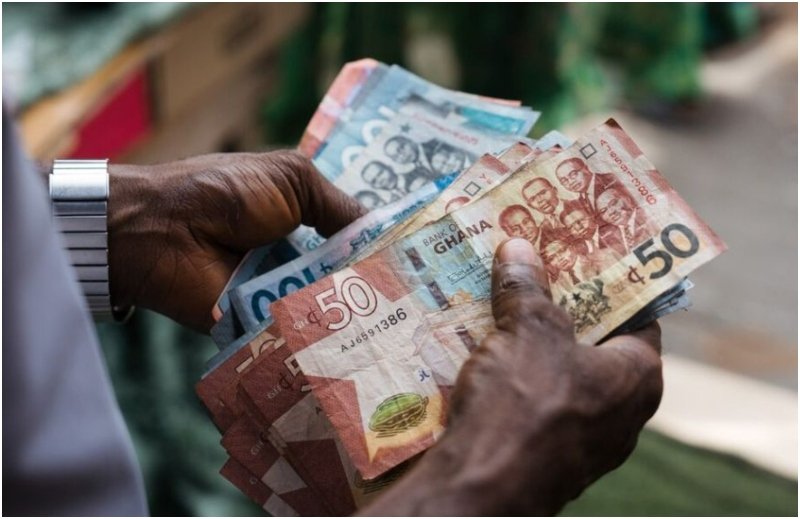
Ghanaian importers have long faced a frustrating ritual: before paying a supplier in China, you first had to buy US dollars, route the payment through American correspondent banks, and absorb the extra fees and processing delays that came with it.
That is now changing. Ghana has introduced a direct cedi-to-yuan payment system, piloted by Stanbic Bank Ghana and announced by Bank of Ghana Governor Dr. Johnson Pandit Asiama at the 132nd Monetary Policy Committee briefing. Here is how to use it.
What You Need to Know First
What it is: A direct payment route that lets you pay Chinese suppliers from your local cedi bank account, with the supplier receiving Chinese yuan.
What it is not: A replacement for the US dollar. The dollar route, SWIFT, and transactions in euros and pounds remain fully operational. This is an alternative pathway.
Who is piloting it: Stanbic Bank Ghana. GCB is also developing a similar service.
Why it matters: China accounted for over 22% of Ghana’s imports in 2024, covering machinery, electronics, textiles, and raw industrial materials.
Step-by-Step: How to Make a Direct Cedi-to-Yuan Payment
Step 1: Confirm Your Supplier Accepts Yuan
Before anything else, check with your Chinese supplier that they are willing to receive payment in Chinese yuan rather than US dollars. Not all suppliers will be set up for this, so confirm early.
Step 2: Open or Use a Stanbic Bank Ghana Account
The pilot is running through Stanbic Bank Ghana. If you are not already a customer, you will need an account with them to access the service during this pilot phase.
Step 3: Prepare Complete Documentation
Eligible payments require complete documents. Gather your import documentation — invoices, trade agreements, and any supporting paperwork your bank requires — before submitting.
Step 4: Submit Your Payment by 2:00 p.m. GMT
This is the critical deadline. If a business submits an eligible payment with complete documents by 2:00 p.m. GMT, it can be settled by the next business day. Miss the cutoff, and your payment moves to the following cycle.
Step 5: Let the Bank Route It Through CIPS
Instead of routing money through American correspondent banks in US dollars, the transaction goes through China’s Cross-Border Interbank Payment System (CIPS). Your supplier receives the payment in yuan.
What You Save
- No double currency conversion — you pay in cedis, your supplier receives yuan
- Lower transaction fees — no middlemen taking a cut
- Faster settlement — next business day if you meet the 2:00 p.m. GMT deadline
- No dollar hunt — you no longer need to source US dollars just to pay a Chinese supplier
As Stanbic Bank Ghana CEO Mwamina Aso Manning put it: “With CIPS, businesses can access a more direct payment route to Chinese counterparties, reducing the need for US correspondent or intermediary banks.”
What Has Not Changed
- The dollar route remains fully open
- SWIFT continues to operate as usual
- Transactions in dollars, euros, and pounds are unaffected
- You can still choose your payment pathway based on trade terms, exchange rates, and cost calculations
Quick Checklist
| Step | Action |
|---|---|
| 1 | Confirm supplier accepts yuan |
| 2 | Ensure you have a Stanbic Bank Ghana account |
| 3 | Prepare complete payment documents |
| 4 | Submit by 2:00 p.m. GMT |
| 5 | Payment settles via CIPS by next business day |
The Bigger Picture
This banking breakthrough comes alongside China’s zero-tariff access for 53 African nations with diplomatic ties to Beijing, which took effect on May 1. Together, zero-tariff market access and direct cedi-to-yuan payments create a two-way street — making it easier to import from China while opening doors for Ghanaian exporters to reach Chinese buyers.
Challenges like logistics, product standards, and competitiveness remain. But for importers tired of chasing dollars, this is a practical step toward faster, cheaper trade.
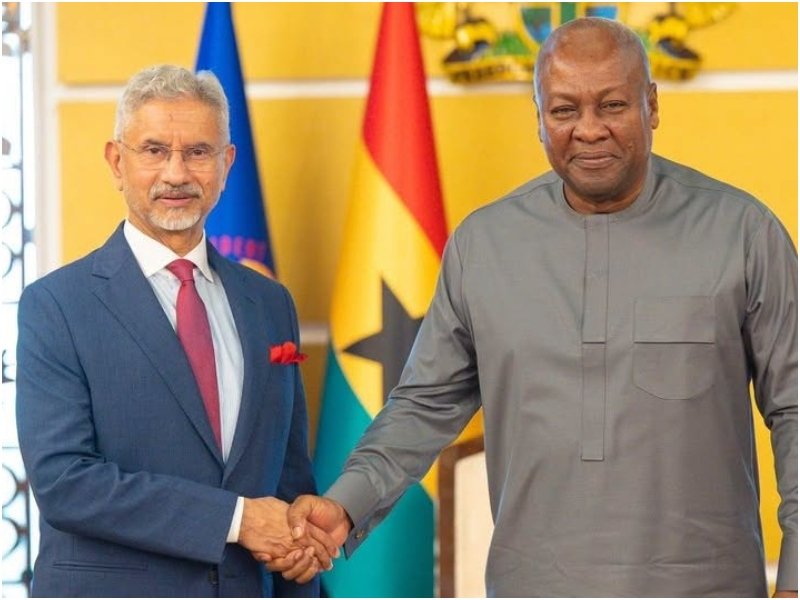
President John Dramani Mahama has declared Ghana “open for business,” inviting Indian companies to capitalize on expanding opportunities in the country’s pharmaceutical and vaccine manufacturing sectors.
Speaking during a courtesy call at the Presidency by India’s External Affairs Minister, Dr. Subrahmanyam Jaishankar, Mahama pledged continued policy reforms under the government’s #ResettingGhana agenda and the ‘Accra Reset’ initiative to secure health sovereignty across Africa.
‘Best Time to Invest’
The President used the meeting to pitch Ghana’s economic recovery to the visiting Indian delegation, pointing to improving macroeconomic indicators.
“Ghana’s economy is doing well. It is stable. Inflation is low, interest rates are down, and the currency is holding its own,” Mahama said. “I think that this is the best time to invest.”
To underscore this recovery, the President said Foreign Direct Investment (FDI) into Ghana rose from US$2.6 billion in 2025, with projections showing it could surpass US$3 billion in 2026.
Focus on Local Vaccine Production
Turning to healthcare, Mahama noted that Ghana’s new national pharmaceutical framework prioritizes domestic production. He cited the partnership between Atlantic Life Sciences and indigenous firm KinaPharma as a working model for indigenous vaccine capacity.
“They are part of our effort to localize vaccine production, but there is still substantial room for expansion,” the President said.
The push aligns with the government’s broader ‘Accra Reset’ initiative, which aims to reduce Africa’s reliance on imported vaccines and pharmaceuticals by building local manufacturing capacity.
Strategic Partnership
The courtesy call underscores Ghana’s efforts to deepen economic ties with India, a global leader in generic drug manufacturing and vaccine production. Indian pharmaceutical companies have increasingly looked to African markets for expansion, and Ghana’s new framework offers incentives for local production partnerships.
President Mahama’s invitation signals that his administration views Indian investment as central to its health sovereignty ambitions — and to the broader economic reset promised under his government’s reform agenda.
Ghana News
Ghana’s Cyber Security Authority Challenges FBI’s Kash Patel’s Account Of Major Scam Operation in Accra
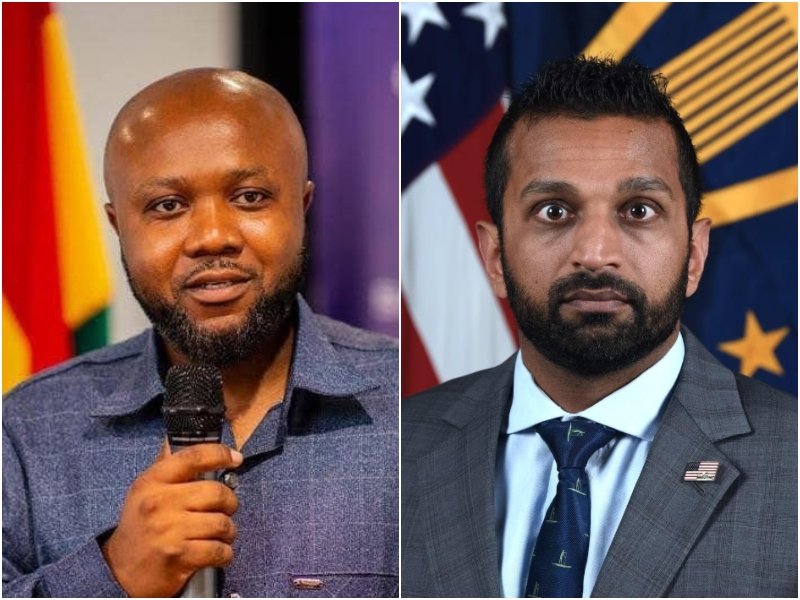
Ghana’s Cyber Security Authority (CSA) has publicly challenged FBI Director Kash Patel’s account of a major anti-cybercrime operation in the country, insisting that Ghanaian authorities led and coordinated the exercise, not the U.S. Bureau.
The operation, known variously as “Operation Cyber Hunt” or “Operation Blackout,” targeted suspected cybercrime networks operating in Ghana. According to the CSA, it was planned and executed under Ghana’s legal and institutional frameworks, with support from international partners including the FBI and the United Kingdom’s National Crime Agency (NCA).
Dispute Over Credit
The dispute erupted after Patel posted on X on October 8, 2026, framing the operation as part of the FBI’s global campaign against scam centres.
“OPERATION BLACKOUT: this FBI’s global scam center fraud demolition. Another takedown this week out of Ghana,” Patel wrote.
The FBI director claimed the operation had identified nearly US$10 million in losses involving 89 victims, with more than 130 people arrested or detained and over 300 electronic devices seized.
In a press release issued the same day, the CSA rejected any suggestion that the operation was independently planned or led by the FBI.
“Ghanaian authorities planned, coordinated and executed the operation within Ghana’s legal and institutional frameworks, and it thus cannot be said to be conceived as part of an FBI-led global programme, neither was it conducted under a foreign operational command,” the statement said.
Ghanaian Authorities Assert Sovereignty
The CSA stressed that the public account should reflect the roles played by Ghanaian institutions and other international partners. It also issued a pointed reminder to foreign law enforcement agencies: they cannot independently exercise police powers or make arrests in Ghana. Their involvement, the Authority said, must be based on lawful cooperation and the authorisation and participation of relevant Ghanaian authorities.
Despite its concerns, the CSA acknowledged the intelligence support provided by the FBI and the NCA, describing their contributions as important to the fight against international cybercrime. The Authority called on the FBI to clarify its public account and recognise the roles of Ghanaian agencies and other international partners.
Inside the Operation
According to the CSA, Operation Cyber Hunt uncovered suspected cybercrime centres at multiple locations in the Greater Accra Region. The operation led to the arrest of eight suspects and the rescue of 120 people suspected of being trafficked and forced into online fraud activities.
The exercise followed intelligence received on August 26, 2026, indicating that apartments at Ubuntu Haven Estate in Kpone Katamanso, Franko Estate in Ga North, and other locations in Ga West were being used as bases for organised cybercrime, including romance scams.
Items seized included:
- 136 mobile phones
- 130 laptops
- Internet connection devices
- Four vehicles (one reportedly stolen from Canada)
- Other digital equipment
- Jewellery and 10 Nigerian passports
The CSA said authorities were working to return the rescued victims — most of whom were identified as Nigerians — to their home country. Investigations into the suspects and the seized devices are ongoing.
Broader Implications
The public rift highlights growing tensions over credit and sovereignty in international cybercrime operations. While cross-border cooperation remains essential, the CSA’s statement underscores a firm position: Ghana welcomes partnership, but not the appearance of foreign command on its soil.
The FBI has not yet responded to the CSA’s call for clarification.


Making Every Square Metre Count: Interior Design Tips for Ghanaian Homeowners

Poor Posture Is More Than a Bad Habit: How Four Minutes a Day Can Help

Accra’s Pool Party Brings Music, Style and Detty December Energy
-

 Commentary1 day ago
Educated, Wealthy and Still Trapped: Why Women’s Advancement Falls Short of Empowerment
-
 Ghana News1 day ago
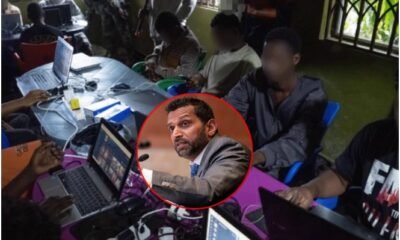
FBI’s Kash Patel Says Ghana Scam Network Targeted 89 U.S. Victims, Stole Nearly $10 Million
-

 Perspectives1 day ago
Russia-Africa Summit: The Search for Resources, Influence and War Resilience
-
 Ghana News1 day ago
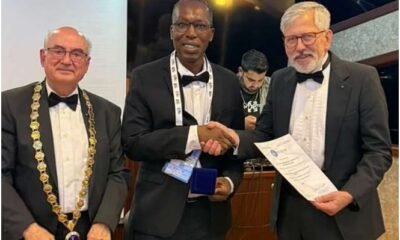
Dr Issaka Yakubu Akparibo: Ghanaian Doctor Becomes First African Inducted into Global Aviation and Space Medicine Academy
-

 Health & Wellness2 days ago
When Weight Loss Stalls, Look Beyond the Scale
-

 Ghana News6 hours ago
Ghana’s Cyber Security Authority Challenges FBI’s Kash Patel’s Account Of Major Scam Operation in Accra
-
 Ghana News6 hours ago
How to Pay Chinese Suppliers Directly From Your Ghanaian Cedi Account
-

 Reels & Social Media Highlights1 day ago
Nana Akua Addo, Dumelo, and KFC: What Ghana Was Actually Talking About on Social Media