
Ghana News
Top Ghana News Headlines Across Various News Outlets Today: January 1, 2026


As Ghana ushers in 2026 with celebrations and reflections, today’s top stories from leading local sources focus on economic reforms, political transitions, security developments, and cultural highlights.
From VAT changes impacting remittances to diaspora investments in tourism, these updates keep you connected to home amid New Year’s optimism. Here’s a curated aggregation of major news stories in Ghana:
Fireworks, Faith, and Flashlight Vigils Usher in 2026 Across Ghana
Ghana welcomed the New Year with a vibrant mix of fireworks, religious services, and candlelight vigils as millions marked the start of 2026. Streets, churches, and public spaces were alive with celebrations stretching into the early hours, signaling national optimism after a year of economic challenges and recovery.
Churches Across Ghana Held Traditional Watch Night Services to Welcome 2026
Across the country, congregations gathered for watch night services on December 31, blending Christian worship with cultural traditions as believers reflected on the past year and prayed for protection and prosperity in 2026.
GRA Implements Major VAT Overhaul Across Ghana Starting January 1, 2026
The Ghana Revenue Authority has officially begun implementing massive reforms to the Value Added Tax system under the new VAT Act, 2025 (Act 1151). Key changes include raising the VAT registration threshold, reducing the standard rate, abolishing the COVID-19 Health Recovery Levy, and streamlining tax structures. Businesses and consumers are advised to prepare for the changes as they take effect today.

MTN Ghana Plans Maintenance Downtime Ahead of New VAT System Integration
To align its billing systems with the updated tax regime, MTN Ghana announced a temporary suspension of airtime and data purchases during early morning maintenance on January 2, 2026. The brief disruption is part of preparations for the newly implemented VAT tariffs.
President Mahama Thanks Labour for Accepting 10% Pay Rise
In remarks reflecting ongoing economic reforms, President John Dramani Mahama expressed appreciation to labour unions for accepting a 10% public sector salary increase. The pact is part of broader efforts to stabilize Ghana’s economy amid fiscal pressure and cost-of-living concerns.
💰 Business & Economy
Ghana Completes $1.4 Billion in Eurobond Payments for 2025
Ghana successfully settled all scheduled Eurobond obligations for 2025, culminating in an early payment of a $709 million bond on December 30. Officials say this disciplined debt servicing strengthens Ghana’s credibility with international investors following prior economic challenges.
Fuel Prices Expected to Decline Marginally at Ghanaian Pumps
A combination of a strengthening Ghana cedi and falling global crude prices is expected to result in slight reductions in petrol and diesel pump prices from January 1, easing transport costs for drivers and businesses nationwide.
Ghana cedi Records Historic Annual Gain; First in 32 Years
After decades of currency pressure, the Ghanaian cedi closed 2025 with a notable annual appreciation against the U.S. dollar. Analysts link the rally to strong global gold markets and solid macroeconomic indicators, fueling optimism among importers, exporters, and investors.
Nigerian Star Asake Meets President John Mahama After Accra Show
Afrobeats sensation Asake met with President Mahama following his performance in Accra as part of the “December in GH” festivities. The encounter highlighted Ghana’s growing cultural ties with the wider West African music scene.
Viral Video of Actor LilWin Spraying Cash Sparks Online Reaction
A social media clip showing Ghanaian actor Kwadwo Nkansah (LilWin) spraying money on a religious leader has sparked widespread discussion about celebratory culture and social norms during festive events.
Community & Security
Ho Central Mosque Temporarily Closed Amid Leadership Dispute
Authorities in the Volta Region ordered the temporary closure of the Ho Central Mosque due to an unresolved leadership conflict. The action aims to create space for peaceful mediation and reduce tension among community members.
Police Increase Security Presence for New Year Festivities
The Ghana Police Service has reassured the public of heightened safety measures nationwide during New Year celebrations, including patrols at high-traffic zones, event locations, and watch night services.
Sports & Youth Events
All Set for an Exciting ‘Best of Bukom 2’ Boxing Showcase
Boxing fans are gearing up for the return of “Best of Bukom 2,” a major boxing event taking place at the historic Bukom Arena in Accra on January 1, promising thrilling matchups and celebration of Ghana’s pugilistic heritage.
Human Interest & Prophecy
Prophet Nigel Gaisie Shares 2026 Predictions
Prophetic leader Nigel Gaisie has released a series of visions he says will unfold in 2026, ranging from social shifts to high-profile releases and national triumphs. The prophetic message has ignited debate among followers and observers alike.






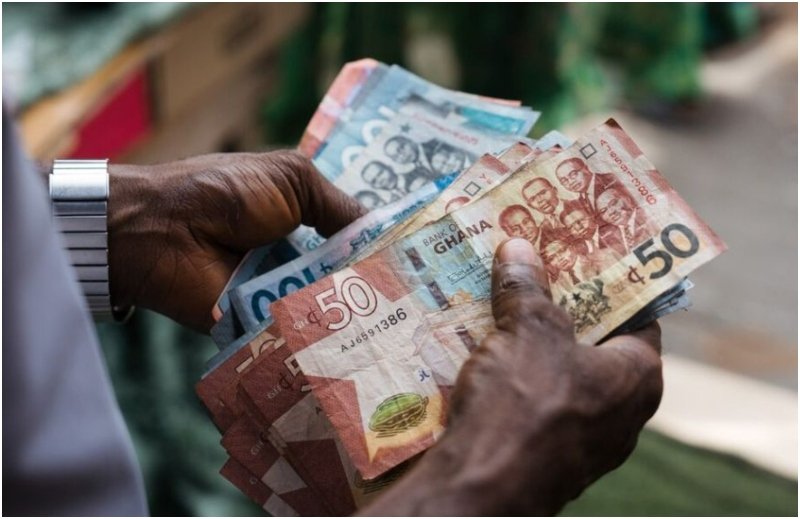
A practical guide for Ghanaian importers using the new cedi-to-yuan payment route
Ghanaian importers have long faced a frustrating ritual: before paying a supplier in China, you first had to buy US dollars, route the payment through American correspondent banks, and absorb the extra fees and processing delays that came with it.
That is now changing. Ghana has introduced a direct cedi-to-yuan payment system, piloted by Stanbic Bank Ghana and announced by Bank of Ghana Governor Dr. Johnson Pandit Asiama at the 132nd Monetary Policy Committee briefing. Here is how to use it.
What You Need to Know First
What it is: A direct payment route that lets you pay Chinese suppliers from your local cedi bank account, with the supplier receiving Chinese yuan.
What it is not: A replacement for the US dollar. The dollar route, SWIFT, and transactions in euros and pounds remain fully operational. This is an alternative pathway.
Who is piloting it: Stanbic Bank Ghana. GCB is also developing a similar service.
Why it matters: China accounted for over 22% of Ghana’s imports in 2024, covering machinery, electronics, textiles, and raw industrial materials.
Step-by-Step: How to Make a Direct Cedi-to-Yuan Payment
Step 1: Confirm Your Supplier Accepts Yuan
Before anything else, check with your Chinese supplier that they are willing to receive payment in Chinese yuan rather than US dollars. Not all suppliers will be set up for this, so confirm early.
Step 2: Open or Use a Stanbic Bank Ghana Account
The pilot is running through Stanbic Bank Ghana. If you are not already a customer, you will need an account with them to access the service during this pilot phase.
Step 3: Prepare Complete Documentation
Eligible payments require complete documents. Gather your import documentation — invoices, trade agreements, and any supporting paperwork your bank requires — before submitting.
Step 4: Submit Your Payment by 2:00 p.m. GMT
This is the critical deadline. If a business submits an eligible payment with complete documents by 2:00 p.m. GMT, it can be settled by the next business day. Miss the cutoff, and your payment moves to the following cycle.
Step 5: Let the Bank Route It Through CIPS
Instead of routing money through American correspondent banks in US dollars, the transaction goes through China’s Cross-Border Interbank Payment System (CIPS). Your supplier receives the payment in yuan.
What You Save
- No double currency conversion — you pay in cedis, your supplier receives yuan
- Lower transaction fees — no middlemen taking a cut
- Faster settlement — next business day if you meet the 2:00 p.m. GMT deadline
- No dollar hunt — you no longer need to source US dollars just to pay a Chinese supplier
As Stanbic Bank Ghana CEO Mwamina Aso Manning put it: “With CIPS, businesses can access a more direct payment route to Chinese counterparties, reducing the need for US correspondent or intermediary banks.”
What Has Not Changed
- The dollar route remains fully open
- SWIFT continues to operate as usual
- Transactions in dollars, euros, and pounds are unaffected
- You can still choose your payment pathway based on trade terms, exchange rates, and cost calculations
Quick Checklist
| Step | Action |
|---|---|
| 1 | Confirm supplier accepts yuan |
| 2 | Ensure you have a Stanbic Bank Ghana account |
| 3 | Prepare complete payment documents |
| 4 | Submit by 2:00 p.m. GMT |
| 5 | Payment settles via CIPS by next business day |
The Bigger Picture
This banking breakthrough comes alongside China’s zero-tariff access for 53 African nations with diplomatic ties to Beijing, which took effect on May 1. Together, zero-tariff market access and direct cedi-to-yuan payments create a two-way street — making it easier to import from China while opening doors for Ghanaian exporters to reach Chinese buyers.
Challenges like logistics, product standards, and competitiveness remain. But for importers tired of chasing dollars, this is a practical step toward faster, cheaper trade.
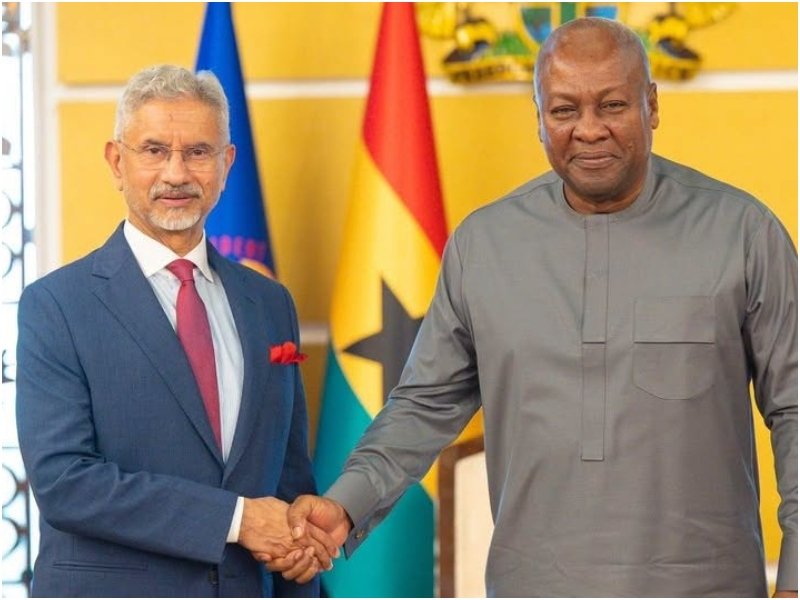
President John Dramani Mahama has declared Ghana “open for business,” inviting Indian companies to capitalize on expanding opportunities in the country’s pharmaceutical and vaccine manufacturing sectors.
Speaking during a courtesy call at the Presidency by India’s External Affairs Minister, Dr. Subrahmanyam Jaishankar, Mahama pledged continued policy reforms under the government’s #ResettingGhana agenda and the ‘Accra Reset’ initiative to secure health sovereignty across Africa.
‘Best Time to Invest’
The President used the meeting to pitch Ghana’s economic recovery to the visiting Indian delegation, pointing to improving macroeconomic indicators.
“Ghana’s economy is doing well. It is stable. Inflation is low, interest rates are down, and the currency is holding its own,” Mahama said. “I think that this is the best time to invest.”
To underscore this recovery, the President said Foreign Direct Investment (FDI) into Ghana rose from US$2.6 billion in 2025, with projections showing it could surpass US$3 billion in 2026.
Focus on Local Vaccine Production
Turning to healthcare, Mahama noted that Ghana’s new national pharmaceutical framework prioritizes domestic production. He cited the partnership between Atlantic Life Sciences and indigenous firm KinaPharma as a working model for indigenous vaccine capacity.
“They are part of our effort to localize vaccine production, but there is still substantial room for expansion,” the President said.
The push aligns with the government’s broader ‘Accra Reset’ initiative, which aims to reduce Africa’s reliance on imported vaccines and pharmaceuticals by building local manufacturing capacity.
Strategic Partnership
The courtesy call underscores Ghana’s efforts to deepen economic ties with India, a global leader in generic drug manufacturing and vaccine production. Indian pharmaceutical companies have increasingly looked to African markets for expansion, and Ghana’s new framework offers incentives for local production partnerships.
President Mahama’s invitation signals that his administration views Indian investment as central to its health sovereignty ambitions — and to the broader economic reset promised under his government’s reform agenda.
Ghana News
Ghana’s Cyber Security Authority Challenges FBI’s Kash Patel’s Account Of Major Scam Operation in Accra
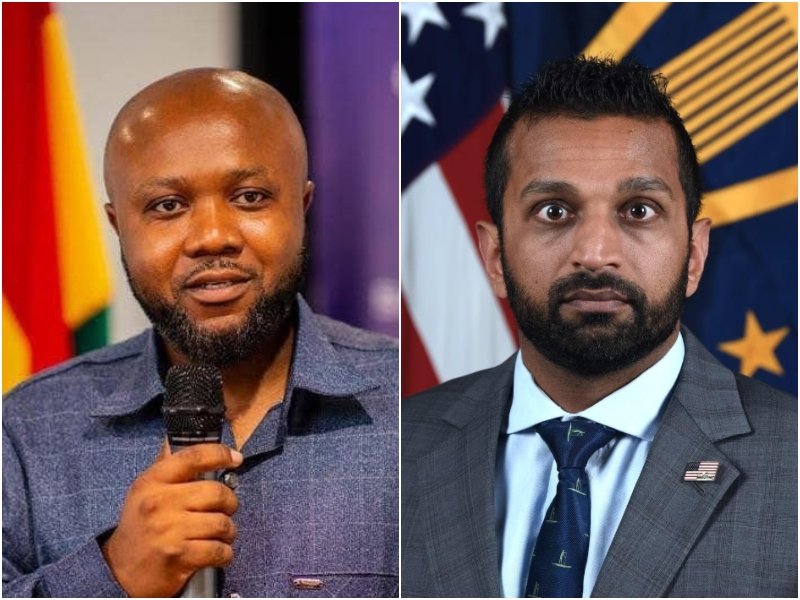
Ghana’s Cyber Security Authority (CSA) has publicly challenged FBI Director Kash Patel’s account of a major anti-cybercrime operation in the country, insisting that Ghanaian authorities led and coordinated the exercise, not the U.S. Bureau.
The operation, known variously as “Operation Cyber Hunt” or “Operation Blackout,” targeted suspected cybercrime networks operating in Ghana. According to the CSA, it was planned and executed under Ghana’s legal and institutional frameworks, with support from international partners including the FBI and the United Kingdom’s National Crime Agency (NCA).
Dispute Over Credit
The dispute erupted after Patel posted on X on October 8, 2026, framing the operation as part of the FBI’s global campaign against scam centres.
“OPERATION BLACKOUT: this FBI’s global scam center fraud demolition. Another takedown this week out of Ghana,” Patel wrote.
The FBI director claimed the operation had identified nearly US$10 million in losses involving 89 victims, with more than 130 people arrested or detained and over 300 electronic devices seized.
In a press release issued the same day, the CSA rejected any suggestion that the operation was independently planned or led by the FBI.
“Ghanaian authorities planned, coordinated and executed the operation within Ghana’s legal and institutional frameworks, and it thus cannot be said to be conceived as part of an FBI-led global programme, neither was it conducted under a foreign operational command,” the statement said.
Ghanaian Authorities Assert Sovereignty
The CSA stressed that the public account should reflect the roles played by Ghanaian institutions and other international partners. It also issued a pointed reminder to foreign law enforcement agencies: they cannot independently exercise police powers or make arrests in Ghana. Their involvement, the Authority said, must be based on lawful cooperation and the authorisation and participation of relevant Ghanaian authorities.
Despite its concerns, the CSA acknowledged the intelligence support provided by the FBI and the NCA, describing their contributions as important to the fight against international cybercrime. The Authority called on the FBI to clarify its public account and recognise the roles of Ghanaian agencies and other international partners.
Inside the Operation
According to the CSA, Operation Cyber Hunt uncovered suspected cybercrime centres at multiple locations in the Greater Accra Region. The operation led to the arrest of eight suspects and the rescue of 120 people suspected of being trafficked and forced into online fraud activities.
The exercise followed intelligence received on August 26, 2026, indicating that apartments at Ubuntu Haven Estate in Kpone Katamanso, Franko Estate in Ga North, and other locations in Ga West were being used as bases for organised cybercrime, including romance scams.
Items seized included:
- 136 mobile phones
- 130 laptops
- Internet connection devices
- Four vehicles (one reportedly stolen from Canada)
- Other digital equipment
- Jewellery and 10 Nigerian passports
The CSA said authorities were working to return the rescued victims — most of whom were identified as Nigerians — to their home country. Investigations into the suspects and the seized devices are ongoing.
Broader Implications
The public rift highlights growing tensions over credit and sovereignty in international cybercrime operations. While cross-border cooperation remains essential, the CSA’s statement underscores a firm position: Ghana welcomes partnership, but not the appearance of foreign command on its soil.
The FBI has not yet responded to the CSA’s call for clarification.


Making Every Square Metre Count: Interior Design Tips for Ghanaian Homeowners

Poor Posture Is More Than a Bad Habit: How Four Minutes a Day Can Help

Accra’s Pool Party Brings Music, Style and Detty December Energy
-

 Commentary1 day ago
Educated, Wealthy and Still Trapped: Why Women’s Advancement Falls Short of Empowerment
-

 Perspectives1 day ago
Russia-Africa Summit: The Search for Resources, Influence and War Resilience
-
 Ghana News1 day ago
FBI’s Kash Patel Says Ghana Scam Network Targeted 89 U.S. Victims, Stole Nearly $10 Million
-

 Health & Wellness2 days ago
When Weight Loss Stalls, Look Beyond the Scale
-

 Ghana News1 day ago
Dr Issaka Yakubu Akparibo: Ghanaian Doctor Becomes First African Inducted into Global Aviation and Space Medicine Academy
-

 Ghana News6 hours ago
Ghana’s Cyber Security Authority Challenges FBI’s Kash Patel’s Account Of Major Scam Operation in Accra
-
 Ghana News5 hours ago
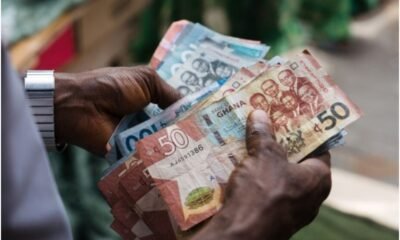
How to Pay Chinese Suppliers Directly From Your Ghanaian Cedi Account
-

 Reels & Social Media Highlights1 day ago
Nana Akua Addo, Dumelo, and KFC: What Ghana Was Actually Talking About on Social Media