
Tourism
“This Is What Happens When You Are A Tourist In Accra”: Vlogger’s Journey Through City Captures Iconic Sites

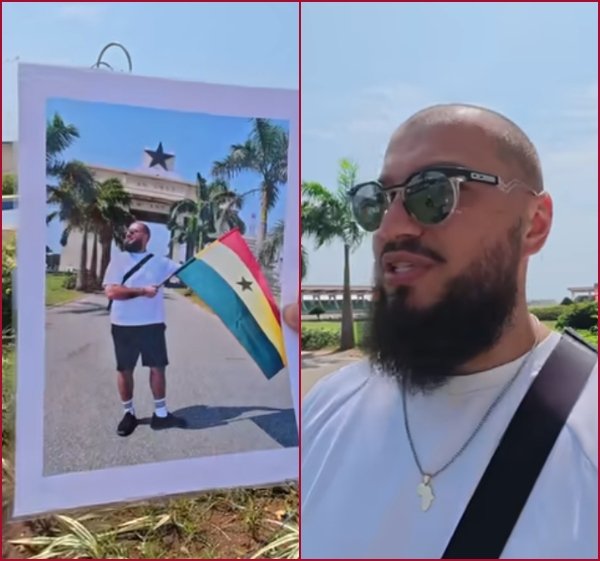
For any first-time visitor to Ghana’s capital, the path from the iconic Black Star Square to the bustling Accra Arts Centre is a rite of passage.
A recent YouTube travel vlog by David Akhundzada (@Davud_Akh) perfectly captures this classic tourist experience, blending historical awe, cultural immersion, and the vibrant—sometimes intense—reality of market negotiations.
The video, titled “This Is What Happens When You Are A Tourist In Accra,” begins at the Independence Arch, a national monument built to commemorate Ghana’s freedom from British colonial rule in 1957. The vlogger explores the arch and the adjacent Black Star Square, explaining their significance during national celebrations.
“This is very iconic place to visit,” Akhundzada notes, while engaging with local entrepreneurs.
He pays 40 Cedis (approx. $3.50) for a commemorative photo printed on-site and later buys a Ghana flag chain for 100 Cedis after friendly haggling, highlighting the support for local businesses that is part of the tourist experience.
The journey then moves to the Accra Arts Centre (Centre for National Culture), a hub for traditional Ghanaian crafts. The vlogger navigates the vibrant, sometimes overwhelming, atmosphere of the textile and craft market. He films workshops where artisans hand-make drums, wooden masks, fans, and brass statues, offering a glimpse into authentic craftsmanship.
“You will get hustled since the first minute… I have to just go explore,” he says, candidly addressing the persistent sales tactics.
He eventually finds a more relaxed interaction at Thunder Drum Village, a family-run drum workshop with a legacy dating back to 1967, where he purchases a small hand-drum adorned with the Ghana flag.
A walk through the community behind the market leads to the Jamestown coastline, revealing a stark contrast. The vlogger expresses disappointment at the amount of plastic trash on the beach, engaging in a thoughtful conversation with a local elder, who calls for systematic clean-up efforts and government intervention.
The video concludes with a successful negotiation for a traditional Nigerian mask at the Arts Centre before catching a taxi back, having spent a full day immersed in Accra’s tourist trail.
The Takeaway for Travellers:
The vlog serves as a practical guide for tourists, emphasizing that a visit to Accra’s core landmarks requires patience for negotiation, an appreciation for handmade crafts, and an awareness of both the city’s rich history and its contemporary urban challenges. The experience is portrayed as deeply rewarding for those willing to engage authentically, support local artisans, and explore beyond the surface.









Ghana is set to become the fifth country in Africa to grant visa-free access to all African passport holders.
The landmark policy, announced by President John Mahama, will take effect on May 25, 2026 — coinciding with Africa Day celebrations.
Here is everything you need to know about the historic shift.
1. The Policy Takes Effect on Africa Day, May 25
President John Mahama announced the new visa-free regime during the first state visit of Zimbabwean President Emmerson Mnangagwa to Ghana, according to Foreign Affairs Minister Sam Okudzeto Ablakwa.
The policy will officially come into force on May 25 — a symbolic date chosen to align with Africa Day, the annual commemoration of the founding of the Organization of African Unity (now the African Union).
2. Ghana Becomes the 5th African Country to Offer Visa-Free Access to All Africans
With this move, Ghana joins a small but growing group of African nations that already allow visa-free entry to all African nationals. The other four countries are:
- Benin
- The Gambia
- Rwanda
- Seychelles
Ghana is now the fifth country on the continent to adopt such a policy, marking a significant shift in its travel and immigration framework.
3. The Policy Builds on a 2025 Promise That Did Not Materialize
The visa-free initiative was originally introduced under former President Nana Akufo-Addo, who announced visa-free travel for all African passport holders in his final State of the Nation Address in January 2025.
However, the measure — initially expected to take effect in 2025 — did not materialise as planned before the end of his tenure. The Mahama administration has now implemented the policy.
4. It Will Be Linked to a Broader E-Visa Rollout Next Month
The visa-free regime will not stand alone. It forms part of a broader reform of Ghana’s immigration system, including the introduction of a new e-visa platform expected to launch next month.
Authorities say the system is designed to streamline entry processes while maintaining border controls. The visa-free regime will form part of this broader e-visa system set to be launched by the Mahama administration next month, according to Foreign Affairs Minister Ablakwa.
5. The Policy Aims to Boost Tourism, Trade, and Pan-Africanism
Ablakwa noted that the policy is aimed at reinforcing Ghana’s position as the cradle of Pan-Africanism, while unlocking gains in tourism and intra-African trade through the reform.
The introduction of visa-free entry for all Africans is expected to support increased mobility across the continent, with potential implications for tourism, business travel, and regional integration. The move aligns with broader continental efforts to ease movement under frameworks such as the African Continental Free Trade Area (AfCFTA).
Bonus: Ghana Is Also Expanding Travel Access for Its Own Citizens
Ghana’s government has also been expanding travel access for its own citizens. The Foreign Ministry said 23 visa waiver agreements have been negotiated for Ghanaian passport holders since last year.
Summary Box:
| Policy | Visa-free entry for all African passport holders |
|---|---|
| Effective date | May 25 (Africa Day) |
| Announced by | President John Mahama |
| Number of African countries with similar policy | 5 (Benin, Gambia, Rwanda, Seychelles, Ghana) |
| Linked reform | New e-visa platform launching next month |
| Key goals | Pan-Africanism, tourism, intra-African trade, AfCFTA alignment |

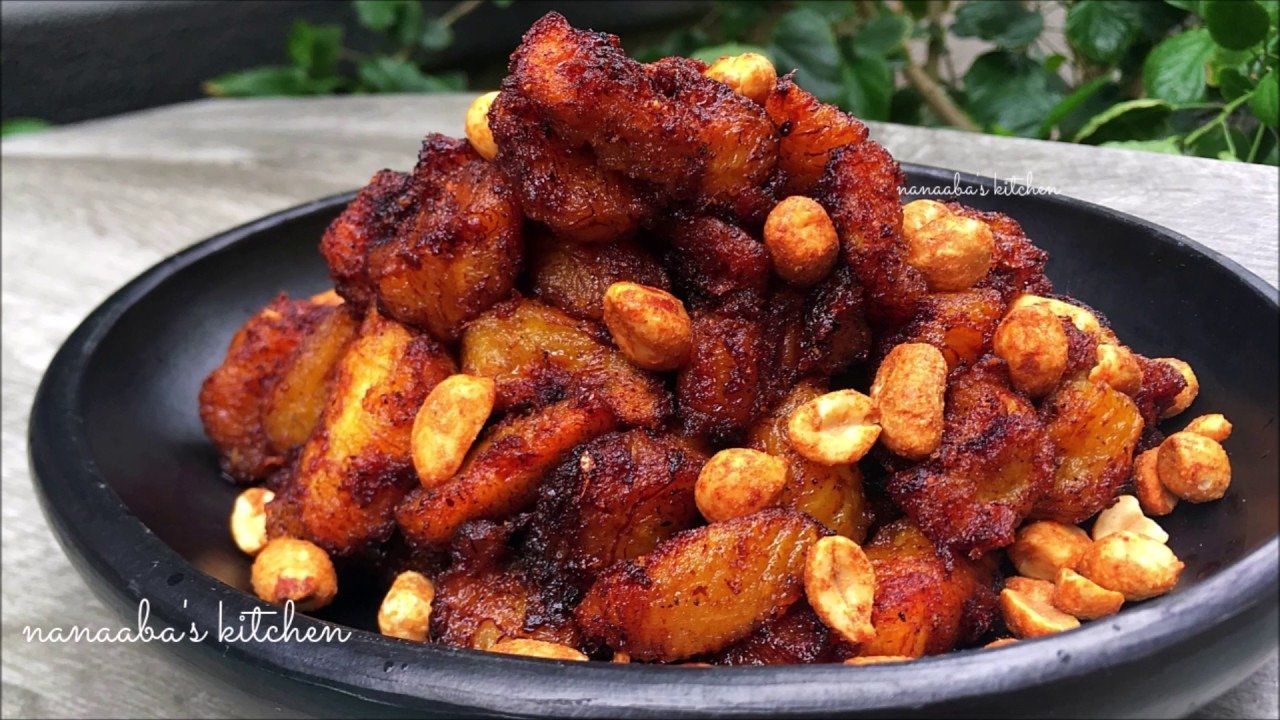
The scent arrives before the snack itself—warm ginger, pepper, and caramelized plantain drifting through the evening air in Accra. Follow that irresistible aroma and you’ll likely find a small street stall serving one of Ghana’s most beloved bites: kelewele with fried groundnuts.
Kelewele begins with ripe plantains cut into small cubes and tossed in a lively blend of spices—usually ginger, garlic, pepper, and a hint of salt.
Once lowered into hot oil, the plantain turns golden and crisp at the edges while remaining soft and sweet inside. The result is a snack that balances heat, sweetness, and smoky richness in a single mouthful.
But kelewele rarely travels alone. A handful of crunchy fried groundnuts—peanuts roasted until fragrant—often accompanies the dish.
Their nutty bite complements the spiced plantain perfectly, adding texture and depth to every serving. Locals know the rhythm well: a toothpick in hand, a paper wrap of kelewele in the other, and laughter shared with friends on a warm night.
Across Ghana, kelewele vendors appear as evening falls. Outside busy markets, near roadside corners, or beside lively bus stops, small frying pans sizzle under the glow of streetlights.
Office workers stop by on their way home, students gather after lectures, and late-night travelers grab a portion before continuing their journey.
For visitors, tasting kelewele is an introduction to Ghana’s vibrant street food culture—simple ingredients transformed into something memorable. For Ghanaians, it’s comfort food wrapped in nostalgia, a snack that carries the flavors of home.
@chefabbys KELEWELE might just be Ghana's best Street Food🇬🇭✨! We need to position it and give it even more credit ! It's easy , fast, extremely delicious to make. I made this in bulk hence the quantity of the spices All you need is Pepper Ginger Onion Red chillies Hwentia Cloves Calabash nutmeg EFOM WISA (alligator pepper ) Oil #FoodTiktok #fyp #foryou #virall ♬ With You (feat. Omah Lay) – Davido
Whether enjoyed after sunset or as a quick bite during a city stroll, kelewele and fried groundnuts remain a delicious symbol of Ghana’s everyday culinary magic.
The morning light over Accra falls softly across the stately grounds of the National Museum of Ghana. A few schoolchildren chatter beneath the trees, their voices echoing faintly against the museum’s pale walls.
Inside, quiet halls hold centuries of Ghanaian creativity—wooden sculptures carved with patient skill, bold textiles alive with color, and masks whose expressions seem to carry stories from generations past.
It’s the kind of place where time slows, inviting visitors to look more closely and listen to the country’s cultural heartbeat.
Step through the galleries and Ghana’s artistic journey unfolds. Intricately carved stools, ceremonial regalia, and traditional instruments reveal how art has long been woven into daily life. Sunlight filters through high windows, glancing off brass ornaments and beads once worn by royalty.
Visitors wander from display to display, pausing to study the details—symbols etched into wood, patterns stitched into cloth, fragments of history preserved with care. The museum feels calm and reflective, a welcome pause from the city’s busy rhythm.
But just a short drive away, the tempo changes entirely.
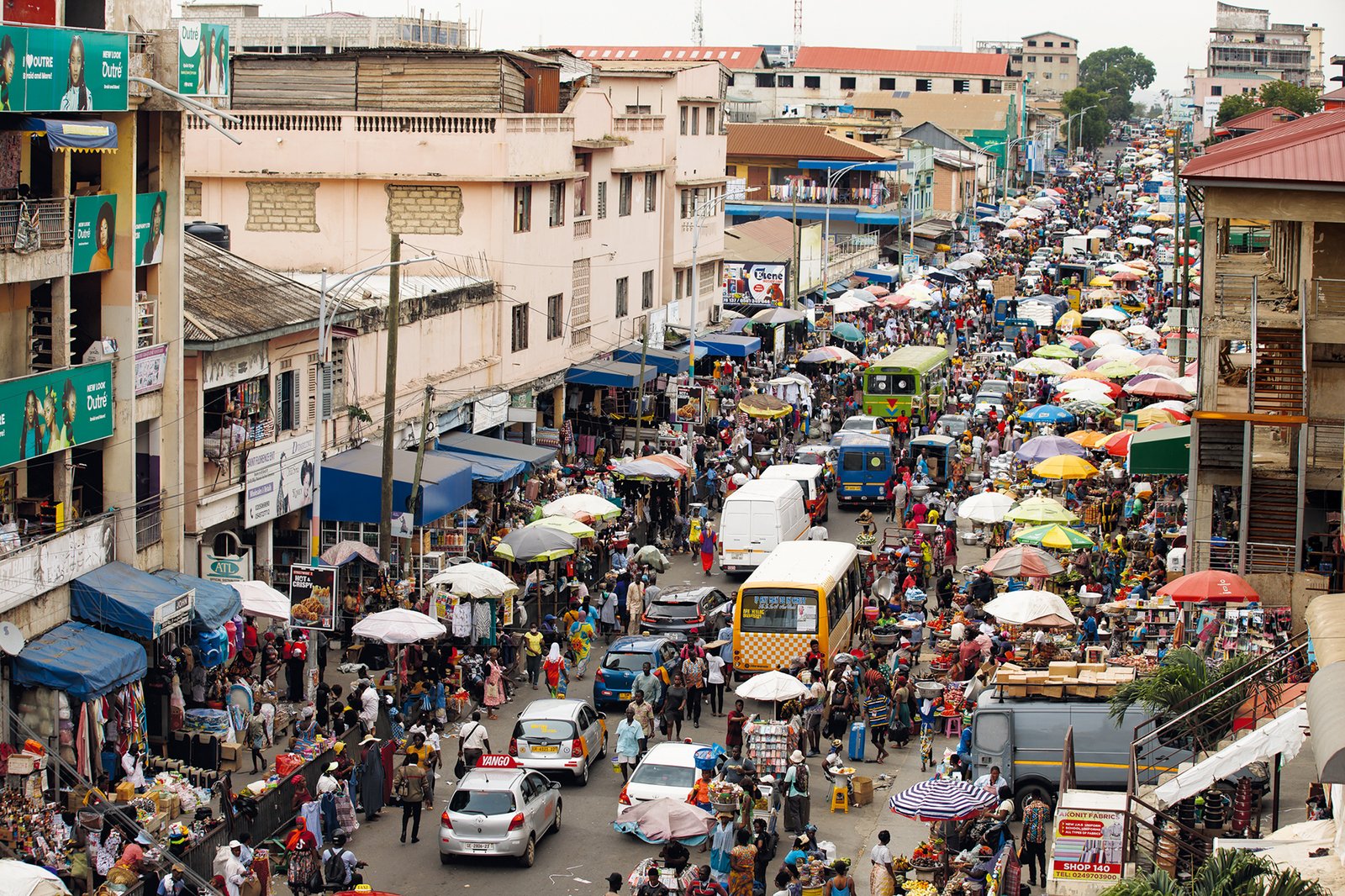
At Makola Market the air vibrates with movement. Traders call out prices over the hum of conversation.
Fabrics ripple in bright cascades of orange, turquoise, and deep indigo. The scent of smoked fish drifts through narrow lanes while baskets overflow with fresh peppers, tomatoes, and ginger. Here, Accra shows its everyday energy.
Visitors quickly realize Makola is more than a place to shop—it’s a living theater of commerce and community.
Women balance bowls of goods with remarkable grace, bargaining unfolds with good-natured laughter, and every stall offers something different: handmade sandals, woven baskets, shimmering jewelry, and neatly folded wax prints waiting to become tomorrow’s outfit. The colors alone can keep you wandering for hours.
Together, the museum and Makola Market capture two sides of Ghana’s story. One preserves heritage in quiet halls; the other keeps culture alive in the open air, vibrant and unscripted.
Experiencing both in a single day gives travelers a fuller sense of the city—its creativity, its resilience, and its warmth.
Leave Makola in the late afternoon and the sounds of the market linger in your ears: laughter, bargaining, music from a passing radio.
It’s a reminder that in Accra, culture isn’t just displayed behind glass—it’s happening all around you.


Renowned Global Bodies Warn Middle East War Will Scuttle Africa’s 2026 Growth

Ex-President Akufo-Addo and President Mahama Exchange Pleasantries on Easter
