
Arts and GH Heritage
The Stories Woven Into Every Strand at Annobil Contemporary Gallery

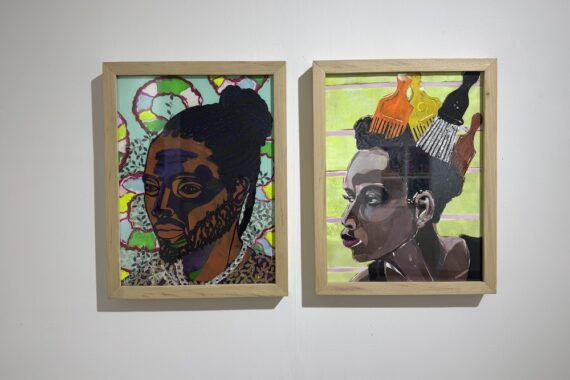
Before a single word is spoken, a hairstyle can announce belonging, confidence, rebellion—or memory.
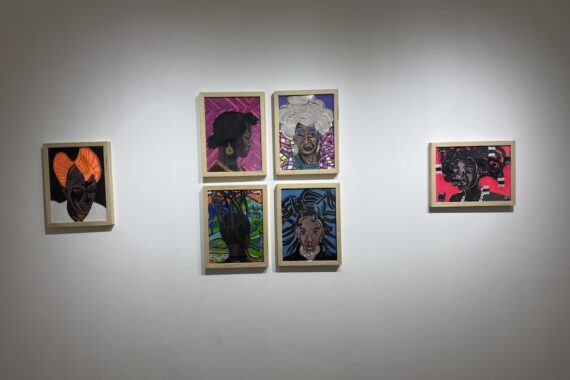
That quiet truth sits at the heart of Hairstyle Politics, the new exhibition by German artist, anthropologist and historian Dr. Ilsmargaret Luttman at Annobil Contemporary Gallery in Accra, where African hair is treated not as fashion alone but as a living archive.
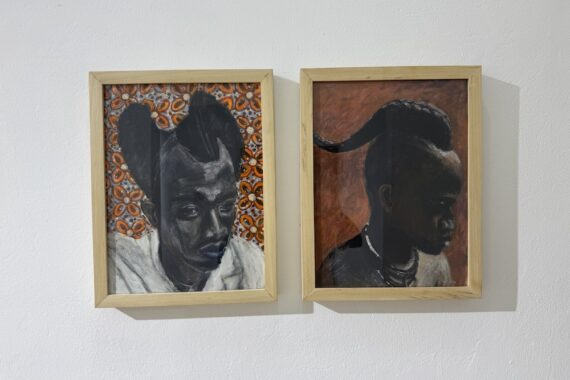
For generations across Ghana and the wider continent, hair has carried meanings that rarely appear in textbooks.
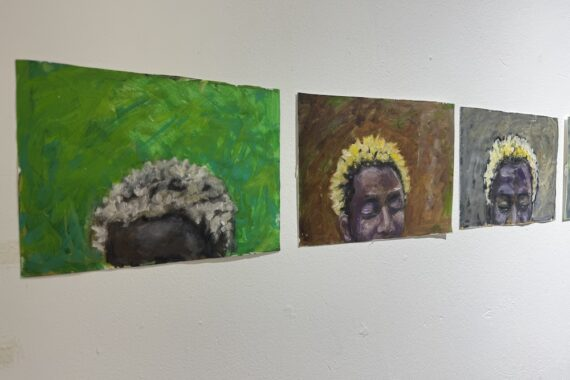
A braid could mark a life stage, an elaborate style could celebrate status, and adornments could signal identity long before introductions were exchanged.
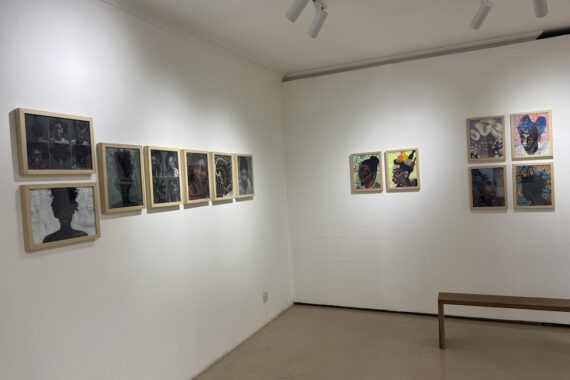
The exhibition invites visitors to see these traditions not as relics of the past but as an evolving language that continues to shape how people present themselves today.
Art That Mirrors Cultural Memory
Luttman’s work gains its distinctive character through an unusual process that blends painting, stencil printing and paper cutting.
The layered compositions echo the very histories they explore—built, erased, reshaped and remembered.
Rather than presenting African aesthetics from a distance, the exhibition reflects decades of travel and engagement across Ghana, Cameroon, Mali, Côte d’Ivoire and Nigeria, allowing personal encounters to inform artistic interpretation.
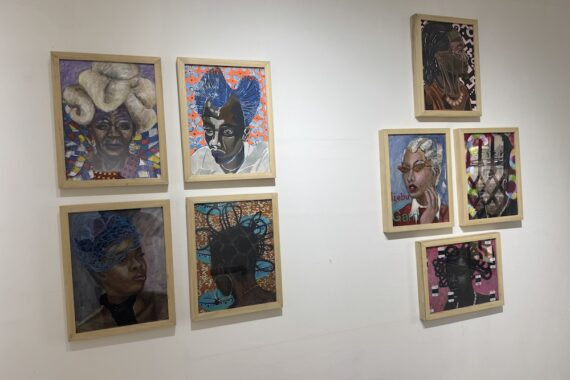
Installed in the gallery’s intimate Jill Silverman Room, the works encourage close looking.
Familiar hairstyles become symbols of resilience, creativity and self-definition, revealing how appearance has often served as a subtle form of negotiation in changing social and political landscapes.
As the exhibition runs until September 26, 2026, it offers something beyond an art viewing. It asks a simple but profound question: what histories are we carrying every time we style our hair?

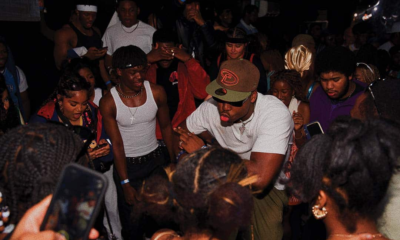






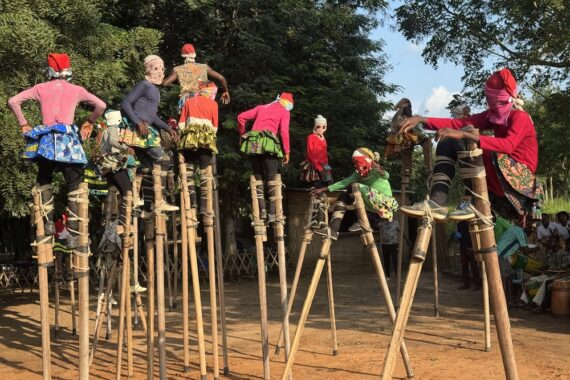
The 2026 edition of the Karp Kamina Artists and Researchers Residency began on a high note as the Zogbéadji Band, officially known as the Association Culturelle et Artistique Zogbéadji d’Atakpamé (ACAZOT), delivered a magnetic opening performance that transformed the gathering into a vibrant celebration of traditional music, dance, and cultural memory.
From the moment the drums began to speak, the atmosphere shifted. Drawing on years of discipline and experience, the performers unleashed a powerful blend of energetic dance and frenzied percussion that immediately captivated residents and participants.
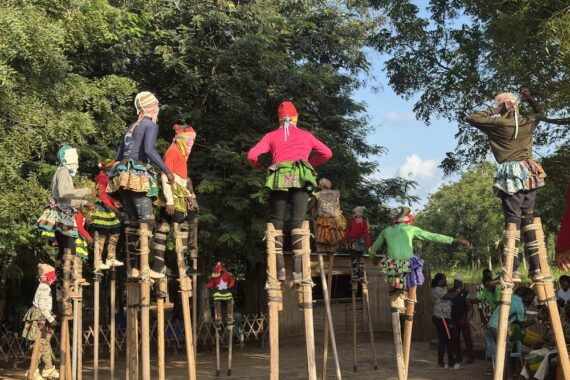
Their performance was not merely entertainment; it felt like an encounter with a living cultural tradition, expressed through rhythm, movement, costume, and ritual.
At the heart of the presentation was the spectacular Tchébé dance, one of the most visually stunning traditional dance forms in the repertoire.
Perched on towering wooden stilts that can reach as high as six meters, the dancers performed daring acrobatics with extraordinary confidence and balance.
Their movements were at once graceful and ferocious, creating moments of genuine suspense as they seemed to defy both gravity and physical limits.
The soundscape was equally commanding. Led by Tsèviska Le Baobab, the ensemble generated an intense, ground-shaking pulse that seemed to travel through the audience’s bodies.
Among the instruments was the sacred Aran-Lakou, or grand talking tom-tom, whose deep, resonant voice holds significance in the local Ifè language and tradition. In the hands of experienced percussionists, the drum became more than an instrument; it became a vehicle for communication, ceremony, and collective memory.
Visually, the performers reinforced the music’s power with vibrant traditional costumes and fierce body paint, creating a striking spectacle that complemented the relentless rhythm of the drums.
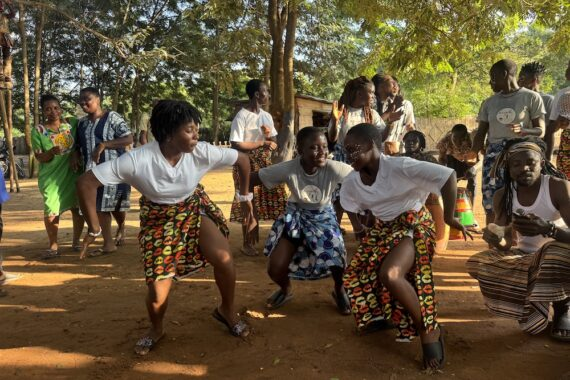
A gentler counterpoint came from young kora player Marie Jo Atikpolater, whose soft, flowing melodies brought a moment of calm amid the intensity. Her playing showcased the evening’s remarkable range, moving seamlessly from explosive percussion to the kora’s delicate resonance.
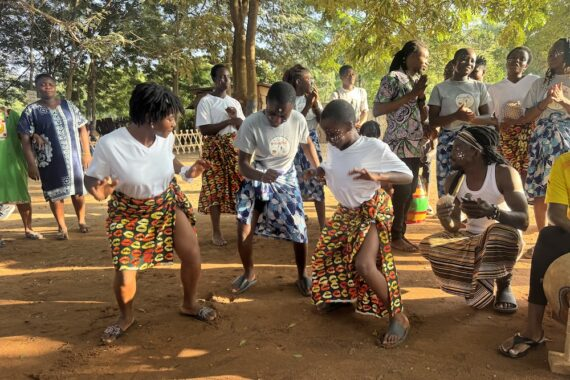
As an opening statement for the Karp Kamina residency, the Zogbeadji Band offered more than a performance. It presented tradition as dynamic, physical, and enduring—capable of thrilling contemporary audiences while carrying a people’s memory and identity into the future.
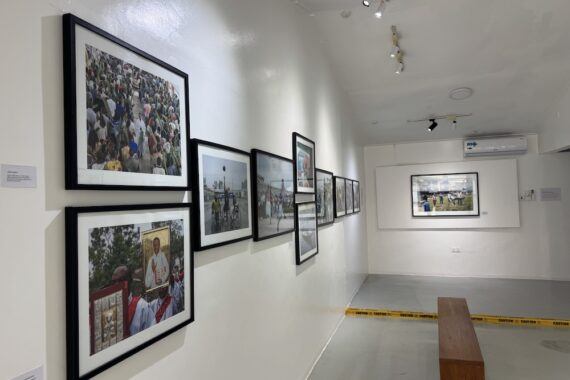
War photography often arrives from afar, bringing images of destruction, displacement, and death to audiences who may never encounter the conflict firsthand. Congo, Close to Home, however, offers a different kind of testimony.
Presented at Dikan Gallery in Accra, the exhibition brings together the work of seven young Congolese photographers whose cameras remain embedded in the communities they document.
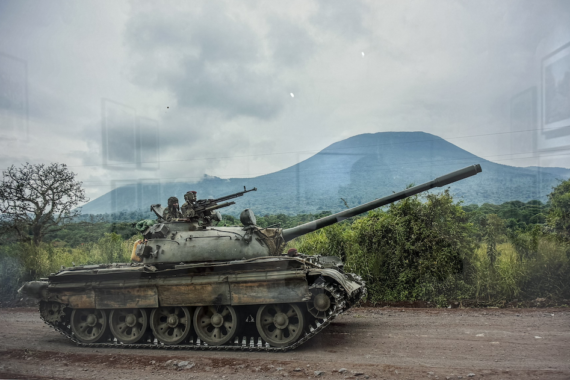
Aubin Mukoni, Arlette Bashizi, Gloire Chasinga, Guerchom Ndebo, Jospin Mwisha, Marie-Jeanne Munyerenkana, and Moses Sawasgwa photograph life in and around Goma, a city of more than a million people on the shores of Lake Kivu.
Living under the shadow of conflict and occupation since January 2025, they document a society confronting violence while refusing to surrender its ordinary rhythms.
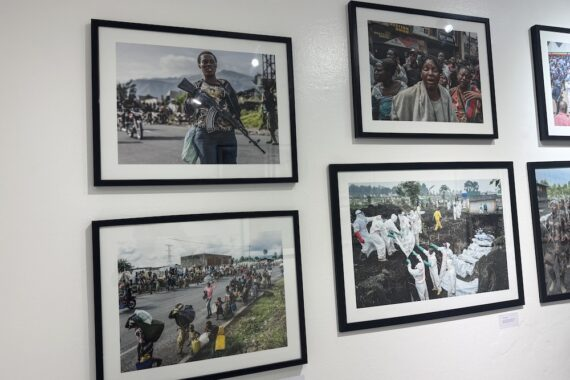
That tension gives the exhibition its emotional force. The photographs do not merely catalog war; they look at what unfolds alongside it. Markets continue.
People dance. Couples marry. Children play. Families mourn. Graves are dug. Daily life, in all its fragility and resilience, endures.
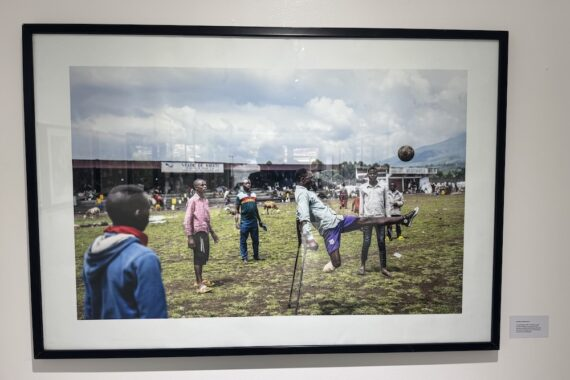
One particularly striking image shows a boy playing football on crutches at a camp for displaced people outside Goma.
It could easily be read solely through the language of tragedy, yet the football introduces another dimension: childhood endures even in circumstances that try to take it away.
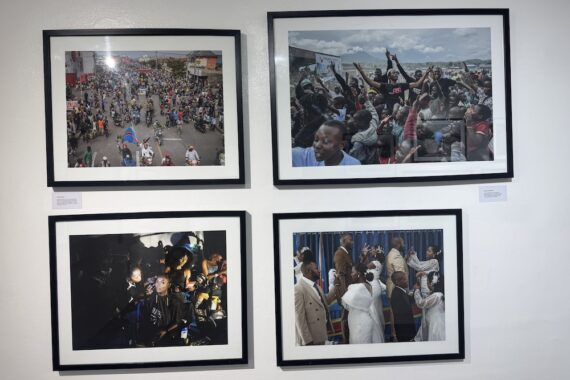
This is where the exhibition moves beyond conventional conflict photography. Its photographers are not visiting journalists passing through a crisis.
They are witnesses who live with the consequences of what they photograph. Their proximity creates an intimate visual record in which the line between photographer and subject blurs.
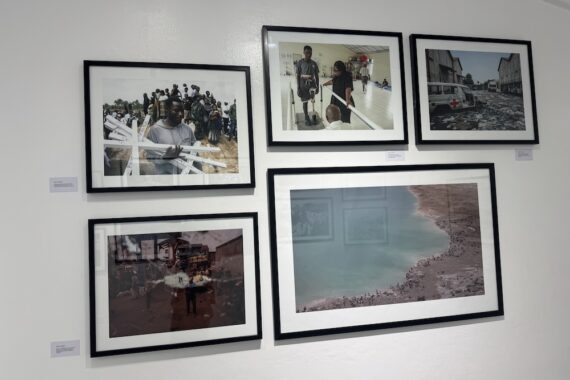
Curated by Paul Ninson, chief curator of Dikan Gallery, the exhibition also advances a deliberate geographic argument. Displaying these photographs in Accra reminds us that Congo is not some distant African crisis beyond the concerns of other Africans.
From Accra to Goma, the exhibition proposes a shared continental proximity—geographical, historical, and human.
There is also an important question of authorship. In an age when images of African conflict are frequently produced for international audiences, Congo, Close to Home places the camera in the hands of Congolese photographers.
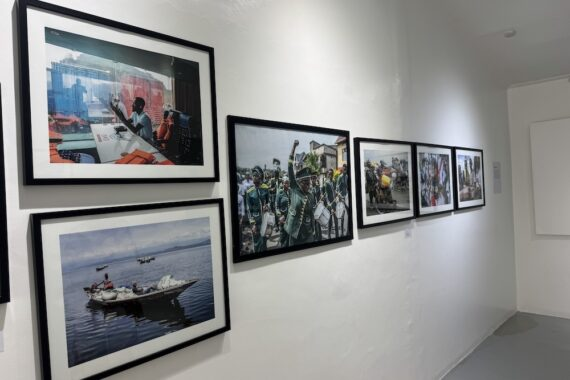
Their photographs therefore become personal documents as much as news images, preserving details that might otherwise disappear once international media attention shifts elsewhere.
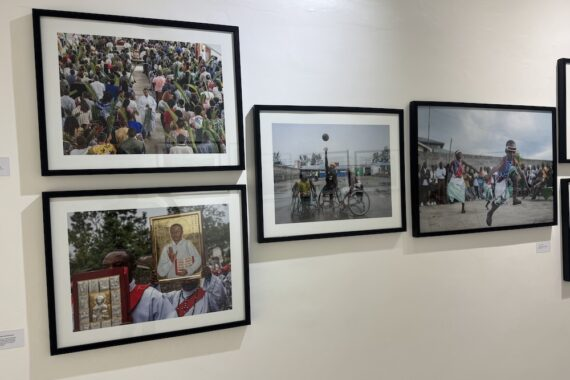
Ultimately, Congo, Close to Home is an exhibition about a city that is broken but not emptied of life. Its photographs insist that beyond the headlines and statistics are people who continue to love, work, celebrate, grieve, and dream.
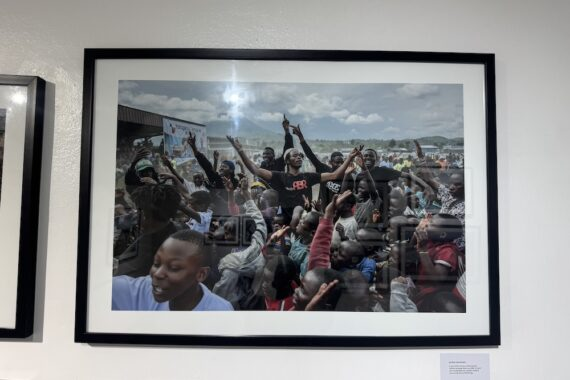
In that sense, the exhibition does more than document Congo’s war; it documents the stubborn persistence of life within it.
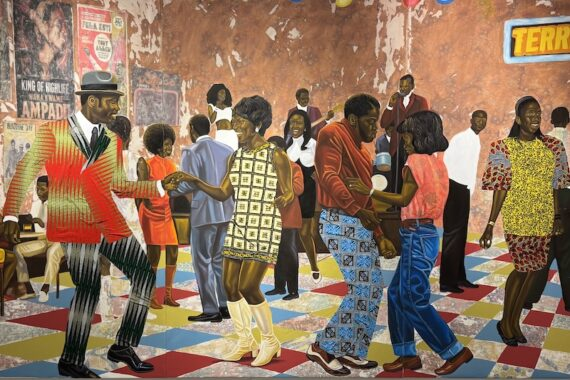
A wardrobe can hold more than clothes. A chair can remember a person. Even a photograph can carry traces of a life long after the moment it captured has disappeared.
That quiet idea sits at the heart of Ghanaian artist Cornelius Annor’s What Stains, What Stays, currently showing at Gallery 1957 in Accra.
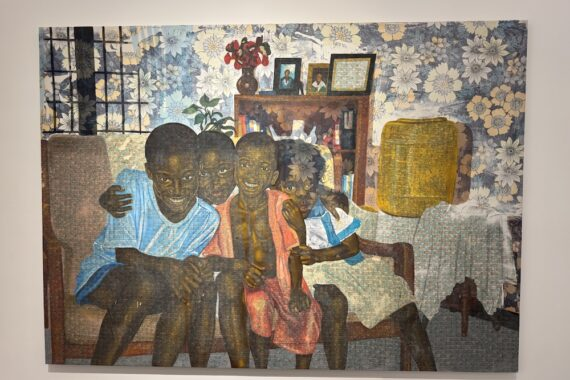
Curated by Ato Jackson, the exhibition explores memory through family photographs, domestic scenes and objects that often escape attention.
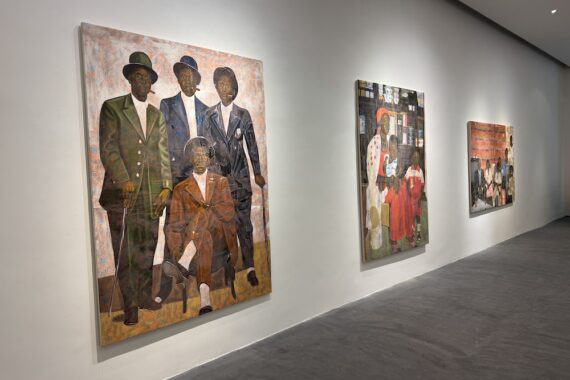
Annor transforms these fragments into paintings that feel less like records of the past than places where the past continues to live.
One of the exhibition’s most striking elements is his use of pigments drawn from African textiles. As the colours migrate onto canvas, they leave translucent marks and irregular stains. The technique becomes a metaphor for memory itself: never perfectly preserved, always shifting, overlapping and carrying traces of what came before.
Annor extends this thinking into furniture. Wardrobes, mirrors, drawers and chairs become witnesses to domestic life, holding associations that cannot always be photographed or documented. In Ghanaian homes, where objects are often closely tied to family histories and inheritance, this approach gives ordinary possessions a deeper cultural resonance.
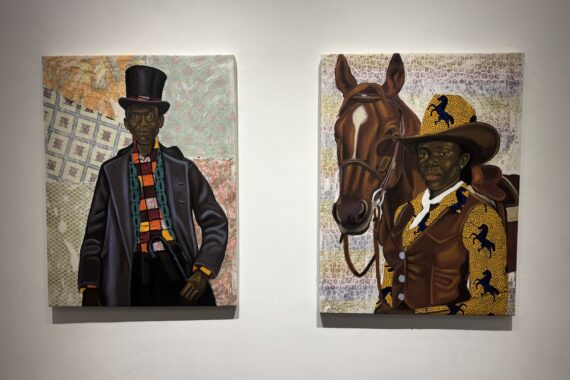
The exhibition becomes especially poignant through sculptures by Annor’s late father, introducing another layer of inheritance—one passed not only through artworks, but through proximity, observation and care.
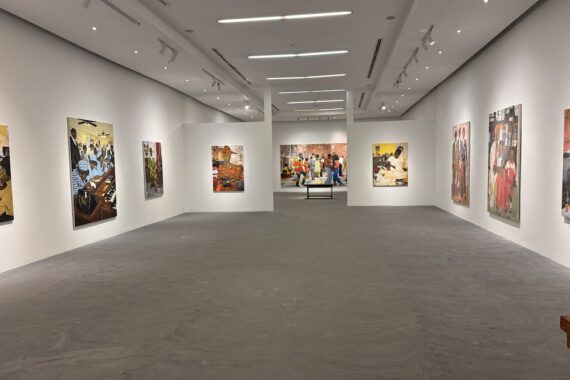
Annor once described his domestic objects as “frames or containers of a certain moment.” At Gallery 1957, those containers open again, asking what remains when memories begin to fade.
What Stains, What Stays runs until Saturday, November 7, 2026.


Making Every Square Metre Count: Interior Design Tips for Ghanaian Homeowners

Poor Posture Is More Than a Bad Habit: How Four Minutes a Day Can Help

Accra’s Pool Party Brings Music, Style and Detty December Energy
-

 Commentary2 days ago
Educated, Wealthy and Still Trapped: Why Women’s Advancement Falls Short of Empowerment
-
 Ghana News1 day ago
FBI’s Kash Patel Says Ghana Scam Network Targeted 89 U.S. Victims, Stole Nearly $10 Million
-

 Perspectives1 day ago
Russia-Africa Summit: The Search for Resources, Influence and War Resilience
-
 Ghana News1 day ago
Dr Issaka Yakubu Akparibo: Ghanaian Doctor Becomes First African Inducted into Global Aviation and Space Medicine Academy
-

 Health & Wellness2 days ago
When Weight Loss Stalls, Look Beyond the Scale
-

 Ghana News12 hours ago
Ghana’s Cyber Security Authority Challenges FBI’s Kash Patel’s Account Of Major Scam Operation in Accra
-
 Ghana News11 hours ago
How to Pay Chinese Suppliers Directly From Your Ghanaian Cedi Account
-

 Reels & Social Media Highlights1 day ago
Nana Akua Addo, Dumelo, and KFC: What Ghana Was Actually Talking About on Social Media