
Business
The $1 Billion Forecasting Error That Exposed Ghana’s Broken Cocoa Model

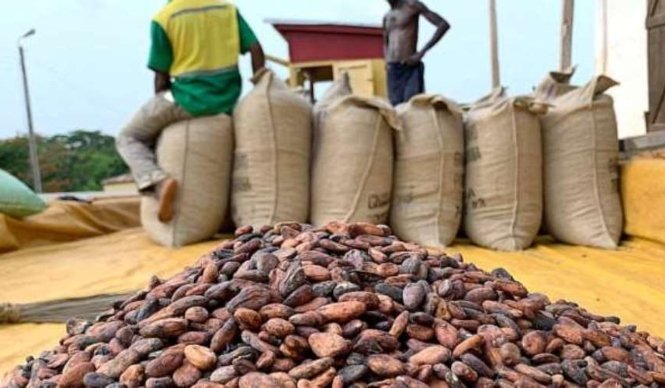
A 45% cocoa production miscalculation and disastrous forward contracts cost Ghana more than $1 billion, revealing deep systemic flaws in the sector that has long been the backbone of Ghana’s economy.
Ghana’s cocoa sector suffered a loss exceeding $1 billion after a catastrophic forecasting error left the industry exposed to a dramatic price collapse, according to a new analysis by policy analyst Bright Simons.
Bright Simons is a Ghanaian technologist, social innovator, entrepreneur, writer, social and political commentator. He is the vice-president, in charge of research at IMANI Centre for Policy and Education. He is also the founder and president of mPedigree.
The blunder—a 45% deviation between projected and actual production—has laid bare what Simons describes as a systemic failure in policymaking that has plagued the sector for decades.
For the 2023/24 season, COCOBOD, Ghana’s cocoa marketing board, projected output of 800,000 tonnes and committed 786,672 tonnes in forward contracts.
Actual production came in at just 432,145 tonnes.
The resulting 333,767 tonnes of rollover contracts were priced at $2,661 per tonne at a time when the spot market stood above $8,000. The difference embedded losses exceeding $1 billion—erasing in a single stroke any gains from prior turnaround efforts.
The crisis deepened when global cocoa prices crashed from their 2024 peaks to below $3,000 by February 2026. The buyer-financed model that had replaced COCOBOD’s collapsed syndicated loan evaporated as the price spread that made pre-financing attractive disappeared.
By February 2026, roughly 800,000 cocoa farming households remained unpaid, triggering emergency Cabinet sessions.
Simons, in his analysis titled Brown Gold, Green Envy, and Black Comedy, attributes the recurring crises to what he calls katanomics—a phenomenon where big political visions are repeatedly undermined by messy policy execution and a lack of elite policy expertise.
He pointed to structural issues including a cocoa-spraying program that research shows delivers only half the chemical rounds needed for effective pest management, and a Cocoa Roads Program that piled GHS21.7 billion in debt onto COCOBOD’s balance sheet—GHS21.5 billion of that accumulated in just three years.
Cabinet approved a reform package in February 2026 featuring automatic price adjustments, domestic cocoa bond financing, and a 50% local processing mandate. But Simons warned that automatic price decreases will be “politically toxic” in an election year, risking suspension of the very mechanism meant to bring stability.
“Between [missionary Josef Mohr’s sigh in 1906 and farmer Akosua Frimpong’s tears in 2026] stretches 120 years of a crop that has funded education, built cities, sustained governments, and impoverished the very families who grew it,” Simons wrote.
Read Bright Simon’s article in full here.







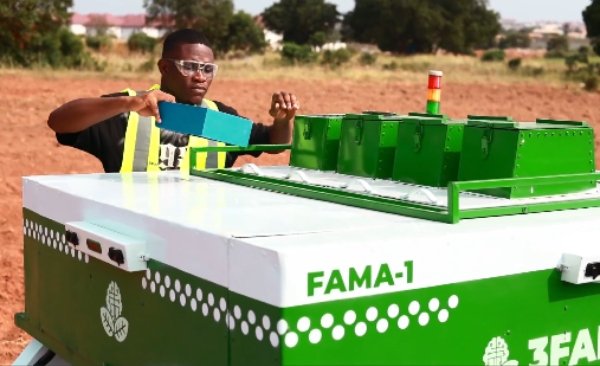
Two young engineers who began prototyping in a university dorm room have unveiled FAMA, Ghana’s first autonomous farming robot, and are preparing for commercial deployment in the 2026 planting season.
ACCRA, Ghana – In 2021, two engineering students at Kwame Nkrumah University of Science and Technology (KNUST) began tinkering with robotics in a dorm room, driven by a conviction that Africa’s agricultural future could be built with African hands.
Four years later, Ohene Osei-Agyeman and Koffi Cobbin have launched FAMA—Ghana’s first AI-powered autonomous farming robot designed for large-scale crop production.
The robot, developed by their agritech startup 3Farmate, represents a significant milestone in African agricultural technology: a homegrown, market-ready solution built by young Ghanaian engineers to address the continent’s pressing food production challenges.
“We built FAMA as a true testament to every young engineer in Africa that ‘IT IS POSSIBLE,’” the founders announced during the company’s official launch.
From Dorm Room Prototype to Market-Ready Machine
What began as a university project has undergone eight major iterations, with the team logging 60 field test runs across more than 100 cumulative acres and thousands of runtime hours in real farm conditions.
FAMA is an autonomous robot capable of planting seeds, applying fertilizer, weeding, and spraying across agricultural environments. Unlike many agricultural robots that rely on GPS, FAMA uses a vision-based artificial intelligence system to navigate, allowing it to operate reliably in areas where satellite signals are inconsistent or unavailable.
The robot is designed to handle the challenging conditions of African farmlands. It can operate across uneven terrain, loose and muddy soils, and variable weather patterns. Powered by batteries that are recharged using solar panels while in the field, FAMA requires minimal human intervention. A single operator can oversee multiple robots simultaneously, with each unit covering between 27 and 35 acres per day and achieving planting precision within 85 millimeters.
A Service Model for Ghana’s Farmers
3Farmate is targeting large-scale staple crop producers in Ghana, beginning with corn and soybeans. Rather than requiring farmers to purchase expensive equipment, the company operates a service model, charging per acre and removing the barrier of upfront capital investment.
The approach appears to be resonating. The company reports that over 70 farmers and several large-scale crop production companies are currently in discussions, with commercial deployments scheduled to begin in the 2026 planting season.
Investment Backing and Government Recognition
The startup has raised approximately $200,000 to date, securing investment from the 776 Foundation, founded by Reddit co-founder Alexis Ohanian, as well as a grant from KIC Ghana, a leading innovation hub.
The founders say their work falls within a broader vision of African industrialization, explicitly citing Ghana’s first president, Dr. Kwame Nkrumah, whose belief that “Africa must industrialize to achieve true independence” they say inspired their journey.
“We built FAMA right here in Ghana,” the company stated, emphasizing that the technology is designed specifically for Ghanaian soil while remaining adaptable to agricultural environments worldwide.
A Team of Young Engineers
The 3Farmate team consists of young Ghanaian engineers specializing in robotics, embedded systems, software, and mechanical design. Their trajectory—from a university dormitory to attracting international investment—has become a point of inspiration for a growing community of African tech entrepreneurs.
In their launch announcement, the founders called on the government of Ghana, stakeholders, international organizations, and agri-industry leaders to partner in transforming agriculture.
“This is not history in the making, because history has already been made,” the company declared.
With commercial deployments set to begin later this year, 3Farmate now faces the challenge of scaling from field tests to full operations. For the farmers who have signed on, the promise is simple: higher efficiency, reduced labor burdens, and access to precision agriculture without the cost of ownership.
For the young engineers who built FAMA, the mission extends beyond any single harvest.
“Join us as we drive innovation across global agriculture,” they said. “The future is here.”
Diaspora Investment Guide
Ghana’s “Raw Material” Export Era Ends: These 3 Value-Added Products Emerge as 2026 Goldmines

Accra, Ghana – Ghana’s traditional model of exporting raw agricultural commodities is rapidly giving way to a value-addition economy in 2026, driven by tightening export regulations, a surging global demand for processed foods and clean beauty products, and a combined market opportunity now valued at over $2.5 billion for three high-margin categories.
Export and agribusiness analysts say the smartest entry points for new and existing exporters right now are:
Processed Shea Butter & Derivatives
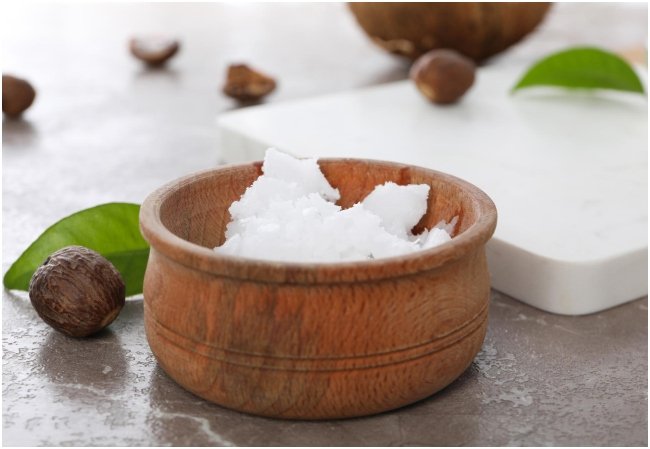
With the government actively moving toward a full ban on raw shea nut exports in 2026 (building on earlier restrictions), the window for unprocessed shea is closing fast.
The global “clean beauty” and natural cosmetics wave has created explosive demand for refined shea butter, shea-based creams, soaps and hair products.
Ghana, already the world’s leading shea producer, is ideally positioned to shift from raw-nut supplier to finished-goods exporter.
Dried Mango & Pineapple
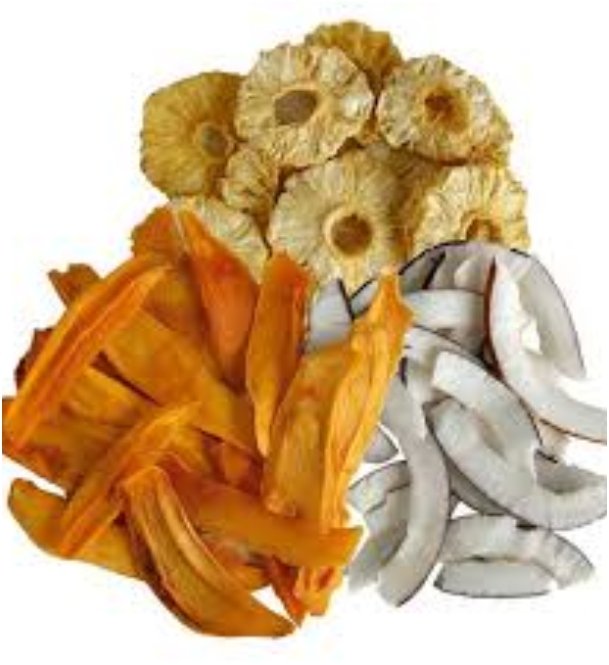
Shelf-stable, lightweight, and commanding premium prices in health-conscious European and U.S. markets, dried fruits avoid the spoilage losses that plague fresh produce.
Exporters can source from smallholder farmers, partner with local drying facilities, and ship finished retail packs — capturing far higher margins than raw fruit crates.
Roasted, Salted & Spiced Cashew Nuts
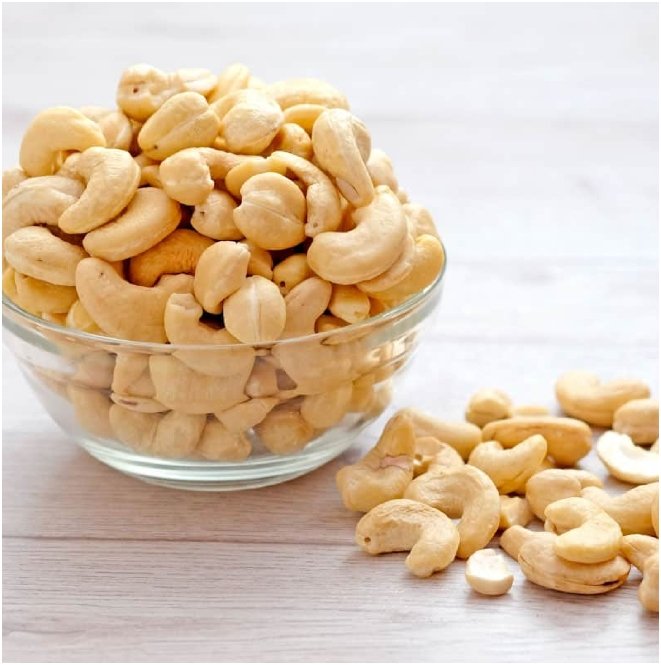
Instead of shipping raw cashews to Vietnam or India for processing and re-importing finished nuts at lower margins, Ghanaian players are increasingly roasting, seasoning and packaging cashews locally for direct retail placement in supermarkets worldwide.
The retail-ready format delivers significantly higher value per kilogram and strengthens domestic processing capacity.
The shift is not optional. Recent policy signals — including proposed raw-sheanut export restrictions and incentives for agro-processing under the current administration’s Resetting Ghana agenda — make value addition the only sustainable path for long-term profitability in these sectors.
“You don’t even need to own a farm,” noted Anna Spio, an Ghanaian export consultant, in a widely shared analysis. “Find a reliable local processor, build or co-brand a finished product, and take it global. The game in 2026 is value addition — not raw volume.”
The three categories are seen as low-to-medium entry barriers for serious exporters: dried fruits require drying kilns and packaging lines, processed shea needs refining and cosmetic-grade certification, and roasted cashews demand roasting equipment and food-safety compliance.
All benefit from existing raw-material supply chains, AfCFTA market access, and growing diaspora demand in North America and Europe.

Accra, Ghana — Sammy Gyamfi, Chief Executive Officer of the Ghana Gold Board (GoldBod), has strongly defended the Bank of Ghana’s decision to sell portions of the country’s gold reserves.
The outspoken CEO is arguing that the move to sell portions of the gold reserves has shielded the national treasury from a sharp price correction that has erased more than $800 per ounce in recent weeks.

In a detailed Facebook post published on March 19, 2026, Gyamfi highlighted that gold prices have fallen from a record peak of approximately $5,500 per ounce to around $4,680 per ounce in a matter of weeks. He described the decline as evidence of the metal’s volatility and argued that Ghana — a middle-income economy with gross international reserves covering only about 5.7 months of imports — cannot afford to over-concentrate its reserve portfolio in a single asset class.
“Gold is a proven safe-haven asset. However, it is subject to significant price volatilities that pose considerable risk to reserve preservation,” Gyamfi wrote. “This is why a middle-income country like Ghana… ought not to over-concentrate its reserves in gold holdings but rather diversify same across different asset classes.”
According to the GoldBod CEO, the Bank of Ghana converted approximately 22 tonnes of physical gold into U.S. dollars, added the proceeds to the country’s foreign-exchange reserves, and invested the funds to generate returns.
He emphasized that the transaction did not result in any loss of national assets and has “significantly minimized the impact of the recent collapse in gold prices on Ghana’s reserve position.”
Gyamfi praised Bank of Ghana Governor Dr. Johnson Asiama and the central bank team for what he called a “SAFE and sensible decision” guided by the core principles of reserve management: safety, liquidity, and return.
The public defence comes amid growing domestic debate over the timing and scale of gold sales at a moment when international bullion prices have retreated sharply from historic highs. Critics have questioned whether the sales were premature, while supporters — including Gyamfi — argue they reflect prudent risk management in a volatile commodity market.
Gold remains one of Ghana’s principal foreign-exchange earners and a key component of the central bank’s reserve diversification strategy.
The Bank of Ghana has not yet issued an official comment on the recent price movement or the specific volume and timing of sales referenced by Gyamfi.


Global Arts Community Condemns Police Assault on Ghanaian Artist Ibrahim Mahama

Renowned Civil Rights Attorney Ben Crump to Join Global Leaders at UN Panel As Ghana Presents Motion for Reparatory Justice for Slave Trade

Rev Al Sharpton Backs Ghana’s UN Slave Trade Initiative, Attorney-General Dragged to Court Over Kotoka Airport Renaming, and Other Big Stories in Ghana Today (March 24)
-

 Business22 hours ago
KNUST Graduates Build Ghana’s First AI-Powered Farming Robot
-

 Ghana News2 days ago
This is How Airline Passengers Can Access Ghana’s Newly Launched Dedicated Complaints Portal
-

 Ghana News2 days ago
Brazil Joins Ghana’s UN Campaign to Declare Transatlantic Slave Trade the Gravest Crime Against Humanity
-

 Diaspora Investment Guide2 days ago
Ghana’s “Raw Material” Export Era Ends: These 3 Value-Added Products Emerge as 2026 Goldmines
-

 Ghana News1 day ago
Ghana Confident UN Will Back Slave Trade Resolution as Mahama Presents Draft March 25
-
 Ghana News2 hours ago
Renowned Civil Rights Attorney Ben Crump to Join Global Leaders at UN Panel As Ghana Presents Motion for Reparatory Justice for Slave Trade
-

 Ghana News2 days ago
President Mahama Responds to Calls to Seek 3rd Term, Three-Year-Old Killed in Bee Attack, and Other Big Stories in Ghana Right Now (March 22)
-

 Opinion1 day ago
Bright Simons Sounds Alarm About Alleged Secret Plan to Privatize GoldBod