
Homes & Real Estate
Inside Ghana’s Estate Boom: Why Planned Communities Are Attracting Homebuyers

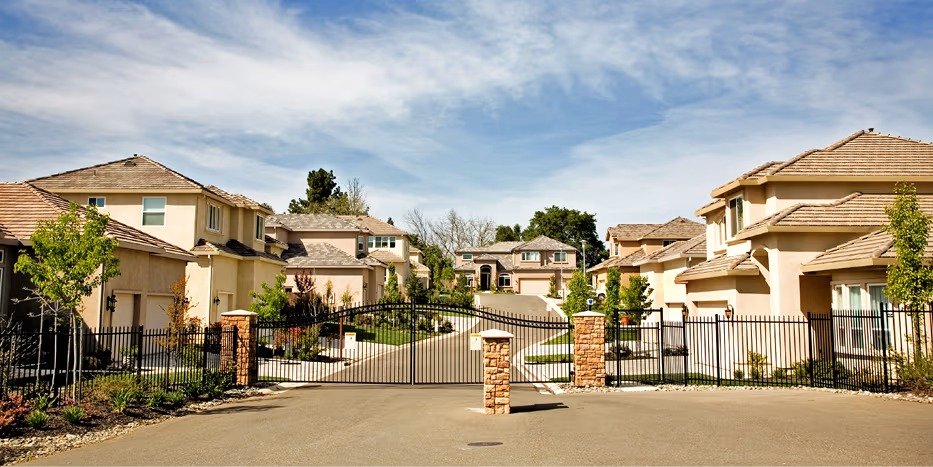
In Ghana’s fast-growing cities, the dream of owning a home can often feel just out of reach. Rising land prices, complex registration processes, and construction costs have made building a house from scratch a daunting journey for many families.
Yet across the outskirts of Accra, Kumasi, and other major urban centres, a new housing trend is steadily reshaping how people achieve that dream: estate living.
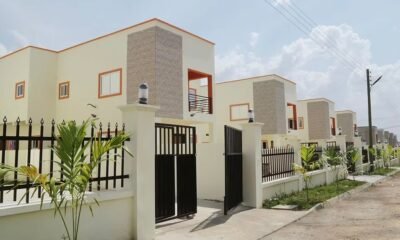
Estate housing has become one of the most visible responses to Ghana’s long-standing housing deficit. With demand for homes far exceeding supply, developers have stepped in to build planned communities—clusters of nearly identical houses developed by a single real estate company and sold to buyers ready to move in.
In simple terms, an estate house is part of a residential community designed and built by a developer rather than by individual homeowners. These homes may be detached or semi-detached and typically follow a uniform architectural style. While buyers sometimes have limited flexibility to make changes, the overall layout and appearance of the community are usually guided by the developer’s design standards.
Across Ghana, especially along the expanding edges of cities, new estates are appearing at a rapid pace. For many buyers, the appeal is clear: a brand-new home in a planned community, often with infrastructure already in place. But like most housing choices, estate living comes with both advantages and trade-offs.
One of the biggest attractions is security. Many estates are built with perimeter fencing, gated entrances, security personnel, and sometimes electronic access systems. For homeowners concerned about safety—an increasingly important consideration in urban areas—this controlled environment offers reassurance and peace of mind.
Estate communities also promise a quieter alternative to city life. Located mostly on the urban fringes, these neighbourhoods offer a slower pace and less congestion than central city districts. After a long day navigating Accra’s traffic, residents often appreciate returning to streets that are calmer and more orderly.
Families are another group drawn to estate living. Many developments are designed with communal spaces such as playgrounds, parks, and walking paths. These shared spaces encourage interaction among neighbours and provide safe areas where children can play.
Affordability is another key factor driving interest. While buying a house in an estate may seem expensive at first glance, it can actually be more predictable than building independently. Purchasing land, securing permits, hiring architects, managing construction, and dealing with legal paperwork can quickly add up. Estate homes bundle many of these costs into one purchase, reducing both time and uncertainty.
Over time, these homes may also gain value. Planned communities often attract supporting amenities—schools, shops, clinics, and financial institutions—which can increase property demand and strengthen resale value.
Still, estate living isn’t without its challenges. Because homes are built close together, neighbours inevitably become part of daily life, and not every community will suit every buyer. Some estates attract mostly young families, while others may be quieter areas with older residents.
Strict building rules are another factor to consider. Developers often enforce guidelines to maintain a consistent appearance across the estate. Homeowners who prefer extensive renovations or architectural freedom may find these restrictions limiting.
Location is perhaps the most common concern. Many estates are built far from city centres where land is cheaper. For residents working in Accra or other busy urban districts, daily commuting can mean long hours in traffic.
Despite these challenges, estate housing continues to play a growing role in Ghana’s urban future. For many families, it offers a practical pathway to home ownership in a housing market where building alone is becoming increasingly complex.
As cities expand and demand for homes continues to rise, these carefully planned communities may well shape the next chapter of how Ghanaians live—and where they call home.

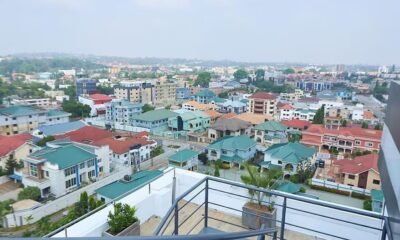








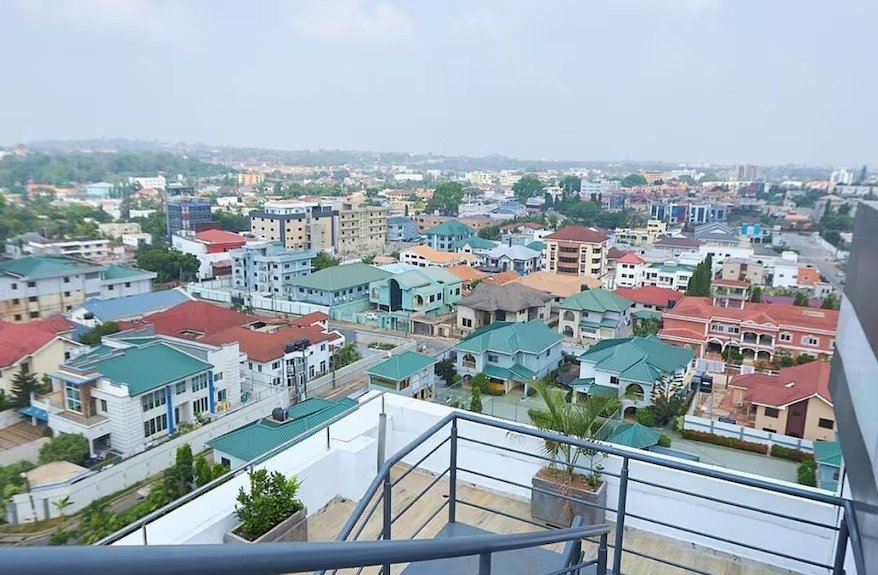
Mention East Legon in conversation, and the reaction is often immediate. For many people in Accra, the neighborhood represents a certain arrival point in life—a symbol of success wrapped in manicured streets, gated houses, and modern apartment blocks.
But beyond the image lies a question that regularly circulates among property buyers and investors: are East Legon’s property prices supported by genuine market value, or are they inflated by reputation?
The answer, according to many observers in Ghana’s real estate sector, sits somewhere in the middle.
A Reputation That Moves the Market
East Legon has gradually built a reputation as one of the capital’s most desirable residential areas. Located close to universities, major roads, shopping centers, and the airport, the suburb offers both convenience and status. Over the years, diplomats, business owners, professionals, and members of the Ghanaian diaspora have gravitated toward the area.
That concentration of affluent residents has helped shape the neighborhood’s identity. For some buyers, simply owning property in East Legon carries social significance. In everyday conversations across the city, living there can signal that someone has “made it.”
That perception has real consequences for the housing market.
Why Properties Sell Quickly
Real estate agents often point to a simple fact: homes in East Legon tend to sell faster than in many other parts of Accra. Investors who purchase houses or apartments in the area frequently find strong demand when they decide to sell.
Part of this comes down to location. East Legon sits within easy reach of key commercial districts, educational institutions, and entertainment spots. The area also offers relatively well-developed infrastructure compared with some newer suburbs.
Another factor is the steady influx of buyers from abroad. Members of the Ghanaian diaspora returning home often look for neighborhoods with established reputations, reliable amenities, and international-style housing. East Legon fits that description.
Hype Meets Real Value
Still, the prestige attached to the neighborhood undeniably fuels price escalation. When demand is driven partly by perception, the market can become competitive quickly.
Developers have responded by building luxury apartments, townhouses, and gated communities designed to match the area’s reputation. Prices have followed suit, sometimes rising beyond what similar properties might command elsewhere in the city.
Yet the market continues to move.
What East Legon Reveals About Accra’s Property Market
The story of East Legon reflects a broader trend in Ghana’s urban development: location branding matters. A neighborhood’s image can shape demand just as strongly as its physical features.
For investors and homebuyers, the lesson is clear. In Accra’s evolving property market, value is rarely determined by bricks and land alone. Reputation, lifestyle, and the promise of quick resale can be just as powerful in setting the price of a home.
In many global cities, living close to an airport is rarely considered desirable. The constant movement, noise, and congestion often push property values down rather than up. Yet in Accra, two neighborhoods have turned that logic on its head.
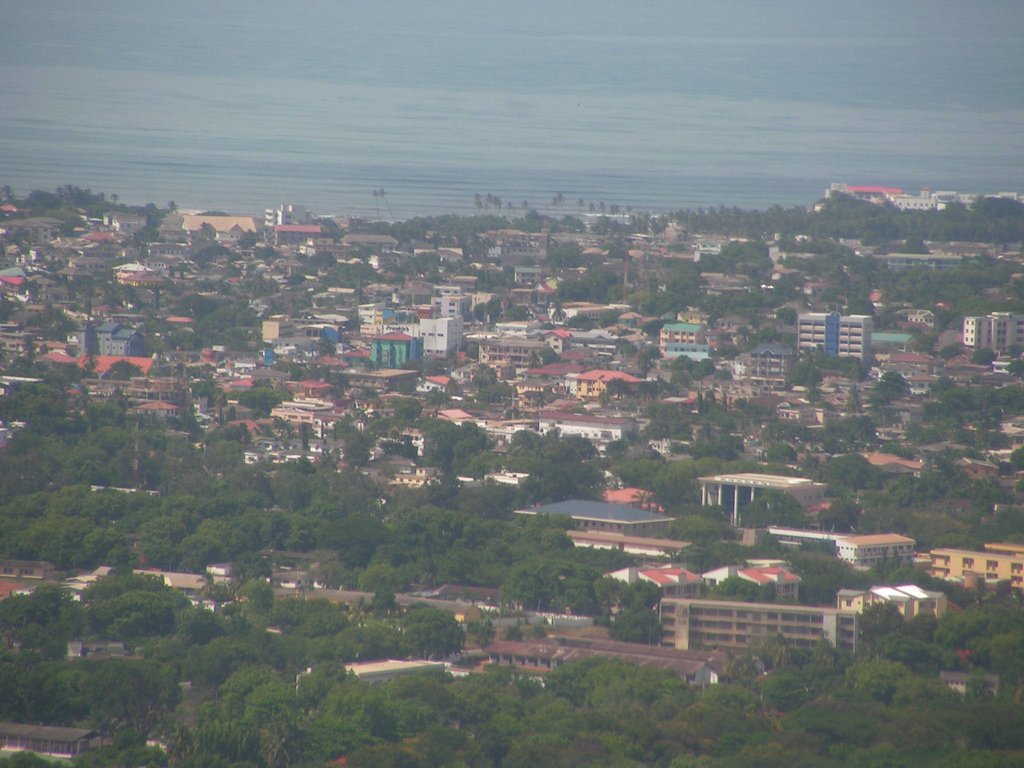
Cantonments and Labone remain among the most prestigious and expensive residential areas in the city, despite their proximity to Kotoka International Airport. Their status, however, is no accident. It is the result of decades of history, government planning and strategic location.
A Colonial Blueprint for Prestige
The story begins during the colonial era, when urban planning in Accra followed a clear hierarchy. Areas close to key infrastructure were reserved for colonial administrators and senior officials.
Cantonments was originally developed as a residential enclave for colonial military officers and high-ranking government staff. The neighbourhood’s name itself reflects this past, referring to military quarters.
Being located near the airport carried strategic importance. In uncertain times, proximity meant quick access for travel or evacuation. Over time, this practical advantage helped elevate the area’s importance.
When Ghana gained independence in 1957 under Kwame Nkrumah, the pattern largely remained intact. The neighbourhood continued to house senior government officials, diplomats and expatriates, reinforcing its reputation as one of the capital’s most secure and exclusive districts.
Diplomacy and Security
Today, Cantonments still carries a distinctly diplomatic character. Many embassies, ambassadorial residences and international offices are based there, contributing to the area’s calm and carefully maintained atmosphere.
Security and infrastructure have played a major role in maintaining the neighbourhood’s appeal. Wide streets, controlled development and relatively low congestion make it stand out from the denser parts of Accra.
Just next door, Labone developed as a quieter but equally attractive residential community. Over the years, it has evolved into a blend of upscale homes, boutique apartments, restaurants and creative spaces.
Together, the two areas have created a corridor of high-end living that continues to attract both local elites and international investors.
Prime Location, Lasting Value
Another factor behind their enduring popularity is connectivity. Residents can reach Accra’s central business districts, diplomatic missions, and the airport within minutes.
For business travelers, expatriates, and professionals working with multinational companies, this convenience is invaluable.
Property values in these neighbourhoods reflect their status. Luxury apartments, gated villas, and modern developments have steadily replaced older homes, pushing prices upward while maintaining the districts’ prestige.
Yet despite new construction, strict planning guidelines help preserve the leafy character that distinguishes them from the rest of the city.
A Symbol of Accra’s Real Estate Evolution
In many ways, Cantonments and Labone represent the evolution of Accra itself. What began as colonial residential planning has transformed into some of the city’s most sought-after property markets.
For investors and homebuyers alike, these neighbourhoods remain a reminder that in real estate, history and location often shape value for generations.
The moment the landlord returned, the mood in the building changed.
At first, it was subtle. A longer stare than usual. A tone in conversation that carried more edge than courtesy. Then came the attempts to intimidate—quiet pressure meant to remind a tenant who held the power.
But the response was simple: silence.
“I don’t respond well to intimidation,” the tenant recalls. “And honestly, nobody should.”
That brief encounter highlights a reality many renters quietly face around the world, including in Ghana: the delicate power balance between landlord and tenant. Renting a home should mean security and privacy. Yet for some tenants, it becomes a test of boundaries.
In this case, the warning signs appeared quickly. The apartment had seemed fine at first. But once the landlord returned to the property, his behavior began to raise concerns.
Conversations carried an undercurrent of control. There were moments that felt less like routine property management and more like attempts to assert dominance.
For the tenant, the realization came suddenly: this was no longer a comfortable place to live.
“I wouldn’t want to stay in an apartment where someone might try to harm me,” the tenant explains. The decision to leave came soon after.
Across Ghana’s growing rental market, stories like this surface more often than people expect. As cities expand and housing demand rises, many tenants find themselves navigating agreements that rely heavily on trust. While most landlords operate responsibly, the few who abuse their authority can create environments where tenants feel vulnerable.
Housing advocates say intimidation can take many forms. It may appear as repeated unannounced visits, aggressive communication, or subtle threats about deposits and eviction. These actions rarely make headlines, yet they shape the daily experiences of renters.
The larger issue isn’t just one difficult landlord. It’s the question of rights.
In Ghana, tenant protections exist, but awareness remains uneven. Many renters—especially young professionals or newcomers to a city—enter agreements without fully understanding the boundaries landlords are legally required to respect.
The result is that some tenants endure uncomfortable situations longer than they should.
Walking away from a lease is rarely easy. It means packing up, searching for another home, and often losing money in the process. Yet for many renters, personal safety outweighs convenience.
“No landlord should ever use their position to dominate a tenant,” the former resident says. “A home should never feel like a place where you’re being watched or threatened.”
It’s a reminder that renting a space is more than a transaction. At its best, it provides stability and peace of mind. When that balance disappears, the only real option may be the hardest one—leaving.
And sometimes, leaving is the strongest response to intimidation.


Art and Emotion Collide in Accra as Ismael Tamek Unveils “Kingdom of Pride”

Walking Through History: The Powerful Experience of Visiting Cape Coast Castle

Global Education Comes to Accra: Inside the QS Undergraduate & Master’s Fair 2026
-

 Ghana News8 hours ago
President Mahama Arrives in France for High-Level Talks, Man Burns Wife’s House Over Alleged Cheating and Other Big Stories in Ghana Today
-

 Health & Wellness2 hours ago
New to Fitness? Experts Warn These Common Beginner Mistakes Can Slow Your Progress
-

 Festivals & Events2 hours ago
Where Big Ideas Begin: Inside the Entrepreneur Summit and E-commerce Launch in Accra
-

 Ghana News9 hours ago
Newspaper Headlines Today: Tuesday, April 7, 2026
-
 Africa Watch7 hours ago
Botswana Acquires Stake in Angola’s Lobito Refinery in Major Intra-African Energy Deal
-

 Fashion & Style3 hours ago
The Model Turning Vitiligo Into a Powerful Fashion Statement
-

 Health & Wellness2 hours ago
Simple Lifestyle Changes That Can Help You Lose Weight Without Extreme Diets
-

 Reels & Social Media Highlights1 hour ago
Dark Streets, Empty Wallets & A Data Heist: Ghana’s Internet is Boiling