
Ghana News
Ghana’s Former Finance Minister Ofori-Atta Declared ‘Illegal Alien’ in the U.S., Faces Possible Deportation

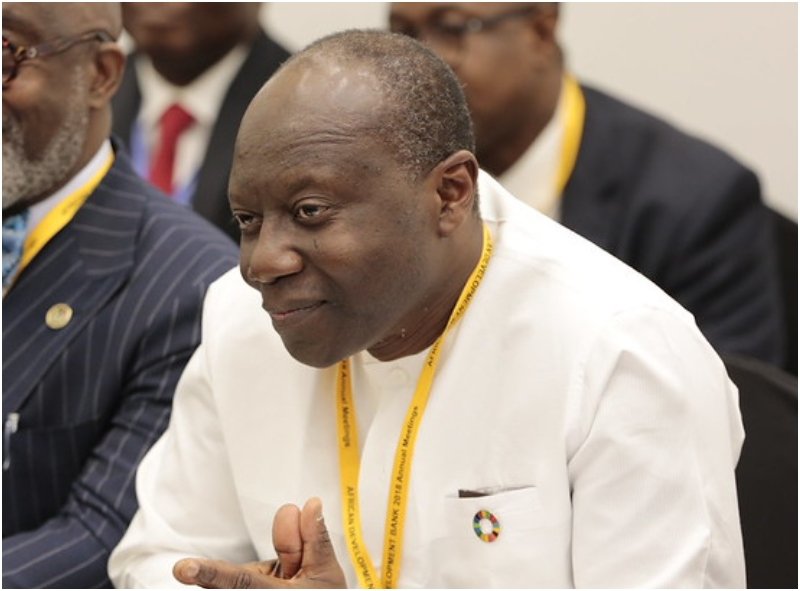
The United States Immigration and Customs Enforcement (ICE) has officially confirmed that former Ghanaian Finance Minister Ken Ofori-Atta is classified as an “illegal alien” in the United States, having overstayed his visa following its revocation in mid-2025.
In a statement released on January 15, 2026, ICE detailed that Ofori-Atta, who remains in custody at the Caroline Detention Facility in Virginia, entered the U.S. on a temporary visa that expired, and he failed to depart or regularize his status.
The agency described him as an “illegal alien” under U.S. immigration law, a designation that significantly complicates his legal position amid Ghana’s ongoing extradition request, reports say.
Ofori-Atta, who served as Finance Minister from 2017 to 2024 under former President Nana Akufo-Addo, faces 78 criminal charges in Ghana, including allegations of corruption, financial misconduct, and procurement irregularities tied to the Strategic Mobilisation Limited (SML) contract and payments for the National Cathedral project.
Ghana formally submitted its extradition request to the U.S. Department of Justice on December 10, 2025.
The ICE confirmation adds new pressure to the case, which has already sparked intense diplomatic engagement between Accra and Washington. Ghana’s Foreign Affairs Minister Samuel Okudzeto Ablakwa recently announced that U.S. authorities assured Ghana they would not block extradition proceedings for Ofori-Atta or fugitive former MASLOC CEO Sedina Tamakloe Attionu, signaling potential cooperation despite the immigration classification.
Legal experts note that the “illegal alien” status could accelerate removal proceedings, though Ofori-Atta’s defense team has filed a petition for adjustment of status and is challenging the detention.
A U.S. immigration court hearing is scheduled for January 20, 2026, where his case will be further reviewed.
The development continues to draw widespread attention in Ghana, fueling debates on accountability for public officials, the strength of bilateral relations, and the intersection of immigration enforcement with international justice.
Ofori-Atta’s case remains a major test of Ghana–U.S. diplomatic and law-enforcement ties under the Mahama administration’s anti-corruption and accountability drive.










Accra, Ghana – March 4, 2026 – Ghana’s former Vice President Dr. Mahamudu Bawumia and his wife Samira Bawumia have been safely evacuated from Qatar as the US–Israel–Iran conflict enters its most dangerous phase, diplomatic sources confirmed.
According to reporting by Joy News, relocation was coordinated by Ghanaian embassies in the region under direct instructions from Foreign Affairs Minister Samuel Okudzeto Ablakwa.
Officials described the operation as swift, discreet, and well-coordinated with host authorities, though specific details—including the destination country—remain undisclosed for security reasons.
The evacuation comes after Iranian missile and drone strikes targeted US military bases and civilian infrastructure across the Gulf, including Qatar, in retaliation for US–Israeli airstrikes that killed Iran’s Supreme Leader Ayatollah Ali Khamenei. The conflict has triggered widespread airspace closures, mass flight cancellations, and heightened risks for civilians and expatriates.
Ghana’s Foreign Ministry has activated emergency preparedness plans across the Middle East, with partial evacuation of non-essential embassy staff from Tehran already underway and full contingency measures in place for nationals in Iran, the UAE, Qatar, Bahrain, Kuwait, and other affected countries.
The ministry continues to urge Ghanaians in the region to shelter in place, register with missions, avoid unnecessary movement, and monitor official channels.
The crisis threatens Ghana’s large diaspora in the Gulf—many of whom work in construction, hospitality, domestic services, and other sectors—whose remittances remain a vital source of foreign exchange.
It also risks driving up global oil and LNG prices, potentially reversing Ghana’s recent single-digit inflation gains and increasing fuel, transport, and living costs at home.
Ghana News
Ghanaian Authorities Seize Over 1,000 Banned Chanfang Machines Used in Illegal Mining at the Port
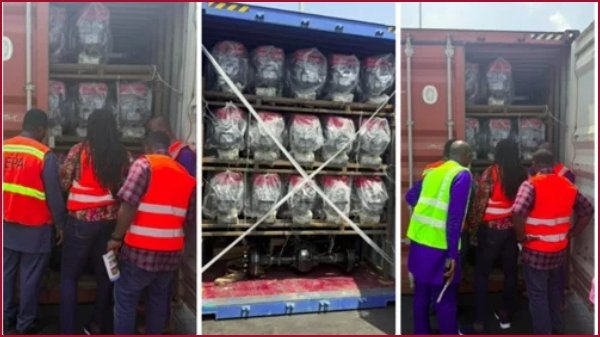
Accra, Ghana – March 3, 2026 – The Environmental Protection Agency (EPA) has intercepted 1,070 prohibited Chanfang mining machines at the Tema Port in one of the largest single seizures since the government intensified its fight against illegal small-scale mining, commonly known as galamsey.
The operation, executed on March 3, 2026, was the result of months of intelligence-led surveillance and multi-agency collaboration involving customs, security services, and regulatory bodies.
Officials say the machines were concealed in imported containers and destined for a sophisticated syndicate suspected of fueling widespread river and forest destruction across Ghana.
Chanfang machines—small, portable alluvial gold mining equipment—were banned nationwide in October 2025 due to their severe environmental impact. They cause extensive river pollution, heavy siltation, destruction of aquatic ecosystems, and degradation of fertile farmland.
The EPA cited the Environmental Protection Act, 2025 (Act 1124) and the Environmental Protection (Environmental Assessment) Regulations, 2025 (L.I. 2504) as the legal basis for the prohibition.
“Although the manufacture and sale of these machines may have created livelihoods for some individuals, their use in riverine mining has resulted in extensive environmental damage, including polluted water bodies, silted rivers, and the loss of aquatic biodiversity,” an EPA statement read.
The seized equipment is now under secure custody pending further investigations. Authorities have vowed to prosecute all individuals and companies linked to the shipment, signaling a broader strategy to target not only on-the-ground operators but also importers, financiers, and logistical facilitators sustaining the illegal mining ecosystem.
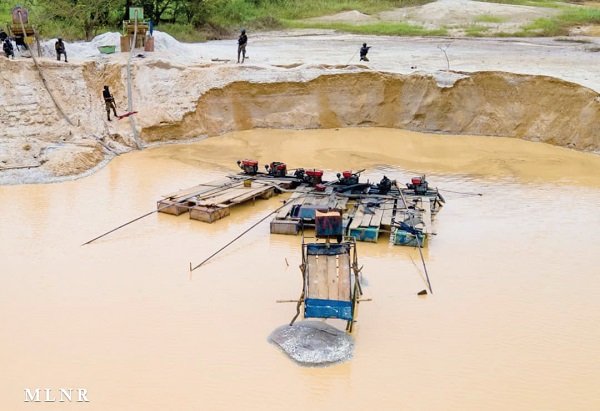
The interception aligns with the EPA’s ongoing efforts to restore degraded water bodies. The agency recently deployed ionic nano-copper technology to treat polluted sections of the Birim River in the Eastern Region, at an estimated cost of $200,000 per kilometre.
Illegal mining remains one of Ghana’s most pressing environmental and public health challenges, contaminating major rivers that supply drinking water to millions. The EPA reiterated its zero-tolerance stance and commitment to dismantling supply chains that enable the entry of banned equipment.
Ghana News
Ghana Intensifies Middle East Evacuation Efforts as Gulf States Reel from Iranian Retaliatory Strikes

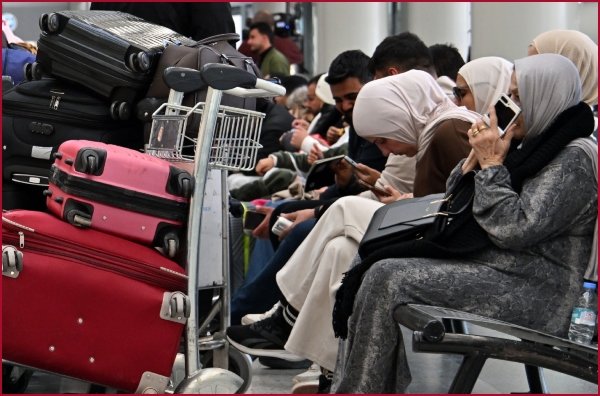
Accra, Ghana – March 3, 2026 – Ghana’s Foreign Affairs Minister Samuel Okudzeto Ablakwa has disclosed that the government is actively preparing for potential large-scale evacuation of citizens from Iran and several Gulf countries following Iran’s missile and drone attacks on US military bases and civilian infrastructure across the region.
In a Facebook post late Tuesday evening, Minister Ablakwa revealed he convened a virtual emergency meeting with Ghana’s Heads of Mission in Israel, Saudi Arabia, Qatar, Kuwait, the UAE, Iran, and Turkey to assess the fast-moving crisis and coordinate consular support. He reported that no Ghanaian has been killed or injured to date.
Key actions underway include:
– Creation of a comprehensive database of all Ghanaians in the affected countries, including short-term visitors and transit passengers
– Direct outreach to identify individuals wishing to be evacuated for urgent government consideration
– Active assistance for Ghanaians seeking to exit via strategic border crossings
“The safety and welfare of all Ghanaians remains our utmost priority,” the minister stated, closing with “For God and Country.”
The diplomatic push comes as Gulf Arab states—long positioned as neutral commercial and tourism hubs—find themselves directly targeted by Iran’s retaliation against US-Israeli airstrikes that killed Supreme Leader Ayatollah Ali Khamenei.
Strikes have hit energy facilities, airports, and residential areas in the UAE, Qatar, Bahrain, Kuwait, and Saudi Arabia, shattering the region’s image of stability and prompting widespread airspace closures, flight suspensions, and economic disruption.
The conflict threatens Ghana’s large diaspora in the Gulf (construction workers, domestic staff, students, and businesspeople) whose remittances are vital to the economy.
It also risks driving up global oil and LNG prices, potentially reversing Ghana’s recent single-digit inflation gains and increasing fuel, transport, and living costs.
Ghana’s missions continue to advise nationals to shelter in place, avoid unnecessary movement, register immediately, and monitor official channels. Emergency contacts remain: +233 240 913 284 / +233 240 793 072.


I Watched My Friend Lose His Land Because He Trusted the Wrong People

What 1,000 Skips a Day Does to a Man Who Thought He Was Fit

The Week We Forgot About Cocoa and Talked About a Russian Instead
-

 News2 days ago
Ghana Gears Up for Vibrant 69th Independence Day Celebrations: Parades, Plays, Poetry, and Heritage in Focus
-

 Ghana News2 days ago
Newspaper Headlines Today: Tuesday, March 3, 2026
-

 Tourism2 days ago
Emirates Resumes Limited Flights from Dubai as Middle East Airspace Slowly Reopens Amid Ongoing Conflict
-
 Ghana News2 days ago
Ayawaso East By-Election Results Trickle in, ECG Audits Fast-Reading Meters, and Other Trending Topics in Ghana (March 3, 2026)
-
 Commentary2 days ago
At a glance: US‑Israel attack on Iran
-

 Ghana News2 days ago
Ghana’s Top Muslim Leader Condemns Khamenei Assassination, Calls for New World Order Based on ‘Right Over Might’
-
 Business2 days ago
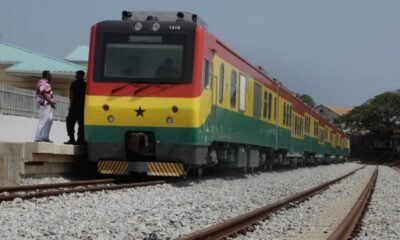
Ghana’s Mega Infrastructure Push: 10 Game-Changing Projects Set to Transform the Country in 2026
-

 Fashion & Style2 days ago
The New Wave of “Afro-Minimalism”: Redefining Luxury Beyond the Print
Pingback: Ghana News Updates (Jan 16): Catch up on the Major Stories