
Business
Ghana to Diaspora: Partner With US Investors, Help Build Economy at Home

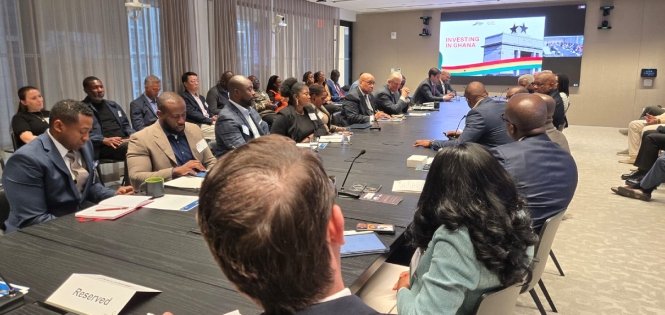
Ghana’s Ambassador to the United States, Victor Emmanuel Smith, has issued a clarion call to the Ghanaian diaspora, urging them to partner with American investors to drive development and create jobs back home.
Speaking at the seventh Investment Roundtable held at Orrick’s New York office in New York City, Ambassador Smith reaffirmed that Ghana has strategically positioned itself to enhance private-sector participation, manage external debt prudently, and exit the International Monetary Fund (IMF) stabilization program with both confidence and credibility.
The Ambassador highlighted the transformative investment opportunities emerging in Ghana, noting that significant hurdles have been overcome to stabilize the economy under President John Dramani Mahama. He reiterated that Ghana is open for business and ready to receive strategic partnerships.
“Ghana has laid the groundwork for sustainable growth. We are inviting our diaspora and their American counterparts to join us in building an economy that works for all,” Ambassador Smith said.
The roundtable, which forms part of the Embassy’s ongoing focus on expanding access and driving impactful investment, also featured remarks from Abdul Razak, Deputy CEO of the Ghana Investment Promotion Corporation (GIPC). Razak outlined the investment opportunities and incentives available under the GIPC Act, designed to support priority sectors for industrial transformation under the Mahama administration.
The event marked the latest in a series of strategic engagements aimed at fostering direct investment into Ghana, with a particular focus on job creation and long-term development.







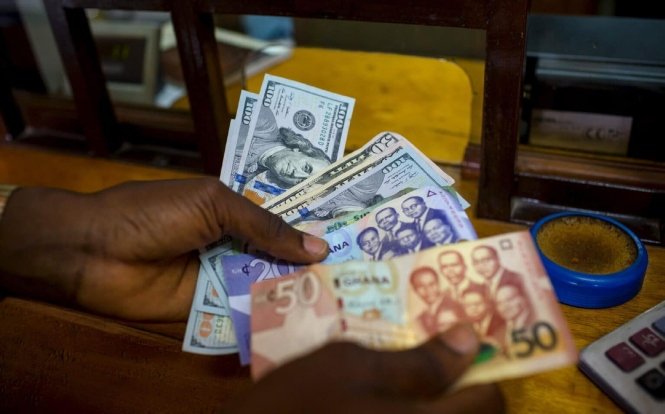
Ghana’s cedi is forecast to face continued depreciation pressure against the US dollar in the coming week.
At the same time, Zambia’s kwacha is expected to remain relatively stable, according to currency traders and bank analysts.
The cedi traded at 10.93 to the dollar on Thursday, March 26, 2026, compared with 10.90 a week earlier, according to London Stock Exchange Group data.
Traders cited persistent dollar demand from the energy, manufacturing, and commerce sectors that continues to outstrip supply in the interbank market.
Ronald Mensah, a trader at Stanbic Bank Ghana, told CNBC Africa: “The cedi continues to face modest depreciation pressure as demand persistently outpaces supply, with the Bank of Ghana’s FX intermediation auction providing only a partial offset.”
He added that, barring a meaningful shift in liquidity conditions, the currency’s relative weakness looks set to extend into the near term.
Andrews Akoto, head of trading at Absa Bank Ghana, echoed the view, noting that FX liquidity conditions are likely to remain tight in the coming week.
In contrast, Zambia’s kwacha strengthened to 19.02 per dollar on Thursday from 19.75 a week earlier. Traders attributed the stability to improved liquidity conditions and increased hard currency sales ahead of end-month obligations.
Access Bank noted in a market update that liquidity has improved, likely due to anticipated foreign exchange inflows in preparation for a government bond auction.
“These factors could continue to support the kwacha in the near-term,” the bank said.
The divergent trends highlight ongoing challenges for Ghana’s currency amid high import demand and limited dollar supply, while Zambia benefits from better liquidity positioning.
The developments come as African currencies continue to navigate global commodity price movements, domestic fiscal pressures, and varying levels of central bank intervention.
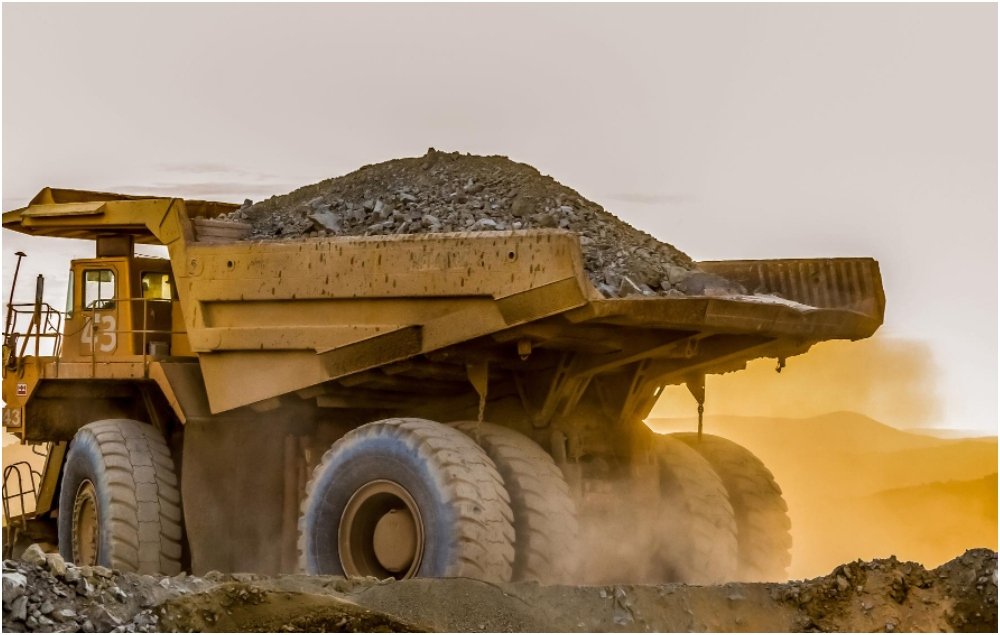
Accra, Ghana – Gold Fields has confirmed that preparations for the handover of its Damang Mine to the Government of Ghana are progressing smoothly.
The transfer is scheduled to take place in April 2026 following the non-renewal of the company’s mining lease.
The South African gold producer stated that it has worked closely with government officials and the transition team over the past year to ensure continuity of operations and a well-managed transfer of ownership. Mining activities at Damang were successfully restarted in May 2025, and the company has continued to invest in the asset, including the completion and submission of a detailed feasibility study to the Government of Ghana in December 2025.
“As part of the commitment to sustain ongoing operations at Damang, mining activities were successfully restarted in May 2025. Gold Fields has continued to invest in the mine, including by completing and providing to the Government of Ghana a detailed feasibility study in December 2025 – setting Damang up for an extended life of mine,” the company said in a statement.
The feasibility study projects that, with an estimated capital injection of roughly US$600 million, the Damang mine could continue producing for another nine years at an average annual output of around 150,000 ounces. However, Gold Fields emphasised that these figures are based on its own operational assumptions, and any new operator under state control may adopt a different approach.
Gold Fields CEO Mike Fraser reiterated the company’s commitment to supporting a stable transition while maintaining strong relationships in Ghana’s mining sector.
“We remain committed to contributing in Ghana’s mining sector and maintaining solid relationships with our stakeholders,” he said.
Since 2000, Gold Fields has invested approximately US$5 billion in its Damang and Tarkwa operations and contributed about $2.9 billion to the Ghanaian state through taxes, royalties, and dividends. The company currently employs more than 7,000 people in Ghana, 99% of whom are Ghanaian nationals, and has invested over $100 million in community development initiatives spanning health, education, and infrastructure.
The handover aligns with the government’s broader push for greater local participation and value addition in the mining sector. However, the government has not yet issued any formal public statement on the latest developments regarding the Damang transition.
The Damang Mine, located in Ghana’s Western Region, has produced more than four million ounces of gold over its operational lifetime and is viewed as a strategically important asset as Ghana seeks to diversify its mineral revenue base beyond traditional gold production.
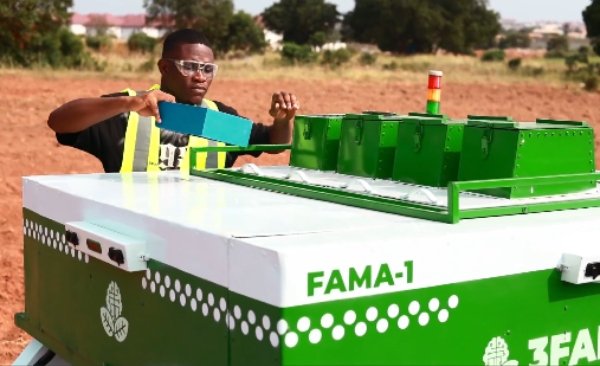
Two young engineers who began prototyping in a university dorm room have unveiled FAMA, Ghana’s first autonomous farming robot, and are preparing for commercial deployment in the 2026 planting season.
ACCRA, Ghana – In 2021, two engineering students at Kwame Nkrumah University of Science and Technology (KNUST) began tinkering with robotics in a dorm room, driven by a conviction that Africa’s agricultural future could be built with African hands.
Four years later, Ohene Osei-Agyeman and Koffi Cobbin have launched FAMA—Ghana’s first AI-powered autonomous farming robot designed for large-scale crop production.
The robot, developed by their agritech startup 3Farmate, represents a significant milestone in African agricultural technology: a homegrown, market-ready solution built by young Ghanaian engineers to address the continent’s pressing food production challenges.
“We built FAMA as a true testament to every young engineer in Africa that ‘IT IS POSSIBLE,’” the founders announced during the company’s official launch.
From Dorm Room Prototype to Market-Ready Machine
What began as a university project has undergone eight major iterations, with the team logging 60 field test runs across more than 100 cumulative acres and thousands of runtime hours in real farm conditions.
FAMA is an autonomous robot capable of planting seeds, applying fertilizer, weeding, and spraying across agricultural environments. Unlike many agricultural robots that rely on GPS, FAMA uses a vision-based artificial intelligence system to navigate, allowing it to operate reliably in areas where satellite signals are inconsistent or unavailable.
The robot is designed to handle the challenging conditions of African farmlands. It can operate across uneven terrain, loose and muddy soils, and variable weather patterns. Powered by batteries that are recharged using solar panels while in the field, FAMA requires minimal human intervention. A single operator can oversee multiple robots simultaneously, with each unit covering between 27 and 35 acres per day and achieving planting precision within 85 millimeters.
A Service Model for Ghana’s Farmers
3Farmate is targeting large-scale staple crop producers in Ghana, beginning with corn and soybeans. Rather than requiring farmers to purchase expensive equipment, the company operates a service model, charging per acre and removing the barrier of upfront capital investment.
The approach appears to be resonating. The company reports that over 70 farmers and several large-scale crop production companies are currently in discussions, with commercial deployments scheduled to begin in the 2026 planting season.
Investment Backing and Government Recognition
The startup has raised approximately $200,000 to date, securing investment from the 776 Foundation, founded by Reddit co-founder Alexis Ohanian, as well as a grant from KIC Ghana, a leading innovation hub.
The founders say their work falls within a broader vision of African industrialization, explicitly citing Ghana’s first president, Dr. Kwame Nkrumah, whose belief that “Africa must industrialize to achieve true independence” they say inspired their journey.
“We built FAMA right here in Ghana,” the company stated, emphasizing that the technology is designed specifically for Ghanaian soil while remaining adaptable to agricultural environments worldwide.
A Team of Young Engineers
The 3Farmate team consists of young Ghanaian engineers specializing in robotics, embedded systems, software, and mechanical design. Their trajectory—from a university dormitory to attracting international investment—has become a point of inspiration for a growing community of African tech entrepreneurs.
In their launch announcement, the founders called on the government of Ghana, stakeholders, international organizations, and agri-industry leaders to partner in transforming agriculture.
“This is not history in the making, because history has already been made,” the company declared.
With commercial deployments set to begin later this year, 3Farmate now faces the challenge of scaling from field tests to full operations. For the farmers who have signed on, the promise is simple: higher efficiency, reduced labor burdens, and access to precision agriculture without the cost of ownership.
For the young engineers who built FAMA, the mission extends beyond any single harvest.
“Join us as we drive innovation across global agriculture,” they said. “The future is here.”



-

 Ghana News1 day ago
Newspaper Headlines Today: Friday, March 27, 2026
-
 Ghana News15 hours ago
Mahama Says Ghana’s LGBTQ Stance is Rooted in Culture, Court Clears Way for Abu Trica’s Extradition to the US and Other Trending Stories in Ghana
-
 Ghana News2 days ago
Escalating Violence in Oti Region Town Claims 5 Lives, Parliament Passes Legal Education Bill 2025, and Other Big Stories in Ghana Today
-

 Africa Watch16 hours ago
Pan Africanist Otchere-Darko Rebukes UK Conservative Leader Kemi Badenoch Over Recent Comment on Slavery Reparations
-
 Ghana News1 day ago
Major Change Comes to How Lawyers are Trained: 10 Things to Know About Ghana’s Newly Passed Legal Education Reform Bill
-

 Business22 hours ago
Ghana Cedi Expected to Weaken Further in The Coming Week, Traders Say
-

 Ghana News1 day ago
Latest Update on Ofori-Atta’s Case, Ghana’s Upcoming 7-Year Domestic Note, and Other Big Stories in Ghana Today (March 27)
-
 Homes & Real Estate2 days ago
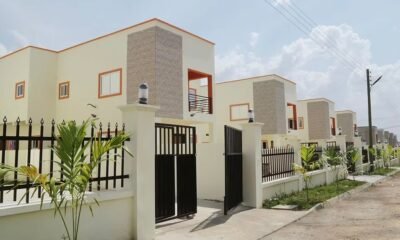
The Property Catfish: When Apartment Photos Don’t Match Reality