
Ghana News
Ghana and Spain Set to Sign Landmark Labor Mobility Agreement to Create Legal Work Opportunities for Ghanaian Youth


Accra, Ghana – Ghana and Spain are finalizing a comprehensive Labor Mobility Agreement that will open structured, legal employment pathways for Ghanaian workers, particularly young people, in key sectors of the Spanish economy.
The agreement, announced by Ghana’s Minister for Foreign Affairs, Samuel Okudzeto Ablakwa, comes as Spain implements ambitious migration reforms, including the recent decision to regularize approximately 500,000 undocumented migrants. Spanish authorities are actively seeking to address severe labor shortages driven by an ageing population and declining birth rates. The move is expected to boost Spain’s workforce in critical sectors such as agriculture, construction, hospitality, and care services.
Strategic Partnership for Mutual Benefit
The proposed Ghana–Spain Labor Mobility Agreement aims to create safe, regulated, and transparent channels for Ghanaian workers while protecting their rights and ensuring decent working conditions. It will include fair recruitment processes, clear contractual terms, grievance mechanisms, and strong diplomatic oversight.
This will be the second major labor agreement pursued under President John Dramani Mahama’s current administration, following a similar pact with Qatar that targets the deployment of up to 50,000 Ghanaian workers by 2030. The Qatar agreement established a Joint Technical Committee to monitor recruitment, welfare, and skills development.
For Ghana, the Spain deal forms part of a broader strategy to tackle youth unemployment — currently around 12.8% — and generate foreign exchange through increased remittances. It also seeks to reduce dangerous irregular migration by offering legal and protected opportunities abroad. The government views labor mobility as a key tool for job creation, skills acquisition, and national development.
Spanish Prime Minister Pedro Sánchez has repeatedly highlighted the vital role of migrants in sustaining the country’s economic growth and supporting its social security system.
Strengthened Bilateral Ties
Beyond employment, the agreement is expected to deepen Ghana–Spain bilateral relations through enhanced economic cooperation, trade, investment, and people-to-people exchanges. It reflects a modern approach to migration management that benefits both labor-sending and labor-receiving countries.
The initiative aligns with growing international trends in which African nations partner with European countries facing demographic challenges to create structured, win-win labor mobility frameworks.



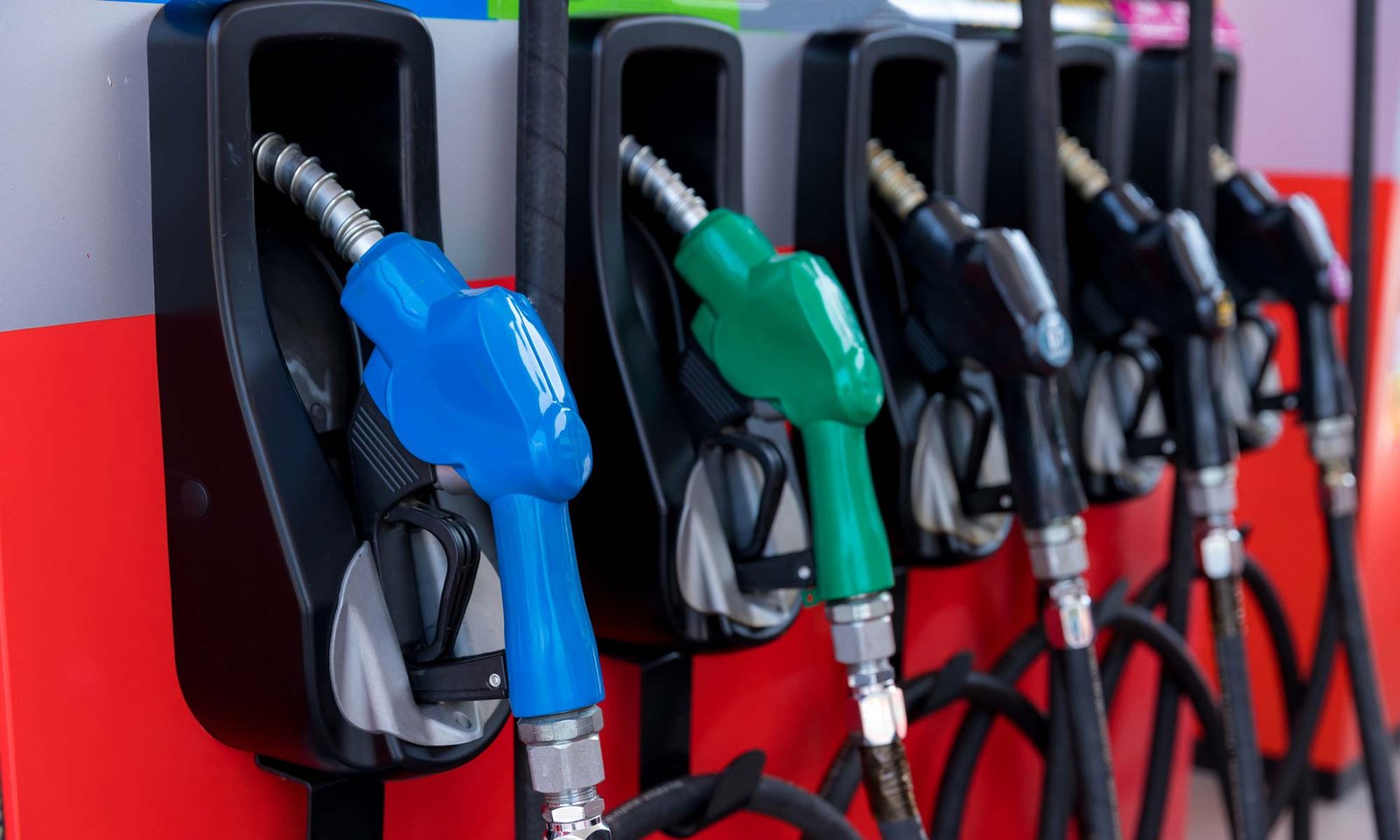
Ghana may be on the verge of a significant shift in how it buys its oil, and it could change what motorists pay at the pump.
The Managing Director of the Tema Oil Refinery (TOR), Edmond Kombat, has outlined a plan to purchase Ghanaian crude oil from the Ghana National Petroleum Company (GNPC) and its partners in Ghana cedis rather than US dollars, alongside ramping up refinery production to meet domestic fuel demand.
The proposal, which would require an amendment to the Petroleum Management Act, is being pitched as a way to eliminate what Kombat calls the dollar “wahala” — the persistent currency pressure that feeds into fuel prices.
Speaking at a press briefing in Accra on Monday (October 26, 2026), Kombat said Ghana spends close to $60 billion annually importing petroleum products, according to the country’s import bill.
“If the Petroleum Management Act, which states that crude should be purchased in dollars, is changed and TOR is able to buy crude oil in Ghana cedis, the impact of the dollar, you will not feel it at the pump. We will be able to guarantee price stability in a way that will be more beneficial to Ghanaians,” he said.
A New Pricing Benchmark?
Beyond the currency switch, Kombat argued that boosting TOR’s production capacity could allow Ghana to move away from international pricing benchmarks.
“When we [TOR] also ramp up production and we can guarantee the security of almost 100% of the domestic need, instead of using Platts and Brent, NPA (National Petroleum Authority) can start using TOR cost benchmark to be able to predict the price, and there will be stability,” he added.
The proposal rests on two interlocking pillars: currency reform (buying crude in cedis) and capacity reform (refining enough crude domestically to supply the national market). Together, TOR argues, they would insulate Ghanaian consumers from exchange-rate volatility and global price swings.
The Legal Hurdle
The plan hinges on amending the Petroleum Management Act, which currently mandates that crude oil be purchased in dollars. Changing that provision would allow TOR to transact with GNPC and its partners in local currency — a move that could reduce demand for foreign exchange in a sector that is a major dollar consumer.
Why It Matters
Ghana’s fuel prices have long been sensitive to cedi-dollar movements, with depreciation feeding directly into pump prices. If TOR’s plan succeeds, it could:
- Reduce forex pressure by cutting dollar demand from petroleum imports
- Stabilize pump prices by removing exchange-rate pass-through
- Strengthen domestic refining and reduce reliance on imported finished products
- Shift pricing power from international benchmarks to a domestic cost model
The Open Questions
The gamble comes with risks. Cedi-denominated crude purchases would shift currency risk onto GNPC and its partners, who may seek compensation. TOR’s ability to ramp up to 100% of domestic demand depends on refinery capacity and reliability — both of which have been questioned in the past. And replacing Platts and Brent with a TOR cost benchmark would require the National Petroleum Authority to build a credible, transparent pricing methodology.
For now, Kombat’s proposal has opened a national conversation about how Ghana buys, refines, and prices its oil, and whether the dollar’s grip on the pump can finally be loosened.
Ghana News
Ghana’s President Congratulates Brazil’s Lula on Historic Fourth Term, Vows to Champion Global South Agenda
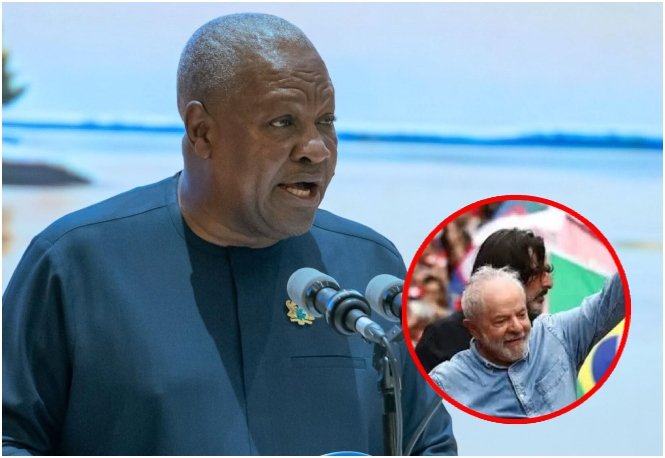
President John Dramani Mahama has congratulated Brazilian President Luiz Inácio Lula da Silva on his re-election to a fourth, non-consecutive term, calling the victory “well-deserved” and reaffirming Ghana and Brazil’s shared commitment to championing the Global South agenda.
In a message posted on social media, Mahama expressed confidence in the future of relations between the two countries, highlighting their shared history and prospects for stronger bilateral cooperation.
“Congratulations to President @LulaOficial on your well-deserved re-election as President of Brazil,” Mahama stated.
The Ghanaian leader said he looked forward to deepening cooperation with Brazil through the Accra Reset initiative, which seeks to reshape international development cooperation and strengthen the capacity of countries in the Global South to determine their own development priorities.
“Brazil and Ghana share a rich history, and I look forward to further strengthening our bilateral relations,” Mahama added. “Together, through the Accra Reset initiative, we will continue championing the Global South agenda for the betterment of our peoples. Parabéns!”
Lula Wins Closely Contested Run-off
Lula secured re-election in Brazil’s presidential run-off on Sunday, October 25, defeating Senator Flávio Bolsonaro, son of former president Jair Bolsonaro.
Official results from Brazil’s Superior Electoral Court showed Lula winning 51.79% of valid votes, more than 64.2 million ballots, against Bolsonaro’s 48.21%. The result followed a closely contested campaign in which Bolsonaro had led after the first round of voting.
The election marked a significant moment in Brazil’s political history, making Lula the first person to be elected president of the country four times. His latest victory followed a campaign centered on his record in government, social welfare policies and economic development, amid a sharply divided electorate. He is scheduled to begin his new term on January 5, 2027.
A former metalworker and trade union leader, Lula rose to prominence through Brazil’s labor movement before co-founding the Workers’ Party. He first became president in 2003 and served two consecutive terms until 2010. After returning to office in January 2023 following his 2022 election victory, he secured another mandate in the 2026 election, extending his decades-long influence on Brazilian politics and international affairs.
Shared Push for Historical Justice
Mahama and Lula have also aligned on issues concerning historical justice and the interests of developing countries.
In March 2026, Ghana led efforts at the United Nations General Assembly to secure the adoption of a resolution declaring the trafficking of enslaved Africans and the racialized chattel enslavement of Africans the gravest crime against humanity. The resolution received 123 votes in favor, three against and 52 abstentions, with Mahama addressing the Assembly ahead of the vote on behalf of the African Group.
Trade Ties Worth US$763 Million
Ghana and Brazil have maintained diplomatic relations and pursued cooperation in trade, agriculture, technical exchange and other areas of mutual interest.
In 2024, bilateral trade reached approximately $763 million, according to Brazil’s ambassador to Ghana at the time. Ghana exported products including oil, minerals and cocoa paste, while Brazil supplied goods such as sugar, animal products and machinery.
The two countries have also explored cooperation in cocoa production, agricultural technology and research, providing an economic foundation for the stronger partnership Mahama says he hopes to build.

Under the shade of a giant tree in Adaklu, in Ghana’s Volta Region, mothers balance their children on their hips as they wait their turn to be vaccinated.
Among them is 27-year-old Adeline Ahitroga, a mother of four, carrying her seven-month-old twins, a boy strapped to her back and a girl held close to her chest, for their second dose of the malaria vaccine.
“I’m really glad I can protect my twins,” she said. “When my older children had malaria as babies, they would develop a fever and become weak. I was always afraid they could die. As a mother, you just wish you could take the sickness away from them.”
Five years after Ghana became one of the first countries to pilot the malaria vaccine, the program is saving children’s lives, but experts warn that sustaining those gains will depend on reliable financing and continued support for complementary malaria control measures.
A Decades-Long Search for a Vaccine
Malaria, spread through infected mosquitoes, can cause high fever, weakness, and life-threatening complications, particularly in young children. In 2024, malaria killed about 610,000 people worldwide, with Africa accounting for 95% of those deaths—children under five among the hardest hit.
For decades, a vaccine remained elusive, in part because the parasite that causes the disease is complex. That changed in 2021, when the World Health Organization (WHO) recommended wider use of the RTS,S vaccine—the result of more than three decades of scientific research, developed by GlaxoSmithKline and its partners. It targets Plasmodium falciparum, the parasite responsible for the deadliest form of malaria.
At the time, WHO Director-General Tedros Adhanom Ghebreyesus celebrated the milestone: “This long-awaited malaria vaccine is a breakthrough for science, child health, and malaria control.”
Ghana’s Pilot Program Shows Results
Ghana, Kenya, and Malawi were the first countries to pilot the vaccine. In Ghana, it is scheduled at 6, 7, 9, and 18 months of age—meaning health workers must persuade caregivers to return again and again.
In Adaklu, the district health directorate reports that nearly 70% of eligible children have completed all four doses. It also reports that annual malaria cases among children under five have fallen from about 6,000 to 2,000, with no deaths since the vaccine was introduced alongside existing malaria control measures.
Dopea Kulafa, 32, has completed all four doses for her two youngest children, aged four years and 23 months.
“My two children have been doing well since they took the vaccine,” she said. “At first, I was worried about the side effects. But after about three days, they were fine. I gave them paracetamol syrup and they recovered. From my experience, the vaccine is helping my children. And I’d encourage other mothers to get their babies vaccinated.”
Overcoming Hesitancy
Yet health workers face challenges. Emilia Tanyeva, a health worker involved in community outreach in Adaklu, says the task of persuading caregivers to return for multiple doses is becoming more difficult due to suspicions in some areas.
“Some caregivers believe that it’s a way of reducing their population,” she said. “They want to kill their children or wipe out the children that they are giving birth to.”
Others worry the malaria vaccine adds too many injections to their children’s routine immunizations.
The Importance of Completing the Schedule
Inside the Vaccine Research Laboratory at the Noguchi Memorial Institute for Medical Research in Accra, immunology professor Kwejo Asamuakusi explained why completing all four doses is critical.
“If you just do one or two, it will protect you for a few weeks to a few months, and then it’s gone,” he said. “And if at that point you feel like you are vaccinated against malaria, your child in a year’s time could easily succumb to malaria. But doing all the four extends how long that protection lasts for them. So it’s very important that we finish all of it.”
Landmark Study Finds 13% Reduction in Deaths
Since WHO recommended wider use in 2021, researchers have continued to assess the vaccine’s impact. A 2026 study published in The Lancet found that vaccinated children across Ghana, Kenya, and Malawi had a 13% lower risk of death from all causes.
“Basically, in these communities, the malaria vaccine prevented approximately one in eight deaths of children that were non-accidental, non-injury related,” said Dr. William Moss, a professor of epidemiology and deputy director of the Johns Hopkins Malaria Research Institute.
Moss said the findings are significant because the reduction in deaths was observed even though many children had not completed the full vaccine schedule. But he warned that sustaining those gains will require the vaccine to complement—not replace—existing malaria control measures.
“If funding for bed nets and surveillance, testing and treatment all decline, we’re going to see more people, unfortunately and tragically, infected with the parasite, developing disease, and even in the face of the vaccines, we’re going to see a larger disease burden,” he said.
Funding Concerns
That warning comes as global health financing faces growing pressure. Disruptions to U.S. foreign assistance, including the dismantling of USAID, have created a $78.2 million health financing gap for Ghana, affecting several interventions, including malaria programs.
Ghana is co-financing its immunization program with Gavi, the Global Vaccine Alliance. Ghana’s obligation is expected to reach $54 million next year and $60 million by 2030. Health Minister Kwabna Minta Akando says the government will find the money to fully finance the program when Gavi leaves in 2030.
But Gladys Damalin, Programmes Manager at Hope for Future Generations, a civil society organization advocating better health policies, says the government must be clearer about where the money will come from.
“What used to be like a death sentence for our children under five, now most of them, because of the malaria vaccines, they are surviving, which is great news for us,” she said. “The question is sustaining and ensuring that every district is covered. That is it.”
She wants a dedicated immunization budget so allocations and disbursements can be tracked more easily.
What’s Next
Back in Adaklu, mothers continue to bring their children for malaria vaccination, holding on to the promise of greater protection.
But experts say whether that promise translates into lasting progress will depend on Ghana’s ability to finance the program and sustain the wider measures that keep malaria in check.
Editor’s Note: Information for this story was culled from reporting by Ridwan Karim Dini-Osman for The World



-
 Arts and GH Heritage12 hours ago
Beyond the Gallery: Karp Kamina Turns Cultural Memory into Contemporary Art
-
 Sights and Sounds2 days ago
Planning a Family Day Out in Accra? Lakeside Marina Park Offers Fun for All Ages
-
 Homes & Real Estate1 day ago
Building a Home in Ghana: How Smarter Construction Choices Can Cut Costs
-
 Festivals & Events2 days ago
Ahukan Festival: Honouring Chiefs and Celebrating Akyem Heritage in Kibi
-
 Fashion & Style18 hours ago
Malian Businesswoman’s Reported $1.5 Million Gold Jewellery Stuns Wedding Guests
-
 Global Update11 hours ago
Huge Storm Kills Two in the UK as 90,000 Properties Left Without Power
-

 Ghana News11 hours ago
Ghana’s President Congratulates Brazil’s Lula on Historic Fourth Term, Vows to Champion Global South Agenda
-

 Health & Wellness11 hours ago
Four Weight-Loss Mistakes That Could Be Holding Back Your Progress