
Festivals & Events
Fao: When Northern Ghana Gives Thanks for the Harvest

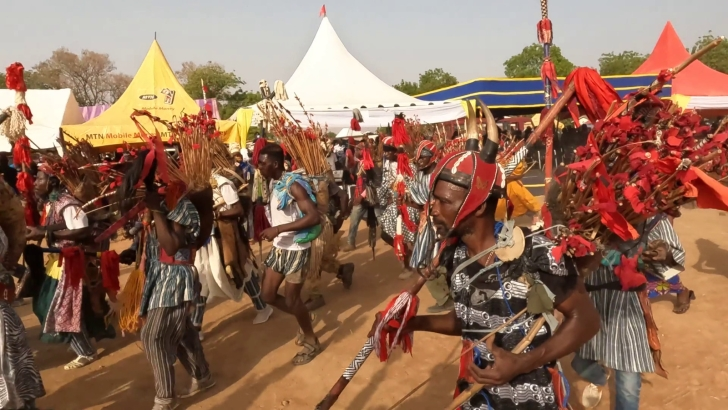
Across villages around Paga, Navrongo, Chiana and Kayoro, millet becomes a symbol of gratitude as communities mark the Fao harvest festival.
The dry-season air carries the sounds of celebration through villages in northern Ghana as families gather around one of the year’s most meaningful moments.
In courtyards and open spaces, stalks of millet are displayed proudly—a simple agricultural crop transformed into a powerful symbol of sacrifice, survival and thanksgiving.
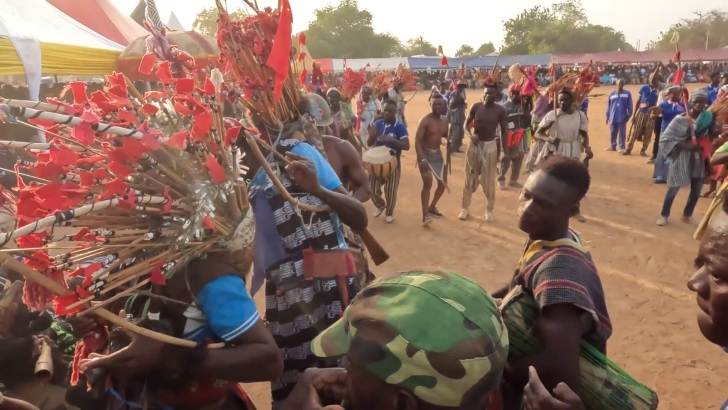
This is Fao, a harvest festival celebrated across communities in parts of the Northern and Upper East Regions, particularly between November and February, with January often serving as the busiest period.
At its heart, Fao is a thanksgiving for the harvest. Millet, an important traditional crop in northern Ghana, takes centre stage.
Its stalks are displayed as offerings of gratitude, representing the labour invested in the farming season and the hope that sustained families through the year.
The celebrations are rooted in a close relationship between farming, community and spirituality. The harvest is not viewed simply as food gathered from the fields; it is a reminder of the forces—human, natural and spiritual—that make survival possible.
Giving thanks therefore becomes both a communal responsibility and a spiritual expression.
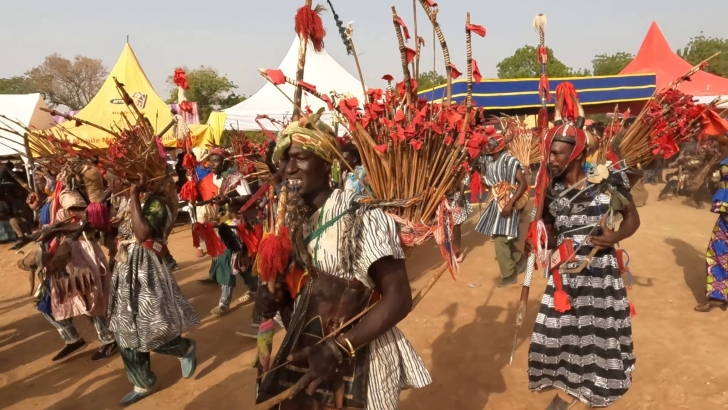
Fao also brings people together after months of agricultural work. Families reconnect, communities celebrate their shared fortunes, and younger generations encounter traditions that might otherwise become distant from everyday life.
For visitors, the festival offers a glimpse into a side of Ghanaian heritage that cannot be captured by monuments alone. It is found in millet stalks carried with pride, gatherings shaped by gratitude and communities pausing to honour the harvest.
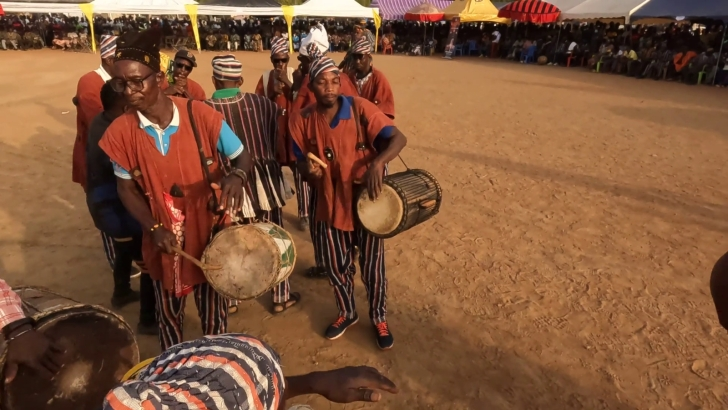
Fao is ultimately a celebration of having enough—and remembering why that should never be taken for granted.









The unmistakable rhythms of Jamaican dancehall are heading to Accra for a celebration of music, food, and Caribbean culture.
On Saturday, November 21, 2026, the Kingston to Accra Block Party will transform The Africa Reach into a lively poolside gathering, bringing together Ghanaian and Jamaican influences for a day-to-night experience rooted in cultural connection.
Hosted by Baby Jamaica in partnership with Accra seafood restaurant 5Loaves 2Fish, the inaugural event draws inspiration from Jamaica’s early 2000s dancehall era, a period remembered for its infectious rhythms, expressive dance moves, distinctive fashion and influential musical personalities.
Dancehall has long been an important expression of Jamaican identity, giving communities a powerful platform for storytelling, creativity and social connection. Its influence has travelled across the world, including Ghana, where local dancehall and Afrobeats artists have embraced Caribbean sounds and incorporated them into contemporary African music.
The block party celebrates this shared musical relationship while creating space for cultural exchange.
Visitors can expect an energetic soundtrack spanning Dancehall, Reggae, Soca, Bouyon, Shatta and Afrobeats. DJs Baby Jamaica, Nelpee Spins and DJ La-Pel will lead the music, while popular Accra hypeman MC Breezy keeps the crowd entertained.
Beyond the dance floor, guests can enjoy Caribbean-inspired food and drinks, poolside relaxation, games and shisha. The combination of Jamaican musical heritage and Accra’s lively social atmosphere promises an experience that goes beyond an ordinary weekend party.
For international visitors, it offers an opportunity to experience Ghana’s openness to global cultural influences. For Ghanaians, particularly lovers of Caribbean music, it is a chance to celebrate familiar sounds and the enduring connection between two cultures.
Running from 11 am to 11:59 pm, entry is free with RSVP. Children are not permitted after 6 pm.
Bring your friends, represent your country and get ready to dance as Kingston meets Accra.
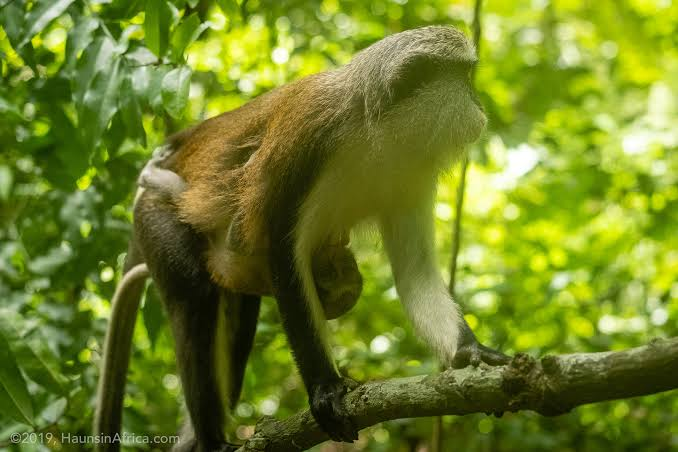
The forest around Tafi Atome comes alive with a special sense of reverence each February as the community celebrates some of its most unusual and treasured residents: monkeys. Here, in Ghana’s Volta Region, these playful forest dwellers are more than wildlife.
They are regarded as sacred messengers of the gods, protected by generations of traditional beliefs.
The annual Fetish Festival, held during the first or second week of February, celebrates this remarkable relationship between people, spirituality and nature.
A Sacred Bond Between People and Monkeys
The festival’s origins are rooted in the community’s ancestral history. According to local oral tradition, approximately 200 years ago, ancestors migrating from Assini in central Ghana brought a traditional deity to the area.
After settling, they encountered monkeys in the surrounding forest, which they believed had followed them from their former home.
The animals became associated with the deity and were considered representatives of the gods. Killing or harming them consequently became taboo, while the surrounding forest was protected as sacred ground. Sacred Natural Sites+1
Rituals of Thanksgiving and Protection
A central part of the February celebration is led by the traditional fetish priest, who performs rituals at the forest shrine.
These include the sacrifice of a goat and the pouring of libation to express gratitude to the deity for protecting the community.
The ceremonies also seek blessings from the gods and ancestors for the coming year, reinforcing the spiritual relationship between the people and their natural surroundings. UCC Institutional Repository+1
Preserving Heritage Through Conservation
The festival carries particular significance today as Tafi Atome balances cultural preservation with environmental protection.
The establishment of the Tafi Atome Monkey Sanctuary as an ecotourism destination in 1996 helped strengthen efforts to protect the forest and its mona monkey population.
Community-based tourism now gives visitors an opportunity to encounter the animals while supporting local livelihoods. Graphic Online+1
For residents, the Fetish Festival is a reminder that traditional beliefs can serve a practical purpose in protecting biodiversity. For visitors, it offers an unusual opportunity to experience Ghanaian heritage through the connection between spirituality, wildlife and community life.
A February visit to Tafi Atome is therefore more than a wildlife excursion. It is an invitation to witness a living tradition in which the forest, its monkeys and the people who protect them share an extraordinary history.
Festivals & Events
Papa Nantwi Festival: Celebrating Courage, Sacrifice and Ancestral Heritage in Kumawu
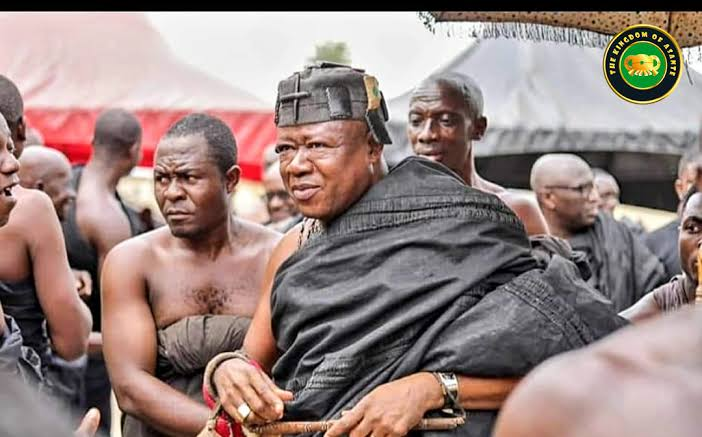
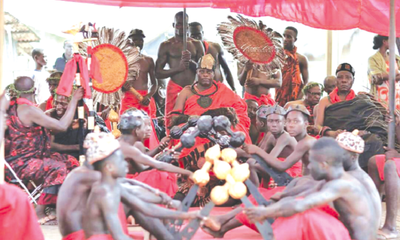
The sound of traditional drums fills the air as chiefs, warriors and enthusiastic crowds gather in Kumawu, Ashanti Region.
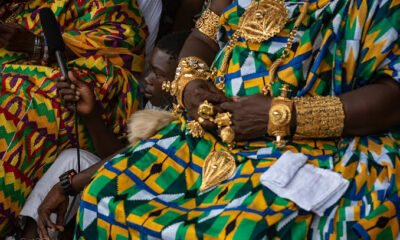
Colourful traditional cloth, ceremonial weapons and the imposing presence of the royal entourage set the scene for one of the area’s most extraordinary cultural celebrations.
Known as the Papa Nantwi Festival, the event brings history to life through a dramatic display of bravery, ancestral reverence and community pride.
Remembering an Ancestor’s Extraordinary Sacrifice
Celebrated on an Akwasidae date, mostly in March, the festival honours Nana Tweneboa Kodua I, a celebrated ancestor of Kumawu whose extraordinary sacrifice is deeply woven into Asante history.
According to oral tradition, during the conflict between the Asantes and the Denkyiras, Nana Tweneboa Kodua I offered himself as a sacrifice to secure victory for the Asante Kingdom under Otumfuo Osei Tutu I. His selflessness became a lasting symbol of courage, patriotism and devotion to his people.
A Dramatic Test of Bravery
The celebrations begin with sacrificial rituals on the eve of the main event. On the festival day, a durbar of chiefs, presided over by the Kumawuhene, precedes a colourful procession of traditional leaders and militia warriors to Papaso, the designated ceremonial grounds.
Here, a cow is ritually slaughtered. Brave participants attempt to cut a piece of its meat and carry it to a designated point while facing beatings and heckling from the surrounding crowd. Successfully securing the meat represents courage, endurance and fearlessness.
Keeping Kumawu’s Heritage Alive
Beyond its dramatic spectacle, Papa Nantwi reinforces community identity and preserves ancestral history. For visitors, it offers a fascinating encounter with Ashanti traditions and a powerful reminder of the sacrifices behind Ghana’s cultural heritage.
Experiencing Kumawu during this celebration is an opportunity to witness a living history that deserves a place on every cultural traveller’s Ghana itinerary.


From Mfantsipim at 9 to University at 12: Meet Diamond Lucas, Ghana’s Albert Einstein

Explainer: Why COP31 Ended Without a Deal, and What it Actually Means

Grieving Mother, Friends Demand Justice After Talented Young Woman Phillipa Acquah Killed by Reckless Motorcyclist
-

 Commentary8 hours ago
A Life Cut Short: A Cry for Justice for Phillipa Acquah and An Urgent End to Road Recklessness
-

 Uncategorized1 day ago
Fat Joe Makes Emotional Appeal to Bronx Youth After Ghanaian Teen Javits Frimpong’s Killing
-
 Ghana News8 hours ago
Grieving Mother, Friends Demand Justice After Talented Young Woman Phillipa Acquah Killed by Reckless Motorcyclist
-

 Ghana News1 day ago
German President Steinmeier Arrives in Ghana to Boost Trade and Skills Partnerships
-

 Global Update9 hours ago
Americans Raise More Than $944,000 to Help Nolan Wells’ Mother Find Answers Despite Grand Jury Decision
-

 From the Diaspora1 day ago
Ghanaian-Born Entrepreneur Mawena Tafa Turns Viral Brooklyn Encounter with Strange Man Into Business Opportunity
-
 Ghana News7 hours ago
Explainer: Why COP31 Ended Without a Deal, and What it Actually Means
-
 Ghana News6 hours ago
From Mfantsipim at 9 to University at 12: Meet Diamond Lucas, Ghana’s Albert Einstein