
Global Update
European Military Heads to Greenland as Trump’s Push for Island Continues Unabated

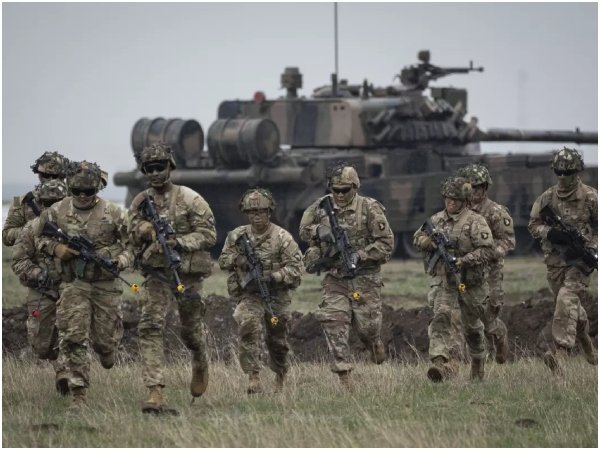
European military personnel have begun arriving in Greenland as geopolitical tensions escalate over U.S. President Donald Trump’s renewed push to acquire the Arctic island.
According to a report by Reuters, troops and defence officials from France and Germany have joined Danish forces in Nuuk, Greenland’s capital, as part of coordinated NATO-backed exercises aimed at strengthening Arctic security and reinforcing Denmark’s sovereignty over the territory.
Strategic Importance of Greenland
Greenland occupies a highly strategic position between North America and Europe and is believed to hold vast untapped reserves of rare earth minerals, oil, and gas.
These factors have placed the island at the centre of growing global competition involving the United States, Russia, and China.
President Trump has repeatedly argued that Greenland is critical to U.S. national security, warning that Washington must control the island to safeguard Western interests in the Arctic. His comments have included suggestions that the U.S. could pursue control of Greenland by force if necessary — remarks that have alarmed European allies.
Europe Signals Unity and Deterrence
The deployment of European military personnel is officially framed as participation in routine joint exercises. However, analysts say the timing and symbolism carry a strong political message.
According to defence officials, the deployments are intended to:
- Demonstrate NATO unity and collective defence commitments
- Deter any unilateral action that could undermine Danish and Greenlandic sovereignty
- Strengthen allied coordination in the rapidly militarising Arctic region
Germany confirmed it has sent a 13-member reconnaissance team, while France said its first units are already en route, with additional forces expected to follow in the coming days.
Diplomatic Talks Yield Little Progress
The military movements come shortly after high-level talks in Washington between U.S. officials — including Vice President JD Vance and Secretary of State Marco Rubio — and representatives from Denmark and Greenland.
While the discussions were described as “frank but constructive,” Danish Foreign Minister Lars Løkke Rasmussen acknowledged that a fundamental disagreement remains. Denmark and Greenland have firmly rejected any suggestion that the island is for sale or subject to external control.
Both sides agreed to establish a high-level working group to explore cooperation on Arctic security, but Danish officials stressed that sovereignty and international law are non-negotiable.
Arctic Tensions and Global Implications
Greenland is an autonomous territory within the Kingdom of Denmark and falls under NATO’s collective defence framework.
Any attack on the island would, in theory, trigger Article 5 of the NATO treaty — a scenario that European leaders warn could fracture the alliance.








Global Update
Latest on U.S.-Israel Attack on Iran: Death Toll Tops 1,045, Maersk Suspends Bookings, U.S. Sinks Iranian Warship
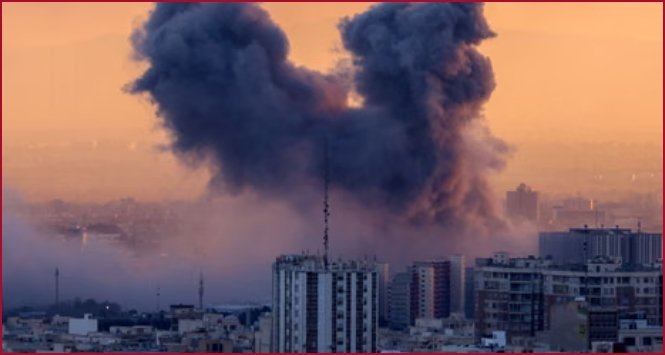
Accra, Ghana – March 4, 2026 – The death toll from five days of US-Israeli airstrikes on Iran has surpassed 1,045, according to Iranian state media, while the conflict continues to draw in Gulf states and disrupt global shipping lanes.
Iran’s President Masoud Pezeshkian addressed neighbouring countries on Wednesday, March 4, 2026, insisting Tehran had “no choice” but to retaliate after US-Israeli attacks, and emphasized respect for sovereignty while calling for collective regional security efforts.
However, Qatar’s Prime Minister Sheikh Mohammed bin Abdulrahman bin Jassim Al Thani told Iran’s Foreign Minister Abbas Araghchi that the strikes on Gulf states showed “no genuine desire for de-escalation” and an intent to drag neighbors into war. Qatar affirmed its right to self-defence and demanded an immediate halt to attacks on states that have remained outside the conflict.
Military developments escalated further on Wednesday:
– A ballistic missile launched from Iran was intercepted and destroyed by NATO air and missile defense systems in the eastern Mediterranean Sea (target unclear).
– A US submarine sank an Iranian warship with a torpedo in international waters off Sri Lanka’s coast, confirmed by US Defense Secretary Pete Hegseth.
– Shipping giant Maersk announced it has temporarily suspended cargo bookings to and from the UAE, Oman (except Salalah), Iraq, Kuwait, Qatar, Bahrain, and parts of Saudi Arabia (Dammam and Jubail) until further notice, citing personnel safety, cargo protection, and network stability amid the volatile situation.
In the United States, Democratic lawmakers criticized President Donald Trump’s justifications for the strikes, warning that the country risks sliding into a ground assault and an “open-ended engagement with no end in sight.”
The conflict has already triggered airspace closures, flight cancellations, and evacuations across the Gulf, with African governments—including Ghana—activating emergency plans for citizens in the region.
Global Update
“Africa Speaks Powerfully, but Empty”: Nigerian Professional Exposes Continent’s Mobility Crisis

As African leaders converged on the Ethiopian capital last week for the African Union summit to discuss unity, integration, and shared destiny, a Nigerian professional who was blocked from attending a parallel peace conference in Mauritania is exposing the stark contradiction between the continent’s rhetoric and its reality.
Habibah Waziri, Managing Director of BGR Consulting, which operates across Nigeria, Rwanda and Ghana, was scheduled to co-launch the Women in Youth Summit at the Africa Conference for Peace in Mauritania.
Her mission was to help shape discussions on designing a peace architecture that is “intelligent, secure, inclusive, culturally grounded, and human.”
Instead, her visa was rejected twice.
Mobility Barriers Highlight Continental Fragmentation
Speaking from her base in Nigeria, Waziri detailed the logistical absurdities that African professionals routinely face when attempting to move across their own continent.
To travel from Nigeria to Mauritania for the conference, her most realistic flight options were Air France and Turkish Airlines—carriers that would require her to leave the continent entirely, transit through Europe or Istanbul, and then fly back into Africa. Her first preference, Royal Air Maroc, proved impractical within the constraints she faced.
“Across the continent, countries are falling out of the ECOWAS block, retreating from regional commitments in favour of herded national postures,” Waziri said. “Mobility, which was once the promise, is becoming collateral damage.”
Visa Rejections and the “Risk” of African Passports
Waziri pointed to the systemic barriers embedded in visa processes across Africa, noting that her Nigerian passport—carried by one of the continent’s most economically active populations—is consistently “read as a risk and not as potential.”
“This perception quietly shapes outcomes of visas, which in turn affects opportunity, access, and free movement,” she explained. “And perception, when left unchallenged, hardens policy.”
The dual barriers of fragmented air connectivity and restrictive visa regimes create what she describes as a fundamental obstacle to the very integration African leaders profess to champion.
Women Bear the Brunt of Closed Borders
Waziri emphasised that the impact of these barriers falls disproportionately on African women, who serve as what she calls “the connective tissue” of the continent’s economy and social fabric.
“Across Africa, women already power economic development through cross-border trade, informal markets, community-level peace building, and emerging digital economies,” she stated.
“When borders close, women’s economic power contracts. When visas fail, women’s leadership disappears from decision-making spaces. Peace processes become narrower, economies become less resilient, and futures become less inclusive.”
Ambition Without Infrastructure
As AU leaders discussed the African Continental Free Trade Area (AfCFTA) and other integration initiatives, Waziri warned that grand declarations amount to little without practical foundations.
“While leaders are in Addis Ababa to chart Africa’s new future, the present is reminding us firmly that this ambition without infrastructure is honestly just symbolism,” she said. “Africa will continue to speak powerfully, but empty.”
She argued that if the continent structurally limits who gets to speak, who gets to move, and who gets to shape outcomes, then the vision of unity remains hollow.
“Peace cannot be built in isolation,” Waziri added. “And the future cannot be negotiated by half of the continent.”
Call for Practical Integration
Waziri’s experience underscores a growing demand among African professionals for tangible progress on freedom of movement, including:
- Streamlined visa processes that treat African passport holders as assets rather than risks
- Strengthened intra-African air connectivity that reduces reliance on non-African carriers
- Recognition that mobility is essential for trade, peace-building, and inclusive development
“Our work is still ahead, and the signal could not be clearer,” she concluded. “Our infrastructure has not yet caught up with our ambition.”
The African Union summit continues through this week, with leaders expected to issue declarations on continental integration.
Whether those declarations will translate into the practical changes that professionals like Waziri require remains an open question.
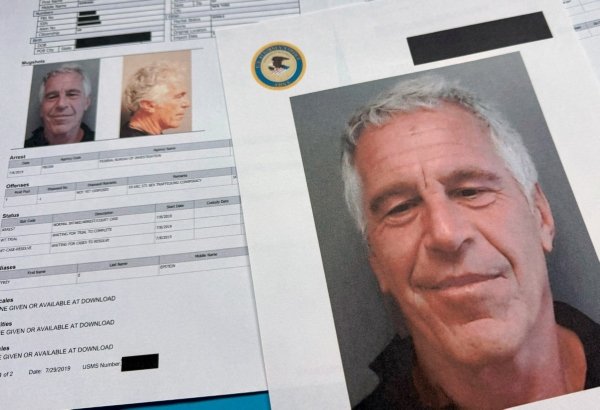
Newly unsealed court documents from the Jeffrey Epstein civil case, made public in early February 2026, contain several references to Ghana.
The mentions, however, do not accuse any Ghanaian citizens or officials of wrongdoing or direct involvement in Epstein’s criminal activities. They appear in depositions, flight logs, and witness statements related to Epstein’s international travel and business dealings in the early 2000s.
According to summaries published by GhanaWeb on February 13, 2026, the references primarily involve:
- Epstein’s brief business and travel connections to West Africa during that period
- A former high-profile associate of Epstein who had commercial interests or meetings linked to Ghana
- Passing mentions of Ghana in the context of broader African financial or investment discussions Epstein pursued
None of the documents implicate current or former Ghanaian government officials, business leaders, or private citizens in any criminal conduct. The references are largely contextual and do not form part of the core allegations against Epstein or his co-conspirators.
Ghanaian authorities have not issued an official comment on the disclosures. Legal and diplomatic experts note that the mentions appear incidental and do not trigger any immediate investigative action under Ghanaian law.
The files are part of the long-running civil defamation lawsuit brought by Virginia Giuffre against Ghislaine Maxwell, with thousands of pages unsealed in stages since 2024.
The Epstein case continues to generate global headlines, with new batches of documents periodically revealing names, travel records, and financial connections. While the Ghana references have sparked online discussion in the country, analysts caution against over-interpretation, as the documents do not suggest any Ghanaian participation in Epstein’s sex-trafficking network.
The latest unsealing adds to the ongoing public fascination and scrutiny surrounding Epstein’s elite network, even years after his 2019 death in custody.


I Watched My Friend Lose His Land Because He Trusted the Wrong People

What 1,000 Skips a Day Does to a Man Who Thought He Was Fit

The Week We Forgot About Cocoa and Talked About a Russian Instead
-

 News2 days ago
Ghana Gears Up for Vibrant 69th Independence Day Celebrations: Parades, Plays, Poetry, and Heritage in Focus
-

 Ghana News2 days ago
Newspaper Headlines Today: Tuesday, March 3, 2026
-

 Tourism2 days ago
Emirates Resumes Limited Flights from Dubai as Middle East Airspace Slowly Reopens Amid Ongoing Conflict
-
 Ghana News2 days ago
Ayawaso East By-Election Results Trickle in, ECG Audits Fast-Reading Meters, and Other Trending Topics in Ghana (March 3, 2026)
-
 Commentary2 days ago
At a glance: US‑Israel attack on Iran
-
 Ghana News2 days ago
Ghana’s Top Muslim Leader Condemns Khamenei Assassination, Calls for New World Order Based on ‘Right Over Might’
-

 Business2 days ago
Ghana’s Mega Infrastructure Push: 10 Game-Changing Projects Set to Transform the Country in 2026
-

 Fashion & Style2 days ago
The New Wave of “Afro-Minimalism”: Redefining Luxury Beyond the Print