
Ghana News
Escalating Violence in Oti Region Town Claims 5 Lives, Parliament Passes Legal Education Bill 2025, and Other Big Stories in Ghana Today


Stay informed with the most relevant and impactful stories from Ghana.
Nkwanta Violence Escalates with Five Confirmed Dead as IGP Deploys Armoured Vehicles
Five people have been confirmed dead following renewed violence in Nkwanta in the Oti Region. The Inspector-General of Police has deployed armoured vehicles and additional personnel to restore calm and protect lives and property as tensions between rival groups continue to simmer.
Read the full story here
Parliament Passes Legal Education Bill 2025
Parliament has passed the Legal Education Bill 2025, which seeks to reform legal training and professional standards in Ghana. The new law aims to improve the quality of legal education, enhance access to justice, and align the sector with international best practices.
Read the full story here
State vs Ken Ofori-Atta & 7 Others Case Adjourned Again
The high-profile trial involving former Finance Minister Ken Ofori-Atta and seven others has been adjourned once more. The case, which centres on alleged financial impropriety, continues to face procedural delays at the Accra High Court.
Read the full story here
BoG Unveils Six-Point Strategy to Strengthen Cybersecurity in Banking Sector
The Bank of Ghana has rolled out a comprehensive six-point strategy aimed at bolstering cybersecurity across the banking and financial sector. The measures include enhanced regulatory frameworks, mandatory stress testing, improved incident reporting, and closer collaboration with international partners to safeguard digital financial services.
Read the full story here
Global InfoAnalytics Poll: Mahama’s Approval Rating at 67%, Economic Optimism Slips
President John Dramani Mahama’s approval rating stands at 67%, according to the latest poll by Global InfoAnalytics. While personal approval remains relatively strong, public optimism about the economy has slipped, reflecting concerns over cost of living, fuel prices, and job creation.
Read the full story here
AU Hails Historic UN Resolution on Slavery and Reparative Justice
The African Union has welcomed the adoption of Ghana’s resolution at the United Nations General Assembly declaring the transatlantic slave trade the gravest crime against humanity. The AU described the vote as a landmark achievement in the global fight for historical justice and reparations.
Read the full story here
Minority Moves to Petition CHRAJ Over President Mahama’s Use of Brother’s Private Jet
The Minority in Parliament has announced plans to petition the Commission on Human Rights and Administrative Justice (CHRAJ) over President John Dramani Mahama’s alleged use of his brother’s private jet, citing concerns about conflict of interest and breaches of the Code of Conduct for public officers.
Read the full story here











Accra, Ghana – With her flight to Ghana departing in exactly three weeks, young American expat Karyn is rushing to leave the United States, saying the “Land of the Free” no longer feels like home amid rising living costs, social hostility, and a sense of impending instability.
Her first visit to Ghana was challenging due to culture shock, but she quickly came to appreciate qualities she felt were missing in the U.S.: a strong sense of community, genuine hospitality, and the ability to live more affordably.
“In Philadelphia we’re really hostile to each other,” she said. “It was nice to have friendly people around, people who made you feel safe.”
Karyn highlighted the financial relief of living in Ghana, where her income allows for a “softer life” compared with the constant financial struggle back home. She also praised the weather and the overall sense of safety and neighbourly connection she experiences in Accra.
Her story is presented as a real-life example of the growing “B.L.A.X.I.T.” (Black Exit) movement — African Americans and people of African descent choosing to relocate to African countries in search of better quality of life, cultural reconnection, and economic relief.
Karyn’s experience echoes a broader trend of increasing interest in Ghana among the African diaspora, particularly since the country’s “Year of Return” initiative. Many cite similar motivations: affordable living, community warmth, and a desire to escape what they perceive as mounting social and economic pressures in Western countries.
The episode feeds into the now-constant conversation about the mass migration of Black Americans to Ghana and other African states.

Africans and citizens from many other nations planning to visit, work, study, or settle in the United Kingdom will have to pay significantly higher visa fees starting April 2026.
This follows official announcements by the UK Home Office that have raised concerns about increased financial barriers to migration.
The fee hikes, intended to cover rising processing costs and ensure the sustainability of the immigration system, will affect almost every category of visa application.
Most fees are rising by roughly 6–7%, adding hundreds of pounds in upfront costs for many applicants before they even factor in tuition, living expenses, or the mandatory Immigration Health Surcharge.
Key increases include:
– Short-term visit visas (up to six months): from £127 to £135
– Longer-term multi-year visit visas: increases of £31 to £69
– Skilled Worker visas: now ranging from £819 to £1,618 depending on duration
– Student visas (standard and child): from £524 to £558
– Short-term English language study visas: from £214 to £228
Analysts warn that the rises will hit applicants from regions with weaker currencies particularly hard. African nationals, who form a substantial and growing share of the UK’s overseas migrants and international students, are expected to be among the most affected groups.
Nigerian, Ghanaian, Kenyan, and South African students alone account for tens of thousands of enrolments in British universities each year. Skilled African professionals also play a vital role in key UK sectors such as healthcare, technology, and engineering through Skilled Worker and Scale-up visas.
Critics argue that the higher fees could deter prospective students, professionals, and entrepreneurs, delay family reunions, and reduce short-term tourism and business travel. Even modest increases of £30–£100 per application can represent a significant burden for many families in Africa.
The UK Home Office maintains that the adjustments are necessary to reflect the true cost of processing applications and to keep the immigration system financially sustainable. However, migration experts and diaspora organisations have expressed concern that the policy may unintentionally weaken people-to-people and economic ties between the UK and African nations at a time when both sides are seeking deeper partnerships.
Applicants are advised to check the latest fee schedules on the official UK Visas and Immigration website and to factor in the new costs when planning future applications.
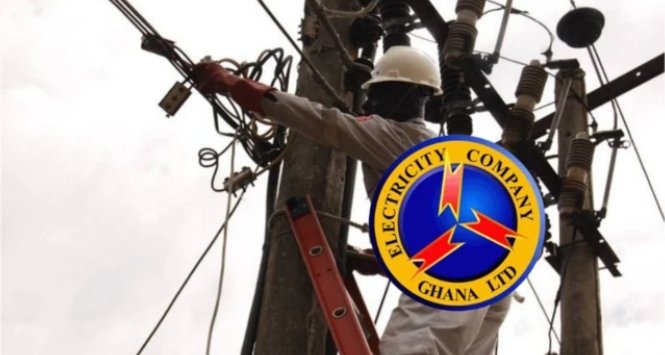
Accra, Ghana – Ghana is facing a growing risk of widespread power outages (commonly known as “dumsor”) as chronic gas supply challenges force the national grid operator to shed nearly 200 megawatts of electricity daily, energy sector insiders have warned.
According to multiple sources familiar with the situation, power plants in the Tema enclave — which supply much of Greater Accra — are not receiving enough natural gas to meet current demand. Ghana requires approximately 230 million standard cubic feet per day (mmscf/d) of gas to run its thermal plants at full capacity, but is currently receiving only about 170 mmscf/d — 100 mmscf from the domestic Ghana Gas Company and 70 mmscf from Nigeria via the West African Gas Pipeline Company (WAPCo).
The shortfall has left the Ghana Grid Company (GRIDCo) with little choice but to implement daily load shedding to balance the system. Insiders described the situation as “alarming” and a clear pointer to an imminent broader power crisis if urgent investments are not made.
The problem has been compounded by increased demand following the installation of additional thermal generation capacity under the previous administration to stabilise power in the middle belt and northern regions. While those generators eased pressure on the national grid at the time, they also significantly raised overall gas consumption without a corresponding increase in supply infrastructure.
Recent intermittent outages reported in parts of Greater Accra and the Ashanti Region have officially been attributed to “planned maintenance” and transformer replacements. However, sector experts and insiders argue that such routine works cannot account for widespread and persistent interruptions. They point instead to a combination of deficient transmission infrastructure causing low voltages and insufficient generation due to the gas shortfall.
One senior source, speaking on condition of anonymity, criticised the government’s explanation as a “public relations move” and called for transparency: “The Ghanaian populace deserve to know what is happening.”
The development raises fresh concerns about the stability of Ghana’s power supply ahead of the peak demand season and as the country continues to pursue industrialisation and economic growth. Energy analysts say long-term solutions will require urgent investment in gas infrastructure, diversification of energy sources (including accelerated renewable energy projects), and improved maintenance of existing generation and transmission assets.
The Ghana Grid Company and the Ministry of Energy have not yet issued a detailed public response to the claims of daily 200MW load shedding.


American Expat Shares Fleeing Philadelphia for “Softer Life” in Ghana

The Muscle Clock: What Happens to Your Body After 30—and Why Lifting Weights Matters

Ghanaians Among Thousands of Africans Facing Higher UK Visa Fees from April 2026
-
 Ghana News24 hours ago
This is What Comes Next After Landmark UN Slave Trade Resolution
-
 Ghana News1 day ago
Ghana Secures Landmark UN Victory as Transatlantic Slave Trade Declared Gravest Crime Against Humanity
-

 Ghana News2 days ago
Deputy Israeli Ambassador to Ghana Strongly Condemns Iran’s Missile Attacks on Civilian Areas
-
 Ghana News1 day ago
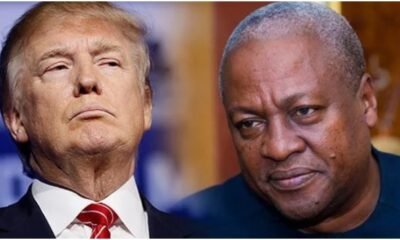
Mahama Takes a Subtle Swipe at Trump in Bold UN Speech
-

 Health & Wellness1 day ago
3 Simple Morning Infused Drinks That May Improve Digestion and Metabolism
-

 Ghana News1 day ago
Ghanaian Official Drags Lincoln University Over Mahama Doctorate Concelation, Gov’t Dismisses Sole-Sourcing Claims and Other Big Stories in Ghana Today (March 25)
-

 Ghana News1 day ago
Newspaper Headlines Today: Wednesday, March 25, 2026
-
 Editorial1 day ago
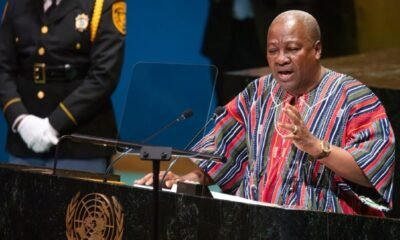
12 Million Souls. Over 400 Years. Ghana Has Finally Pushed the World to Say it: “Slavery Trade is The Gravest Crime Against Humanity”