
Fashion & Style
Boubou Blueprint: How to Master the ‘Rich Auntie’ Aesthetic

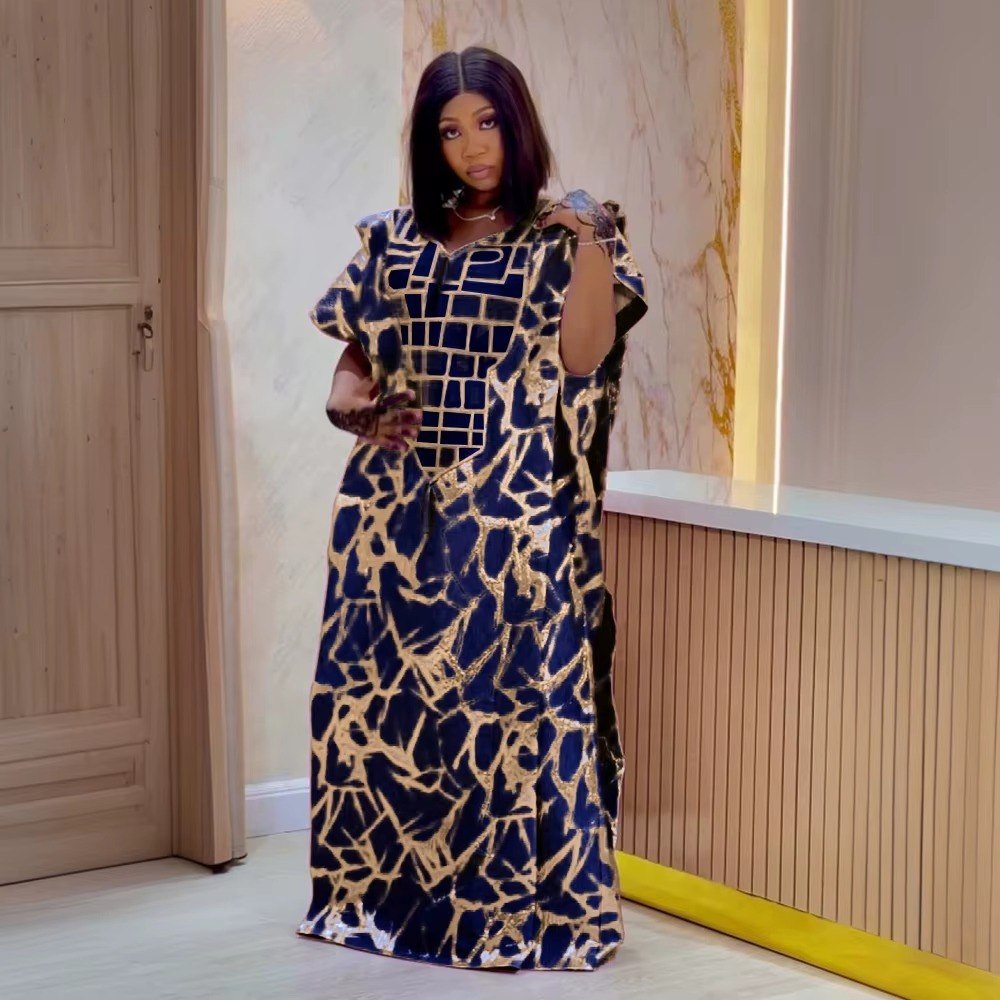
The boubou has long been the undisputed queen of West African lounging—a voluminous, flowing testament to comfort and grace.
But a new wave of style influencers is proving that this traditional staple is far from a “one-trick pony.”
The secret to modernizing the look lies not in buying something new, but in the art of the architectural “tuck and pin.”
By reimagining the silhouette of a standard boubou, fashion enthusiasts are embracing the “Rich Auntie” aesthetic with a contemporary twist.
The technique is simple yet transformative: pick up the hem, secure it with a strategic pin, and allow a glimpse of tailored trousers underneath.
This small structural change shifts the garment from a traditional robe to a high-fashion layered ensemble.
It’s a masterclass in personal branding that says you value heritage, but you aren’t tethered to the past.
The transformation doesn’t stop at the hemline. The “Rich Auntie” look is defined by the intentionality of the finish.
If a statement necklace feels too heavy, a sharp brooch pinned to the lapel adds a touch of vintage sophistication.
To top it off, a scarf twisted and tied around the head provides the ultimate crown. It is an exercise in being “simple and very demure,” yet undeniably commanding.
This movement represents a broader shift in Ghanaian and global African style. It’s about “the cloak” as a symbol of mystery and status, adapted for a generation that wants to show off their footwear and their flair simultaneously.
Whether you’re heading to a high-tea or a high-stakes meeting, the message is clear: elegance is about the way you manipulate the fabric to tell your own story.










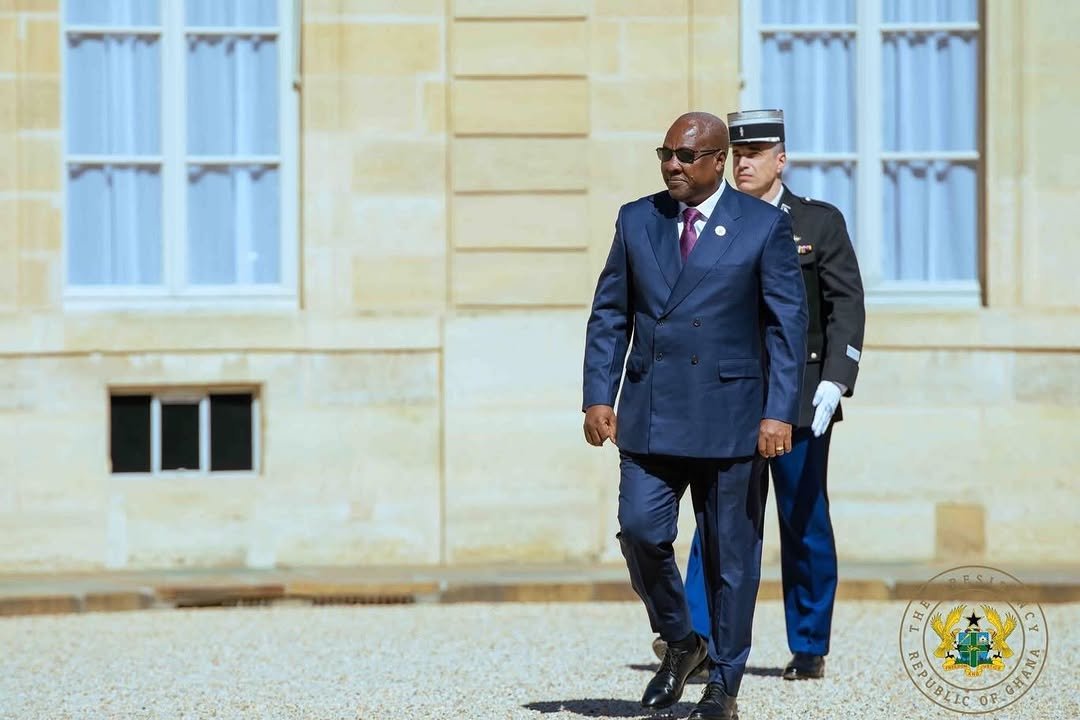
When John Dramani Mahama ascended the stone steps of the Élysée Palace to meet French President Emmanuel Macron, the optics were undeniably heavy with diplomatic weight.
Fresh from the One Health Summit in Lyon and discussions regarding Ghana’s new National Health Compact, the air was thick with talk of bilateral ties and global influence.
However, for those who speak the language of silhouette and stitch, the real conversation was happening in navy wool.
Mahama’s appearance in Paris wasn’t just a political briefing; it was a masterclass in “sartorial diplomacy.”
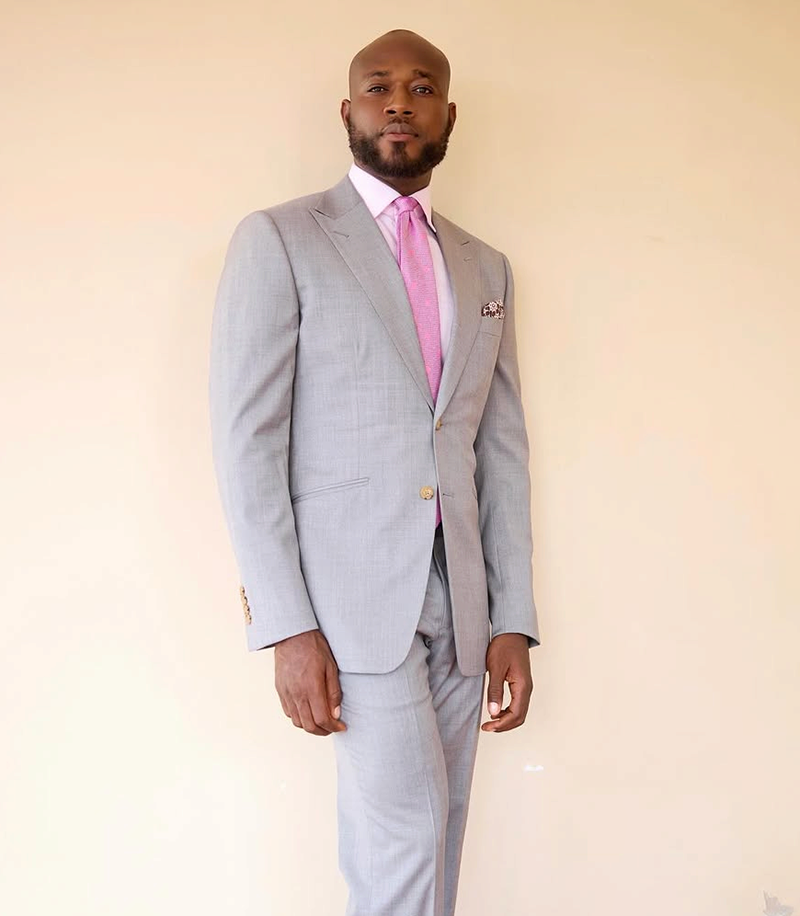
Dressed in a custom two-piece suit by the Ghanaian luxury house Bondaana, the former president bypassed the loud, often performative elements of traditional attire for something far more potent: disciplined, world-class tailoring.
The ensemble, a deep navy set featuring sharp shoulders and a clean, structural chest line, offered a visual narrative of restraint.
It was a silhouette that mirrored the gravity of the meeting itself. By choosing Bondaana, a label that previously crafted his inauguration look, Mahama wasn’t just wearing a suit; he was exporting Ghanaian excellence to the heart of European power.
Bondaana has carved a unique niche in the West African fashion landscape by moving away from “costume” and toward “legacy dressing.”
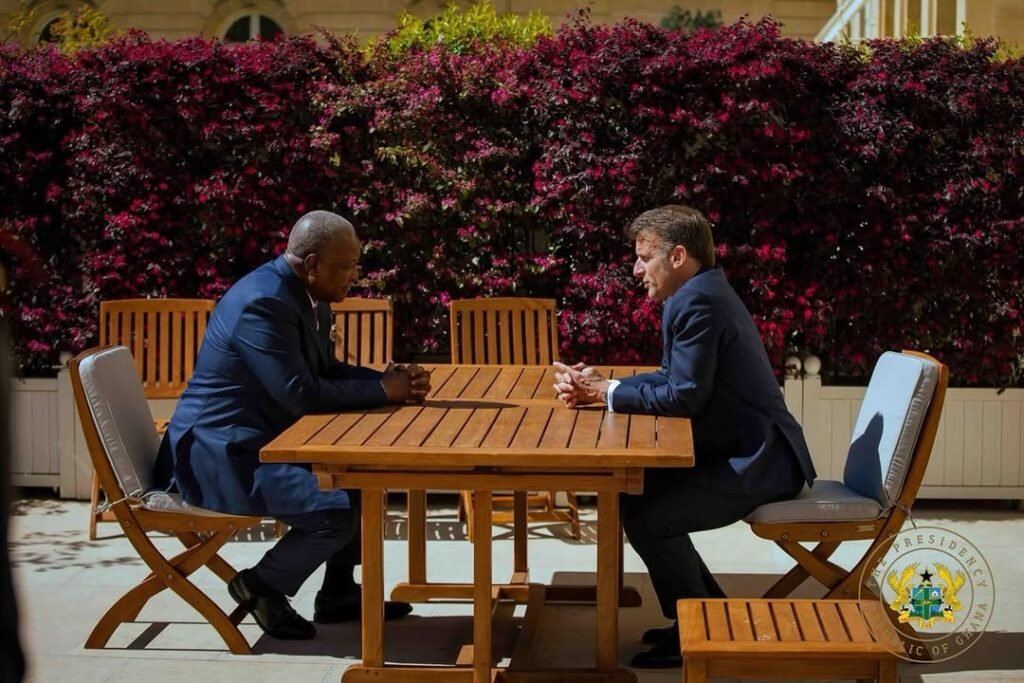
While their previous work for Mahama subtly integrated Adinkra symbolism, this Paris appearance leaned into a more universal, contemporary aesthetic.
It proved that African luxury doesn’t always need to announce its heritage through bold prints to be authentic.
Sometimes, the most radical statement is a perfectly tapered pair of trousers and a fit that rivals the best of Savile Row or Milan.
As the two leaders discussed policy behind closed doors, the imagery captured on the palace steps sent a clear signal to the global fashion industry.
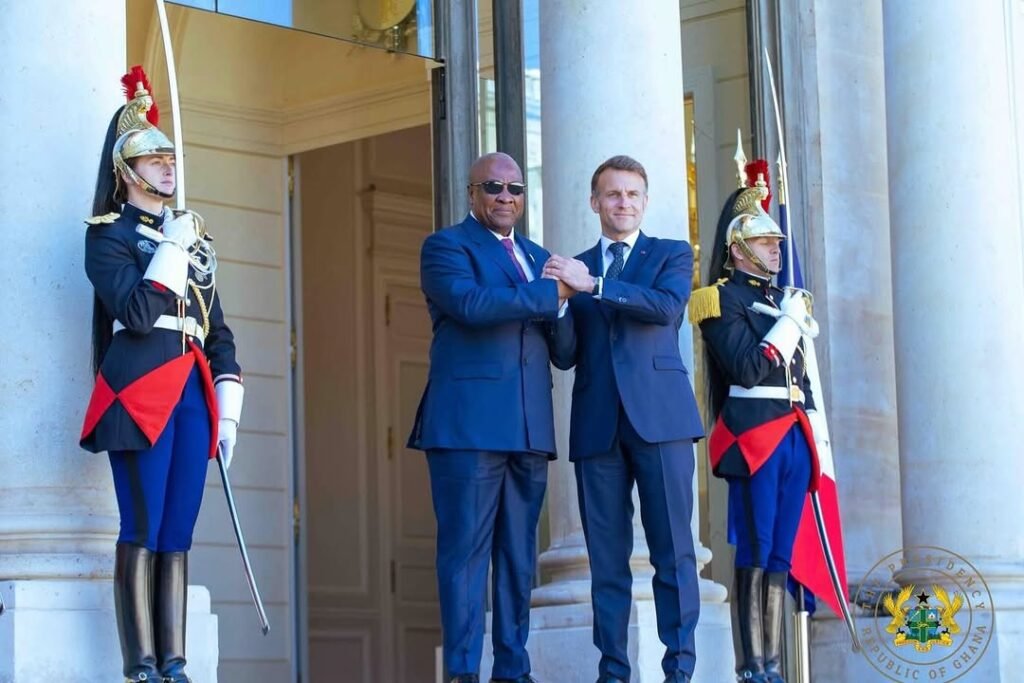
Ghanaian craftsmanship is no longer just a local pride—it is a global standard.
In the high-stakes theater of international relations, Bondaana ensured that while the dialogue was about the future of health and politics, the medium was undeniably Ghanaian luxury.

In the high-stakes world of African fashion, where bold prints and intricate textures often dominate the conversation, the most profound style lessons sometimes come from the art of subtraction.
There is a specific kind of “vibe” that a perfectly executed look carries—one that can be instantly derailed by a single clashing accessory.
The difference between a red-carpet-ready silhouette and a cluttered ensemble often boils down to one critical decision: the relationship between the necklace and the neckline.
The golden rule of modern elegance, especially when navigating the architectural lines of contemporary Ghanaian design, is to let the decolletage breathe. When you are rocking a strapless top, the instinct to fill that space with a heavy chain is a common pitfall.
In reality, showing off the collarbones and shoulders is “super chic” and undeniably “hot.” By leaving the area bare, you remove the “visual noise” that competes for attention, allowing the natural frame of the body to be the main event.
If a necklace is non-negotiable, it must be dainty and kept far away from the fabric’s edge to avoid ruining the flow of the outfit.
Understanding the geometry of your garment is the secret to personal branding through style. For a square neck, a shorter, circular chain without a pendant keeps the look clean and intentional.
High-neck tops present a different challenge; they are often statements on their own, best paired with bold earrings rather than neckwear. However, if you must accessorize a high neckline, a long drop pendant is your best ally, helping to draw the eyes down and balance the proportions of the torso.
Even the humble crew neck or the sharp V-neck requires a strategic approach. While a V-neck demands a pendant that mimics its angular shape, a crew neck often looks best unadorned, especially when the garment features a beautiful, standalone pattern or texture.
In the era of the “African aesthetic” going global, these nuances matter. True style isn’t just about what you put on; it’s about having the confidence to let a well-cut piece speak for itself without the distraction of the wrong jewelry.
Fashion & Style
The Model Turning Vitiligo Into a Powerful Fashion Statement
What began as a personal fashion diary quickly caught attention. But it wasn’t just the clothes people noticed. It was the striking vitiligo patterns across her face and body—something Abigail chose not to conceal but to showcase.
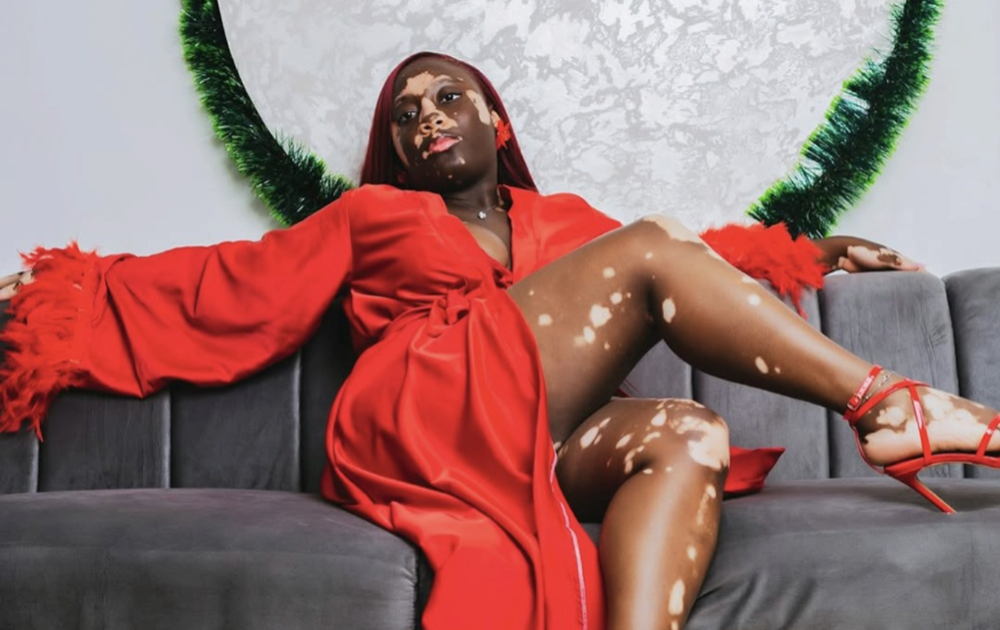
On a fashion landscape often obsessed with flawless skin and rigid beauty ideals, Ghanaian model Abigail Boateng is rewriting the script—one confident outfit at a time.
Known online as Abigail Anderson, the young model first built her audience through casual “Outfit of the Day” posts, styling everyday looks from her bedroom mirror before stepping confidently into the streets. What began as a personal fashion diary quickly caught attention. But it wasn’t just the clothes people noticed. It was the striking vitiligo patterns across her face and body—something Abigail chose not to conceal but to showcase.
In a beauty industry still adjusting to broader definitions of representation, that choice has become her signature.
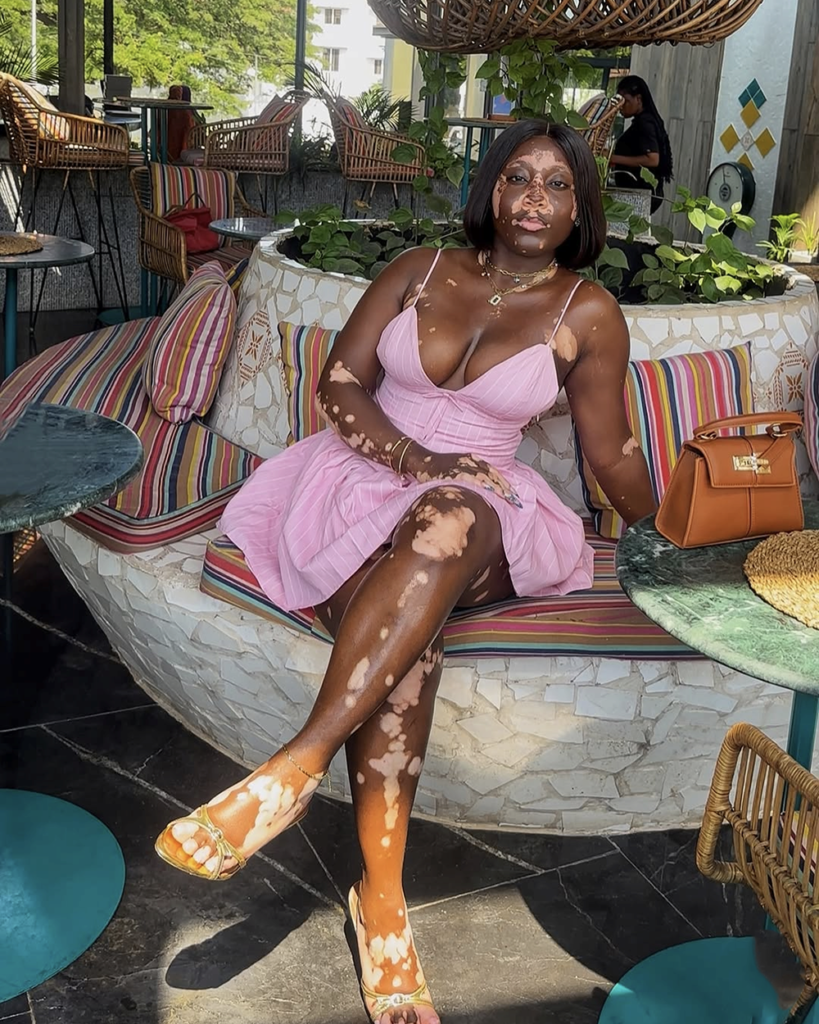
Abigail’s approach to fashion is grounded in authenticity. A marketing graduate from the University of Ghana City Campus, she understands that style is more than clothing; it’s a language. Each outfit, each photograph, and each video becomes part of a larger narrative about confidence, identity, and visibility.
Instead of hiding behind filters or heavy makeup, she leans into her natural look. The result is striking: bold colours, clean silhouettes, and carefully styled outfits that allow her skin’s unique patterns to remain visible. In doing so, she subtly challenges an industry that has long equated beauty with uniformity.
Her influence extends far beyond Instagram aesthetics. On TikTok, Abigail speaks openly about living with vitiligo, answering questions and breaking down myths surrounding the condition. The tone is calm, educational, and deeply personal—transforming curiosity into conversation.
Her rise echoes a global shift sparked by trailblazers such as supermodel Winnie Harlow, whose presence on international runways helped push vitiligo representation into the mainstream. Yet Abigail’s story feels distinctly Ghanaian: rooted in digital creativity, driven by self-expression, and powered by a growing community of followers who see themselves reflected in her confidence.
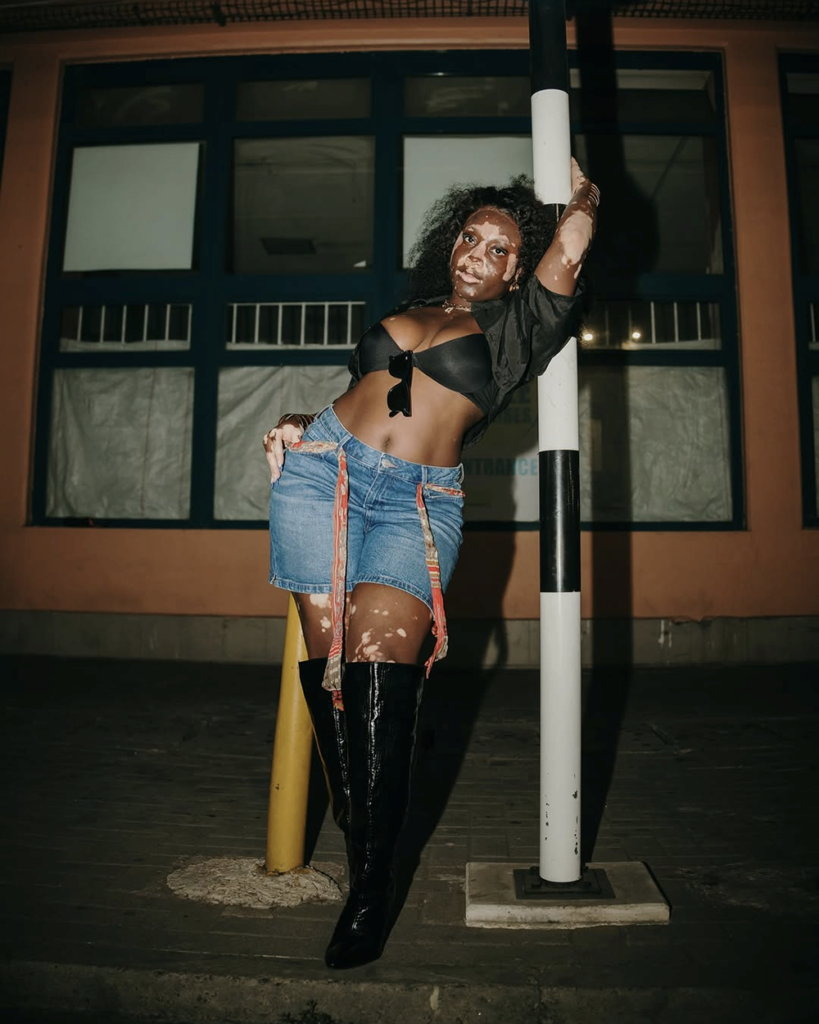
At a time when African creatives are increasingly shaping global style conversations, Abigail Boateng represents a new generation of models redefining what beauty looks like—and who gets to define it.
For her audience, the message is simple but powerful: style is not about hiding difference. Sometimes, the most powerful fashion statement is simply being seen.


Digital Ancestry: Why Synaptic Resonances is the Future of African Performance

Wasawasa: The Ghanaian Dish That Turns Yam Peels into Culinary Gold

From Records to Roots: Discover Your Family Story in This Global Webinar
-

 Business2 days ago
Netherlands Reclaims Position as World’s Top Exporter of Cocoa Products, Ghana Remains Key Supplier
-

 Ghana News24 hours ago
Ghana Leads African Central Banks in Gold Reserve Accumulation as Global Buying Wave Hits $2 Billion
-

 Festivals & Events16 hours ago
A Sunday to Remember: Immersing in the Soulful Power of ‘Before His Throne’
-

 Africa Watch2 days ago
U.S. Warns Citizens to Reconsider Travel to Nigeria Citing Terrorism
-

 Africa Watch2 days ago
Pope Leo XIV to Embark on Ambitious 10-Day Tour of Four African Nations
-

 Ghana News1 day ago
Catholic Bishops Reject Trivialization of LGBTQ+ Debate by Mahama Government: ‘Nations Do Not Live by Bread Alone’
-

 Fashion & Style17 hours ago
How Bondaana Tailored Mahama’s Power Move in Paris
-

 Ghana News24 hours ago
LGBTQ Debate Intensifies After Mahama Comments, Moody’s Upgrades Ghana Outlook and Other Big Stories Today