
Ghana News
“No Blanket Nationalization”: Ghana Moves to Calm Investor Fears After Damang Takeover


ACCRA — The Ghanaian government has explicitly ruled out a blanket nationalization of multinational mining assets, seeking to reassure investors rattled by its recent decision to take operational control of Gold Fields’ Damang mine.
Following a meeting with the Ghana Chamber of Mines, Lands and Natural Resources Minister Emmanuel Armah-Kofi Buah confirmed that the country has no policy or plan to seize mining assets in a sweeping manner.
The announcement comes barely a month after the government’s dramatic move to reject Gold Fields’ lease renewal for the Damang mine, a decision that sent shockwaves through the sector.
“The government does not have a policy or plan to take over the mining assets of multinational companies in a blanket manner,” Buah stated, according to a Xinhua News Agency report.
Instead, the Minister indicated that each mining lease case would be handled on its own merit, as dictated by the legal and regulatory framework, while pursuing the primary objective of protecting the national interest. The government’s policy is aimed at ensuring a sustainable mining sector that assures returns for investors; promoting technology transfer and expertise development; improving local content; and creating opportunities for local mining communities.
The Damang Precedent and Sector Jitters
Investor anxiety has been running high since April 16, 2025, when the Ministry of Lands and Natural Resources announced it would assume operational control of the Damang Mine of Abosso Gold Fields Limited (AGL) upon the expiration of its 30-year lease on April 18, 2025.
At the time, the government justified the decision based on three grounds, citing the company’s failure to declare verifiable mineral reserves, the absence of a detailed technical program, and a lack of budgetary allocation for exploration over the preceding two years. Gold Fields had halted active mining at Damang in 2023 and shifted to processing stockpiles, with an estimated remaining life of mine of just one year.
However, the move triggered immediate alarm within the industry. The Ghana Chamber of Mines warned that lease revocations and uncertainty surrounding renewals could create the perception that “security of tenure in Ghana is not guaranteed,” potentially affecting investment inflows into the sector.
That concern was amplified in May when the Institute of Economic Affairs (IEA), led by former Chief Justice Sophia Akuffo, called on the government to reject Gold Fields’ reported application for a 20-year lease extension at the Tarkwa mine, arguing that Ghana should seize this “historic opportunity” to reclaim ownership of one of Africa’s largest gold mines.
The Chamber of Mines swiftly rejected those calls, cautioning that public pressure surrounding the renewal process risked undermining legal certainty, regulatory predictability, and Ghana’s reputation as a stable mining investment destination.
The Tarkwa Test Case
The contrasting positions set the stage for a fierce debate over the future of Ghana’s mining sector. The IEA argued that Ghana had little transformative development to show after decades of allowing foreign firms to exploit its mineral resources under what it described as concessionary arrangements rooted in the colonial era, maintaining that Ghana now has the technical expertise and operational capacity to manage the Tarkwa Mine itself .
But the Chamber of Mines pushed back forcefully. Chief Executive Officer Kenneth Ashigbey insisted that discussions must be guided by facts and careful analysis, warning that any move to nationalise operations without broader consultation could negatively affect investments and disrupt sector activities.
Resource governance expert and co-chair of the Ghana Extractive Industries Transparency Initiative (GHEITI), Dr. Steven Manteaw, also pushed back against calls for non-renewal, describing the proposals as “misplaced and completely ill-informed”.
“The oil sector is today struggling to attract investments because Ghana is seen as a hostile destination,” Manteaw warned. “The effect is that our oil sector risks collapse in less than 10 years if the situation remains the same. We must be careful here”.
A “Win-Win” Approach
Buah’s latest assurance—that Ghana remains open to investors based on “win-win” cooperation—appears calibrated to strike a balance between rising nationalist sentiment and the practical need for foreign capital and expertise.
The Minister’s stated goals include ensuring sustainable returns for investors while simultaneously promoting technology transfer, expertise development, local content, and benefits for mining communities.
This approach aligns with the government’s broader policy shift away from what officials have described as the “neo-colonial posturing of automatic renewals” of mining licenses, moving instead toward a thorough reassessment of mining leases to ensure optimal national benefit.
The Tarkwa mine remains a key test case for this new approach. The current lease is set to expire in 2027, and the mine produced approximately 427,000 ounces of gold in 2025. A final decision on its renewal will follow a technical review process that includes presentations to a technical committee at the Minerals Commission and subsequent ministerial-level consideration.
Key Facts at a Glance
| Aspect | Details |
|---|---|
| Minister’s Statement | No blanket nationalisation policy or plan |
| Approach | Case-by-case review based on legal and regulatory framework |
| Damang Outcome | Lease rejected; state assumed operational control (April 2025) |
| Tarkwa Status | Lease expires 2027; renewal under review |
| IEA Position | Calls for rejecting Tarkwa renewal; advocates Ghanaian control |
| Chamber of Mines Position | Warns against unpredictability; defends investor confidence |
| Analyst Warning (Manteaw) | Oil sector cautionary tale; risk of “hostile destination” label |
| Government Stated Goals | Technology transfer, local content, community benefits, sustainable returns |






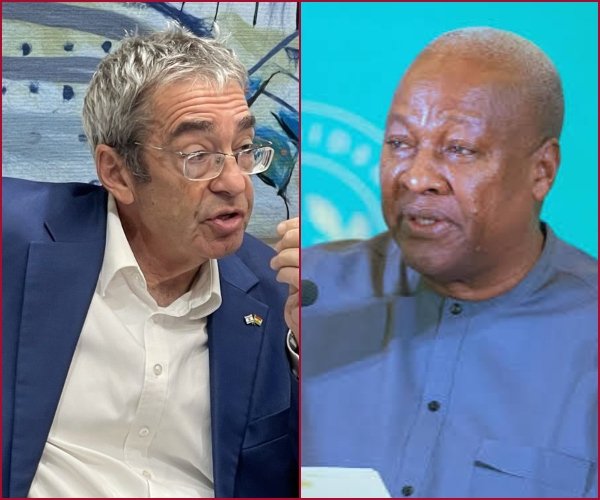
The Israeli Ambassador to Ghana has publicly rejected President John Dramani Mahama’s characterization of the war in Gaza as genocide.
Ambassador Roey Gilad has described Mahama’s assessment of the situation in Gaza as “wrong” and pointed out that Israel’s military campaign is a defensive operation with no intent to annihilate the Palestinian people.
The remarks, delivered at a press briefing in Accra, sharpen the diplomatic disagreement between the two nations over the legal and moral interpretation of the conflict.
The Clash Over “Intent”
Ambassador Roey Gilad acknowledged the significant number of casualties but argued that the legal definition of genocide rests on specific intent, not the scale of civilian deaths. He stated that Israel’s operations were a defensive response to the Hamas-led attacks of October 7, 2023, and that civilian casualties were “collateral damage” rather than an objective of the campaign.
“What defines genocide is the intention of one side to annihilate, to destroy completely the other side… There was no intention whatsoever to destroy, to annihilate the Palestinian people and in that sense I think the President is wrong,” Ambassador Gilad said.
He further emphasized that Israel is fighting terrorist organizations, not the Palestinian people, highlighting the challenge posed by Hamas operating within civilian areas in Gaza.
The President’s Position
President Mahama has consistently used the term “genocide” in international forums. He first applied the label during his address to the 80th United Nations General Assembly in September 2025. He reaffirmed this stance in an interview with TRT World’s Bigger Than Five program aired on August 21, 2026, where he argued that the international community had avoided direct language about the crisis.
He tied the situation in Gaza to what he describes as double standards in international justice, saying, “As long as we continue to distort justice, depending on who it is, we’ll continue to live a lie.”
A Relationship of Disagreement and Partnership
Despite the verbal conflict, the Ambassador was keen to downplay the notion of a strained relationship, stressing that disagreements do not equate to bad relations. He noted that Ghana remains an “extremely important partner” for Israel and highlighted the reopening of Ghana’s embassy in Tel Aviv in late August as a sign of strengthening ties.
Ghana and Israel have maintained diplomatic relations since 1957. The two nations have continued to cooperate on development issues, with recent bilateral consultations in Jerusalem covering cybersecurity, fintech, and defense.
Continued Scrutiny and Casualties
The public disagreement occurs against the backdrop of ongoing international scrutiny over the humanitarian situation in Gaza. As of August 25, 2026, Gaza’s health ministry reported 73,431 Palestinians killed and 174,437 injured since October 7, 2023. The United Nations attributes these figures to the Gaza Ministry of Health while noting they have not all been independently verified.
The debate mirrors wider legal arguments regarding the situation, centered on the interpretation of the 1948 Genocide Convention and whether Israel’s actions demonstrate the specific intent required for a legal finding of genocide.
The Ambassador also called on Ghana to join international efforts to pressure Iran, which he claims is destabilizing the region and impacting global trade routes, including fuel imports crucial for Ghana’s economy.

Here are the top headline stories from the Thursday, August 27, 2026, front pages.
⚖️ Presidential Assent & Legislative Action
- Daily Graphic: “President assents to Tribunals Bill, 9 others” (Mahama signs 10 bills passed by Parliament into law).
- The Spyder: “Mahama defies Bawumia, Labour, Minority to enact Tribunals Law”
- The Meridian: “Mahama Signs Tribunals Act Into Law …9 Other Bills Also Get Presidential Assent”
- The Daily Searchlight: “TRIBUNALS ARE BACK!!!! ..As Mahama Signs Tribunals Bill Into Law Despite Opposition From Minority, Labour And Bawumia”
🗳️ NPP Chairmanship Race (The Agyarko Surge)
- The Custodian: “Agyarko Commits To Bawumia’s 2028 Victory Under His Chairmanship”
- Daily Guide: “Vote For Me, I’ll Make Bawumia President – Boakye Agyarko”
- The Daily Statesman: “BAWUMIA PRESIDENCY, NPP MAJORITY MY 2028 FOCUS” (Boakye Agyarko)
- The Chronicle: “Insha Allah: NPP WILL BE BACK IN 2028! …Agyarko Assures Supporters”
- The Ghanaian Publisher: “Agyarko Pledges To Unite NPP… Vows To Deliver 2028”
- The Daily Gist: “NPP National Chairmanship Race: Elect Me To Make Bawumia President In 2028 – Agyarko Tells Delegates”
- The Dispatch: “I WILL BE A NATIONAL CHAIRMAN FOR EVERY NPP MEMBER, NOT ANY FACTION – PAUL AFOKO”
- The Hawk Newspaper: “WONTUMI DROPS CHAIRMANSHIP BID: ‘STAY UNITED'” and “NAPO: ‘IF BAWUMIA DOES NOT BECOME PRESIDENT, NO ONE IN NPP CAN'”
💰 The GoldBod Saga & Mining
- Daily Guide: “IEA Rejects Gold Sale Loss Claims Against GoldBod”
- The Daily Gist: “Where Is The Missing $1.7bn Gold Cash?”
- The Ghanaian Publisher: “GoldBod Bans Unrefined Gold Doré Exports Sept. 1”
- The Daily Statesman: “Restore missing reports, IERPP tells GoldBod”
- The Chronicle: “Tarkwa Residents Demonstrate For Goldfields’ Lease Renewal”
- B&FT: “Gold Fields offers increased value-sharing in Tarkwa lease renewal bid”
🛡️ Security & Vigilantism Crackdown
- The Exclusive: “National Security Coordinator Warns Against Vigilante Rebranding”
- The Spyder: “Stop Them before They Start – National Security Coordinator Unveils Month-by-Month War Plan against Vigilantism”
- Daily Democrat: “National Security Coordinator Calls For Stronger Action Against Vigilantism”
- The National Enquirer: “2028 POLLS UNDER WATCH – National Security detects early recruitment for political violence”
- The Dispatch: “POLITICAL VIGILANTISM NOW AN ORGANISED THREAT TO GHANA’S ELECTIONS – NATIONAL SECURITY COORDINATOR”
- The Hawk Newspaper: “VIGILANTES ARE BACK IN DISGUISE …National Security targets rebranded groups going online”
- Day Break: “From Vigilantism To Landguardism: National Security Chief Calls For A New Enforcement Drive”
👔 Major Cabinet Reshuffle
- Daily Guide: “Ministerial Reshuffle: Pelpuo, Brogya Genfi Dispatched To Jubilee House”
- The Daily Gist: “Mahama Sacks Brogya Genfi As Deputy Defence Minister”
- Day Break: “From Square To Bunker …Mahama Dumps Brogya Genfi At Presidency”
- The Exposé: “Fear Grips Some Ministers As Mahama Re-Assigns Pelpuo, Brogya Gyamfi”
- The Daily Banner: “Mahama Removes Brogya Genti in 2nd Major Reshuffle”
- The New Crusading Guide: “Mahama Reassigns Brogya Genfi, Pelpuo Moved To Special Initiatives”
💼 Corporate Fraud & Business
- The Canary / Day Break / The Meridian / The Spyder / The Daily Banner / The Exposé / The New Crusading Guide: All feature “Nguvu Holdings Denies US$224M False Media Publication / Share Fraud… Demands Retraction And Apology” (regarding Moses Bospem).
- B&FT: “Diaspora purchasing power fails housing patronage test” and “Recovery ‘real’ but structurally incomplete – World Bank”
- The Daily Gist: “MP Chases Ablakwa For Unnamed Financiers Of South Africa Evacuation”
⚖️ Legal & Corruption Cases
- Daily Graphic / Daily Guide / The Meridian / The Daily Banner / The Daily Gist: “OSP names 5 in AKSA bribery case” / “Aksa $1m Bribe OSP Lists Kwabena Donkor, Others As Persons Of Interest” / “Berko Case: OSP fingers Donkor, 4 others as persons of interest”
- The Chronicle: “OSP Will Show No Fear Or Favour – Agyebeng”
- The Daily Statesman: “Berko Case: K.T Hammond accuses OSP of unprofessional conduct”
- The New Crusading Guide: “Gbade Denies Any Involvement In Galamsey” and “23 People, Including 11 Children, Killed By Abandoned Galamsey Pits – Amoakohene”
🛡️ Social, Health & Other Headlines
- The Canary: “Teaching Arabic is Not Islamization” (Mustapha Hamid Defends Mahama, Bawumia)
- The Custodian / The Canary: “Let’s Respect Ghana’s Religious Diversity / Politics Of Insult Is Uncivilised Behaviour”
- The Voiceless: “Dr. Mahamudu Bawumia Mourns The Legendary Grace Nortey”
- Daily Graphic / The Ghanaian Publisher: “CPS To Evaluate 9-Year Free SHS Journey”
- The Daily Searchlight: “Clear & Present Danger!!!!! As Bagre Dam Begin Spillage On August 28 As Water Levels Reach Critical Threshold”
- The Exposé: “Govt Rejects MTN Ghana’s Gh20m Support for Xenophobic Evacuees”
- Graphic Showbiz: “Gone too soon, but never gone from our playlists” (Oswald Okaitei) and “Tourism not only concerts – Oswald Okaitei”; featuring Bozoma Saint John and Keely Watson’s traditional Ghanaian wedding.
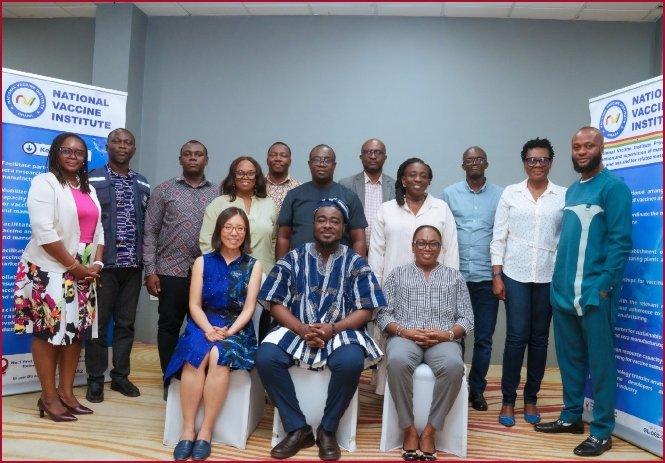
Accra, Ghana – August 26, 2026 – In a landmark achievement for the country’s health and scientific sector, Ghana has been selected as one of only eight countries globally to pilot the World Health Organization’s (WHO) draft benchmarking tool for institutional capability in clinical trials.
The initiative, spearheaded by the National Vaccine Institute (NVI) and supported by the European Union, the Bill & Melinda Gates Foundation, and the UK Government, positions Ghana not just as a participant in global health research, but as a key architect of the very standards that will govern it.
A press statement issued by the NVI explained that, unlike traditional assessments that simply measure the number of studies undertaken, the new WHO tool, which has completed testing and validation in Ghana, provides a structured, evidence-informed approach to evaluate the enabling systems required for consistently high-quality, ethical, and efficient clinical trials.
The framework examines institutional capability across seven functional areas, including patient engagement, scientific research design, regulatory oversight, data management, trial operations, leadership, and infrastructure, encompassing a total of 32 functional objectives and 112 specific outcomes.
Testing and Validation
As part of the pilot phase, the NVI and WHO recently convened a training workshop in Ho, Volta Region, where institutional teams were introduced to the tool and supported in organizing teams for self-assessment. Following this, a comprehensive self-assessment exercise was conducted from August 10 to 13, 2026, across 13 key Ghanaian institutions.
The participating institutions are: the Noguchi Memorial Institute for Medical Research (NMIMR), University of Ghana; University of Ghana Medical Center; West African Centre for Cell Biology of Infectious Pathogens (WACCBIP); Revna Bioscience; University of Cape Coast Enchi Government Hospital; Dodowa Health Research Center; University of Health & Allied Sciences, Hohoe; Centre for Plant Medicine Research, Mampong; KNUST – Kumasi Centre for Collaborative Research (KCCR); KNUST IVI – Agogo; Kintampo Health Research Centre; University for Development Studies, Tamale; and Navrongo Health Research Centre.
Emphasizing that the exercise is strictly for capacity development and continuous improvement rather than institutional ranking, NVI Chief Executive Officer, Dr. Sodzi Sodzi-Tettey, pointed out that the initiative is a critical component of Ghana’s long-term vaccine manufacturing roadmap.
“We are starting with fill-and-finish as a practical entry point, with the long-term goal of full end-to-end manufacturing. The expertise gathered in this room represents the enormous brain power we need to map our institutional capability gaps and begin closing them,” Dr. Sodzi-Tettey stated.
Important Step for Ghana’s Health Sovereignty
The initiative represents a major leap forward for Ghana’s health sovereignty agenda. Deputy Minister of Health, Dr. Grace Ayensu-Danquah, who attended the Ho workshop, stressed that clinical trials conducted elsewhere do not always serve African populations well.
“True health sovereignty depends on the less visible groundwork—systems, policy, and institutional capacity—that precedes actual vaccine production,” Dr. Ayensu-Danquah said.
She added that a proposal for regional collaboration where African countries specialize in specific products and capabilities, trading with one another as “centers of excellence” rather than attempting to produce everything independently.
WHO Technical Officer for Integrated Service Delivery, Dr. Angela Ackon, reaffirmed the global body’s support for the initiative.
“This benchmarking exercise gives Ghanaian institutions a structured, evidence-based way to understand their own capabilities and chart a clear path for improvement,” Dr. Ackon noted. “WHO is proud to stand with the National Vaccine Institute and the Government of Ghana in this important step.”
By participating in this elite global pilot, Ghana will directly influence the finalization of the WHO tool for global adoption.
The findings from the 13 local institutions will be used to identify common capacity gaps, align investments with national priorities, and position Ghana as a trusted, scientifically rigorous, and internationally competitive destination for high-quality clinical trials in Africa and beyond.


The Hidden Brain Benefit of Strength Training After 30

Cedi Fears, Courtroom Drama, and a Viral Escape: Inside Ghana’s Wildest Social Media Day

Diplomatic Row: President Mahama and Israeli Ambassador Lock Horns Over Gaza
-
 Ghana News1 day ago
Ghana Selected Among Eight Pilot Partners for WHO’s Global Clinical Trial Standards
-
 Sights and Sounds1 day ago
Nine Hours That Changed the Gold Coast: The Legacy of the Battle of Katamanso
-

 Ghana News9 hours ago
Top Headlines From Ghanaian Newspapers: Thursday, August 27, 2025
-
Ghana News1 day ago
Top Headlines From Ghanaian Newspapers: Wednesday, August 26, 2025
-

 Health & Wellness13 hours ago
Your Calves Are Your Second Heart: The Travel Health Risk Too Many People Ignore
-
 Ghana News8 hours ago
Diplomatic Row: President Mahama and Israeli Ambassador Lock Horns Over Gaza
-
 Festivals & Events2 days ago
Beyond the Hype – Next Level Is Bringing Ghana’s AI Future to Life at Google Accra
-

 Arts and GH Heritage14 hours ago
The Tower of Discarded Things: How Teshie Turns Letting Go into a Festival Ritual