
Ghana News
Lawyer for Ghana MP Arrested in Netherlands Gives Update, IEA Opposes Gold Field’s Lease Extension and Other Big Stories in Ghana Today

Welcome to our curated morning news roundup.
Lawyer for OK Frimpong Speaks After Arrest of MP in the Netherlands
Legal counsel for detained Ghanaian MP Ohene Kwame Frimpong, known as OK Frimpong, has broken his silence following the lawmaker’s arrest in the Netherlands. The lawyer provided the first official comments on the situation, which has sparked a major diplomatic effort between Accra and The Hague. Speaking in an interview on Salt FM on May 14, 2026, the lawyer, Elvis Adu-Ameyaw, stated that he is prepared to fight for MP’s freedom in Amsterdam.
The arrest of the Asante Akyem North MP, who was reportedly travelling to the United Kingdom, has raised numerous questions. The Majority Chief Whip previously revealed that the MP was detained based on an international warrant circulated through INTERPOL. The legal team’s statement is highly anticipated as it may shed light on the specific allegations against the legislator. Read the full story here
IEA Urges Government to Reject Gold Fields’ Lease Extension for Tarkwa Mine
The Institute for Economic Affairs (IEA) is urging the Ghanaian government to reject a proposed lease extension for Gold Fields’ Tarkwa mine, arguing that the current terms are not in the country’s best interest. The policy think tank believes the agreement, as it stands, fails to secure adequate benefits for the state and local communities, potentially locking Ghana into decades of unfavourable revenue sharing. The IEA is calling for a renegotiation that prioritises national development and environmental safeguards.
This pushback comes amid a broader national conversation about how Ghana manages its natural resource wealth. The IEA’s stance adds pressure on the government to demonstrate transparency and assertiveness in dealings with multinational mining corporations. Analysts suggest that a failure to secure better terms could set a damaging precedent for future resource contracts. Read the full story here
Nurse Killed in Crash While Transporting Medical Supplies with Motorbike
A tragic road accident has claimed the life of a nurse who was transporting essential medical supplies on a motorbike. The female health worker, whose dedication took her on perilous routes to deliver critical supplies, was involved in a fatal crash that has sent shockwaves through the local health community. The incident highlights the often-dangerous conditions faced by healthcare professionals working to reach underserved communities.
The death has reignited calls for improved logistical support for health workers, particularly those in rural areas who rely on personal vehicles and motorcycles to perform their duties. Colleagues and community members are mourning the loss, describing her as a selfless individual who paid the ultimate price in the line of duty. Authorities are investigating the cause of the crash. Read the full story here
Antoine Semenyo Shortlisted for Premier League Player of the Season Award
Ghanaian international Antoine Semenyo has received a prestigious nomination, being shortlisted for the English Premier League Player of the Season award. The Black Stars forward has enjoyed a remarkable campaign, becoming one of the most lethal and exciting attackers in the world’s most-watched league. His powerful runs and clinical finishing have made him a fan favourite and a nightmare for opposing defenders.
Semenyo’s nomination is a massive boost for Ghanaian football, placing him among the elite players in the global game. His success serves as an inspiration to young talents across the country, proving that Ghanaian players can compete at the very highest level. The winner of the award will be announced at the end of the season. Read the full story here
Makola Market Traders to Petition Mahama Over Relocation Plans
Hundreds of traders from the 31st December Makola Market in Accra are staging a protest march today, Friday, May 15, heading to the Jubilee House to petition President John Dramani Mahama. The traders are vehemently opposing what they describe as plans by the Accra Metropolitan Assembly (AMA) to relocate them from the market without providing an alternative trading space. The demonstration has created an atmosphere of fear and uncertainty among business owners who rely entirely on daily sales for their survival.
Speaking to journalists ahead of the demonstration, Interim Market Manager Ebenezer Bekoe expressed strong dissatisfaction, insisting that the traders feel abandoned and threatened by the proposed arrangement. “We are going to take a very drastic action. Our placards are ready, and we are moving,” Bekoe warned. He noted that while the police have issued a permit for 100 persons, the actual number of protesters is expected to be far larger, as many have invested heavily in their businesses and fear the relocation will worsen their economic hardship. Read the full story here
Ghana Shippers Authority Postpones Implementation of Revised Container Charge
The Ghana Shippers Authority has announced a postponement of the planned implementation of revised container charges, offering a reprieve to importers, exporters, and freight forwarders. The decision to delay the new fee structure comes after consultations with industry stakeholders who raised concerns about the potential impact on the cost of doing business. The Authority has not yet set a new effective date, promising further engagement with the shipping community.
The postponement is seen as a victory for trade advocacy groups which argued that the immediate implementation would have disrupted supply chains and increased inflationary pressures. The move allows businesses more time to adjust and for the Authority to refine the policy. The decision demonstrates a responsive regulatory approach, balancing the need for efficient port operations with the realities of the current economic climate. Read the full story here
Very Good Time to Be in Ghana, EU Ambassador Tells Investors
The European Union Ambassador to Ghana has declared that it is a “very good time to be in Ghana,” issuing a strong endorsement to the international investment community. Speaking at a recent economic forum, the Ambassador highlighted the country’s stable democracy, strategic location, and ongoing economic reforms as key attractions for European businesses. The endorsement signals strong international confidence in Ghana’s potential as a prime investment destination.
The Ambassador’s comments are expected to boost foreign direct investment, particularly in sectors like agribusiness, technology, and renewable energy. This vote of confidence comes at a crucial time as the government seeks to accelerate industrialisation and create jobs. The EU remains one of Ghana’s largest trading partners, and this public encouragement is likely to strengthen bilateral trade ties even further. Read the full story here


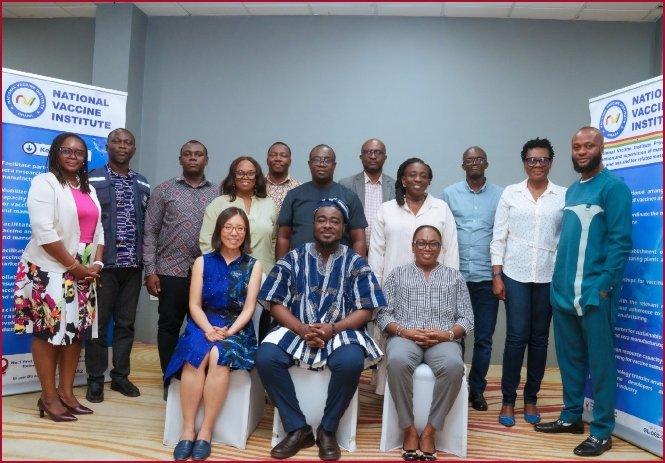
Accra, Ghana – August 26, 2026 – In a landmark achievement for the country’s health and scientific sector, Ghana has been selected as one of only eight countries globally to pilot the World Health Organization’s (WHO) draft benchmarking tool for institutional capability in clinical trials.
The initiative, spearheaded by the National Vaccine Institute (NVI) and supported by the European Union, the Bill & Melinda Gates Foundation, and the UK Government, positions Ghana not just as a participant in global health research, but as a key architect of the very standards that will govern it.
A press statement issued by the NVI explained that, unlike traditional assessments that simply measure the number of studies undertaken, the new WHO tool, which has completed testing and validation in Ghana, provides a structured, evidence-informed approach to evaluate the enabling systems required for consistently high-quality, ethical, and efficient clinical trials.
The framework examines institutional capability across seven functional areas, including patient engagement, scientific research design, regulatory oversight, data management, trial operations, leadership, and infrastructure, encompassing a total of 32 functional objectives and 112 specific outcomes.
Testing and Validation
As part of the pilot phase, the NVI and WHO recently convened a training workshop in Ho, Volta Region, where institutional teams were introduced to the tool and supported in organizing teams for self-assessment. Following this, a comprehensive self-assessment exercise was conducted from August 10 to 13, 2026, across 13 key Ghanaian institutions.
The participating institutions are: the Noguchi Memorial Institute for Medical Research (NMIMR), University of Ghana; University of Ghana Medical Center; West African Centre for Cell Biology of Infectious Pathogens (WACCBIP); Revna Bioscience; University of Cape Coast Enchi Government Hospital; Dodowa Health Research Center; University of Health & Allied Sciences, Hohoe; Centre for Plant Medicine Research, Mampong; KNUST – Kumasi Centre for Collaborative Research (KCCR); KNUST IVI – Agogo; Kintampo Health Research Centre; University for Development Studies, Tamale; and Navrongo Health Research Centre.
Emphasizing that the exercise is strictly for capacity development and continuous improvement rather than institutional ranking, NVI Chief Executive Officer, Dr. Sodzi Sodzi-Tettey, pointed out that the initiative is a critical component of Ghana’s long-term vaccine manufacturing roadmap.
“We are starting with fill-and-finish as a practical entry point, with the long-term goal of full end-to-end manufacturing. The expertise gathered in this room represents the enormous brain power we need to map our institutional capability gaps and begin closing them,” Dr. Sodzi-Tettey stated.
Important Step for Ghana’s Health Sovereignty
The initiative represents a major leap forward for Ghana’s health sovereignty agenda. Deputy Minister of Health, Dr. Grace Ayensu-Danquah, who attended the Ho workshop, stressed that clinical trials conducted elsewhere do not always serve African populations well.
“True health sovereignty depends on the less visible groundwork—systems, policy, and institutional capacity—that precedes actual vaccine production,” Dr. Ayensu-Danquah said.
She added that a proposal for regional collaboration where African countries specialize in specific products and capabilities, trading with one another as “centers of excellence” rather than attempting to produce everything independently.
WHO Technical Officer for Integrated Service Delivery, Dr. Angela Ackon, reaffirmed the global body’s support for the initiative.
“This benchmarking exercise gives Ghanaian institutions a structured, evidence-based way to understand their own capabilities and chart a clear path for improvement,” Dr. Ackon noted. “WHO is proud to stand with the National Vaccine Institute and the Government of Ghana in this important step.”
By participating in this elite global pilot, Ghana will directly influence the finalization of the WHO tool for global adoption.
The findings from the 13 local institutions will be used to identify common capacity gaps, align investments with national priorities, and position Ghana as a trusted, scientifically rigorous, and internationally competitive destination for high-quality clinical trials in Africa and beyond.

The August 26, 2026, front pages of Ghanaian newspapers highlight the upcoming NPP internal elections and the disputed financial loss scandal concerning the GoldBod.
🗳️ NPP Internal Elections & Party Politics
- The Chronicle: “Afoko: I’ll Work With Bawumia … To Win 2028”
- The Custodian & The NewsCentra: “Afoko Files For NPP Chairmanship” / “Afoko files, pledges inclusive leadership”
- Daily Guide: “Assuah Backs Boakye Agyarko For NPP National Chairman” and “Let’s Give Bawumia United Party To Win 2028 Election – Afoko”
- The Ghanaian Publisher: “Agyarko Files For NPP Chair”
- Republic Press, The National Voice, & The Daily Banner: “Wontumi Quits NPP Chairmanship Race” / “Wontumi Withdraws From NPP National Chairmanship Race”
- The Source: “NPP Organiser Race: Titus-Glover Files, Accra Chairmen Back Him”
- The Voiceless: “Musah Superior Writes; Who Really Led The NPP To Victory In 2016?” (A defense of John Boadu’s role over Paul Afoko’s).
💰 The GoldBod & GH¢22bn ($1.7bn) Loss Saga
- The Custodian, Daily Guide, & Supreme Newspaper: “NPP Demands Full Account of $1.7 Billion GoldBod, BoG Losses”
- The Daily Gist & Republic Press: “GoldBod Is Broke After BoG Exit” / “Probe GoldBod $1.7bn Losses – CPS Demands”
- The Daily Gist & The Custodian: “Afenyo-Markin Sues Sammy Gyamfi” / “Osahen Drags Sammy Gyamfi, Others To Court For Character Assassination”
- The Informer: “Afenyo-Markin Dares Accusers”
- The Inquisitor: “BANKS LINE UP FOR GOLDBOD” (Financing Gold Purchase)
- The Metro Lens: “GOLDBOD Bans Doré Exports”
- The New Crusading Guide: “GoldBod Orders Self-Financing Aggregators: Refine Gold Doré Here Or Don’t Export”
- The Daily Searchlight: “BoG/GOLDBOD $1.7B LOSS – WE WILL NOT STOP SPEAKING! – NPP”
- The Meridian: “NPP Chases Goldbod Over $1.7bn Black Hole”
- The NewsCentra, Daily Banner, & The National Voice: “Parliament to probe GH¢22bn gold ‘loss’ – Bagbin”
⚖️ Legal, Parliament & Security
- Daily Guide & Republic Press: “Zenator Rawlings, Ayariga Face MPs Grilling” / “No Break For Adu Boahene! …As Judge Rejects Akyea’s Plea”
- The Accra Times & The Source: “NATIONAL SECURITY BOSS Calls For Tougher, Neutral Enforcement” / “National Security 1 Step Ahead”
- The New Crusading Guide: “VIGILANTE GROUPS CHANGE TACTICS… Rebranding, Now Use Encrypted Social Media Networks – National Security Warns”
- The Informer: “IMF Warns Ghana Against Complacency”
🛡️ Religious & Social Issues
- The Daily Statesman, The Meridian, The Source, The National Voice, & The Daily Banner: “LET’S STOP WEAPONISING RELIGION FOR POLITICAL GAIN” / “Political Abuse Threatens Ghana’s Religious Peace – Hamid”
- The Accra Times: “Bulisa North MCE Condemns Alleged Military Brutality” and “New UniMAC SRC Boss Pledges Accountable And Inclusive Leadership”
- Supreme Newspaper: “Adoteiman Chief Alleges Brutal Assault”
🏥 Health, Environment & Economy
- Daily Graphic: “Stroke rises among men aged 30-49 – Health expert”
- The Ghanaian Times: “Nation’s road deaths hit 35-year high” (2,949 killed on roads in 2025) and “7 arrested in Ashanti narcotics crackdown”
- Business & Financial Times (B&FT): “GNPC on track for Q4 drilling in Voltaian Basin” and “IMF debt assessments failed to fully capture mounting crisis”
- The Informer: “Tackle Galamsey; Don’t Over Celebrate GoldBod Gains”
- The Daily Statesman: “CADEG welcomes GAC entry into Ghana’s automotive market”
⛏️ Corporate & Mining
- The Chronicle & The NewsCentra: “Goldfields Seeks Fair Treatment From Ghana” / “Gold Fields Pleads Fairness” (regarding the Tarkwa Lease renewal)
- The Inquisitor: “Mahama Calls For Stronger Health Regulation To Protect Patients Across Africa”
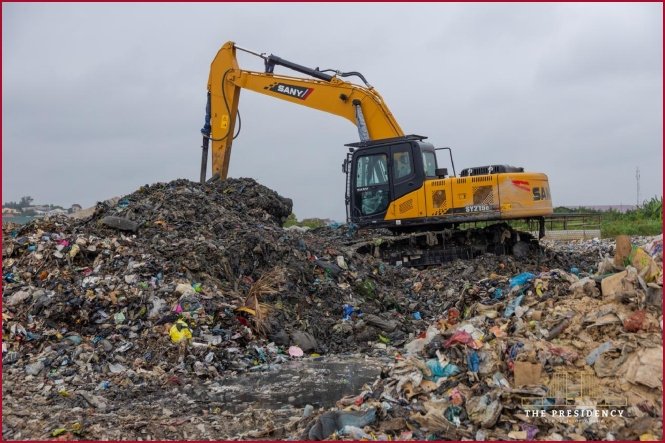
The government has launched a major military-led operation to reclaim the Lafa water retention basin at Mallam, deploying the 48 Engineer Regiment of the Ghana Armed Forces in a high-stakes effort to break the cycle of perennial flooding that has devastated communities in Mallam, Weija, Blue Lagoon, Dansoman and surrounding areas for years.
The intervention, which involves breaking up tonnes of compacted solid waste and dredging heavily silted sediment from the basin, comes nearly two months after torrential rains on June 29 triggered catastrophic flooding across the Greater Accra Region.
The exercise is being coordinated by the Post-Flood Mitigation Task Force, led by the Deputy Chief of Staff in charge of Operations, Mr Stan Xoese Dogbe.
“We are dealing with decades of deliberate dumping,” said Ing. Richard Kofi Amekor, Head of Drainage at the Ghana Hydrological Authority. “Solid waste, boulders and laterite have been tipped into this basin for years. The reservoir is so heavily silted that rainwater could not flow into it naturally, causing backflow that swamped Blue Lagoon, the Mallam-Gbawe corridor and parts of Dansoman.”
According to Ing. Amekor, the Lafa stream originates from Mallam-Gbawe Zero and passes through Santa Maria, Atieku, Pallas Town, Alhaji Tabora and McCarthy Hill before draining into the basin and eventually into the sea. But the obstruction of the basin turned the watercourse into a death trap during the June downpour.
The military engineers face an arduous task. Brigadier General Richard Kinney, Commander of the 14 Engineer Brigade, revealed that the waste had been capped with laterite over the years to create land for illegal sale and development, making excavation particularly difficult.
“Our immediate task is to loosen the compacted material before removal. To minimise traffic disruptions, all haulage of excavated debris will be undertaken at night to the designated landfill site at Nsawam,” Brig. Gen. Kinney stated. He added that the entire dredging and evacuation exercise is expected to take several months.
Beyond the dredging, officials are calling for a more permanent solution: the demolition of all illegal structures erected within the water retention area. Ing. Amekor noted that buildings constructed inside the basin have substantially reduced its storage capacity.
“Once the illegal structures are removed, the Hydrological Authority will work with the Weija-Gbawe Municipal Assembly to secure the banks and ensure continuous monitoring,” he said, warning that restoration of the basin will significantly reduce flooding impacts, though it may not eliminate flooding entirely due to the area’s topography and upstream runoff.
Brigadier General Forster Okae-Yeboah, Director General of Joint Operations of the Ghana Armed Forces and Coordinator of the Flood Mitigation Works, confirmed that the Mallam operation is part of a wider, nationwide offensive. Similar dredging works are ongoing at Oyarifa, East Legon and the Kpeshie Lagoon, while work will begin next week around the Kpeshie-Laboma Beach enclave to reopen the channel linking the lagoon to the sea.
“Government has fulfilled its commitment by providing funding and equipment for this exercise, but we appeal to the private sector to support this nationwide initiative,” Brig. Gen. Okae-Yeboah said.
He stressed that military action alone would not solve Ghana’s flooding crisis without sustained public cooperation.
“Residents must stop dumping refuse into the basin and encroachers must vacate immediately. Only by protecting our waterways can we protect lives and property,” he admonished.


Ghana Selected Among Eight Pilot Partners for WHO’s Global Clinical Trial Standards

Nine Hours That Changed the Gold Coast: The Legacy of the Battle of Katamanso

Top Headlines From Ghanaian Newspapers: Wednesday, August 26, 2025
-
 Ghana News1 day ago
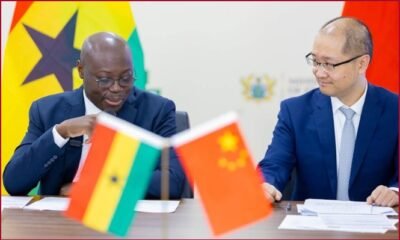
‘We Need Factories’: Ato Forson Calls on China to Invest in Ghana’s Industrial Future
-
 Ghana News1 day ago
Government Deploys Military to Mallam in High-Stakes Bid to End Perennial Flooding
-
 Sights and Sounds2 hours ago
Nine Hours That Changed the Gold Coast: The Legacy of the Battle of Katamanso
-
 Ghana News1 day ago
Top News Headlines from Ghanaian Newspapers: Tuesday, August 25, 2026
-
 Festivals & Events2 days ago
Ahoba Kuma Festival: How the Abura People Keep Their Warrior Legacy Alive
-

 Fashion & Style1 day ago
The 5 Jeans Every Woman Should Own Before Buying Another Pair
-

 Reels & Social Media Highlights20 hours ago
Bawumia’s 2028 Play, Abena Korkor’s Return, and a Security Alarm
-
 Arts and GH Heritage2 days ago
The Architecture of Grief: Gabriel Selassie Tsagli Paints a Portrait of Home and Loss