
Global Update
86-Year-Old Frenchman Issues Historic First Formal Apology for Family’s Role in Transatlantic Slavery


Nantes, France – In what is believed to be the first formal personal apology of its kind in France, an 86-year-old man whose ancestors profited from the transatlantic slave trade has publicly apologised for his family’s involvement, urging both individuals and the French state to confront this dark chapter of history more honestly.
Pierre Guillon de Prince delivered the apology on Saturday, April 18, 2026, in Nantes — France’s historic slave-trading capital — during a ceremony ahead of the inauguration of an 18-metre replica ship mast.
His ancestors, prominent shipowners in Nantes, transported around 4,500 enslaved Africans across the Atlantic and owned plantations in the Caribbean. Standing alongside Dieudonné Boutrin, a 61-year-old descendant of enslaved people from Martinique, Guillon de Prince said he felt a moral responsibility to speak out, especially amid rising racism in society.
“Faced with the rise of racism in our society, I felt a responsibility not to let this past be erased,” he said, adding that he wanted to pass an honest account of his family’s history to his grandchildren.
The two men collaborate through Coque Nomade-Fraternité, an association dedicated to breaking the silence surrounding France’s slave-trading past. Boutrin praised the apology as a “courageous act,” noting that many families with similar histories remain silent for fear of reopening old wounds.
Growing Calls for Accountability
From the 15th to the 19th century, France trafficked an estimated 1.3 million Africans as part of the transatlantic slave trade, out of a total of at least 12.5 million Africans forcibly transported by European nations.
While France formally recognised transatlantic slavery as a “crime against humanity” in 2001, the country has never issued an official state apology, unlike some families in Britain and elsewhere who have offered formal apologies coupled with commitments to repair harm.
Guillon de Prince called on the French government to move beyond symbolic gestures and seriously consider reparations. His action comes as global calls for reparations intensify. Last month, France abstained from a UN resolution declaring slavery “the gravest crime against humanity” and demanding reparations.
The event in Nantes is seen by many as a significant grassroots step toward historical reckoning in a nation still grappling with its colonial legacy.











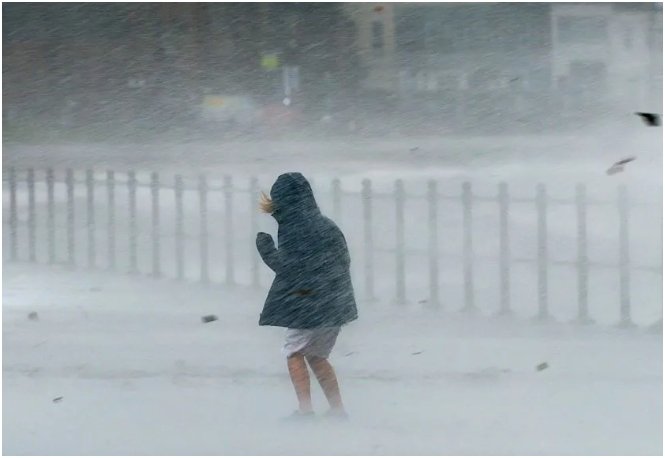
Two men have been killed by falling trees as Storm Boelo continues to batter the United Kingdom with severe weather, leaving more than 90,000 properties without power and causing widespread travel chaos.
A man in his 20s was pronounced dead in north London on Sunday after the car he was driving was struck by a falling tree. The fatality came hours after a 60-year-old man died in Dumfries and Galloway, Scotland.
The Energy Networks Association (ENA) said that as of 19:00 GMT on Sunday, more than 90,000 properties remained without electricity. The association warned that dangerous conditions were “limiting network engineers’ opportunities to safely start the work,” causing delays for affected households.
Fatalities Across the Country
The Metropolitan Police were called to Dollis Road in Finchley at around 12:40 GMT following reports that a tree had fallen onto a moving car. The driver was pronounced dead at the scene.
Chief Inspector Guy Ellwood, from the North West Command Unit, said: “This is a deeply tragic incident and our thoughts are with the loved ones of the young man who lost his life.”
A London Ambulance Service spokesperson confirmed it sent incident response officers, paramedics from its hazardous area response team, and a trauma team from London’s Air Ambulance to the scene.
Earlier, Police Scotland reported that a man died after being hit by a falling tree at Mid Kelton near Castle Douglas. In a separate incident in Aberfeldy, Perth and Kinross, two women were taken to hospital after being struck by a fallen tree at around 12:50 GMT.
Record Power Cuts
Across Storm Boelo and the earlier Storm Austen, which hit the UK on Friday, a combined 838,700 properties faced power cuts, according to the ENA.
Wind gusts peaked on Sunday morning at 85mph in Machrihanish, Argyll and Bute, and 84mph in both Stornoway in the Outer Hebrides and Capel Curig in north Wales.
An amber wind warning issued by the Met Office remained in place until 21:00 on Sunday across Scotland and parts of northern England. A yellow warning covering areas including Liverpool, Manchester, Leeds, Sheffield and Newcastle-upon-Tyne, as well as parts of the East and West Midlands and North Wales, also expired at 21:00.
The Met Office urged people to “stay indoors as much as possible,” adding: “If you do go out, try not to walk, or shelter, close to buildings and trees.”
Flooding and Travel Disruption
Four flood warnings were issued for parts of England and Wales on Sunday, while 17 flood warnings remained in place in Scotland. High rainfall totals were recorded in the Scottish Highlands, peaking at 130mm in Cluanie Inn.
The towns of the Clyde coast in Scotland were hit particularly hard. The main Skelmorlie to Largs road has been badly damaged, and a number of businesses in Largs were flooded overnight on Saturday. In Gourock, a boat ended up on the side of the road, and reports emerged of power being out in Girvan throughout Sunday.
In Dumbarton, on the north bank of the River Clyde, Muhammad Zubair Ashraf’s mobile phone shop was flooded overnight. He estimated between £5,000 and £10,000 of damage was caused and said he was “heartbroken” at the scale of the losses.
Travel has been severely affected across the country. Police in Scotland warned against unnecessary road journeys, ferry services have been impacted, some flights to and from Belfast, Glasgow, Aberdeen and Dublin airports have been cancelled, and train services across the UK have faced disruption.
Government Response
Scottish government ministers and officials gathered on Sunday afternoon to discuss the impact of Storm Boelo.
In a statement, the Scottish government said that while conditions may ease later on Sunday, there is potential for adverse weather to return in the coming days.
Global Update
‘There was a Coordinated Disclosure Plan’: AI-Discovered Flaw in PHP Triggers Global Internet Chaos as Cybercriminals Race to Exploit It

A critical vulnerability in PHP, a programming language that powers much of the internet, was discovered by artificial intelligence, setting off a global scramble that took down websites worldwide and sparked a race between cybercriminals and IT teams to exploit and patch the flaw.
The discovery, made by cybersecurity researchers at Calif and Wiz through OpenAI’s “Patch the Planet” program, was described by Wiz as the “most severe vulnerabilities ever discovered” by AI. The flaws had gone undetected for more than a decade before advanced AI tools found them in a matter of weeks.
What Happened
The vulnerability was found in PHP, the programming language behind roughly 70% of the internet, according to Wiz’s estimate. PHP quietly powers WordPress, Drupal, Joomla, Magento, shared hosting platforms, control panels, and countless software products that don’t even advertise their use of it.
The PHP Foundation intended to release the discovery later this month alongside a complete patch. But details of the flaw were leaked on social media on Tuesday—forcing the Foundation to rush out its announcement and triggering a cascade of emergency responses.
Global Fallout
Governments and organizations worldwide took drastic action:
- Finland temporarily shut down the government’s public web services.
- The Netherlands’ cybersecurity agency took its own website offline, and the Dutch parliament’s lower house website became inaccessible.
- The BBC took several programme pages offline, including those for Doctor Who and The Traitors.
- Edinburgh Council’s website became inaccessible.
- The Wikimedia Foundation took down a number of systems as a precaution, temporarily affecting access to parts of Wikipedia.
- DeviantArt went “temporarily down for maintenance.”
The US National Security Agency issued advice on X for organizations unable to update in time to take their systems offline, warning that “these vulnerabilities often provide a direct path to the server’s file system or database.” The UK’s National Cyber Security Centre, along with counterparts in the EU and Australia, issued similar warnings. Japan’s Prime Minister Sanae Takaichi urged people to check if their publicly available websites ran on PHP.
The White House said federal agencies were working with leading AI labs to speed up a fix.
The AI Factor
Speaking to The World, Matthew Green, a professor of computer science at Johns Hopkins University, explained why AI has fundamentally changed the cybersecurity landscape.
“Human beings are just kind of bad at writing code. The result of that is that we have all of these systems like websites that are full of bugs,” he said. “And the good news is that human beings are bad at finding bugs, or at least that used to be the good news. And unfortunately, AI is very good at finding bugs.”
Green likened traditional vulnerability hunting to finding a weak padlock among a thousand. “That’s incredibly time-consuming. And that’s the kind of thing that AI is great at. It can do millions of padlocks in a day.”
The discovery process itself was ironic: researchers essentially asked an AI model to “find me some great bugs in PHP and try really hard.”
The Leak and the Race
Traditionally, vulnerabilities are disclosed through a coordinated process—notifying organizations quietly so they can patch their systems before details become public. But that process broke down.
“What seems to have happened is there was a coordinated disclosure plan… and one party said, ‘You know what? This is not going fast enough. We’re just going to tell the whole world what the patches are and publish everything,'” Green said. “Once they did that, that kind of opened the floodgates wide for attackers too.”
By the end of Wednesday, even before patching was close to complete, there were thousands of attempts to break into websites, Green said. Cloudflare CTO Dane Knecht said he was “seeing early attacks emerging and are updating mitigations as new vectors show up.”
The Asymmetry Problem
Green highlighted a troubling imbalance: attacking is now AI-automated, while patching remains stubbornly human.
“Fixing things can break parts of the website you don’t expect to be broken. So unfortunately, this patching process is still very human oriented, whereas the attacking process is now AI automated and it’s bad asymmetry,” he said.
He cautioned against simply deploying AI to fix systems autonomously. “Imagine somebody finds a bug in an important piece of software or hardware that’s running inside a water treatment plant. Yes, you could go in there with a good AI model… But I don’t know that you want to do that. Because what if the AI model screws something up?”
China’s Open-Weight Models
Green also pointed to the role of Chinese AI models in the chaos. China has been leading the way in developing open-weight models—models that can be downloaded to local hardware and modified, including removing safety guardrails.
“Those models have just very recently gotten very good at hacking things,” Green said. “So now all of the safety guardrails that we’re kind of keeping the big hackers away are going away. And we’re just starting to see, I think, the first generation of attacks that are powered by those.”
Asked whether the situation scared him, Green was candid: “It’s not great. And I’m not sleeping perfectly well right now.”
He noted that Anthropic published a report identifying a particular Chinese model with safety rails removed that is “really good at hacking”—which he described as “a warning shot” to the Chinese government. “There have been a few hints from China that they’re considering this… But I wouldn’t say we’ve seen a definite shift in strategy yet.”
What’s Next
The PHP Foundation has issued updates only for the latest versions, urging users of PHP 8.1 or older to upgrade. CERT-EU warned the vulnerability could affect all versions dating back to PHP 5, launched in 2004.
Green described the situation as an accelerating game of whack-a-mole.
“It’s always been people finding bugs, people fixing bugs. What’s changing is the velocity of the bugs,” he said. “We saw three or four major bugs just pop up yesterday alone.”
“I think eventually we’ll hit a steady state where we fix everything or most of everything and it’ll be OK,” he added. “I just don’t know what’s going to happen in the time between now and then.”
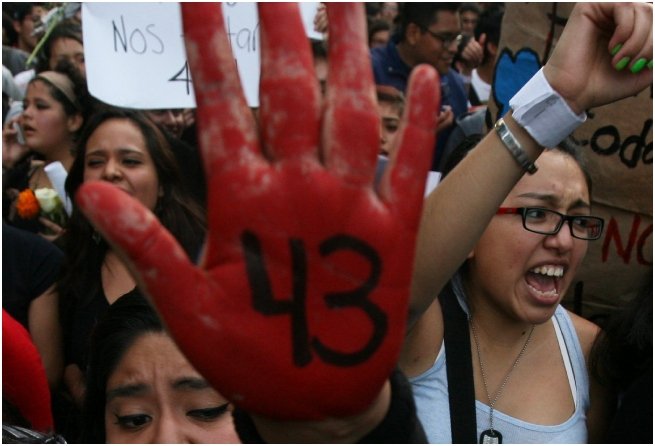
Two female students at the Autonomous University of Morelos disappeared within days of each other in March. Both were later found dead. Since April of last year, at least seven students from the same university have been murdered, five young women and two teenage boys.
Among them was an exchange student from Spain, killed last month just weeks after arriving in Mexico.
“When we hear that another student has disappeared or been killed, we all see ourselves in her. We think, that could have been me,” said Yugi Milan, a student activist in Morelos, speaking to The World’s Tibisay Cea and colleague Axel Hernandez.
The killings have exposed a deepening crisis of gender-based violence at Mexican universities, and a system that activists say is failing to protect students, investigate complaints, or deliver justice.
A University Under Pressure
The Autonomous University of Morelos responded to the high-profile murders with calls for investigation and promises of tighter security: more guards, cameras, and panic buttons.
But activists say those measures do not address the root of the problem, sexual harassment on campus.
“They can’t even respond to complaints of gender violence against professors and fellow students on campus,” Milan said, speaking in Spanish.
The problem extends far beyond Morelos. A recent study found that nearly one in five female university students in Mexico has experienced sexual harassment — but only about 10 percent file a formal complaint.
Fear of Retaliation
Ana Buquet, a gender studies researcher at Mexico’s largest public university, UNAM, says fear keeps victims silent.
“I think basically they are afraid,” Buquet said. “First, many times they feel alone.”
Victims fear retaliation from professors, including lower grades or obstacles to graduating, she said.
Ameyali Ramirez, a UNAM student, remembers a teaching assistant who had been accused of harassing female students — yet continued working with them. Ramirez says she had to take exams alone with him, behind a closed door. Nothing happened to her, but she questions why the exams were conducted that way.
While Ramirez acknowledges universities have made progress, including better reporting procedures and courses on gender violence, Buquet says many reforms focus on responding to harassment rather than preventing it. Universities need more education on gender equality and better training for professors and staff, she said.
Danger Beyond Campus Gates
For many students, the threat follows them home.
Lorena Ruiz Rojas, a 19-year-old anthropology student at UNAM, says she worries about disappearing during her commute. She regularly shares her live location with her family on WhatsApp.
Mexico has a widespread disappearance crisis, with more than 130,000 people officially listed as missing. Security analyst Eduardo Guerrero says organized crime is behind many disappearances involving young women and girls.
“Many times it is young women who disappear, and it has to do with human trafficking markets, sexual trafficking,” Guerrero said.
Some criminal groups abduct young women for sexual exploitation, he said.
Harassment Is Everywhere
Even in everyday life, women in Mexico face harassment in public spaces.
In Mexico City, the subway reserves some cars for women and young children only. Carmen Cuevas, waiting for the next train with her five-year-old son, says the measure exists for safety reasons, she says men have touched her when traveling in mixed-gender cars.
Another passenger, 64-year-old Patricia Ponce de León, says harassment does not stop as women grow older. She has seen men masturbating in front of her on the train.
Justice Denied
For women who report abuse, getting justice can be another ordeal.
Becky Bios is a survivor of domestic violence. Her former husband beat her to the point of deforming her face and causing internal injuries — just because she wanted to leave the relationship. She was hospitalized in critical condition for several days and was afraid to report him.
When she finally filed a formal complaint nine years ago, she says the case never led to prosecution. Her aggressor remains free.
Mexico has one of the highest rates of femicides in the world. According to the National Statistics Agency, more than 93 percent of crimes are either never reported or never investigated.
A Regional Reckoning
The report comes amid renewed global attention to campus sexual violence, following recent gang rape allegations at Cornell University in the United States. In Mexico, students have spent years demanding better protection from sexual harassment and gender-based violence, and say the urgency has never been greater.
For students in Morelos and across Mexico, the fear is personal and constant.
“When we hear that another student has disappeared or been killed, we all see ourselves in her,” Milan said. “We think, that could have been me.”



-
 Arts and GH Heritage10 hours ago
Beyond the Gallery: Karp Kamina Turns Cultural Memory into Contemporary Art
-

 Sights and Sounds2 days ago
Planning a Family Day Out in Accra? Lakeside Marina Park Offers Fun for All Ages
-

 Homes & Real Estate1 day ago
Building a Home in Ghana: How Smarter Construction Choices Can Cut Costs
-

 Festivals & Events1 day ago
Ahukan Festival: Honouring Chiefs and Celebrating Akyem Heritage in Kibi
-

 Fashion & Style15 hours ago
Malian Businesswoman’s Reported $1.5 Million Gold Jewellery Stuns Wedding Guests
-

 Global Update8 hours ago
Huge Storm Kills Two in the UK as 90,000 Properties Left Without Power
-

 Ghana News9 hours ago
Ghana’s President Congratulates Brazil’s Lula on Historic Fourth Term, Vows to Champion Global South Agenda
-

 Health & Wellness8 hours ago
Four Weight-Loss Mistakes That Could Be Holding Back Your Progress