
Opinion
Why President Mahama must not be the new Akufo-Addo

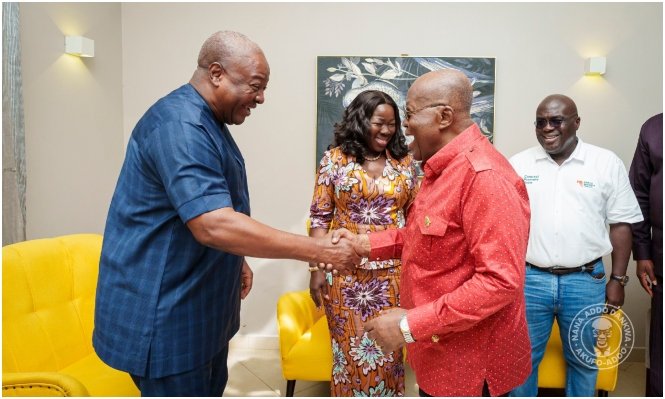
In this sharp political commentary, Felix Anim-Appau draws a powerful parallel between the swift punishment of a hungry young man jailed for stealing a bunch of plantain and the persistent impunity enjoyed by Ghanaian public officials who have cost the state an estimated GH₵100 billion through financial irregularities over the past decade. The author argues that while President John Mahama has delivered notable economic improvements since taking office, his legacy will ultimately be judged not by falling inflation or stable exchange rates, but by whether he breaks the cycle of corruption that has defined successive administrations.
Why President Mahama must not be the new Akufo-Addo
By Felix Anim-Appau
It was a normal week day at Assin Sibinso, my father’s hometown in the Assin South district of the Central region, almost two and a half decades ago.
I was visiting some teacher friends of mine after school when I saw Kwadwo Amoako, a young man in his mid to late twenties then, having been arrested by the residents for stealing a bunch of plantain because he was hungry.
He was beaten to pulp, paraded through the major streets of the community and later handed over to the police. Kwadwo was arraigned, convicted, and sentenced to two years imprisonment for stealing. There was no consideration for the fact that he was answering to nature’s call- hunger.
It’s been a while since I went to church but I remember in Matthew 12:1-8, Mark 2:23-28, and Luke 6:1-5, Jesus and his disciples harvested some corn and ate because they were hungry. Matthew 12:1 puts it as follows:
“At that time Jesus went through the grainfields on the Sabbath. His disciples were hungry and began to pick some heads of grain and eat them”.
The grain didn’t belong to them but it is interpreted by Bible scholars that once they were harvesting to eat and not to sell, it didn’t constitute stealing. If what the Bible says is anything to go by, it means if a man is hungry and takes something little to satisfy his hunger, that should not be deemed stealing.
But Ghana has laws which are incongruous with what’s in the Bible.So, what Kwadwo did is not permitted by Ghanaian laws. Because of that, he was beaten, shamed and jailed in addition.Ghana travel guide
The Auditor-General’s Report
In 2012, when Captain Smart assumed duty at Adom FM as the host of the morning show, the editorial segment dubbed: Fabɛwɔso, was mainly focused on the Report of the Auditor-General (A-G). When I became his Production Assistant in 2017, I had the opportunity to keep in my custody, some copies of the Report. Till date, I still have with me some photocopies of the malfeasance recorded by some state institutions at the time. It started in millions of cedis before increasing to billions.
According to the Auditor-General’s reports over the past decade as reported by Graphic.com, financial irregularities including misappropriation, cash irregularities, procurement breaches, and payroll fraud have cost the state approximately GH₵99.57 billion between 2014 and 2023.TV Shows & Programs
I have never been a friend of Mathematics, but I still remember that when a decimal is five or more, you can round it up to the nearest figure. So, in ten years, this nation lost GH₵100 billion to ‘public servants’ per the A-G’s report.
Public servants and politicians do what Kwadwo did, harvesting where they have not planted, and because they use pens and computers, unlike Kwadwo, who harvested someone’s plantain, or the armed robber who pulled a knife or a gun to rob, their acts have been classified with “nice adjectives” that do not present a true picture of their deeds.
Instead of describing their acts as stealing and labeling them as thieves, we say “financial irregularities,” categorised into misappropriation, cash irregularities, procurement breaches, payroll fraud, and a host of others. Oh, I forgot that other nice name under which all these deeds are branded: Corruption.
Every year, the A-G comes out with a report and I am yet to count just ten people who have been jailed directly in relation to these malfeasance uncovered by the Auditor-General in at least, the last decade.
Public servants and politicians alike, take what belongs to the State everyday. They create, loot and share. The New Patriotic Party (NPP) and National Democratic Congress (NDC) have been playing political chairs with power, and whoever gets the opportunity to govern mess our funds up and go unpunished. It has become a ‘scratch my back and let me scratch your back’ situation. And the few moments one government attempts a prosecution on a political opponent, party foot soldiers besiege the premises of the security agency undertaking the investigations to demand the release of the accused. The process is branded political witch-hunt.Election coverage.
Sometimes, I struggle to understand the mentality of the Ghanaian. Because a person belongs to your political party, it becomes a crime for him to answer to how he expended State funds? Due to this, politicians and civil servants always team up and turn our resources into their own, leaving the poor tax payer at the mercy of posterity.
Scandals under both NPP and NDC
Several high-profile political scandals have occurred in Ghana under both the National Democratic Congress (NDC) and New Patriotic Party (NPP) administrations between 2009 and 2024. I am not saying the years prior to that were scandal-free.Ghana travel guide
But for the purposes of this discussion, I want to limit it to this period. These involved allegations of corruption, procurement breaches, and financial mismanagement, frequently sparking intense public debate and political finger-pointing. However, few weeks after the release of the report, sometimes even days, we will not hear about it again until the next report comes.
If Ghana were any serious country, people should have been languishing in jail for their corrupt deeds. But as usual, scratch my back and I scratch your back so we are still where we are. Let me share with you a few of the major scandals recorded under both governments between the period in question.
Some scandals under NDC administration (2009 to 2016)
GYEEDA Scandal (2013): The Ghana Youth Employment and Entrepreneurial Agency (GYEEDA) was found to have paid millions of Ghana cedis to private companies through irregular, sole-sourced contracts for training and services that were largely non-existent.
SADA Guinea Fowl Scandal (2013): The Savannah Accelerated Development Authority (SADA) spent millions of cedis on projects, including a widely criticised guinea fowl rearing project, with little to show for the investment.
AMERI Deal Scandal (2015): The US$510 million deal for AMERI Energy to supply 10 power turbines to address the power crisis was deemed by opposition MPs to be severely inflated by over US$150 million.
- Some scandals under NPP administration (2017 to 2024)
BOST Contaminated Fuel Scandal (2017): The Bulk Oil Storage and Transportation Company (BOST) sold 5 million litres of contaminated fuel to unlicensed companies, causing a financial loss of about GHC 15 million in revenue to the state. - US$2.25 Billion Bond Saga (2017): Then Finance Minister, Kenneth Nana Yaw Ofori-Atta, who is now a fugitive from justice, was accused of a conflict of interest, alleging that the bond was tailored to benefit his cronies in the banking sector.
Cash for Seat Scandal (2018): Expatriate businesses were allegedly charged up to US$100,000 to sit close to President Akufo-Addo at an awards ceremony, sparking accusations of influence peddling. - PDS Electricity Scandal (2019): The contract to manage Ghana’s electricity distribution was terminated after it was discovered that the Power Distribution Services (PDS) provided fraudulent bank guarantees.
- Agyapa Royalties Deal (2020/2021): The government’s plan to monetise future gold royalties via a listing in Jersey in the Channel Islands (a British Crown Dependency known as a tax haven) was suspended following a report by the Special Prosecutor citing corruption risks, lack of transparency, and procurement breaches.
These are just a few of the many corruption cases reported by the Auditor-General between the period under consideration. Causing financial loss to the State at the various departments and agencies as well as state institutions occurs every year.
The ones I mentioned are just those the public will be familiar with. But the question is, how many people can we count as having been jailed for these scandals?
However, Kwadwo Amoako, like other petty thieves, was convicted and sentenced to two years imprisonment for taking someone’s plantain. As for those taking what belongs to the State, they are walking free. I wonder how this will not incentivise others to learn from those who have gone scot-free.
What influences the voting pattern of some of us
Mr. President, I know the wheels of justice turn slowly as you the politicians have always been telling us. But this time around, you must change the wheels if they’re old so they can move faster. We have been patient for too long and the political chairs have lingered for so many years.TV Shows & Programs
How long should we sit aloof for people to continue milking the state to enrich themselves and their families at the expense of the masses?
In his attempts to become President of the Republic, I voted for him because William Addo Dankwa Akufo-Addo was known to be the ‘no-nonsense’ man who had no heart to tolerate an iota of corruption under his watch.
But what did we see? He turned out to be the ‘Clearer-General’ who was clearing his appointees of corruption even before investigations were conducted.
Because you have been there before and promised to recover every penny taken from the State, many Ghanaians who are not members of the NDC voted for you to see that become a reality due to the level of rot we witnessed under the erstwhile administration.Election coverage
When you were voted into power, I gave you an 18-month “honeymoon” to put things in place before I start critiquing you. Because I felt eight years of damage was too much to be demanding a lot from you in less than a year and a half.
It’s not 18 months yet and what I expected you to be able to do from 18 months on, you were able to do that in less than a year after taking over power. Talk of inflation, exchange rate, fuel prices and what have you.
With the trajectory of the economy as you inherited and where it is now, only a political hypocrite or sycophant would say you haven’t done anything. The economic indices are awesome and I dare say that with what we witnessed under the Akufo-Addo/Bawumia administration, if they were still in power, Ghana’s exchange rate would have been hovering around 25 cedis to a dollar, with a litre of petrol not doing less than same amount.Ghana travel guide
This is based on global indices at their time compared to now, with the current tensions in the Middle East in perspective. Even though the NPP claim you didn’t do anything to achieve this economic feat, they couldn’t achieve same with the “something” they did at the time.
Why Mahama’s achievements will be ‘meaningless’ if…
Despite everything you have achieved and yet to achieve, for some of us, you’ll not be measured by how well the cedi stabilised under you, or how you improved the cost of living. You will not be in my good books for bringing down inflation or fuel prices. But the number of corrupt officials you were able to jail.
Many Ghanaians voted for you because of Operation Recover All Loot (ORAL). But how much have we recovered almost 18 months into your administration? Those who have been found by the Attorney-General, Dr Dominic Ayine, to have plundered the nation into losses are still walking in town as if they haven’t done anything wrong.
On the contrary, those who steal goats, fowls, coins and foodstuffs to satisfy their hunger just like Kwadwo Amoako are handed the swiftest sentences because they are poor. Meanwhile, those who are making the nation lose millions and billions are walking free and all we see from your Attorney-General is update upon update upon updates. Sixteen months is enough to have at least, recorded some convictions.
Another Auditor-General’s report has come and this time around, we don’t want it to be business as usual. We need action. You should act. I am not an expert in law, but I know there are fast-track courts where some cases can be expedited for people found culpable to go to jail.
Or are we going to do the usual back and forth for your tenure to end so that a new government will come and file dozens of nolle prosequis to free their apogees on trial? We are watching you closely to see if you would let people pay for their deeds or it would be business as usual.
Conclusion
Dear Mr. President, the Auditor-General’s reports have become a recurring narrative of causing financial loss to the State and impunity, with perpetrators often escaping accountability every year, at least, since the commencement of the Fourth Republic.
From Rawlings to Akufo-Addo, the Public Accounts Committee hearings has only become a mere formality, with the pattern of corruption being repeated as same movie script with different actors.
Every administration makes an attempt with some prosecutions, but these efforts are often dismissed as politically motivated witch-hunts. But if there are witches, why shouldn’t we hunt them? Why do we shy away from holding those responsible accountable?
Every pesewa misappropriated by these public officials as contained in the Auditor-General’s reports tells us the opportunities we are missing. Our classrooms lack furniture, our communities lack potable water, while basic amenities have become alien to our vicinities. Yet the poor are punished for the petty crimes they commit, while those who loot the State coffers walk free.
Mr. President, I know you’re not directly responsible for jailing people who misappropriate state resources. It is the courts. But, before that could be done, your Attorney-General and Minister of Justice must initiate prosecution for such people to face justice. You promised to recover the loots and I know you knew what you meant when you made that promise.
If you fail to realise this achievement of making those responsible for such losses face the full rigours of the law, your achievements in other areas will be of no relevance to some of us. We will not remember the economic growth or infrastructural projects you have accomplished if those through whom the nation lost billions still visit the same shopping malls with us and shop in trolleys as if they are going to open shopping marts in their homes, drive all the latest vehicles and live lavishly at the expense of the trader who risks her life to Burkina Faso to import tomatoes and pay taxes.
We see how some of your appointees laugh, dine and publicly worship some of the very people you all swore in opposition to prosecute if you’re given the mandate. Today, you’re in power and instead of such persons explaining to the courts how the state lost those huge sums of monies through them, your appointees are feasting with them. What happened, Mr. President?
If those causing financial loss to the State escape justice and walk as free men, describing those making it genuinely in life as lazy or useless because they have benefited in one way or the other from what the State lost through them, what then would be the motivation for people to do what is right? After all, they know they can create, loot and share, and in the end, nothing will happen.
In all honesty, if we don’t see as many prosecutions and convictions as possible under your tenure, I, for one, will not see any difference between your administration and that of Akufo-Addo.
It is time to break this cycle of impunity and show Ghanaians that Justice, is not merely a name given to males in Ghana, nor is it just a title for judges at the courts; Probity and Accountability, are not mere political slogans; but rather, words that should remind every Ghanaian entrusted with State resources that, one day, they will account for their stewardship and should therefore discharge the role as if whatever is under their care are their personal or family properties.TV Shows & Programs
The words have been enough since 1992 and the time for action is now.
Sincerely,
Felix Anim-Appau.
The writer, Felix Anim-Appau, works with the online unit at Media General. The views expressed in this piece are his personal opinions and do not reflect, in any form or shape, those of the Media General Group, where he works. His email address is kwadwoasiedu2012@gmail.com, and he can be found on X as @platofintegrity








In this thought-provoking opinion piece, Associate Professor Theodora Dame Adjin-Tettey examines the alarming deterioration of public discourse in Ghana and beyond, marked by an explosion of hate speech, vitriol, threats, and inciting comments. Drawing on a personal anecdote about a researcher who abandoned a study on media insults in 2010 due to a lack of data, contrasted with today’s overwhelming abundance of such content, she argues that this shift signals a deeply troubling ethical decline in society. Read the full article below.
Hate speech, vitriol, threats, and inciting comments: Can we stop it already?
By Theodora Dame Adjin-Tettey | Associate Professor
A friend of mine recently posted on social media that he had to abandon his 2010 research project on “insults in the media” because he couldn’t find enough data. Every researcher needs data to carry out their study, so when there is a data drought on a subject of empirical investigation, it becomes a huge stumbling block to the researcher, possibly causing them to abandon their study or chart a new parallel path to the original idea. It suffices to say, however, that the lack of data the researcher encountered sixteen years ago on a topic like insults in the media signaled something positive or healthy about the general environment for public discourse at the time. This is despite it posing a serious threat to the attainment of a university degree.
Contrarily, when there is an overabundance of data on a topic like that, 16 years after the initial fruitless attempt, it is indisputable evidence of where society, specifically, public discourse, has shifted to. Significantly, it is also indicative of a deteriorating and possibly ethically deficient society. So, here is my question: must we be concerned about the rather glaringly ethically deficient status quo of our public discourse, or should we write it off as a normal concomitant of a liberal society, aka democracy?
A matter of grave concern
I’m not the first to write about this, and I definitely will not be the last. But I feel I must also make my attempt at a drop in the ocean. Surely, change can be realised when all hands are on deck. Every little effort, every little attempt, every little … helps. It is no wonder the British supermarket chain, Tesco, popularized this phrase. Indeed, small efforts matter and are important in contributing to a bigger goal. The bigger goal, this time, is sanity within our information and media environment.
Over the past weeks, the public sphere has been awash with conversations about how our society’s social fabric is degenerating, and I dare say, at a faster rate than ever, particularly when it comes to decent conversations, be it on politics or on social issues. I say “faster rate” because now the platforms that accelerate public discourse, including who initiates/originates or sets the agenda, and who disseminates it, have been democratized, thanks to advances in digital technologies. With generative technologies being able to imitate human intelligence and our ill tendencies, humans no longer need other humans to perpetrate wrongs against their kind. The technologies have become our faithful and convenient allies, helping us to fabricate wild allegations, perpetrate lies, polish up insults, and execute wicked agendas against our own kind that we sometimes consider “the enemy” or the subject of our dislike and/or hatred. Sad.
When I see, watch, and hear the daily insults, hearsay, hate speech, threats, inciting comments and sharp vitriol accompanying social media posts and commentary, I cannot help but to attempt to contribute to turning the tide; that is, if only the tide has not already washed away our humanity, respect, reverence, and the strength of character and ethical backbone that distinguishes Ghanaians from others without the tiniest crevices to hold on to.
We must fight the temptation at all costs
People always have something to say about someone: their looks, how they talk, what they do, what they do not do, how they wish ill on them, on and on and on. Yes, as right-thinking humans, we may form opinions on issues, but it is not every opinion that must be uttered or shared with the world, even when you are convinced that it is the most persuasive or erudite. There is a reason for the adage that “all truths are not to be told” or “all truth is good, but not all truth is good to say.” Should we all utter what we think of, know of, or how we feel about people or every issue, society would be sent into chaos. Even worse is when made-up falsehoods permeate public discourse. That is why it is important that, in being wise, we must sometimes give our “thoughts no tongue.” as Polonius, the chief counselor to King Claudius, advised his son, Laertes, in William Shakespeare’s Hamlet.
Critical public discourse must be based on factual arguments and not insults and denigration of people’s persona, sometimes to the extent of stripping them of their dignity. As a people who pride ourselves on being civilized, civilization in itself must tame our human nature by redefining our manners, developing our intellect, and, when need be, restraining us. Civilization must advance society and must develop our culture and not erode it. That’s why it becomes a matter of grave concern when we witness some of the vilest insults come from people who are supposed to be an example in society, particularly to the younger generation.
Additionally, our tendency to politicize everything has worsened things. We have become enemies because of political biases. We perceive everything as black or white, forgetting the shades in the spectrum. That is why every other person becomes the enemy, and the only way we seem to know how to deal with the enemy is to “destroy” them so our side of the divide will stand as the better side. Because of politics, we have strangely redefined family, friendship, associate, colleague, etc. Of late, you are likely to see people showing respect only to the people that they share political affiliation with or whom they anticipate obtaining favour from. Once you are of “no use” to them, you are a good candidate for needless castigation and character assassination. It seems to me that the easiest thing to do these days is destroying people’s reputations. I also see that the extent of the harm increases when the act intended to create the destruction is generously bankrolled.
The attention economy as a facilitator of information disorder
The other aspect of the conversation is how social media incentivizes sensationalism and exploits the negativity bias of the human tendency to pay closer attention to content that contains threats, causes anger and outrage. And in the present attention economy built on clicks, shares, comments, and watch time, it is not surprising that those who want to attract the attention that translates into both online and offline monetary returns will do anything to push content that the algorithms are configured to track and promote.
So, next time you react to, comment on, and/or share that vitriol, remember that you are contributing to the ocean of information disorder within the media and information ecology. If you are the one behind that account spewing insults, disrespect, and unnecessary attacks, note that civilization requires that we disagree with one another without losing respect, empathy, and civility for one another. We must also have a sense of responsibility to lift others when they are in their darkest moments rather than verbally battering them to the point of ruin. And rightly so, I find the quote that I recently came across, “to strike an adversary who is down is a betrayal of humanity, not a victory of strength”, incredibly poignant.
The more this goes on, factual information gets buried. And democratic decisions will be taken based on poor judgment. And here is the reason: the algorithms will drown out factual and decent communication when there is a sea of the opposite.
This is not to argue that duty bearers shouldn’t be held accountable. Certainly, we must, but in a decorous manner, while keeping the facts at the centre. Hate speech, threats, and inciting comments do not build a civil society; they quickly tear society apart, leaving us in chaos and dysfunction. So, now my question: must we continue on this tangent, knowing the chaos on social media does not stay just on social media but fast trickles into homes, communities, institutions and society at large?
Until next time, when I meet you and take your responses, this is my drop in the ocean.
The writer is an associate professor of Media and Communication Studies at Durban University of Technology.
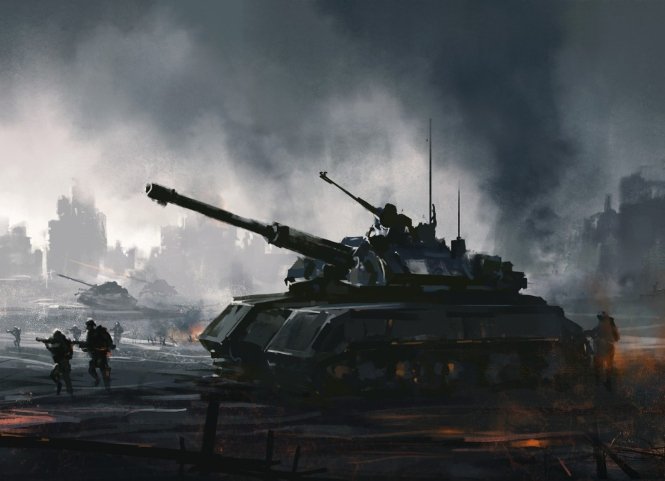
Joseph McCarthy, an analyst specializing in Sahel governance and security, examines how a deceptive recruitment pipeline has drawn thousands of African men into Russia’s war in Ukraine. Drawing on investigations by Amnesty International and the INPACT/All Eyes on Wagner collective, which identified 1,417 recruits from 35 countries and 316 confirmed combat deaths, McCarthy argues that unemployment and misleading job offers have turned Africa’s economic vulnerability into a source of foreign military manpower. A war that is not Africa’s, he writes, should not be allowed to consume Africa’s blood.
African Blood for Other People’s War?
By Joseph McCarthy · Analyst, Sahel governance & security
A recruitment pipeline built on unemployment and misleading job offers has quietly drawn thousands of Africans into the front lines of Europe’s bloodiest war since 1945.
| 1,417AFRICAN RECRUITS IDENTIFIED | 35COUNTRIES OF ORIGIN | 316CONFIRMED COMBAT DEATHS |
A job advertisement can look like an escape route. A promised salary, a ticket to Russia and the prospect of a better life can seem like an opportunity to someone struggling with unemployment or economic hardship. For some Africans who travelled to Russia in search of work, the journey reportedly ended not at a construction site, a logistics company or behind a computer, but on the battlefield in Ukraine.
On 10 September, Amnesty International published an investigation documenting how foreign nationals have been recruited into Russia’s armed forces through deceptive, coercive and exploitative practices. The organisation found that people from countries including Sierra Leone, Somalia, South Africa and Egypt were drawn into the Russian military after being promised civilian employment, high salaries or other incentives. In many of the cases it examined, Amnesty concluded that the practices amounted to human trafficking.
The scale of the phenomenon goes far beyond isolated cases. The INPACT/All Eyes on Wagner collective says it has identified 1,417 African nationals from 35 countries who signed contracts with the Russian army between 2023 and 2025, including 316 whose deaths in combat were recorded. The database contains names, nationalities, dates of birth, military registration numbers and contract dates, along with dates of death and military units for those killed. INPACT says the list is not exhaustive, and that further research has identified additional African combat deaths not included in the original database.
Behind these numbers are young men who, in many cases, did not leave Africa intending to become soldiers. Some were promised civilian employment or help obtaining Russian visas and legal status; only once in Russia did they discover that the opportunity was tied to military service. Others were presented with Russian-language contracts they did not understand before being sent into combat.
“The tragedy is not only that Africans are dying in this war. It is that some families do not even know where their relatives went, how they were recruited, or where they died.”
The human cost is stark. Of the recruits in the database, 316 were recorded as killed in action, with an average period of service, for those whose deaths were recorded, of only about six months. Investigations have documented cases in which families spent months searching for missing relatives before discovering their names on lists of foreign soldiers killed in Ukraine. In one case reported by RFI from the INPACT investigation, a young African man who had travelled to Russia after being promised well-paid work was later identified on a list of those killed.
IDENTIFIED RECRUITS AND RECORDED DEATHS BY COUNTRY, INPACT DATABASE, 2023–2025
| COUNTRY | RECRUITS | DEATHS |
| Egypt | 361 | — |
| Cameroon | 335 | 94 |
| Ghana | 234 | 55 |
| The Gambia | 56 | 23 |
| Mali | 51 | — |
These figures turn the story from a handful of recruitment scams into a broader question about how Africa’s economic vulnerabilities are being converted into manpower for a foreign war. A young African searching for employment, education or a route out of hardship can become a target for a recruiter offering an apparently ordinary opportunity abroad. What begins with the promise of a salary or a better future can end with a military contract, a journey to the Ukrainian front and, in the worst cases, a death notice delivered months later to a family thousands of kilometres away.
The figures reveal two interconnected realities: Russia needs soldiers, and many Africans need economic opportunities. The recruitment system appears to operate at the intersection of those two vulnerabilities. INPACT describes this as a deliberate, organised recruitment strategy; Amnesty’s investigation separately documented the deceptive and coercive practices used to draw foreign nationals into Russia’s war effort.
GOVERNMENTS BEGIN TO RESPOND
Some African governments have begun to treat the recruitment of their citizens as more than a series of isolated cases. Kenya has taken the issue directly to Moscow. Following diplomatic discussions in March 2026, Russia agreed to place Kenya on a military recruitment stop list and to facilitate the disengagement of Kenyans already serving who no longer wished to continue. Nairobi has also tightened oversight of private recruitment agencies and pursued the repatriation of affected citizens. By May, Kenya said 291 of its nationals had been recruited, with 53 already repatriated.
Ghana has moved from concern to investigation. In July, its Foreign Affairs Minister said the government was investigating alleged criminal recruitment networks after reports that 272 Ghanaian nationals had been drawn into the war through fraudulent employment schemes. Fifty-five of those cases reportedly involved deaths, and two Ghanaians were being held as prisoners of war. Ghana has also engaged foreign authorities over the welfare of affected citizens and stepped up public education on deceptive overseas job offers.
These responses matter because they shift the issue from individual misfortune to a question of state responsibility. When citizens are recruited through employment advertisements, intermediaries and recruitment agencies, the problem is not simply that individuals made risky decisions. It raises questions about whether governments have adequate systems to regulate overseas recruiters, verify job offers and warn citizens before they leave the country. Kenya’s experience shows that repatriation is only part of the answer; disrupting the recruitment pipeline itself is the harder task.
The responses across the continent remain uneven, however. Recruits have been identified from numerous African countries, but governments differ sharply in their willingness or ability to investigate recruitment networks, negotiate with Moscow and support affected families. The protection an African citizen receives can depend heavily on whether their government is willing and able to intervene, and recruitment networks do not respect borders. The same mix of unemployment, migration pressure and online advertising that has already ensnared thousands could just as easily target young people in countries that have not yet identified a single case.
WHOSE INTERESTS ARE SERVED
There is also a deeper geopolitical dimension. For years, African countries have sought greater agency in their relations with external powers, insisting that partnerships serve African interests rather than reproduce dependency. The recruitment of African nationals into a distant war raises an uncomfortable question about whose interests are truly being served when economic vulnerability becomes a source of foreign military manpower.
The Russia-Ukraine war is fought thousands of kilometres from Africa, but its consequences are not confined to Europe. Behind every statistic is a son, a brother, a husband or a father who left home believing he was pursuing work and a better future. Some have returned alive; others have returned in body bags; and families are still searching for answers about how their loved ones ended up fighting a war they never intended to join. This cannot remain a distant European problem or a collection of unfortunate individual cases. When poverty can be turned into a recruitment weapon and African citizens into expendable soldiers, silence carries a cost. A war that is not Africa’s should not be allowed to consume Africa’s blood.
Joseph McCarthy is an analyst and researcher specialising in governance, security and political transitions in the Sahel. He writes on geopolitics, development and African diplomacy. joecarthy30@gmail.com
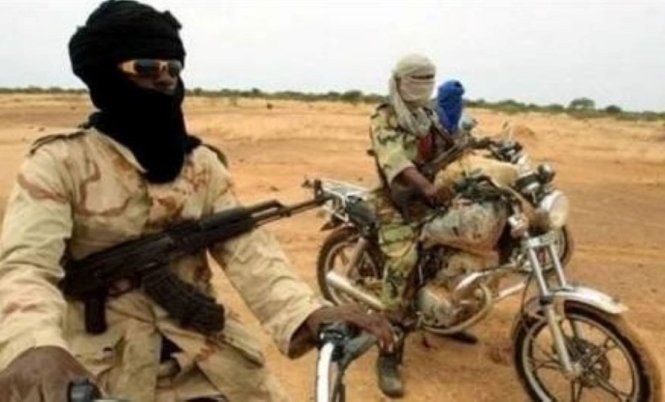
JNIM now strikes at capitals and governs territory, and the bet that Mali, Burkina Faso, and Niger placed on Russia as their sole security guarantor has failed. Analyst and researcher Joseph McCarthy writes that the fire will not stop at the Sahel’s borders, and Ghana stands directly in its path.
The Sahel is Burning, and West Africa Cannot Look Away
By Joseph McCarthy
At dawn on 18 June 2026, fighters stormed Diori Hamani International Airport in Niamey, the most heavily guarded site in Niger’s capital. It is not merely an airport. The complex houses the air force, most of the country’s drones, the headquarters of the Alliance of Sahel States’ joint force, the Russian personnel meant to help crush the insurgency, and even uranium stocks the state hopes to sell. JNIM claimed the assault, which killed eleven soldiers and two civilians. It was the second strike on that complex this year; the Islamic State’s Sahel Province claimed a January raid. Both of the region’s jihadist franchises have now breached the defences of a capital. This was not just another attack. It was a strategic signal.
It was also no act of opportunism. Hitting a fortified installation in a capital demands months of surveillance, intelligence on shift changes, the logistics to move fighters and weapons over long distances, and the ability to slip past layered security. It implies networks operating close to, or inside, the capital itself. As the Armed Conflict Location and Event Data project noted, the Sahel’s insurgents have moved from localised rural fighting to coordinated strikes on vital national infrastructure. The pattern is everywhere. In Mali, JNIM has throttled Bamako with a fuel blockade since September 2025, destroying hundreds of tankers; in April, it overran the garrison town of Kati and killed the defence minister in his own home; it has since placed a bounty of two million euros on the head of Mali’s junta leader, Assimi Goïta.
More troubling than the firepower is the governance. A Reuters investigation found that JNIM now arbitrates land disputes, collects taxes, enforces rules and imposes a rough order in territories the state has vacated. Forged from the merger of four groups, it increasingly presents itself not as a militia but as an alternative authority, building legitimacy among populations long neglected by distant governments. History is unkind here: from Afghanistan to Somalia, insurgencies that learn to govern outlast those that only fight. The contest is no longer simply about defeating armed men. It is about whether the state, rather than an armed movement, remains the most credible source of authority, justice and security.
Against all this, the juntas made a bet. Mali, Burkina Faso and Niger expelled Western forces, walked out of ECOWAS, and rebuilt their security around a single guarantor: Russia, first through the Wagner Group, then the Africa Corps. On 26 June, Burkina Faso severed diplomatic relations with France entirely, accusing Paris of backing the very terrorists it claims to fight, an allegation offered without evidence and flatly rejected. Niger’s government, for its part, blamed the Niamey attack on mercenaries funded by President Macron, again without proof. The promise was straightforward: sovereignty restored, foreign influence reduced, terrorism defeated. Judged by the junta’s own promise, the bet has failed. The violence has not receded. It has spread.
This should not be read as a uniquely Russian failure. It exposes the limits of any strategy built around a single external guarantor. No partner, whether Russia, France or the United States, can resolve a conflict rooted in governance failure, economic exclusion, local grievance and hollow institutions. Force can kill fighters. It cannot rebuild public trust, settle a quarrel between communities, open a clinic or create a job for an idle young man, and those are the very conditions the insurgents harvest for recruits. Russia carries constraints of its own: bogged down in Ukraine, its resources finite, it was outfought alongside Malian troops at Kidal even after reportedly receiving a warning of the assault. A security architecture resting on a single distracted partner does not reduce risk; it concentrates it, and when that partner underdelivers, there is no second line. The 2026 Global Terrorism Index now names the Sahel the global epicentre of terrorism, the source of more than half the world’s terrorism deaths and one in five of its attacks.
None of this stays in the Sahel. Ghana shares roughly 550 kilometres of frontier with Burkina Faso, much of it porous and threaded with informal crossings used daily by traders and herders. Southward expansion rarely begins with a spectacular attack. It begins quietly: a recruiter, a supply route, a financing cell, fighters embedding in border communities long before a shot is fired. That is precisely how the contagion crossed from Mali into Burkina Faso and Niger, and how it has already reached Benin and Togo, with Côte d’Ivoire and northern Ghana plainly exposed. Alongside the fighters’ travels, something almost as corrosive: a flood of assault rifles, explosives and military hardware that does not stop at extremist hands but arms robbers, traffickers and illegal mining syndicates, hollowing out a country’s security long before any jihadist banner appears.
The wider world has its own reasons to watch. Niger holds some of the planet’s richest uranium. A jihadist proto-state straddling West Africa would command migration routes toward the coast and the Mediterranean, strain fragile coastal economies, disrupt trade corridors and rattle investor confidence. At the same time, every successful strike on a capital broadcasts a template to armed groups from Nigeria to Mozambique. What looks today like a regional security crisis could become an international one. A region generating one in five of the world’s militant attacks is not a distant problem. It is a lit fuse.
Africa has paid before for believing that outside powers can guarantee its security. They cannot. Partners can offer intelligence, training and equipment; they cannot substitute for legitimate governance and functioning institutions. This crisis will be settled not only on the battlefield but in courtrooms, classrooms, local councils and marketplaces, where citizens decide whether the state or an armed movement better delivers justice and opportunity. For Ghana, the task is preventive, not reactive: intelligence cooperation, stronger borders, regional collaboration, community resilience and investment in local governance, all of it far cheaper than containment once the violence has taken root. And for the Sahel’s rulers, there is a harder truth.
Sovereignty that trades several partners for total dependence on one distant and overstretched power is not sovereignty; it is a fresh vulnerability dressed in the language of liberation. The question is no longer whether the crisis will spread beyond Mali, Burkina Faso and Niger. It already has. The only question left is whether West Africa acts before the Sahel becomes the world’s next strategic emergency.
Joseph McCarthy is an analyst and researcher specialising in governance, security, and political transitions in the Sahel. He writes on geopolitics, development, and African diplomacy. Email: joecarthy30@gmail.com



-

 Ghana News23 hours ago
OBITUARY: Gamal Gorkeh Nkrumah, Son of Ghana’s Founding President, Dies in Cairo
-

 Health & Wellness1 day ago
Walking Is More Than Exercise: Small Steps That Can Transform Your Health
-

 Festivals & Events21 hours ago
MaddFest 2027: Welcome the New Year with a Night of Celebration in Accra
-

 Sights and Sounds2 days ago
EPP BookShop at Legon: A Destination for Students, Families and Book Lovers
-

 Homes & Real Estate2 days ago
Building Smarter in Ghana: Could Plastic Rebar Clips Improve Construction Efficiency?
-
 Arts and GH Heritage1 day ago
Inside Togo’s Abandoned Colonial Building, African Artists Reclaim Cultural Memory
-

 Global Update22 hours ago
Wave of Student Killings at Mexico Universities Raises Safety Concerns
-

 Ghana News22 hours ago
Mahama to Churches: The Real Sermon Is Written After the Closing Prayer