
Ghana News
Starlink satellite internet Access at Luta D/A Basic School Is Redefining Rural Education

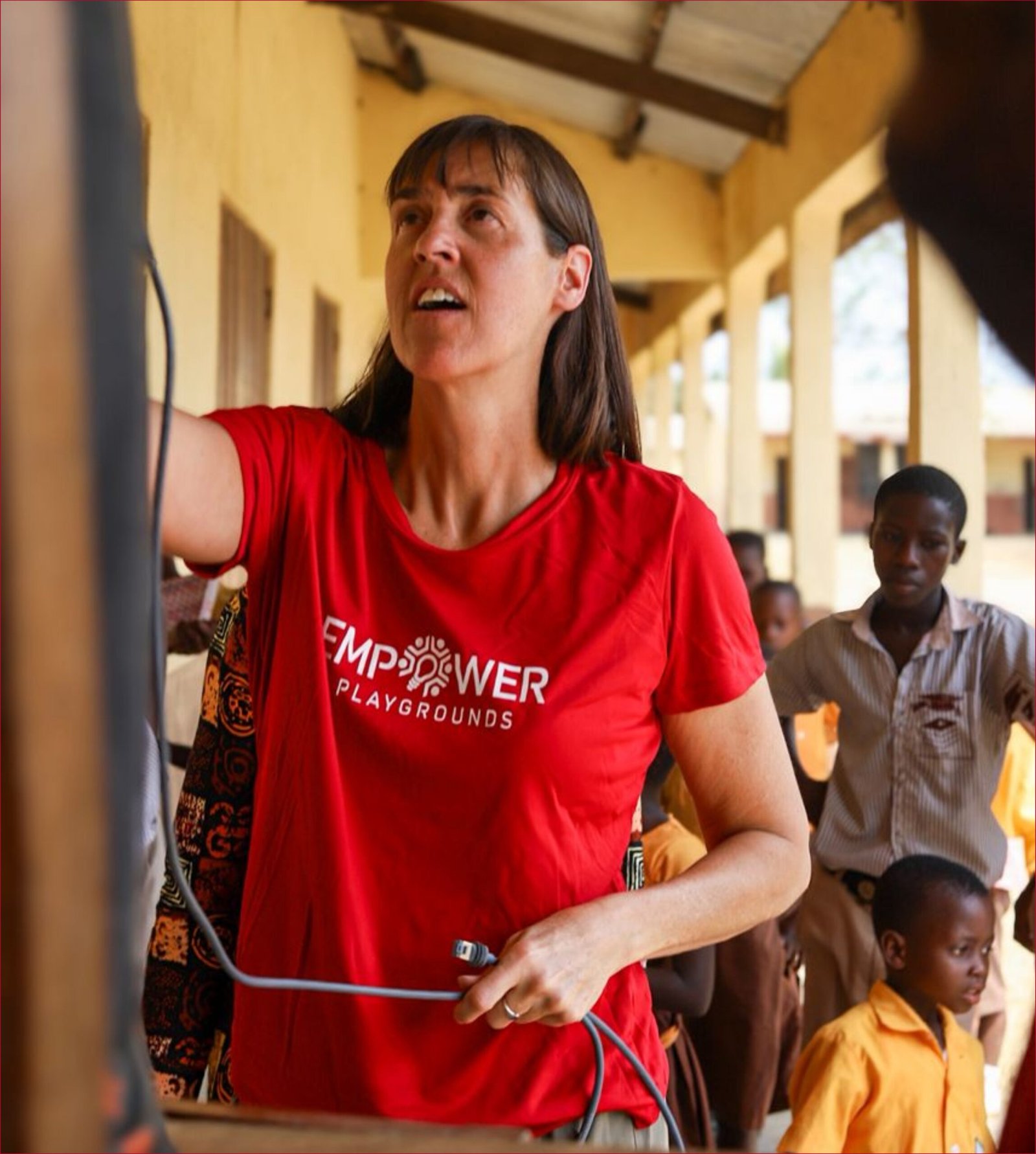
Across rural Ghana, the digital divide remains one of the most persistent barriers to quality education.
While students in urban centers increasingly benefit from online learning tools, digital resources, and seamless communication, many rural schools continue to operate without reliable internet access, placing them at a structural disadvantage from the very start.
The absence of connectivity affects more than just learning materials. It limits access to information, disrupts administrative processes, isolates teachers, and reinforces educational inequality between rural and urban communities. For students, it often means fewer opportunities to explore, research, and learn beyond the classroom.
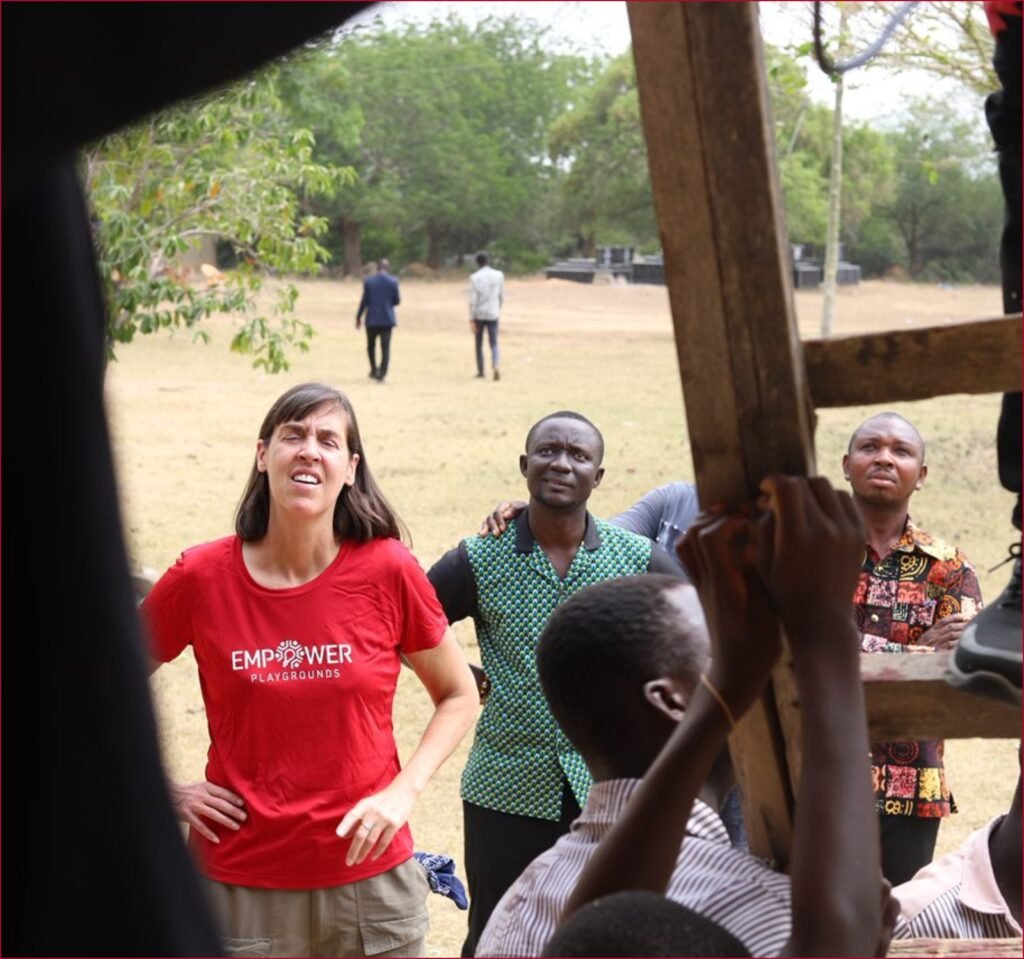
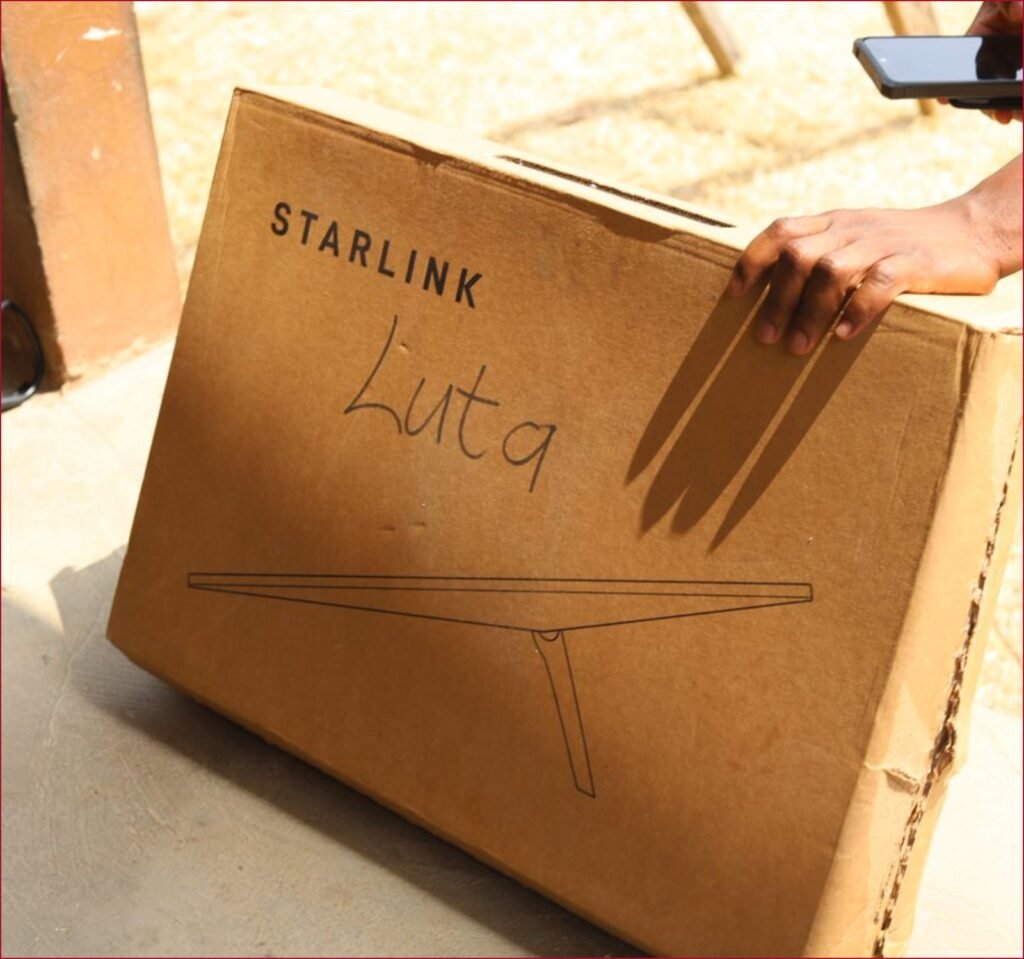
At Luta D/A Basic School, this long-standing challenge is now being addressed through the installation of Starlink satellite internet, a move that represents a step toward equity.
By providing reliable internet access, the school is now better positioned to offer students learning experiences closer to those available to their peers in urban areas. Digital access creates opportunities for research, exposure to new ideas, and engagement with educational content that was previously out of reach.
For the students, the impact is immediate and personal. “We are excited because now we can do a lot more research and learn better,” one student shared.
This access helps level the playing field, ensuring that where a child lives does not determine the quality of education they receive.
Beyond student learning, internet access plays a critical role in supporting teachers who work in rural and nearly off-grid communities.
For over ten years, current teachers at Luta D/A Basic School faced serious connectivity challenges. Essential professional tasks such as online verifications and updates required by education authorities, often meant traveling long distances to Ada or Sege, at personal cost and inconvenience.
Even staying in touch with family was difficult. Teachers had to travel to a location known as “cobra spot”, an area with frequent snake sightings, just to find enough network coverage to make a phone call.
“With this installation, all of that is going to be a thing of the past,” a teacher noted.
Speaking on the broader implications, Angela Trego, a board member of Empower Playgrounds, emphasized that infrastructure like internet access is key to improving teacher retention in rural schools.
Providing reliable connectivity, she explained, helps make rural postings more sustainable and attractive, encouraging teachers to remain in these communities rather than seek transfers to urban areas.
With connectivity now in place, the quality of teaching and learning at Luta D/A Basic School is expected to improve significantly.
Teachers can now access online resources, stream educational videos, and integrate digital materials into their lessons, tools that enhance comprehension and engagement in the classroom.
“Teaching is going to improve,” a teacher shared. “Now we will be able to stream educative videos and materials to aid in teaching.”
This installation, carried out as part of Empower Playgrounds’ mission to enhance educational experiences in underserved communities, demonstrates how targeted infrastructure investments can address systemic inequities in education.
At Luta D/A Basic School, internet access is helping close the gap between rural and urban education, supporting teachers, empowering students, and moving the community closer to a future where opportunity is not defined by geography.



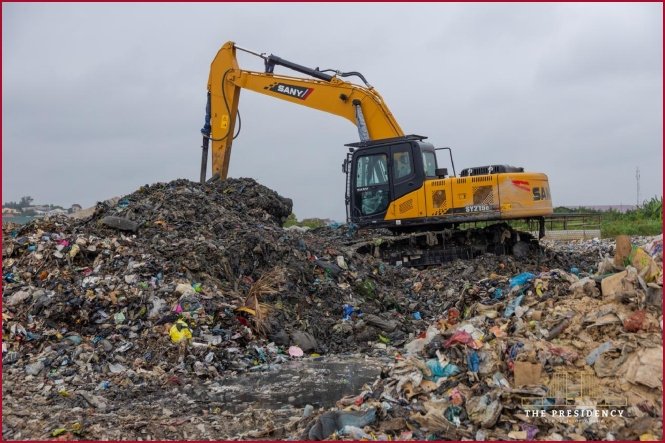
The government has launched a major military-led operation to reclaim the Lafa water retention basin at Mallam, deploying the 48 Engineer Regiment of the Ghana Armed Forces in a high-stakes effort to break the cycle of perennial flooding that has devastated communities in Mallam, Weija, Blue Lagoon, Dansoman and surrounding areas for years.
The intervention, which involves breaking up tonnes of compacted solid waste and dredging heavily silted sediment from the basin, comes nearly two months after torrential rains on June 29 triggered catastrophic flooding across the Greater Accra Region.
The exercise is being coordinated by the Post-Flood Mitigation Task Force, led by the Deputy Chief of Staff in charge of Operations, Mr Stan Xoese Dogbe.
“We are dealing with decades of deliberate dumping,” said Ing. Richard Kofi Amekor, Head of Drainage at the Ghana Hydrological Authority. “Solid waste, boulders and laterite have been tipped into this basin for years. The reservoir is so heavily silted that rainwater could not flow into it naturally, causing backflow that swamped Blue Lagoon, the Mallam-Gbawe corridor and parts of Dansoman.”
According to Ing. Amekor, the Lafa stream originates from Mallam-Gbawe Zero and passes through Santa Maria, Atieku, Pallas Town, Alhaji Tabora and McCarthy Hill before draining into the basin and eventually into the sea. But the obstruction of the basin turned the watercourse into a death trap during the June downpour.
The military engineers face an arduous task. Brigadier General Richard Kinney, Commander of the 14 Engineer Brigade, revealed that the waste had been capped with laterite over the years to create land for illegal sale and development, making excavation particularly difficult.
“Our immediate task is to loosen the compacted material before removal. To minimise traffic disruptions, all haulage of excavated debris will be undertaken at night to the designated landfill site at Nsawam,” Brig. Gen. Kinney stated. He added that the entire dredging and evacuation exercise is expected to take several months.
Beyond the dredging, officials are calling for a more permanent solution: the demolition of all illegal structures erected within the water retention area. Ing. Amekor noted that buildings constructed inside the basin have substantially reduced its storage capacity.
“Once the illegal structures are removed, the Hydrological Authority will work with the Weija-Gbawe Municipal Assembly to secure the banks and ensure continuous monitoring,” he said, warning that restoration of the basin will significantly reduce flooding impacts, though it may not eliminate flooding entirely due to the area’s topography and upstream runoff.
Brigadier General Forster Okae-Yeboah, Director General of Joint Operations of the Ghana Armed Forces and Coordinator of the Flood Mitigation Works, confirmed that the Mallam operation is part of a wider, nationwide offensive. Similar dredging works are ongoing at Oyarifa, East Legon and the Kpeshie Lagoon, while work will begin next week around the Kpeshie-Laboma Beach enclave to reopen the channel linking the lagoon to the sea.
“Government has fulfilled its commitment by providing funding and equipment for this exercise, but we appeal to the private sector to support this nationwide initiative,” Brig. Gen. Okae-Yeboah said.
He stressed that military action alone would not solve Ghana’s flooding crisis without sustained public cooperation.
“Residents must stop dumping refuse into the basin and encroachers must vacate immediately. Only by protecting our waterways can we protect lives and property,” he admonished.
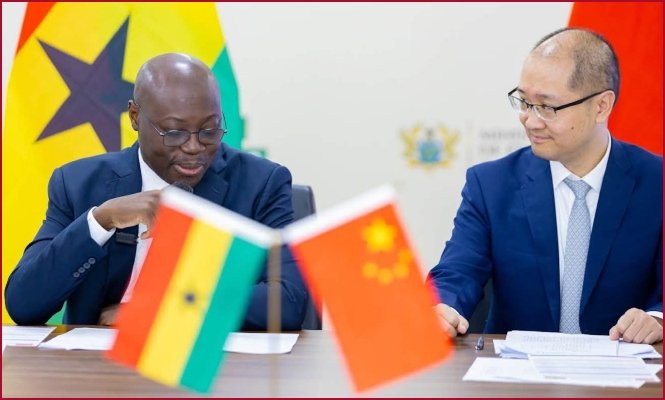
Finance Minister Cassiel Ato Forson is calling for a shift in Ghana’s economic relationship with China, arguing that the country needs investment in factories, technology and local industries rather than a trade structure dominated by the export of raw materials.
Forson made the case as Ghana and China opened the Fifth Session of the Ghana–China Joint Commission on Economic, Trade and Technical Cooperation, where he urged both countries to embrace a new approach centred on value addition, industrial investment, technology transfer and job creation.
While China remains Ghana’s largest trading partner, Forson said the structure of that relationship must evolve to ensure more of the wealth generated from Ghanaian resources remains within the country.
“Ghana’s priority is to process more of what we produce and export more value-added goods, including processed cocoa, to China,” Forson said.
His message amounted to a broader call for investment that helps Ghana build its productive capacity at home.
“We are also seeking investments that build factories, transfer technology, support Ghanaian businesses, train our people and create sustainable jobs,” he added.
A trade relationship marked by imbalance
The call comes as trade between Ghana and China continues to grow. Bilateral trade reached a record $14.1 billion in 2025, representing a 19.3% increase from the previous year.
But the figures also highlight a longstanding imbalance. In 2024, China exported about $9.844 billion worth of goods to Ghana, compared with roughly $1.992 billion in Ghanaian exports to China.
China’s exports have included machinery, electrical equipment, textiles and steel, while Ghana’s exports have largely consisted of commodities such as crude oil, manganese ore and cocoa beans.
Forson’s argument is that Ghana must move further up the value chain — processing its own resources and agricultural products before they leave the country rather than importing higher-value finished goods.
For a country whose economy has long relied heavily on commodity exports, the push for domestic processing could also mean more opportunities for manufacturing and employment.
China opens its market — but can Ghana capitalize?
The renewed focus on industrialisation comes as China expands market access for African exporters. Beginning May 1, 2026, China extended zero-tariff treatment to products from 53 African countries with which it has diplomatic relations, including Ghana.
The policy could create new opportunities for Ghanaian businesses, but expanded access alone may not solve the country’s trade imbalance if Ghana continues to export primarily unprocessed materials.
Forson’s remarks suggest Ghana is seeking to pair greater access to the Chinese market with investments that can strengthen domestic supply chains and help local companies produce more finished goods.
At the continental level, the challenge is similarly pronounced. Trade between China and Africa reached a record $348.05 billion in 2025, but Chinese exports substantially exceeded imports from African countries, leaving the continent with a significant trade deficit.
Ghana seeks investment beyond extraction
Chinese investment is already spread across several sectors of Ghana’s economy, including mining, energy, manufacturing and construction. But as Ghana pursues broader economic transformation, officials are increasingly stressing investments that bring technology, skills and long-term industrial capacity alongside capital.
Chinese Assistant Minister for Commerce Zhang Li acknowledged Ghana’s economic recovery and expressed China’s commitment to deepening cooperation, including through industrialisation and economic transformation.
For Forson, however, the message was clear: Ghana’s future trade strategy cannot simply be about selling more raw materials abroad.
It must also be about building the factories and industries capable of turning Ghanaian resources into higher-value products — and creating sustainable jobs in the process.

Ghana’s major news outlets on Tuesday, August 25, 2026, lead with a mix of high-stakes political drama, government interventions in the mining sector, and pressing economic developments. The headlines are dominated by the escalating legal battle between Minority Leader Alexander Afenyo-Markin and GoldBod CEO Sammy Gyamfi over extortion allegations, while President Mahama’s administration moves to rescue the struggling Adamus Resources mine and fends off scrutiny over GoldBod’s financial losses.
1. The Daily Banner
BaWumia Throws Weight Behind Afenyo-Markin
2. Spyder
Cash-Strapped House of Chiefs Grounds Justice
3. The Hawk
Buah Revokes Presidency Rescues Adamus / Paul Afoko Files for NPP Chairmanship
4. Daybreak
Bagbin to Admit Minority’s GoldBod Motion / NLA Staff Suspend Strike
5. The Business Analyst
GoldBod Rejects GH¢1bn Overdraft Allegation
6. The Daily Searchlight
I Believe In Afenyo-Markin! – Bawumia Affirms
7. Business & Financial Times
Mining Chamber Urges Shift from Local Content to Local Capability
8. Daily Post
NDC Formally Notifies Bagbin of James Agalga’s Appointment as Majority Leader
9. The Dispatch
Mahama Intervenes to Save Adamus Mine
10. The Chronicle
I’m Ready to Face OSP – Afenyo-Markin Sues Sammy Gyamfi
11. Daily Guide
Adamus Resources Welcomes Turnaround Plan
12. The Ghanaian Times
Cutting Waste Key to Economic Disaster Looms at Ashaiman
13. Daily Graphic
FDI Inflows Jump to $2.62bn After 2-Year Decline



-
 Ghana News1 day ago
‘We Need Factories’: Ato Forson Calls on China to Invest in Ghana’s Industrial Future
-
 Ghana News1 day ago
Government Deploys Military to Mallam in High-Stakes Bid to End Perennial Flooding
-

 Festivals & Events2 days ago
Ahoba Kuma Festival: How the Abura People Keep Their Warrior Legacy Alive
-

 Ghana News1 day ago
Top News Headlines from Ghanaian Newspapers: Tuesday, August 25, 2026
-
 Sights and Sounds2 days ago
Nine Hours That Changed the Gold Coast: The Legacy of the Battle of Katamanso
-

 Fashion & Style1 day ago
The 5 Jeans Every Woman Should Own Before Buying Another Pair
-

 Reels & Social Media Highlights16 hours ago
Bawumia’s 2028 Play, Abena Korkor’s Return, and a Security Alarm
-
 Arts and GH Heritage2 days ago
The Architecture of Grief: Gabriel Selassie Tsagli Paints a Portrait of Home and Loss