
Ghana News
How Much Did Ghana’s New Aircraft Cost? The Question the Handover Didn’t Answer

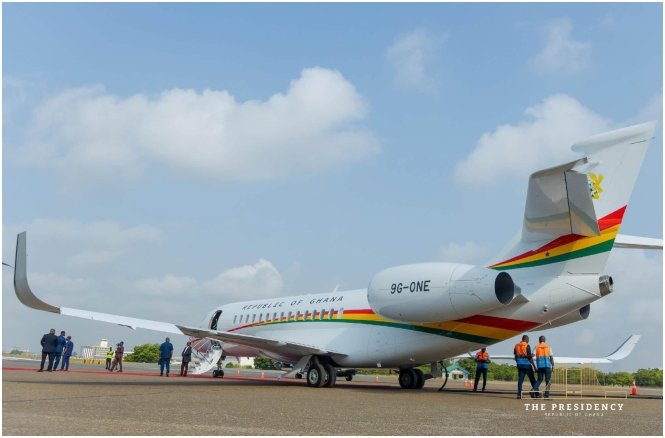
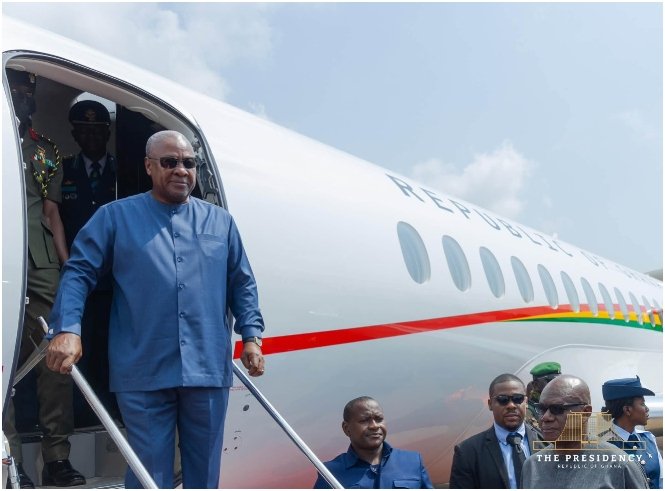
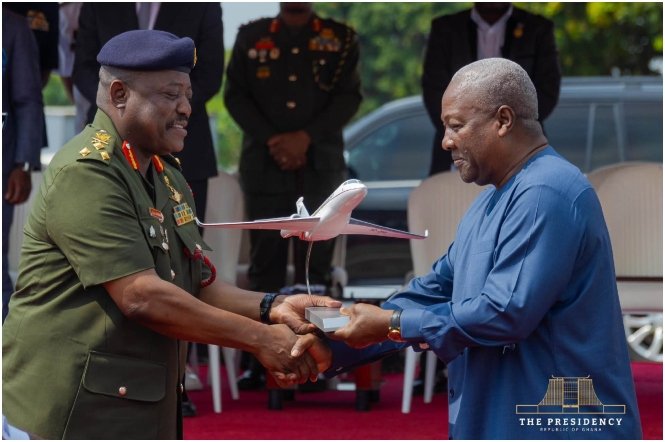
ACCRA, Ghana — President John Dramani Mahama has formally handed over three newly acquired aircraft to the Ghana Air Force, marking another step in the government’s military modernization program.
However, while the handover ceremony highlighted the aircraft’s operational capabilities and strategic importance, it did not disclose how much Ghana paid for the three aircraft.
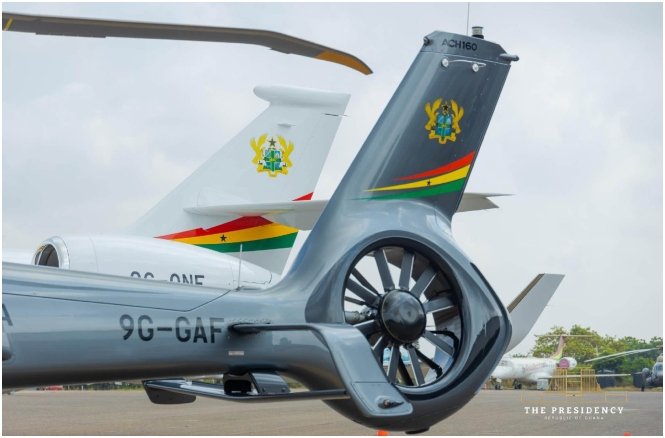
The acquisition comprises an Airbus H175 helicopter, an Airbus H160 helicopter and a Dassault Falcon 6X long-range executive aircraft. They were formally handed over at the Air Force Base in Accra as part of efforts to strengthen the operational and air transport capabilities of the Ghana Armed Forces.
The financial question surrounding the acquisition is significant because the aircraft were procured under defense agreements approved by Parliament in December 2025. Yet the handover announcement provided no breakdown of the purchase price, the total contract value or the individual cost of each aircraft.
It also did not specify whether the procurement figures include associated costs such as training, maintenance arrangements, spare parts, technical support and other logistical requirements.
For a major public-sector defense acquisition, these details matter not only to the military’s long-term planning but also to public understanding of how government resources are being committed.
Three Aircraft, Different Military and State Functions
The three aircraft are intended to serve different functions within Ghana’s national aviation and defense requirements.
The Airbus H175 is a medium-sized, multi-purpose helicopter designed for demanding transport and operational assignments. Its capabilities include personnel transport and missions requiring flexibility in challenging operating environments.
The Airbus H160 is a next-generation medium helicopter designed for transport and other specialized missions. Its addition is expected to provide the Ghana Air Force with greater flexibility in meeting its operational requirements.
The Dassault Falcon 6X, meanwhile, is a long-range business jet designed for intercontinental travel. President Mahama said it would strengthen Ghana’s long-distance air transport capacity and support official state engagements abroad.
The President also disclosed that Ghana is expected to receive two additional Airbus H175 helicopters in 2027 under the same procurement agreement, meaning the three aircraft handed over represent only part of the planned acquisition.
The eventual delivery of the additional helicopters will further expand the Air Force’s transport capabilities.
Mahama Defends Investment in Military Equipment
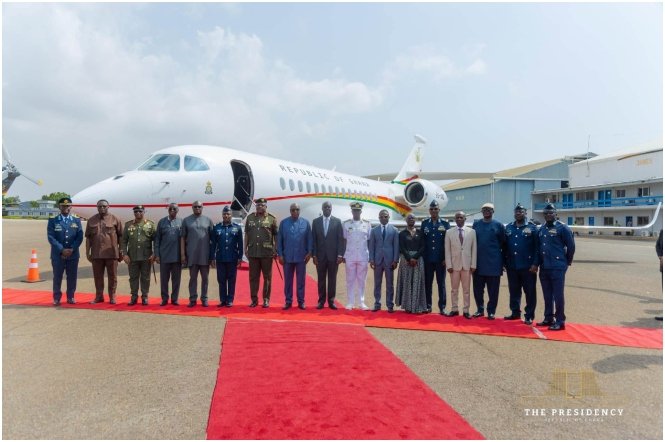
Speaking at the handover ceremony, President Mahama said the acquisition reflected his administration’s commitment to providing the Armed Forces with the equipment and resources necessary to fulfil their constitutional responsibilities.
He noted that the military was responsible for defending Ghana’s territorial integrity and sovereignty, obligations that required personnel to have reliable equipment and adequate operational support.
“If a group of people are required to risk their lives in defense of our motherland, the least we can do is to ensure that they are always adequately equipped to carry out this duty,” he said.
The President argued that military modernization should extend beyond the purchase of aircraft and other equipment to include training, infrastructure development and improved welfare for service personnel.
He also pointed to the changing security environment in West Africa and the wider sub-region, saying the Armed Forces needed sufficient capabilities to deploy personnel, respond to emerging threats and coordinate emergency operations effectively.
Government Also Funding Repairs to Existing Aircraft
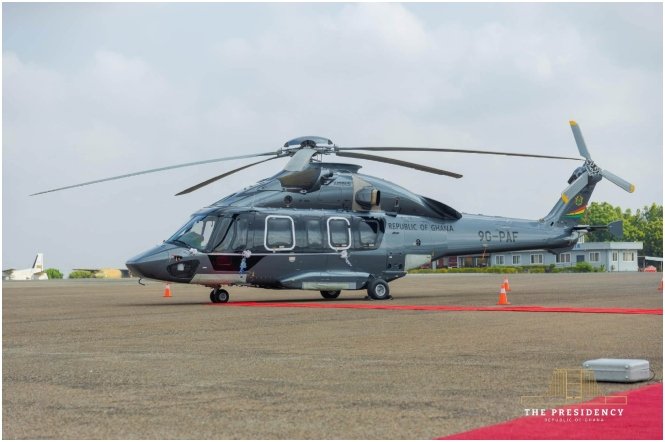
Beyond the acquisition of new aircraft, Mahama said the government had allocated resources to restore some grounded aircraft already belonging to the Ghana Air Force.
The equipment identified for repairs includes Mi-17 helicopters, CASA C-295 troop transport aircraft and K-8 light fighter jets.
The restoration program is intended to improve the availability of existing military aviation assets rather than relying exclusively on new procurement.
This is an important aspect of the modernization effort, particularly as the operational effectiveness of an air force depends not simply on the number of aircraft it owns but also on how many are serviceable, properly maintained and available when required.
The President also highlighted investments in aviation infrastructure and professional training, stressing the need to ensure that military personnel can operate and maintain the expanded fleet efficiently.
Who Owns the Aircraft?
Mahama stressed that the newly acquired aircraft belong to the Republic of Ghana, with the Ghana Air Force serving as their custodian and operator.
He said the military would be responsible for their safe operation, maintenance and efficient utilization in the national interest.
The distinction reinforces the government’s position that the acquisition represents a national investment in Ghana’s defense capabilities rather than an institutional asset belonging exclusively to the Air Force.
The President formally transferred the aircraft on behalf of the Ghanaian people to the Ghana Armed Forces through the Ghana Air Force.
The Cost Question Remains
Despite the emphasis on military preparedness and the strategic importance of the acquisition, the financial details remain a significant omission from the handover announcement.
The absence of disclosed figures makes it difficult for the public to establish the total cost of the three aircraft, assess the financial commitments under the wider procurement agreement or understand the projected expenditure associated with operating and maintaining them.
It is also important to distinguish between the purchase price of the aircraft and the overall cost of acquiring and sustaining them. Military aviation procurement frequently involves additional contractual obligations covering maintenance, training, spare parts, technical assistance and long-term servicing.
With two more H175 helicopters expected in 2027 under the same agreement, disclosure of the overall contract value and its financial components would provide a clearer picture of the government’s commitments.
The handover establishes that Ghana has acquired three additional aircraft intended to strengthen its military and official transport capabilities. It also signals a broader program involving the rehabilitation of existing aircraft, infrastructure improvements and personnel development.
But one important question remains unanswered: How much did Ghana actually pay for the new aircraft, and what is the total financial commitment involved in the procurement program?
For Ghanaian taxpayers, that information is an important part of understanding not just what the country has acquired, but what the acquisition will ultimately cost the Republic.






Ghana News
Ghana’s Police Force Enters New Era of Safety: 110 Armored Vehicles, Tasers and Body Armor Deployed Nationwide
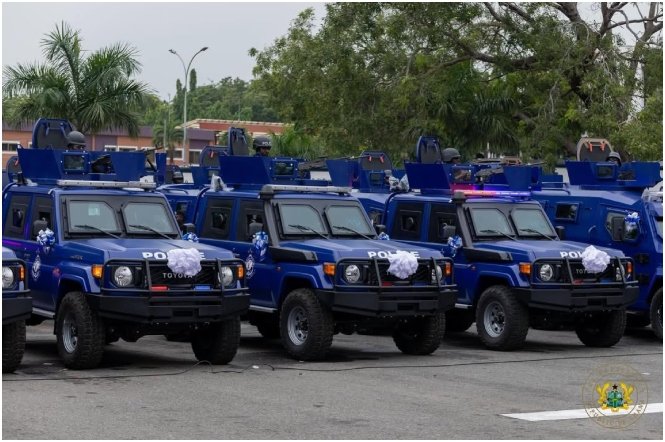
ACCRA, Ghana — The Ghana Police Service is entering a new era of operational safety and modernization, with a total of 110 armored vehicles, body armor, and tasers being deployed nationwide to protect officers and strengthen public security across the country.
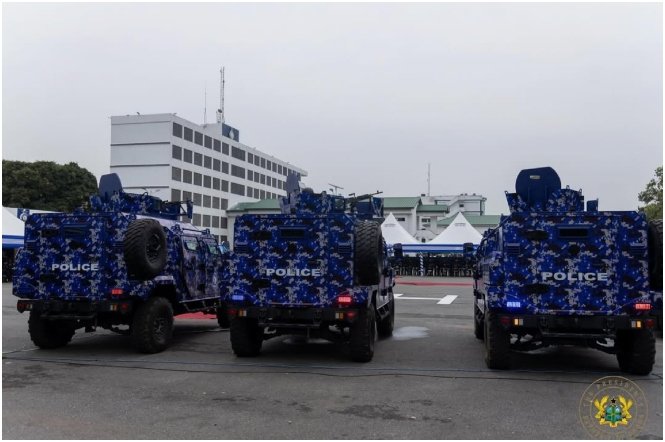
The landmark investment, announced during the Service’s annual Memorial Day ceremony on Wednesday, marks one of the most significant equipment overhauls in the history of Ghanaian law enforcement. It builds on the 50 armored vehicles handed over to the Service in December last year, with an additional 60 vehicles expected to arrive in the country within four weeks.
Government officials said the combined fleet of 110 armored vehicles will be distributed to police formations across the country, enhancing the Service’s capacity to respond to violent crime, conduct high-risk operations, and protect officers operating in volatile environments.
Alongside the vehicles, the government has procured body armor to provide officers with better protection while on duty and is in the process of procuring tasers as an additional protective measure in situations involving violent attacks. The tasers are expected to give officers a non-lethal option for subduing assailants, reducing the likelihood of deadly confrontations.
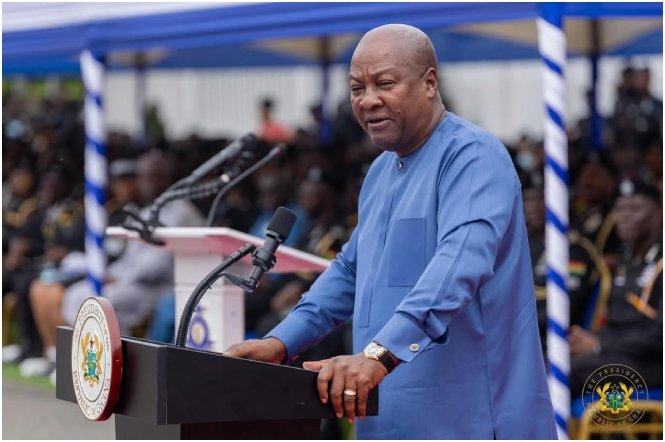
The Memorial Day ceremony, held to honor officers who have died in the line of duty, provided a solemn backdrop for the announcement. Nine officers have lost their lives in the line of duty so far in 2026, a sharp decline from 20 in 2025 and 23 in 2024. Officials attributed the reduction to deliberate investments in officer safety, improved operational planning, and a renewed emphasis on intelligence-led policing.
“Our goal is that no officer should lose their life to a violent attack while carrying out their lawful duties,” the President said at the ceremony, stressing that it is the responsibility of the state to equip officers and minimize the risks they face during dangerous encounters.
The Inspector General of Police and the Police Management Board were commended for their efforts to improve officer safety, with a call for sustained action to strengthen intelligence-led policing, operational preparedness, and regular training in risk assessment and tactical responses.
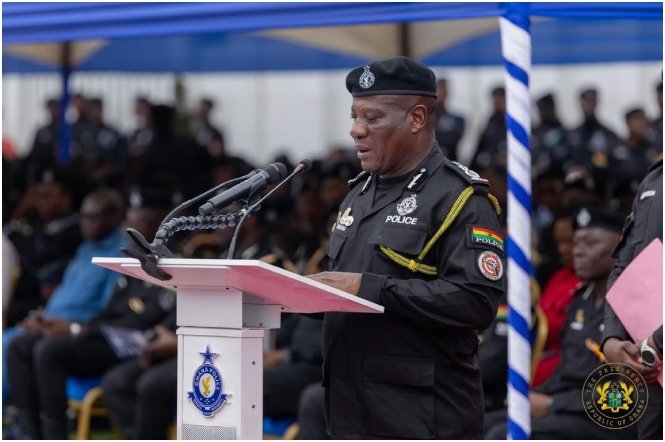
The modernization drive is expected to have implications beyond Ghana’s borders. As one of West Africa’s most stable democracies, Ghana’s approach to law enforcement safety and professionalism is closely watched across the region.
The combination of material investment, armored vehicles, body armor, and tasers, with a strategic push toward intelligence-led policing and tactical training positions the Ghana Police Service as a potential model for other African nations grappling with similar security challenges.
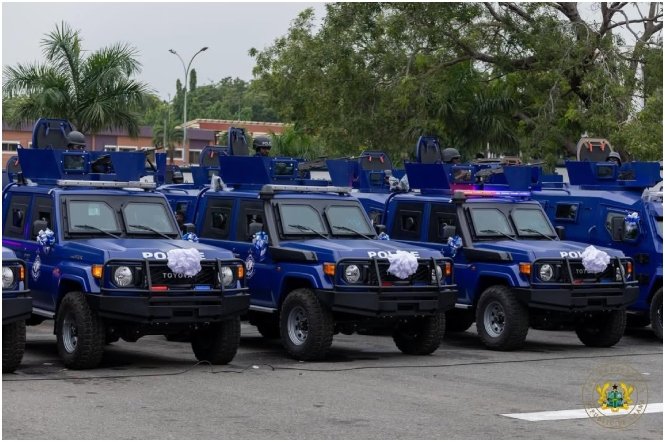
For the officers on the front lines, the message is both practical and symbolic: their safety is a national priority. The arrival of the new vehicles and protective equipment in the coming weeks will be followed by the integration of tasers into operational units, with training expected to accompany their deployment. The Service is also expected to intensify its focus on risk assessment and tactical response training, ensuring that officers are not only better equipped but also better prepared.
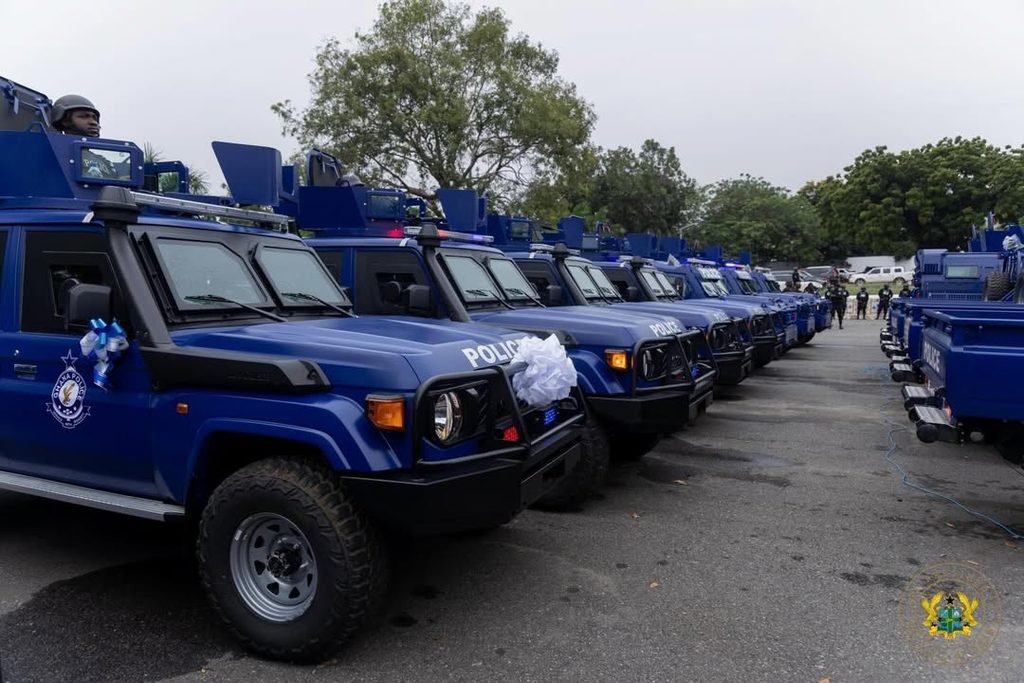
As the nation reflects on the sacrifices of its fallen officers, the Memorial Day announcements offer a forward-looking vision: a police service that is safer, more professional, and more capable of protecting both its officers and the communities they serve. The coming months will determine how swiftly and effectively these commitments translate into lasting change on the ground.
The Ghana Police Service’s transformation is a national story with global resonance—a case study in how a developing nation is taking concrete steps to protect its law enforcement personnel while strengthening public safety for all.
Business
“We Will Not Be Waiting”: Ghana Challenges European Investors to Join Africa’s $12 Billion Pharma Opportunity

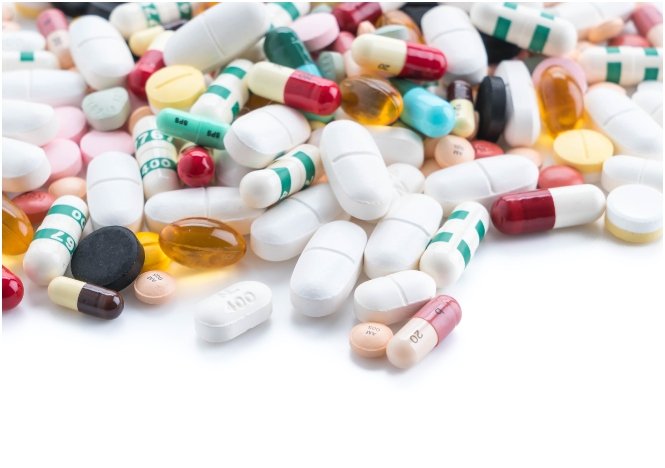
ACCRA — Africa’s pharmaceutical market is projected to expand by $12 billion in the next five years, and Ghana’s top vaccine official is urging German and European companies to move quickly or risk missing out.
Dr. Sodzi Sodzi-Tettey, Chief Executive Officer of Ghana’s National Vaccine Institute (NVI), told a side event at the German–African Business Summit 2026 that pharmaceutical sales across the continent are expected to rise from $40 billion in 2025 to $52 billion by 2030, a 30 percent increase. He described the projected growth as both a public-health necessity and a major commercial opportunity.
“Africa needs reliable and affordable products, and the manufacturing capacity, technology and services to deliver them,” Sodzi-Tettey said.
He noted that more than 70 percent of Africa’s pharmaceutical consumption is still imported, while vaccines remain almost entirely dependent on foreign supply, with 99 percent coming from abroad.
“We want to change this!” he declared in his keynote speech.
The African Union has set a target for the continent to manufacture at least 60 percent of its health-product needs by 2040. Sodzi-Tettey presented that goal as a clear policy signal for investors and partners. He also pointed to the medical-devices market, which is forecast to add $2.68 billion between 2025 and 2030, growing at roughly 8 percent a year.
Beyond selling equipment, he stressed the need for local engineering capacity, spare parts and long-term maintenance services so that technology delivers lasting value.
German companies, he said, bring world-class strengths in pharmaceutical production technologies, automation, laboratory systems and engineering. African firms offer market knowledge, proximity to customers and an understanding of local conditions. The best path forward, he argued, lies in practical partnerships: technology licensing, joint ventures, local assembly, workforce development and ongoing service arrangements.
Regional integration is improving the investment case. Implementation of the African Continental Free Trade Area, joint regulatory assessments and pooled procurement mechanisms are creating larger, more predictable markets that allow companies to scale beyond single countries.
Sodzi-Tettey ended on a pointed note.
“Africa’s health markets are growing. We need partners and we are ready to work with them,” he said. “The question is not whether the demand will be there. It is who will step forward in time to help meet it, and who will thus capture the opportunities this growth creates.”
“Africa is engaging with partners from around the world. We certainly want to work with Germany and Europe, but we will not be waiting. The opportunities are here. The time to engage is now.”
The remarks were delivered at a Health and Pharma Industry session under the theme “Where German Technology Meets African Growth.”
Sodzi-Tettey said he hoped the discussions would produce concrete projects, potential partners and practical next steps that companies and institutions could pursue together.
About the event
The 6th German-African Business Summit (GABS 2026) took place from November 23 to 25, 2026, at the Kempinski Hotel Gold Coast City in Accra, Ghana.
Key Details of Event
- Organizers: Sub-Saharan Africa Initiative of German Business (SAFRI) and the Delegation of German Industry and Commerce in Ghana (AHK Ghana), in cooperation with partners like GIZ.
- High-Level Participation: Opened with remarks from German President Frank-Walter Steinmeier and Ghanaian leadership alongside hundreds of business executives, policymakers, and investors.
- Bilateral Context: Accompanied a German–Ghanaian Business Day linked to bilateral development negotiations, highlighting growing trade ties and plans for a Ghana–Germany Industrial and Investment Acceleration Desk.
Core Focus Areas
- Industry & Trade: Manufacturing, local value addition and beneficiation, raw materials and mining, and opportunities under the African Continental Free Trade Area (AfCFTA).
- Energy & Sustainability: Energy transition, renewable energy, green hydrogen, and circular economy practices.
- Digital & Infrastructure: Digitalization, AI, logistics, quality standards, and mobility.
- Talent & Finance: Access to capital, startups and youth leadership, women in business, healthcare, and skills development.
Ghana News
Ghana Earned $68 Million Carbon Credits by Saving Forests But Galamsey Threatens the Next Payday
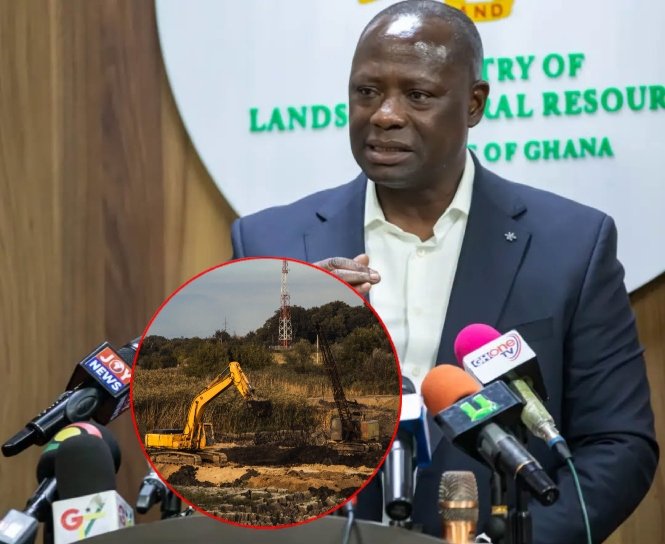
Accra, Ghana — Ghana has earned global acclaim as the first African country to receive verified forest carbon credits under the Architecture for REDD+ Transactions (ART), a historic win worth up to $68 million.
But as officials bask in the milestone, two uncomfortable questions hang over the celebration: when will the money actually arrive, and can the forests that earned it survive the galamsey crisis long enough to secure the next payday?
A Historic Milestone On Paper
At a press briefing in Accra on Monday, November 23, 2026, Lands and Natural Resources Minister Emmanuel Armah-Kofi Buah announced that Ghana had been issued approximately 6.5 million tons of verified emission reductions under ART’s REDD+ Environmental Excellence Standard (TREES). The achievement, approved on November 10, 2026, makes Ghana the first country in Africa and the third globally to reach this milestone.
“We have taken this journey since 2008,” Buah said. “Successive governments have contributed to making sure we continue to protect our forests.”
The credits cover emission reductions achieved between 2017 and 2021, with the next monitoring period covering 2022 to 2026.
Dr Hugh C.A. Brown, Chief Executive of the Forestry Commission, stressed that the credits were not a gift, they were earned.
“These credits were not simply allocated to Ghana,” he said. “They were earned through results that had to be achieved, measured, reported, independently validated, and verified.”
The $68 Million Question: Where Is the Money?
Buyers, including members of the LEAF Coalition, have committed to purchasing four million tons of the credits at prices ranging between $10 and $13 per ton, approximately $43 million. The remaining 2.5 million credits are available for further transactions, with the potential to generate an additional $25 million.
That brings the total potential value to roughly $68 million.
But there is a catch. The credits have been issued. The commitments have been made. The money has not been received.
“The issuance of the credits does not mean Ghana has received the money,” Dr Brown clarified. “Government is yet to receive the proceeds from the committed purchases.”
Carbon credit deals are complex: buyers commit to purchase credits, but payment timelines depend on contractual terms, delivery schedules, and sometimes third-party verification of the credits’ transfer. The government has not disclosed when it expects the funds to land.
When the money does arrive, the approved benefit-sharing arrangement will determine its distribution: 46 per cent to communities, farmers and traditional authorities; 39 per cent to government institutions, including the Forestry Commission and district assemblies. The remaining 15 per cent has not been publicly detailed.
For communities living near Ghana’s forests, many of whom have borne the costs of conservation, the 46 per cent share represents a significant potential windfall. But it also raises questions about delivery: how will funds reach remote communities, who will manage them, and what oversight will ensure they are used as intended?
Galamsey: The Threat to the Next Payday
Even as Ghana awaits payment for its first tranche of credits, officials are warning that future earnings are not guaranteed. Dr Brown identified illegal mining (galamsey), illegal logging, wildfires, and unsustainable farming practices as ongoing threats to the country’s forests.
If deforestation accelerates, future carbon credit issuances could shrink, or disappear entirely.
Carbon credits are a results-based payment: Ghana only earns future credits if it can prove it reduced deforestation.
The next monitoring period, covering 2022 to 2026, will be judged on whether Ghana’s forests were actually protected during those years. If galamsey continues to ravage forest reserves, that period could produce fewer verified emission reductions, jeopardizing future earnings and undermining the credibility of Ghana’s carbon market ambitions.
The warning lands with particular weight because galamsey is not a distant threat, it is a present and persistent crisis. Illegal mining has contaminated rivers, scarred landscapes, and encroached on forest reserves across the country. It is often driven by economic desperation in the very communities that carbon credit money is meant to benefit.
That creates a difficult feedback loop: if communities turn to galamsey for survival, the forests suffer; if the forests suffer, future carbon credits shrink; if future credits shrink, the money available to support those communities shrinks too.
Can Carbon Money Break the Cycle?
The government’s challenge is twofold. First, it must ensure that the $68 million, when it arrives, reaches the communities that earned it, and is used in ways that provide alternatives to illegal mining and logging. Second, it must demonstrate that Ghana can actually protect its forests during the 2022–2026 monitoring period, or risk losing the credibility that made this first issuance possible.
Dr Brown said the Forestry Commission would continue working with government, traditional authorities, and local communities to protect forests and sustain the gains made.
But the clock is already ticking on the next verification period.
What’s Next?
Ghana’s carbon credit milestone is real: 6.5 million tonnes of verified emission reductions, a continental first, and a potential $68 million in committed and available credits. But the financial benefit remains prospective, and the environmental foundation on which it rests is under pressure.
The $68 million question, when will the money arrive, and who will ensure it reaches the communities that earned it, has no clear answer yet.
And now a second question has emerged: can Ghana’s forests survive the galamsey crisis long enough to earn the next payday?
For now, Ghana can celebrate the verification. The payment, the accountability, and the protection of the forests themselves are still to come.


‘I Didn’t Sell My Likeness to AI. I Licensed It’: Woman Behind Viral AI Avatar ‘Emma’ Speaks Out

Ghana Moves to Establish Permanent Direct Flights and Shipping Links With the Caribbean

How Much Did Ghana’s New Aircraft Cost? The Question the Handover Didn’t Answer
-
 Africa Watch2 days ago
ECOWAS Gives The Gambia $480,000 for December Presidential Election
-

 From the Diaspora1 day ago
Mahama to Honor Victims of Transatlantic Slave Trade at New Barbados Memorial
-
 Ghana News1 day ago
Ghana’s Police Force Enters New Era of Safety: 110 Armored Vehicles, Tasers and Body Armor Deployed Nationwide
-
 Global Update5 hours ago
Ghana Moves to Establish Permanent Direct Flights and Shipping Links With the Caribbean
-
 Global Update1 hour ago
‘I Didn’t Sell My Likeness to AI. I Licensed It’: Woman Behind Viral AI Avatar ‘Emma’ Speaks Out