
Ghana News
‘We Didn’t Come Here to Beg’: Ghana’s Zanetor Agyeman-Rawlings Demands Climate Justice and Funding for Africa at COP31

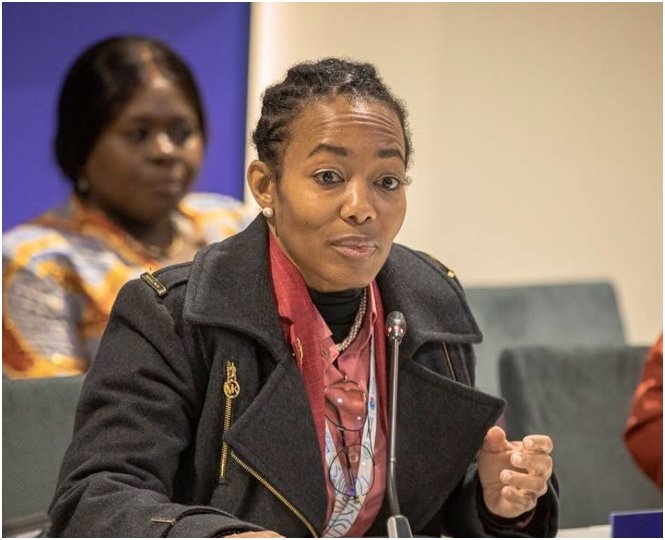
Ghana’s Minister for Environment, Science and Technology, Dr Zanetor Agyeman-Rawlings, has delivered a forceful message to world leaders at the United Nations Climate Change Conference (COP31), demanding climate justice, adequate financing and accountability from developed nations over the environmental damage disproportionately affecting African communities.
Addressing delegates at the climate summit in Antalya, Türkiye, Agyeman-Rawlings declared that African countries had not come to plead for financial assistance but to demand what she described as their rightful entitlement after suffering the consequences of industrialization and other human activities that have contributed to global warming.
“We didn’t come here to beg, we came here to claim what is rightfully ours for our people, who are suffering the brunt of anthropogenic activities of developed countries, that they are now being asked to pay for in ways that they never asked,” she told delegates.
Her remarks placed Africa’s longstanding demand for climate justice at the center of negotiations, challenging wealthy nations to recognize their historical contribution to climate change and fulfil their financial responsibilities towards countries facing increasingly severe environmental consequences.
The Ghanaian minister also questioned the fairness of climate transition arrangements being proposed for developing economies, arguing that African populations should not be expected to shoulder additional costs for a crisis they contributed comparatively little to creating.
“The people of Africa, those who have suffered the most as a result of what has been going on due to the activities mostly of developed countries, deserve better,” she said.
“And we’re here to be a voice for them.”
Her message ended with a warning against another international climate conference producing ambitious declarations without meaningful implementation.
“We’re here to declare that we will not allow this to be another talk shop,” she said.
Africa rejects climate commitments without adequate funding
Agyeman-Rawlings’ intervention reflects a broader African position that wealthy industrialized nations must provide meaningful financial and technical assistance to developing countries confronting climate change.
African countries face mounting pressure to adapt to rising temperatures, changing rainfall patterns, droughts, flooding, coastal erosion and other climate-related threats.
Yet many African economies have limited financial resources to build resilient infrastructure, protect vulnerable communities, modernize agriculture and transition towards cleaner energy systems.
The minister has maintained that African nations should not be expected to accept additional climate obligations without the financial and technical capacity required to implement them.
At an African Ministerial Conference on the Environment meeting on the margins of COP31, she outlined three important conditions African governments should defend during the negotiations: maintaining the commitment to triple adaptation finance, rejecting additional obligations without adequate implementation support, and preventing climate finance from being double-counted or delivered predominantly through loans that increase developing countries’ debt burdens.
She argued that African countries had already demonstrated their willingness to participate in global climate action through their Nationally Determined Contributions, carbon market initiatives and national climate strategies.
However, the resources promised to support these commitments have not been sufficiently delivered.
She therefore called for concrete financial commitments and clear delivery arrangements rather than announcements that leave developing countries without the means to act.
‘So-called just transitions’ are not necessarily just, minister warns
One of the most significant aspects of Agyeman-Rawlings’ statement was her criticism of the concept of a just transition.
A just transition generally refers to the process of moving towards a lower-carbon economy while protecting workers, communities and vulnerable populations from the economic and social consequences of changes in energy production and consumption.
However, the Ghanaian minister questioned whether the arrangements currently being discussed genuinely protect African interests.
“We’re being asked to engage in so-called just transitions, which are anything but just,” she said.
Her criticism reflects concerns that developing economies could face pressure to restructure their energy systems and meet new environmental requirements without receiving sufficient financial assistance, technology transfer or investment to support that transformation.
For African countries, the challenge involves balancing environmental protection with the need to expand electricity access, develop industries, create employment and improve living standards.
Agyeman-Rawlings’ position is that climate action must recognize these development priorities rather than impose responsibilities without providing the resources needed to meet them.
Africa’s transition must also take account of national economic circumstances, energy infrastructure and the different capacities of countries to finance environmental reforms.
Climate talks face growing divisions over funding and fossil fuels
The minister’s intervention came at a particularly contentious stage of COP31, which was held from November 9 to 20, 2026, in Antalya, Türkiye.
The summit was scheduled to conclude on Friday, November 20, but negotiations extended into Saturday as countries struggled to reach agreement on climate finance, fossil fuels, adaptation and the global energy transition.
One major source of disagreement was a revised draft agreement released during the final days of the conference.
An earlier version included stronger language calling for an accelerated transition away from coal, oil and gas. However, the subsequent draft removed references to fossil fuels, prompting objections from countries and climate advocacy organizations.
The revised text also dropped a proposed annual $120 billion climate adaptation funding target that had angered developing nations.
These developments intensified concerns among African representatives and other climate-vulnerable countries that wealthy nations were failing to provide the financial commitments necessary to protect populations facing the consequences of climate change.
The negotiations remained unresolved beyond the conference’s scheduled closing date, with countries continuing efforts to reach a consensus.
For African governments, the disagreement over climate finance is particularly consequential because adaptation requires substantial investment in infrastructure, agriculture, water management, coastal protection and disaster preparedness.
Without predictable financial support, countries may struggle to implement climate commitments even when they have established national plans.
Ghana takes a stronger voice in Africa’s climate negotiations
Agyeman-Rawlings’ remarks also reflect Ghana’s efforts to position itself within wider African climate negotiations.
Since assuming office as Minister for Environment, Science and Technology in August 2026, she has stressed the importance of a coordinated African position at international climate meetings.
Before COP31, she called on Ghana’s delegation to approach the negotiations with unity, professionalism, discipline and accountability, stressing that representatives were attending as a national team rather than pursuing separate institutional interests.
At the Antalya summit, Ghana’s position was closely connected to the wider African demand for climate finance, adaptation support and a fair distribution of responsibilities.
The minister has also pledged Ghana’s support for African cooperation in the negotiations, stressing the importance of speaking with one voice when engaging developed nations.
She has argued that Africa’s bargaining position is strengthened when countries work together rather than negotiate from fragmented national positions.
Climate justice is about more than financial assistance
At the heart of Agyeman-Rawlings’ message is the argument that climate finance should not be treated as charity.
African countries are demanding recognition that the economic activities responsible for much of the historical accumulation of greenhouse gas emissions have largely taken place in industrialized economies, while the consequences are increasingly being experienced by vulnerable populations elsewhere.
Climate justice therefore involves addressing historical responsibility, unequal vulnerability and the financial capacity to respond to environmental damage.
For countries across Africa, this means access to resources to protect agricultural production, strengthen infrastructure, safeguard coastal communities, develop renewable energy and respond to climate-related disasters.
It also means ensuring that climate financing is accessible, transparent and does not simply create new debt burdens for countries already facing economic challenges.
The distinction between financial promises and actual delivery remains central to the African position.
Agyeman-Rawlings wants international climate agreements to include commitments that can be measured, financed and implemented rather than statements that offer political reassurance without changing conditions on the ground.
For Ghana and the wider continent, the outcome of COP31 will therefore be measured not only by the language adopted in the final agreement but also by the resources and practical support made available to vulnerable populations.
‘We will not allow this to be another talk shop’
Agyeman-Rawlings’ closing message was directed at the credibility of the entire international climate negotiation process.
For African communities already experiencing the consequences of climate change, another conference ending with ambitious declarations but insufficient financial support would represent a failure to address their concerns.
Her remarks challenge developed nations to move beyond expressions of solidarity and demonstrate their commitment through actual funding, technology transfer and practical cooperation.
The minister’s position is that Africa has a right to participate in shaping the global climate response while demanding that its development priorities and environmental vulnerabilities are taken seriously.
Her declaration that Africa did not come to beg but to claim what is rightfully owed represents a wider demand for fairness in international climate relations.
As negotiations at COP31 extend beyond their scheduled deadline, Ghana’s message is that African countries should not be expected to accept more responsibilities without the means to fulfil them.
For Agyeman-Rawlings, climate justice must be reflected in tangible commitments that improve the lives of the people most affected by the crisis.
Africa, she insists, deserves better than another round of promises.


Ghana News
Ghanaian Teen’s Bronx Funeral Sparks NY Attorney General’s Demand to Repeal Law Protecting Gunmakers
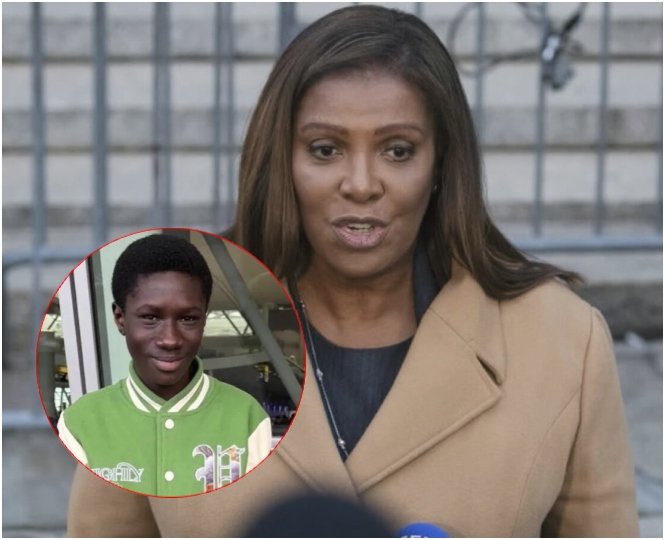
The funeral of 15-year-old Ghanaian student Javits Frimpong in New York has become the focus of a wider demand for gun industry accountability after New York Attorney General Letitia James called on the United States Congress to repeal federal legislation that protects gun manufacturers from certain civil lawsuits.
James made the appeal during Frimpong’s funeral on Friday, November 20, 2026, as hundreds of mourners, including Ghanaian community members, government representatives, American political leaders and civil rights advocates, gathered in the Bronx to honor the teenager.
Frimpong, who moved from Ghana to the United States in 2025 to continue his education, was fatally shot on October 29 while walking to school.
His ambition was to become a medical doctor. Instead, his death has left two grieving parents, devastated Ghanaian relatives and a community on both sides of the Atlantic demanding justice.
“Javits should have made it to school,” civil rights attorney Ben Crump said, expressing the painful reality of a young life cut short.

But the funeral also became an opportunity to raise questions about America’s gun laws and the accountability of firearm manufacturers.
Addressing members of Congress attending the service, James called for the repeal of the Protection of Lawful Commerce in Arms Act (PLCAA), arguing that the legislation makes it difficult for victims and public officials to pursue certain legal claims against gun manufacturers.
“As the Attorney General of the State of New York, I urge members of Congress who are here, and particularly those who will take over the Congress in the coming weeks, to repeal a law that provides immunities to gun manufacturers in this country,” she said.
She argued that the legislation restricts her ability, alongside attorneys such as Crump, to pursue manufacturers for harm associated with firearms.
“It is a law that does not allow me or Ben Crump to sue gun manufacturers for all of the harm that they are causing in the Bronx, in urban centers, all throughout this nation,” James said.
Her message was particularly forceful when she called on lawmakers to ensure that manufacturers were held accountable for the deaths of young Black people.
“We’ve got to get off to action and to make sure that they are held responsible for the death of every Black boy in this country,” she declared.
A Ghanaian boy who crossed the Atlantic in search of a better future
Javits’ story has resonated deeply with Ghanaians because he represents a familiar experience among immigrant families: parents making difficult decisions and sacrifices in the hope of creating better opportunities for their children.
He moved from Ghana to the United States in 2025 to reunite with his father, Thomas Frimpong, and continue his education.
He was a Grade 10 student at DreamYard Preparatory School in the Bronx and reportedly aspired to become a medical doctor.
His father had brought him to America with hopes that he would receive a good education, develop his abilities and build a successful future.
Those dreams ended on October 29, when he was shot while walking to school in the Claremont neighborhood of the Bronx.
The circumstances of his death shocked Ghanaians in New York and communities back home, triggering calls for justice and renewed concerns about the safety of young people in American schools and neighborhoods.
His mother, Doris Adu Gyamfi, travelled from Ghana after receiving an emergency visa to attend her son’s funeral.
Her grief was evident in her tribute, in which she recalled the future she had imagined for her only son.
“I have only one child, and I need justice for him,” she said in an emotional appeal.
She also spoke about the painful contrast between the peaceful child she had raised and the violent circumstances of his death.
“If love could conquer death, my son would still be here,” she said.
Ghana sends official delegation to Bronx funeral
The importance of the tragedy to Ghana was reflected in the presence of an official government delegation at the funeral.
Deputy Minister of Foreign Affairs and Regional Integration James Gyakye Quayson led the Ghanaian government delegation, joining relatives, friends and members of the Ghanaian diaspora in paying their last respects.
Their presence underscored the government’s concern over the death of a Ghanaian minor abroad and the continuing calls for justice.
Ghana’s diplomatic response had already involved coordination with American authorities following the shooting. Foreign Affairs Minister Samuel Okudzeto Ablakwa had previously stated that Ghanaian officials in New York were engaging local authorities to support efforts to secure justice.
The funeral brought that solidarity into public view, with Ghanaian representatives joining American officials and civil rights leaders in honoring the teenager.
New York City Mayor Zohran Mamdani, Reverend Al Sharpton, New York Attorney General Letitia James and Ben Crump were among the prominent figures who attended.
Mamdani delivered a particularly meaningful tribute, recognizing that although Javits had lived in New York for only a short time, the city considered him one of its own.
“Though he was only a New Yorker for a short time, New York City will forever be proud to call Javits one of our own,” he said.
The mayor described the teenager as friendly, thoughtful and unusually purposeful for someone so young.
He also lamented that Javits would never have the opportunity to wear a medical uniform or hold a stethoscope as he had hoped.
Mamdani concluded his remarks in Twi, Ghana’s widely spoken language, prompting a standing ovation from the mourners.
The gesture was a powerful acknowledgment of the teenager’s Ghanaian roots and the family and cultural connections that remained central to his identity.
Why Letitia James wants Congress to change America’s gun laws
James used the funeral to draw attention to the federal Protection of Lawful Commerce in Arms Act, enacted in 2005.
The law generally prevents certain civil lawsuits against firearms manufacturers and sellers when injuries result from the criminal or unlawful misuse of firearms by third parties.
Although the legislation includes exceptions, James argues that its protections make it difficult for victims and public officials to hold manufacturers accountable in certain circumstances.
She wants Congress to repeal the law, saying manufacturers must face greater accountability for the consequences of firearm availability in American communities.
Her appeal is directed at the United States Congress, which has the authority to amend or repeal federal legislation.
The issue is significant beyond the immediate circumstances of Javits’ death because it concerns the wider American debate about gun violence, public safety and the responsibilities of the firearms industry.
James’ remarks suggest that the loss of young people such as Javits should prompt policymakers to reconsider whether existing laws provide sufficient opportunities for families and public authorities to pursue accountability.
A suspect has been charged as an adult
The funeral came after a significant development in the investigation into Javits’ killing.
A 17-year-old suspect has been arrested and charged as an adult in connection with the shooting. Reported charges include murder, manslaughter and criminal possession of a weapon.
The New York Police Department was also seeking two other suspects believed to have been involved in the incident.
The criminal charges remain allegations, and the accused is entitled to the presumption of innocence unless proven guilty in court.
Javits’ family had previously raised concerns about alleged bullying at school. His father said he had been informed that two students were disturbing his son and had been suspended before the fatal shooting.
Police had said they were examining possible motives, including bullying and robbery. No definitive motive should be assumed without findings from investigators.
The case has therefore raised concerns extending beyond the immediate act of gun violence, including school safety, the protection of immigrant children and the responsibility of authorities to investigate threats against students.
Ben Crump and Sharpton call for justice
Crump, who has represented families in prominent cases involving racial injustice and police accountability, joined Javits’ family in demanding justice.
His statement that “Javits should have made it to school” captured the ordinary expectation that a child should be able to leave home for an education and return safely.
Reverend Al Sharpton, who delivered the eulogy, also addressed the tragedy in the context of violence and divisions affecting Black communities.
He called for greater unity among people of African descent, reminding mourners of their shared African heritage.
His remarks echoed a wider sentiment at the funeral: that the death of a young Ghanaian in an American city should matter to people across national and cultural boundaries.
For Ghanaian families living abroad, the tragedy has also renewed conversations about the security of their children, the challenges of raising young people in unfamiliar environments and the hopes that motivate families to relocate in search of better opportunities.
A loss that connects Ghana and its diaspora
The death of Javits Frimpong has brought together two communities separated by the Atlantic but connected by family, identity and shared grief.
His father moved him to America with hopes of expanding his educational opportunities. His mother travelled from Ghana to mourn him. Ghanaian officials joined American leaders at his funeral, while New York’s mayor addressed the gathering in a Ghanaian language.
These moments illustrate how the loss of a Ghanaian citizen abroad can become a matter of profound concern for families and communities both in Ghana and across the diaspora.
For James, the tragedy must also lead to action on the laws governing America’s firearms industry.
Her demand for Congress to repeal the PLCAA has placed gun manufacturer accountability back into the public conversation, using Javits’ death as a painful reminder of the human consequences of gun violence.
For the Frimpong family, however, no legislative debate can replace the son they lost.
His father wanted to celebrate his achievements, not stand beside his grave. His mother wanted to call him doctor one day, not plead for justice after his death.
And for the Ghanaian community, the words Ben Crump used at the funeral continue to carry the weight of a future that should have unfolded very differently:
“Javits should have made it to school.”
Ghana News
‘Stop Taking Our Money to Hide in Switzerland’: Dangote Challenges Wealthy Africans to Invest at Home
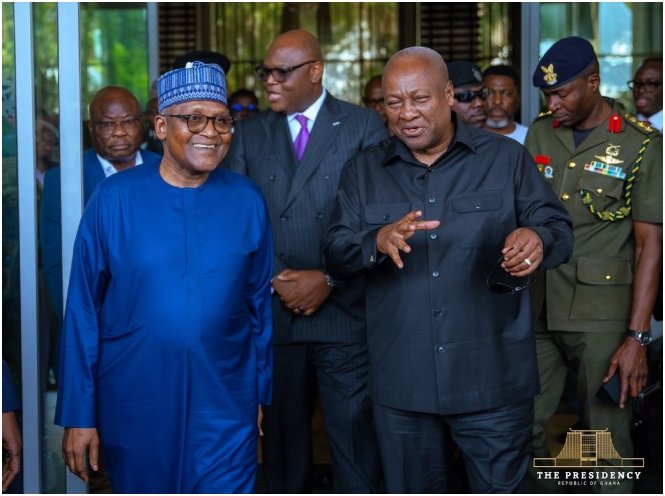
Africa’s richest industrialist, Aliko Dangote, has delivered a pointed message to wealthy Africans, business leaders and investors, challenging them to stop keeping their money outside the continent and start committing their wealth to building African economies.
Dangote argues that Africa cannot achieve meaningful economic transformation by continually waiting for foreign investors to finance its development while Africans with substantial financial resources keep their own wealth overseas.
“If we, Africans, will really move forward, we must stop taking our money to hide in Switzerland and invest the money at home. We will see the difference,” the Nigerian billionaire declared.
His remarks, delivered on the first day of the maiden Invest Ghana Summit in Accra on November 16 and 17, 2026, went beyond a conventional appeal for investment.
They amounted to a challenge to Africa’s wealthy individuals, entrepreneurs and financial institutions to take greater responsibility for the continent’s industrialization, job creation and long-term economic prosperity.
For Dangote, Africa’s development cannot remain dependent on promises from multinational corporations and international investors. The continent must first demonstrate its own commitment by putting domestic capital to work, establishing productive businesses and creating the economic conditions that encourage others to invest.
His central argument is that African money should help finance African development.
Foreign investment cannot replace African investment
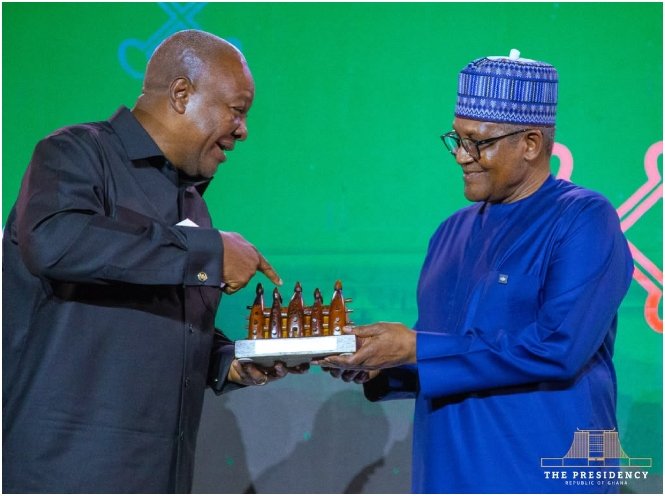
Dangote questioned Africa’s continued dependence on foreign capital, pointing to a recurring problem in which international corporations make impressive announcements about major projects, generate public excitement and then fail to follow through.
He recalled situations in which governments and political leaders participate in project launch ceremonies, only for the promised investors to disappear without delivering the investment.
“You will see a lot of promises by big corporations to give people a lot of hope. Then at the end of the day, we don’t see them come back,” he told participants.
He said the consequences extend beyond the failure of an individual business proposal. When a president publicly launches a project that never materializes, citizens often blame the government, even when the investor is the party that fails to fulfil its commitment.
According to Dangote, African countries have made the mistake of waiting on the sidelines for foreign investors rather than mobilizing their own resources to establish industries.
“But the issue is that we are actually just sitting on the fence and trying to watch out for foreign investors to invest in Africa, but foreign investment is not domestic investment,” he said.
He believes African entrepreneurs and investors must lead the process.
“So, Africa must lead in this trajectory with Africans, and there you see the future,” he added.
His argument does not necessarily reject foreign investment. Rather, it challenges the idea that foreign capital should be the primary engine of African development. In his view, domestic investment should establish the foundation, demonstrate commercial confidence and help attract international partners.
The distinction is important for countries such as Ghana, where attracting foreign direct investment remains a major part of economic development strategies.
Dangote is effectively asking African governments and investors to look inward first: identify viable opportunities, mobilize local resources, build businesses and create industries capable of competing internationally.
The wealth Africa keeps abroad versus the industries it needs at home
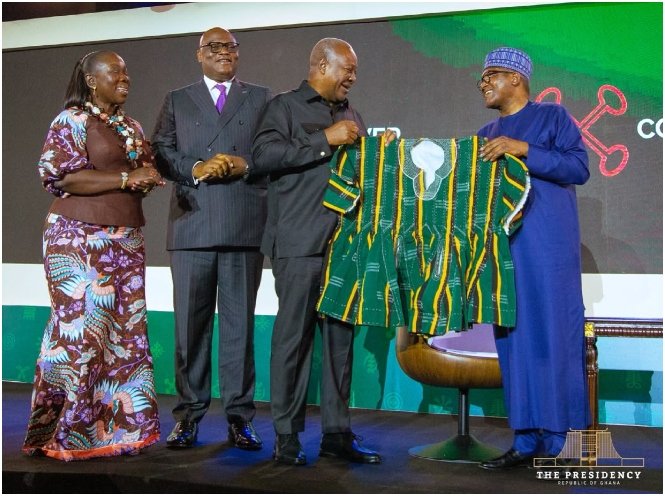
The reference to Switzerland was among the most striking parts of Dangote’s address.
By urging Africans to stop taking their money abroad, he challenged the investment choices of wealthy individuals who have the financial capacity to support factories, agricultural enterprises, infrastructure projects and other productive businesses on the continent.
His argument raises an important economic question: what could African countries achieve if more of the wealth generated by African individuals and businesses were committed to productive investment within Africa?
For Dangote, the answer lies in the transformation of local economies through manufacturing, agriculture, processing and industrial expansion.
Money invested in productive businesses can support the construction of factories, purchase machinery, establish supply chains, employ workers and create markets for local suppliers.
It can also support businesses that process agricultural products rather than leaving African countries dependent on exporting raw materials and importing finished goods.
This is particularly important in economies that possess valuable natural resources but struggle to retain a significant share of the value generated from those resources.
Africa produces cocoa, minerals, agricultural commodities and other resources that supply international industries. Yet the continent continues to face challenges in expanding its own manufacturing and processing capacity.
Dangote’s position is that domestic capital must become a central part of changing that equation.
His appeal also has implications for Africans living abroad who have accumulated wealth through business, professional careers and investments. Their financial resources, business experience and international connections could play a greater role in developing productive enterprises across their countries of origin and the wider continent.
However, Dangote did not provide a specific estimate of how much African wealth is held in Switzerland or other overseas financial centers. His reference was a broader challenge to wealthy Africans to reconsider where they invest their resources.
Dangote points to his own industrial journey as an example
The argument carries particular weight because Dangote has spent decades building one of Africa’s largest industrial business groups.
His business interests extend across manufacturing, cement, fertilizer, food processing and petroleum refining, demonstrating the scale of industrial investment African entrepreneurs can undertake.
One of his most significant projects is the Dangote Petroleum Refinery in Nigeria, a multibillion-dollar undertaking with a stated design capacity of 650,000 barrels per day.
Speaking at the summit, he explained that the scale of the refinery initially presented financing challenges because international lenders were unfamiliar with a project of that size.
He said the company had to engage hundreds of engineers in India and Chicago to provide technical and advisory support.
Dangote also disclosed that his group raised $750 million at an interest rate of approximately 7.5 per cent without providing security for that financing, illustrating his argument that credibility and confidence are important in attracting capital.
“Money doesn’t follow only profit; it follows trust. Money follows trust, and then profit. If there’s no trust, money will not go there. That’s a big issue,” he said.
His observation suggests that African businesses must build more than commercially attractive proposals. They must establish credibility, demonstrate their capacity to execute projects and earn the confidence of lenders and investors.
For entrepreneurs seeking financing, this is an important part of his message: capital is more likely to support businesses that investors trust to deliver.
Why Dangote believes government policy matters more than access to capital
Beyond asking wealthy Africans to bring their money home, Dangote challenged another widely held belief about the difficulties of doing business in Africa: that lack of capital is the biggest obstacle facing entrepreneurs.
He argued that while financing is important, government policies, regulatory uncertainty and the absence of investor confidence can be more significant barriers to business growth.
“I think capital is not that difficult. What we need first is the right policies of government, and then you have entrepreneurs who are ready to commit their own resources,” he said.
“The biggest challenge is mainly the policies. If you have the right policies and your own seed capital, then you can move smoothly.”
His argument places considerable responsibility on African governments to establish predictable business environments where investors can make long-term commitments without constantly worrying about changing regulations, unnecessary bureaucratic hurdles or uncertainty over government decisions.
The issue is particularly relevant to large industrial investments, which often require substantial upfront financing and several years before generating returns.
A manufacturer considering a new factory must be confident that the regulatory environment will remain sufficiently predictable, infrastructure will support production and markets will be available for its products.
Dangote’s experience demonstrates the importance he attaches to that confidence. His account of financing the refinery illustrated how an entrepreneur’s credibility and ability to execute an ambitious project can help secure financial backing even when conventional lenders are initially reluctant.
His message to governments is therefore not simply to announce investment opportunities but to create conditions in which businesses can confidently commit their own money.
Ghana becomes a practical example of his investment argument
Dangote’s comments came at a particularly significant time for Ghana, where the government has been seeking to attract investment into manufacturing, commercial agriculture, agro-processing, infrastructure and other productive sectors.
At the Invest Ghana Summit, organized by the Ghana Investment Promotion Authority (GIPA), he disclosed that the Dangote Group was in discussions with the Ghanaian government about establishing sugar and cocoa manufacturing facilities.
The proposed investments offer an example of the type of productive domestic and African capital deployment he was advocating.
He said discussions about a sugar investment were already advanced, with the project expected to create approximately 50,000 jobs.
The Group was also in discussions with the Ghana Cocoa Board (COCOBOD) about establishing a cocoa processing plant.
Dangote further indicated that his Group could support Ghana’s rice production with an additional 100,000 tons if the necessary agreement could be reached.
These proposals are significant because they involve moving beyond the export of raw agricultural commodities towards local processing and manufacturing.
A sugar factory, for example, could create opportunities for farmers supplying sugarcane, transport operators, equipment suppliers, engineers, factory workers and other businesses connected to the production chain.
Similarly, greater cocoa processing capacity could help Ghana retain more of the value generated from its internationally recognized cocoa industry.
However, the projects remain under discussion and should not be confused with completed investment agreements or factories already under construction.
President John Dramani Mahama welcomed Dangote’s participation at the summit, describing him as an African businessman Ghana was proud to have as an investment partner.
The President also stated that government must create the conditions for businesses to build productive capacity, including reliable infrastructure, predictable regulations and access to financing.
For Ghana, this relationship between domestic capital, African investment and government policy could be important in determining whether investment announcements translate into actual factories, employment and increased production.
‘Made in Africa’ must become an economic priority
Dangote also used the summit to make a broader argument about African industrialization, insisting that producing goods locally should not be treated as an optional development strategy.
“Made in Africa was not a choice but a necessity,” he said.
He argued that countries that have successfully developed major industrial economies did so because their own people and businesses took responsibility for building productive industries.
“Nobody really did it for India; nobody did it for the Asian Tigers; nobody did it for the US. But the people who are from there did it,” he said. “So, for Africans, we must do it.”
The comparison is central to his argument that African countries cannot depend indefinitely on imported manufactured goods while expecting to generate sufficient employment and prosperity for their growing populations.
Local manufacturing can create demand for raw materials, agricultural products, technical skills, professional services and transportation. It can also help develop businesses that supply larger industrial companies.
But industrialization requires more than establishing factories. It depends on reliable electricity, transportation networks, skilled workers, access to finance, competitive production costs and markets large enough to support expansion.
Dangote’s position is that African investors must take the initiative while governments provide the environment necessary for businesses to succeed.
Banks must support businesses with ‘a human heart’
The billionaire also directed part of his message towards African financial institutions, particularly banks that provide financing to small and medium-sized enterprises (SMEs).
He argued that lending decisions should consider the broader economic and social value of businesses rather than focusing exclusively on immediate financial returns.
“It is good to make money, but you also have to make money with a human heart,” he said.
“You just cannot be about money. Sometimes you make the money, but you must make sure that what you are doing creates jobs and prosperity.”
The statement highlights another dimension of Dangote’s argument: Africa needs financial institutions that understand the role of businesses in creating employment and supporting economic development.
Small businesses often struggle to obtain financing because they lack sufficient collateral, have limited operating histories or cannot meet conventional lending requirements.
Yet these enterprises play important roles in agriculture, retail, manufacturing, technology and services.
Dangote’s appeal suggests that banks should consider how financing viable enterprises can support broader economic activity, including opportunities for smaller suppliers connected to major industrial companies.
A successful manufacturing investment can create business for farmers, transport operators, maintenance companies, packaging suppliers and numerous smaller enterprises.
This means that the benefits of domestic investment can extend beyond the company providing the initial capital.
Africa’s investment future also depends on regional integration
Dangote’s appeal to Africans to invest at home also extends beyond individual countries. He believes domestic investment must be supported by stronger regional trade and infrastructure that allow businesses to reach larger markets.
He made a strong case for the African Continental Free Trade Area (AfCFTA), arguing that Africa needs better transportation networks to make regional economic integration commercially meaningful.
One of his proposals was the construction of a 1,000-kilometre road linking Nigeria and Ghana, which he believes could stimulate trade between some of the continent’s largest economies.
“I think, really I am going to engage Mr. President and other Presidents to make sure that this road is built,” he said.
“Can you imagine the amount of trade on this 1,000 kilometers?”
The proposal reflects his argument that African manufacturers need access to markets beyond their national borders if they are to achieve the scale necessary to compete internationally.
A factory established in Ghana, for example, should not be viewed as serving only Ghanaian consumers. Through regional trade arrangements, its products could potentially reach customers across West Africa and other African markets.
However, achieving that ambition requires more efficient border procedures, compatible product standards, dependable transport infrastructure and effective implementation of AfCFTA commitments.
Without these supporting systems, even well-financed manufacturing businesses can struggle with the costs of moving products between countries.
Dangote sees Africa as a future global food supplier
Another part of his investment argument concerns agriculture and food security.
Dangote warned that Africa must begin preparing now to meet growing global demand for food, pointing to the continent’s young population and agricultural resources.
He cited Africa’s share of global arable land and argued that the continent has an opportunity to become a major food supplier to the rest of the world by 2050.
“God has given us the youngest population, and we have 65 per cent of the arable land available in the world,” he said.
He warned that the opportunity could be lost if African countries fail to invest in agricultural production, modern farming, food processing and the infrastructure needed to move food from farms to markets.
“By 2050, most people there will depend on Africa to supply them with food. So, we have to wake up and plan,” he said.
His message reinforces the importance of investing in agriculture as an economic industry rather than treating it simply as a means of subsistence.
For African countries, greater investment in commercial farming, irrigation, storage, processing, agricultural technology and transportation could create jobs while reducing dependence on imported food.
Dangote’s proposed support for Ghanaian rice production and discussions about sugar and cocoa processing fit into this wider vision of building productive agricultural value chains.
A challenge to Africa’s wealthy: invest where the future must be built
Ultimately, Dangote’s address at the Invest Ghana Summit was a call for a change in how Africans approach economic development.
He wants wealthy individuals to become more active participants in financing the continent’s transformation instead of relying primarily on foreign governments, corporations and international financial institutions.
His argument is that Africa cannot consistently appeal to outsiders to invest in opportunities that its own wealthy citizens are unwilling to finance.
However, the responsibility does not rest exclusively with investors.
Governments must create predictable policies, provide reliable infrastructure and protect legitimate investments. Banks must make financing more accessible to viable businesses. Entrepreneurs must demonstrate the willingness and capacity to take calculated risks. And regional institutions must make it easier for African companies to trade across borders.
The Ghanaian government’s own investment strategy reflects some of these priorities. President Mahama told the summit that government should enable investment through infrastructure and predictable rules, while the private sector builds productive businesses, generates employment and expands exports.
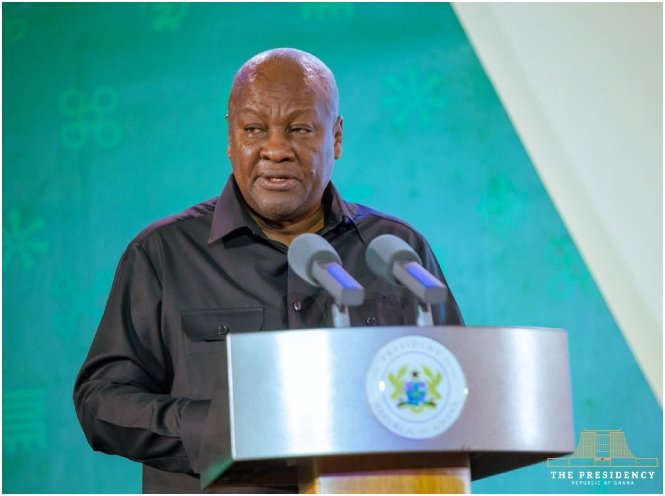
There is also an important distinction between keeping money overseas for legitimate financial diversification and failing to deploy sufficient capital into productive African businesses. Dangote’s remarks were directed at the broader investment choices of wealthy Africans, not accompanied by an assessment of individual offshore holdings.
Nevertheless, his challenge raises a question that African business leaders and policymakers cannot easily ignore: what might the continent look like if more of the wealth accumulated by Africans were invested in factories, farms, technology, infrastructure and businesses at home?
For Dangote, the answer begins with Africans taking greater ownership of their economic future.
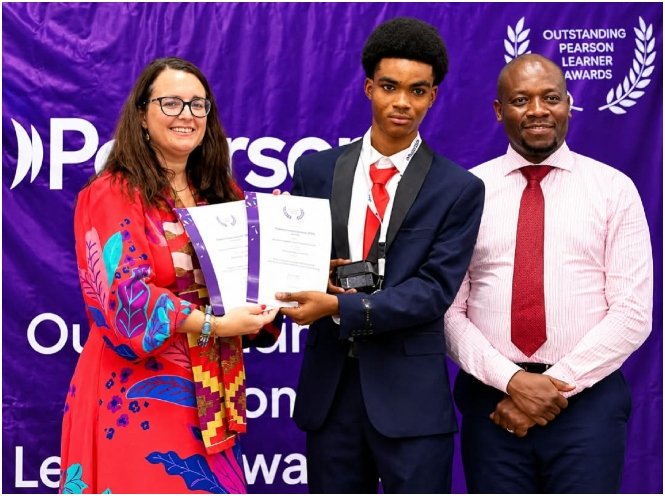
Crystal Heights International School records 12 World Highest Marks and 14 Africa Highest Marks as Pearson highlights responsible AI integration in education.
Crystal Heights International School has clinched an outstanding academic achievement at the Outstanding Pearson Learner Awards (OPLAs) 2026 held in Accra, with 26 of its learners receiving international recognition for their exceptional performance in the Pearson Edexcel examinations.
OPLAs recognize top-performing international students outside the UK who achieved outstanding exam results in Pearson Edexcel qualifications. Winners are notified through their schools in November 2026 based on results from the previous October, January, and May/June examination series.
Out of the 34 awards presented at the ceremony, Crystal Heights International School secured 26, while the remaining eight were shared among other participating schools in Ghana.
The school’s impressive haul comprised 12 Highest Mark in the World awards and 14 Highest Mark in Africa awards, highlighting its growing reputation for academic excellence.
The award recipients were among more than 2,700 learners from 740 schools across 85 countries who qualified for recognition following the 2025/2026 Pearson Edexcel examinations.
School Management, Teachers and Parents Commended
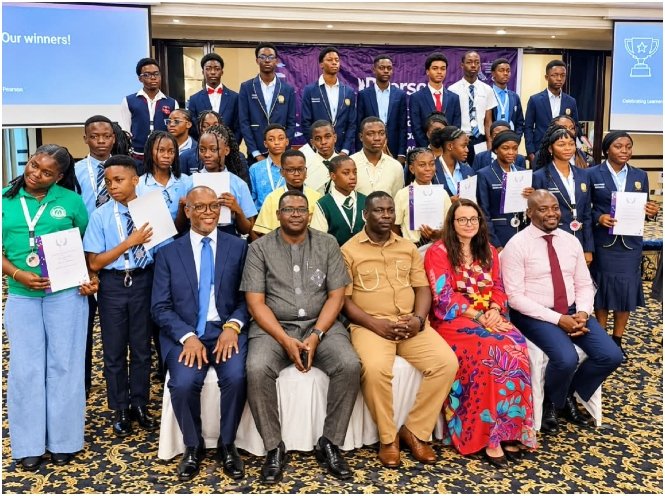
Speaking on the school’s achievement, Daniel Lomotey Nartey, Principal in charge of the Pearson Division at Crystal Heights International School, expressed excitement over the performance, attributing the success to the collective efforts of school management, teachers, parents and learners.
He commended the school’s management for investing in infrastructure, providing essential teaching and learning resources, and ensuring that teachers receive the necessary support to deliver quality education.
Mr Nartey also acknowledged the significant contribution of parents, particularly their commitment to providing learning materials, participating in parent-teacher engagements and implementing recommendations from teachers to enhance their children’s academic development.
Robotics and STEM Education Driving Practical Learning

On the school’s approach to Science, Technology, Engineering and Mathematics (STEM) education, Mr Nartey disclosed that Crystal Heights International School has a dedicated robotics laboratory supported by trained teachers who provide learners with practical learning experiences.
He explained that the initiative enables students to apply classroom knowledge to real-life situations rather than relying solely on memorization.
For instance, mathematical concepts such as measurement, area and volume are applied in designing and creating objects in the robotics laboratory.
The school believes that this hands-on approach is helping learners develop critical thinking, creativity, problem-solving and innovation skills.
Mr. Nartey said the achievement of the 26 learners reflects the school’s commitment to academic excellence and practical, skills-based education.
Pearson Reaffirms Commitment to Safe and Responsible AI in Education
Meanwhile, Pearson has reaffirmed its commitment to promoting the responsible and safe integration of Artificial Intelligence (AI) into education, emphasizing the importance of keeping teachers at the center of the learning process.
Speaking on the sidelines of the Pearson Learner Awards 2026 in Ghana, Lisa Evans, Global Marketing Director and Sales Director for Africa, Europe and the Americas at Pearson, said AI presents both exciting opportunities and challenges for learners worldwide.
She stressed that although AI is transforming education, its application must be guided by teachers to ensure that technology supports, rather than replaces, the role of educators.
According to her, Pearson is working closely with global education experts and institutions, including UNESCO and the Department for Education, to ensure that AI-powered learning resources and assessment systems prioritize teacher leadership and learner safety.
Awards Celebrate Excellence Beyond Examination Scores
Reflecting on the achievements of the award recipients, Ms. Evans described the ceremony as a remarkable celebration of academic excellence.
She noted that the awards go beyond recognizing learners who attain the highest marks nationally, regionally and globally. They also celebrate the hard work, resilience, dedication and determination demonstrated by the students.
She further acknowledged the important roles played by parents, teachers, school administrators and support staff in helping learners achieve their academic ambitions.
The annaul awards are hosted regionally or at individual schools worldwide.


The Sahel’s Dangerous Calm: What Does the Lull in Jihadist Fighting Really Hide?

‘We Didn’t Come Here to Beg’: Ghana’s Zanetor Agyeman-Rawlings Demands Climate Justice and Funding for Africa at COP31

Ghanaian Teen’s Bronx Funeral Sparks NY Attorney General’s Demand to Repeal Law Protecting Gunmakers
-
 Ghana News16 hours ago
Top Ghanaian School Wins 26 Awards at 2026 Pearson Learner Awards
-

 Business21 hours ago
Invest Ghana Summit: NVI Pitches Vaccine Manufacturing Opportunities to Investors
-

 Ghana News2 days ago
How a Helicopter Crash Sparked Ghana’s New Forensic DNA Lab
-

 Ghana News2 days ago
Ghana Joins Elite Group of Five African Nations Using mRNA Tech After Commissioning of Groundbreaking Lab
-

 Reels & Social Media Highlights2 days ago
Ghana’s Timeline Had One Question Thursday: “What Has Changed?”
-

 Ghana News2 days ago
“Don’t Be Afraid”: Mahama Urges Ghanaians to Accept Clinical Trials at Commissioning of Ghana’s Groundbreaking Forensic mRNA Lab
-

 Festivals & Events2 days ago
Kingston to Accra Block Party Brings Jamaican Dancehall Culture to Accra
-
 Ghana News1 hour ago
Ghanaian Teen’s Bronx Funeral Sparks NY Attorney General’s Demand to Repeal Law Protecting Gunmakers