
Business
Ghana Seeks Investors to Revive National Airline After Advanced Talks with Boeing


Ghana is in advanced negotiations with US aerospace giant Boeing over plans to establish a new national airline, with the government working to finalise arrangements and attract investors to the proposed carrier, Ghana’s Ambassador to the United States, Victor Smith, has disclosed.
Speaking in an interview with JoyNews, Mr Smith said discussions with Boeing were nearing completion, raising the prospect of Ghana restoring a national flag carrier more than two decades after the collapse of Ghana Airways.
“We are in talks with Boeing. The deal is nearing completion. We are working to ensure that Ghana has a national airline that we can all be proud of,” he said.
The Ambassador did not disclose the specific terms under discussion, the proposed ownership structure or the financial commitments involved. He also did not provide a timeline for concluding the negotiations or launching the airline.
Government seeking investors for national carrier
Mr Smith said attracting investors was an important part of the government’s effort, suggesting that the proposed airline could offer commercial opportunities for those willing to participate.
“We are looking for investors. They may invest in this effort. They may get something out of it,” he said.
However, he emphasised the symbolic and national significance of restoring a Ghanaian carrier, describing it as a potential legacy of President John Dramani Mahama’s administration.
“What is important for me is the legacy that the President will leave when he’s leaving office—that we will have a national flag back in the air. That is important for me,” he added.
His remarks indicate that the government is pursuing both an investment-led approach and a broader national ambition to restore Ghana’s presence in international aviation.
Ambassador points to public enthusiasm
Mr Smith also argued that Ghanaians would welcome the return of an airline carrying the country’s flag, suggesting that national identity and passenger confidence could contribute to public support for the project.
“Ghanaians are more excited flying their own flag than flying British Airways or Delta or United and being charged huge amounts for tickets,” he said.
“They think that we would feel more comfortable and fly in our own flag.”
His comments reflect the government’s expectation that a national carrier could appeal to travellers seeking a Ghanaian airline option. However, the proposed airline’s routes, fares, service model and competitive position in the international aviation market have not yet been outlined.
Ghana’s long search for a national airline
Ghana has been without a national airline since Ghana Airways collapsed in 2004. Ghana International Airlines, established as a subsequent attempt to restore the country’s flag-carrier status, also ceased operations in 2010.
Successive governments have explored ways to re-establish a national carrier, including potential partnerships with international aviation companies, but those efforts have yet to produce a lasting replacement.
The latest initiative represents another attempt to restore Ghana’s position in commercial aviation through a partnership involving an international industry player.
Boeing is one of the world’s major aircraft manufacturers, but the extent of its proposed involvement in Ghana’s project remains unclear. The Ambassador’s comments do not establish whether the discussions concern aircraft purchases, leasing arrangements, technical support or a broader partnership.
Key questions remain over ownership and operations
Although the government says negotiations are nearing completion, several important details about the proposed airline remain outstanding.
These include how the carrier will be financed, whether it will be wholly state-owned or involve private investors, the number and type of aircraft it will operate, its initial destinations and the date it is expected to begin commercial services.
Its long-term viability will also depend on its ability to compete in an established aviation market, maintain operational efficiency and secure sufficient passenger demand.
For now, Mr Smith’s disclosure provides an indication of progress in the government’s discussions with Boeing, but a final agreement and a clearly defined operational plan will be necessary before Ghana’s proposed national carrier can move from ambition to reality.













Business
Ghanaian Pharmaceutical Manufacturers Begin Breaking Into African Markets Thanks to Africa CDC’s Pooled System

Ghanaian pharmaceutical manufacturers are beginning to secure supply opportunities in other African countries as the continent advances efforts to create a more coordinated market for medicines produced within Africa.
The development has been made possible through the African Pooled Procurement Mechanism (APPM), an initiative established by the Africa Centres for Disease Control and Prevention (Africa CDC).
The APPM is expected to expand commercial opportunities for local manufacturers while helping participating countries improve access to quality-assured health products.
At a regional meeting jointly organized by the National Vaccine Institute (NVI) and the Africa CDC, Dr Sodzi Sodzi-Tettey, Chief Executive Officer of NVI, disclosed that Ghanaian companies had won new tenders to supply Uganda, South Sudan, the Democratic Republic of the Congo and Ethiopia.

His announcement was part of his opening remarks during the two-day regional meeting on the APPM that started on November 10, 2026. At the meeting, government officials, manufacturers, procurement authorities and regulators discussed how to increase African participation in the continental procurement system.
The move is significant for Ghana’s pharmaceutical industry, which is seeking to expand beyond the domestic market and benefit from procurement opportunities across a continent with a population of approximately 1.4 billion.
For local manufacturers, access to larger markets could provide the demand needed to justify investment in additional production capacity, improve economies of scale and strengthen the competitiveness of Ghana-made medicines.
It also supports the government’s broader ambition to increase local production from a reported 30 per cent of medicines used in Ghana to 70 per cent within five years.
From a continental concept to actual supply opportunities
The APPM is designed to aggregate demand from participating African countries, strengthen their collective purchasing power and connect national procurement requirements with qualified African manufacturers.
By coordinating demand and procurement, the mechanism aims to create a more predictable market for producers while improving access to affordable, quality-assured medicines and other health products.
Sodzi-Tettey said the initiative had made significant progress since he assumed office at the NVI a little over a year ago.
“When I came into office a little over a year ago, the APPM was but a concept. On paper. In this short time, thanks to the dynamic leadership of Dr. Mariatou Tala, the APPM is today launching tenders, pre qualifying suppliers and on boarding manufacturers,” he said.
He praised Dr Mariatou Tala Jallow, Director of the APPM at Africa CDC, for helping move the initiative towards operational implementation.
Tala Jallow said the mechanism was transitioning from its operational phase towards consolidation and expansion, with a focus on connecting African manufacturers to the purchasing needs of participating countries.
“Through this engagement, Africa CDC is supporting Member States to translate their participation into tangible procurement opportunities and stronger continental manufacturing capacity,” she said.
The reported tender successes involving Ghanaian companies are an important development because they demonstrate how regional procurement arrangements could create opportunities beyond individual national markets.
However, the disclosure did not identify the companies involved, the specific medicines supplied, the contract values or the volumes covered by the tenders.
Those details will be important in assessing the commercial scale and longer-term impact of the reported awards.
Ghana’s manufacturers face a much larger continental opportunity
Despite the reported progress, Ghanaian manufacturers remain underrepresented in the APPM registration process.
Sodzi-Tettey disclosed that out of 108 companies registered under the mechanism, only 19 were from West Africa, representing 17.6 per cent. Ghana accounted for just three companies, equivalent to 2.8 per cent of the total.
The figures highlight a significant opportunity for Ghanaian pharmaceutical companies to become more involved in a procurement system intended to connect African suppliers to a much larger market.
The NVI chief executive called for manufacturers and other industry stakeholders to take advantage of the changing pharmaceutical landscape rather than remain focused on historical challenges.
His message was directed particularly at Ghanaian and West African manufacturers, whose participation will be important if the region is to secure a stronger position in continental pharmaceutical trade.
Ghana signed a memorandum of understanding with Africa CDC to participate in the APPM on August 21, 2026, providing a framework for the country’s engagement with the mechanism.
Participation, however, does not automatically qualify every manufacturer for contracts. Suppliers must still meet relevant product approval, regulatory, quality assurance and competitive tendering requirements.
Why access to regional markets matters
For pharmaceutical manufacturers, the ability to sell beyond their domestic market can be a major factor in determining whether an investment is commercially viable.
Production facilities, specialized equipment, skilled personnel, quality assurance systems and regulatory compliance all involve substantial costs.
When a manufacturer serves only a relatively small domestic market, it may struggle to achieve the production volumes needed to spread those costs and remain competitive.
Access to several national markets could help address this problem.
The APPM’s demand aggregation approach is intended to make purchasing opportunities more visible and predictable, potentially allowing manufacturers to plan production around larger regional requirements.
That could also help address a financing problem highlighted by Sodzi-Tettey: banks are often reluctant to lend to manufacturers without evidence of dependable future revenue.
He said some companies had spent almost two years pursuing development financing before proposed deals collapsed because lenders lacked confidence in their ability to repay loans in the absence of robust multi-year purchasing agreements.
A more predictable procurement environment could improve manufacturers’ ability to secure financing, although the success of that approach will depend on credible contracts, funded purchasing commitments and reliable payments by buyers.
Ghana is building domestic capacity to support regional expansion
The reported regional tender successes come as Ghana advances plans to strengthen its own pharmaceutical manufacturing ecosystem.
The government has launched the Ghana Pharmaceutical Manufacturing Policy and is developing a proposed Ghana Pharmaceutical Hub as part of its wider industrial transformation agenda.
The hub is intended to connect manufacturers to production infrastructure, shared laboratories, utilities, logistics, investment and training.
Its first proposed development phase is in Kwanyarko in the Eastern Region, with plans for five initial contract manufacturing facilities, ten modular factory shells, shared laboratories, utilities, warehousing and cold-chain infrastructure.
A proposed second phase in the Central Region would focus on active pharmaceutical ingredients, plant-based medicines, research, raw materials and packaging materials.
The presidential staffer for Health and Pharmaceuticals, who also coordinates the Ghana Pharmaceutical Hub, said the initiative was designed around a demand-led model connecting verified domestic and regional demand to investment, local manufacturing, procurement and market access.
The government has also outlined safeguards intended to support fair participation by both manufacturers and existing pharmaceutical importers, including transparent supplier selection, clear commercial arrangements and protection of intellectual property.
The objective is to encourage existing businesses to participate in local production rather than exclude companies whose experience, brands, technical relationships and distribution networks could support the industry’s expansion.
Quality and competitiveness will determine long-term success
While the APPM could open new markets, Ghanaian manufacturers will need to demonstrate that they can supply products consistently, competitively and in accordance with the quality standards required by participating countries.
Regulatory approval, technical specifications, product quality, manufacturing reliability and the ability to fulfil contracts will remain essential.
The Accra meeting therefore placed considerable emphasis on supplier readiness, demand forecasting, the APPM Supply Catalogue, quality assurance and the procurement procedures applicable to participating countries.
For Ghana, the challenge now is to convert early commercial opportunities into sustained regional market participation.
The reported tenders involving Uganda, South Sudan, the DRC and Ethiopia offer an encouraging indication of what may be possible, but the longer-term measure of success will be whether Ghanaian companies can secure repeat business, expand production and build a durable presence in African pharmaceutical supply chains.
If that happens, the benefits could extend well beyond individual manufacturers, supporting investment, skilled employment, industrial development and greater access to medicines across the continent.
Ghana’s emerging position in the APPM therefore represents more than an export opportunity. It is part of a wider African effort to build a pharmaceutical industry capable of serving the continent’s health needs with products manufactured within its own borders.

In a bold departure from Ghana’s traditional reliance on external debt, the government has announced that the entire $2 billion needed to finance the Accra-Kumasi Expressway has been secured from domestic sources, with no borrowing involved.
President John Dramani Mahama has confirmed that $2 billion, sourced from taxpayers’ money, has been deposited in a special account at the Bank of Ghana.
“And let me also announce that this is our own money. We have not gone to borrow money from anywhere. This money is the taxpayers’ money,” the President stated at the handover ceremony of the cleared right-of-way on September 14, 2026.
No Borrowing, No Debt Burden
Finance Minister Dr. Cassiel Ato Forson has reinforced this commitment, assuring the nation that “we will not borrow a pesewa for this construction”.
He stated that the full amount required will be ready by December 31, 2026, and reiterated that the government plans to mobilise the required funds entirely from domestic sources, allowing the project to proceed without adding to Ghana’s debt burden.
Timely Payments to Contractors
The funds are lodged in a dedicated account to facilitate timely payments to the contractor throughout the duration of the project.
President Mahama assured that all payment certificates submitted by the contractor would be honoured promptly to prevent delays and ensure the project progresses as scheduled. The project is being managed by a special purpose vehicle, Accra Kumasi Expressway Limited, registered for this purpose.
The GAF Factor in Cost Savings
The government’s domestic financing strategy has been bolstered by significant cost savings from the involvement of the Ghana Armed Forces (GAF) Engineers.
The GAF cleared 175.6 kilometres of the right-of-way in just 19 weeks—beating a 20-week target—at an estimated cost of GH₵10.9 billion, compared with commercial contractor baselines of GH₵15–18 billion. This yielded billions of cedis in net savings.
The $2 billion domestic financing model represents a significant shift in Ghana’s infrastructure funding approach. If successfully executed, it could provide a template for future mega-projects, demonstrating that national development need not come at the cost of mounting external debt.
Business
From Raw Minerals to Luxury Brand: Ghana’s Gold Value-Addition Strategy Gains Global Momentum with UK Showroom
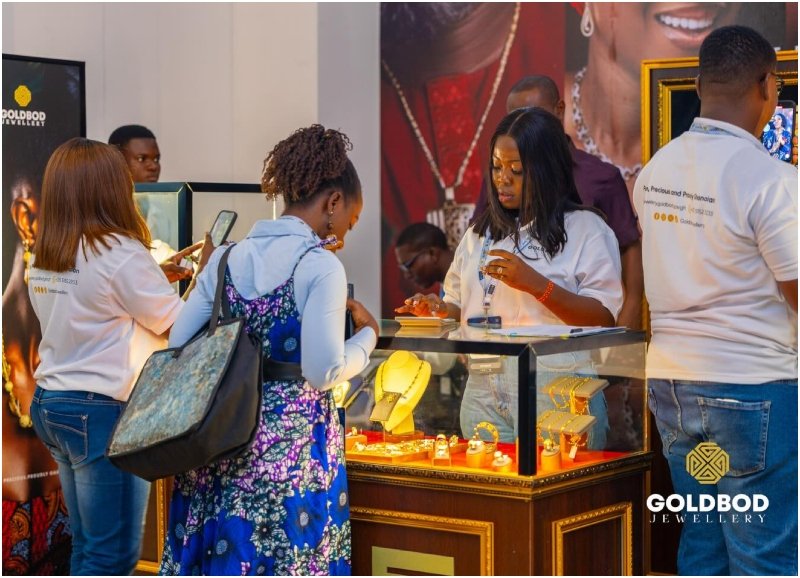
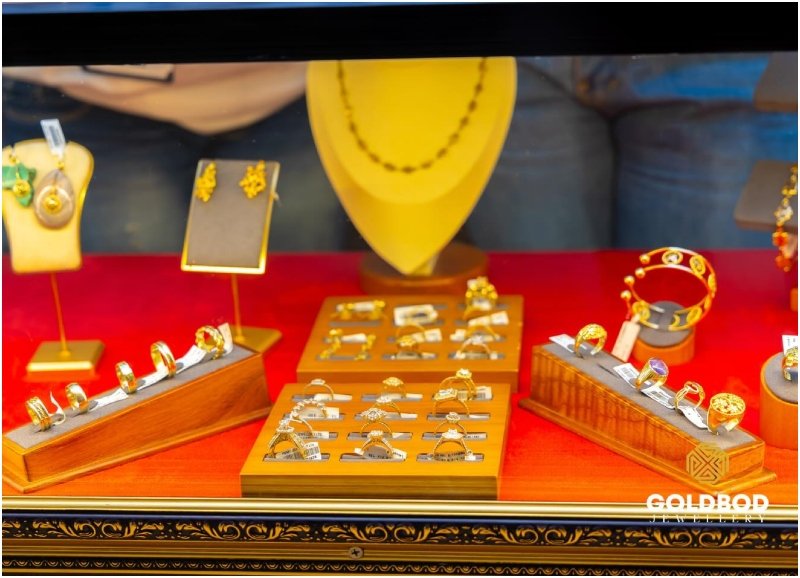
Ghana’s ambition to transform its gold sector from a raw mineral exporter into a competitive player in the global luxury jewelry market has received a significant boost, with indigenous company GOLDBOD Jewellery setting its sights on establishing a flagship showroom in the United Kingdom.
The move, which aligns with the government’s broader strategy of increasing value addition within the gold sector, reflects Ghana’s determination to maximize returns from its mineral resources through local beneficiation, manufacturing and branding initiatives designed to generate employment and enhance export earnings.
Chief Executive Officer of GOLDBOD Jewellery, Gertrude Emefa Donkor, recently paid a courtesy call on Ghana’s High Commissioner to the United Kingdom, Sabah Zita Benson, to present the company’s vision of showcasing premium jewelry and investment-grade gold products crafted from responsibly sourced Ghanaian gold.
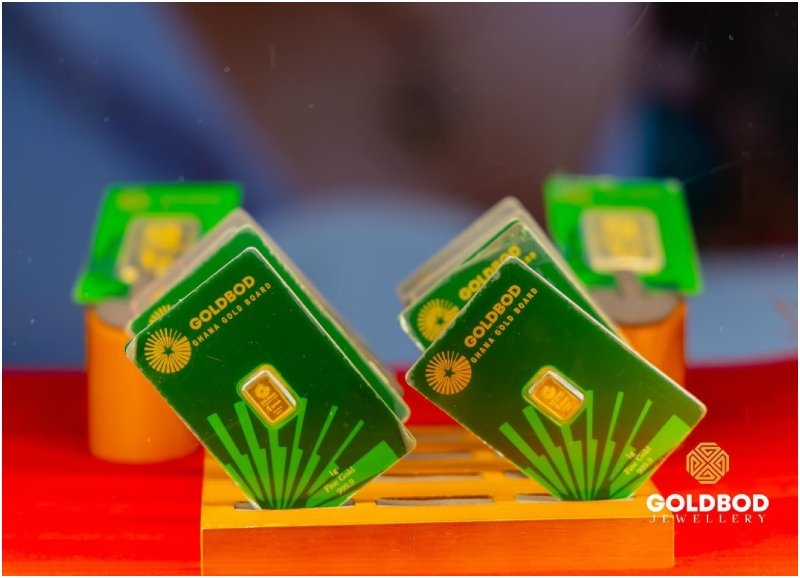
During the discussions, Miss Donkor highlighted the growing demand for the company’s innovative Gold Tablet, revealing that the product sold out during this year’s Ghana Party in the Park in London, one of the largest annual gatherings of the Ghanaian diaspora in Europe. She noted that the overwhelming patronage reflects growing confidence among diaspora communities and international consumers in authenticated Ghanaian gold products.
The planned expansion comes as Ghana, Africa’s leading gold producer, intensifies efforts to move beyond the export of raw minerals and establish a reputation as a trusted source of responsibly produced, value-added gold products.
The strategy is central to the country’s industrialization agenda, which seeks to create jobs, boost foreign exchange earnings and reduce dependence on primary commodity exports.
High Commissioner Benson reaffirmed the Mission’s commitment to supporting Made-in-Ghana products in the UK market, noting that the High Commission continues to collaborate with relevant public institutions, private sector stakeholders and business associations to create opportunities for Ghanaian enterprises seeking to expand internationally.
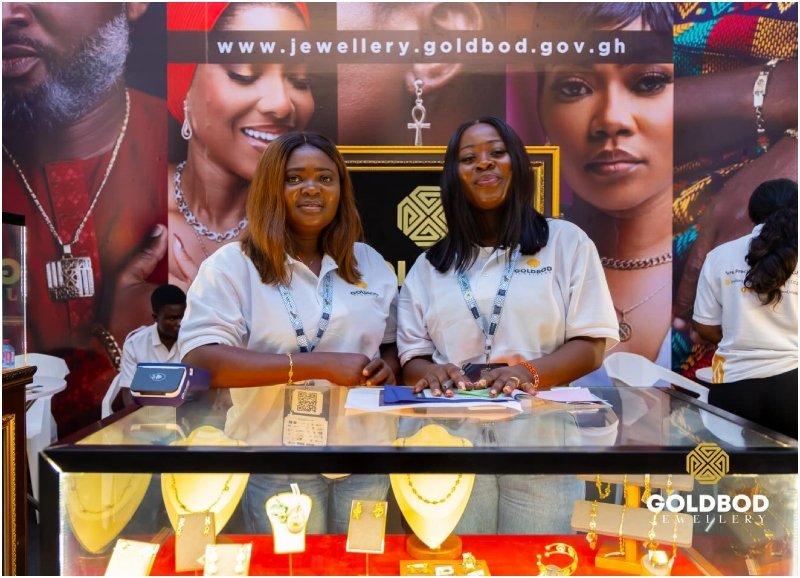
She expressed optimism that the proposed showroom would not only showcase the quality and craftsmanship of Ghanaian jewelry but also reinforce Ghana’s reputation as a trusted source of responsibly produced gold products. She added that initiatives of this nature complement the government’s broader agenda of leveraging trade, investment and economic diplomacy to promote sustainable national development.
The engagement underscores the evolving role of Ghana’s diplomatic missions in advancing economic diplomacy by facilitating market access for Ghanaian businesses and strengthening commercial partnerships abroad. The United Kingdom remains one of Ghana’s key trading partners and a strategic destination for Ghanaian exports, investment and diaspora engagement.
As Africa’s leading gold producer, Ghana has long been a major supplier of raw gold to international markets. However, successive governments have recognised that real economic transformation lies in retaining more value from the mineral through local processing, manufacturing and branding. GOLDBOD Jewellery’s UK expansion represents a tangible example of this vision taking shape on the global stage.
Industry observers note that the success of such initiatives could encourage more Ghanaian companies to explore international markets, particularly in sectors where the country holds a comparative advantage. The diaspora market, in particular, presents a significant opportunity for Ghanaian brands seeking to build consumer confidence and establish a foothold in competitive markets.
The meeting between Miss Donkor and High Commissioner Benson reflects growing collaboration between Ghana’s diplomatic missions and indigenous businesses as the country seeks to strengthen its presence in international markets while advancing industrialization, export diversification and value addition within the mining sector.
With the proposed showroom in the United Kingdom, GOLDBOD Jewellery is positioning itself as a flagship brand for Ghanaian gold, demonstrating that African products can compete at the highest levels of the global luxury market.
The move signals a new chapter in Ghana’s economic story, one in which the nation’s natural resources are transformed into globally recognised brands that tell the story of Ghanaian craftsmanship, quality and innovation.


Building in Ghana? How to Test Your Blocks Before They Become Part of Your Home

Samanpiid Festival: Bawku’s Celebration of Harvest, Renewal and Kusasi Heritage

Vegan Kontomire Stew: A Ghanaian Classic Reimagined with Tofu and Melon Seeds
-

 Ghana News10 hours ago
After COVID-19 Exposed Africa’s Vaccine Dependence, Ghana’s NVI and Africa CDC Embark on a New Path to Secure Health Sovereignty
-

 Business9 hours ago
Ghanaian Pharmaceutical Manufacturers Begin Breaking Into African Markets Thanks to Africa CDC’s Pooled System
-

 Ghana News9 hours ago
Africa Cannot Build Its Pharmaceutical Future on Imports: Ghana and Africa CDC Seek a New Way Forward
-
 Festivals & Events4 hours ago
Samanpiid Festival: Bawku’s Celebration of Harvest, Renewal and Kusasi Heritage
-
 Homes & Real Estate4 hours ago
Building in Ghana? How to Test Your Blocks Before They Become Part of Your Home
-
 Sights and Sounds8 hours ago
Shea Butter and African Black Soap: Ghana’s Natural Skincare Gifts to Take Home
-

 Entertainment2 days ago
Efya and Tomi Thomas Dedicate Baby Girl in Heartwarming Church Ceremony
-

 Reels & Social Media Highlights1 day ago
The Day Ghana Argued With Itself—and Laughed While Doing It