
Global Update
Tragedy As Three Children Found Dead in Vehicle Boot in Ghana

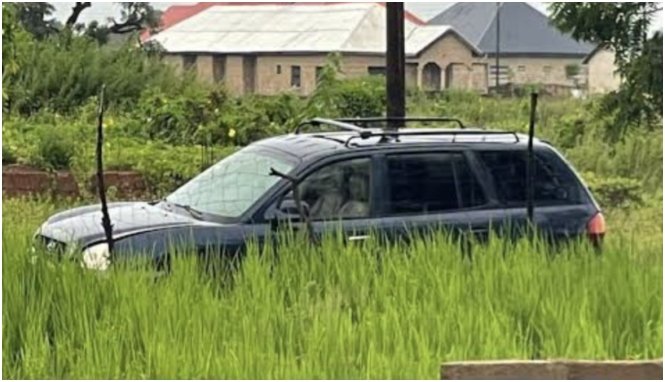
Police in Ghana’s Northern Region have launched a murder investigation into the deaths of three young children whose bodies were discovered in the boot of a vehicle at the Koblimahagu Zoo in the Tamale Metropolis, after a preliminary autopsy indicated they did not die of natural causes.
The children, Dauda Abdul Aziz, 3; Saani Alsharaf, 5; and Dauda Fadilan, 7, were found dead on Monday morning, Oct. 5, in a black Hyundai Tucson with registration number AS 1770-14.
They had reportedly left home on Sunday to attend Islamic classes but never returned.
According to reports, preliminary autopsy findings suggest the children may have been murdered. However, a toxicological examination is still required to establish the full circumstances and possible cause of death.
“The autopsy revealed they did not die a natural death,” a source familiar with the investigation told Joy News. “There is a need for toxicological examination to be conducted to fully establish the facts.”
Vehicle Owner Arrested
The owner of the vehicle, a member of the Ghana Immigration Service, has been arrested and transported to Accra to assist with investigations. The officer reportedly told police that the vehicle had been stuck in mud for five days.
Police said the vehicle was found stuck in mud, with the driver’s door and rear passenger door open, while the boot and other doors were locked. The vehicle has been secured for further forensic examination as investigators work to determine how the children ended up inside the boot.
National Response
The Inspector-General of Police has deployed forensic and crime scene experts to Tamale to support the investigation. Homicide investigators and intelligence officers have also been dispatched to assist the Northern Regional Police Command.
The teams are expected to examine the vehicle and other evidence at the scene as investigators work to establish the circumstances surrounding the children’s deaths.
The case has generated widespread concern in the Northern Region, where residents are calling for a thorough and transparent investigation.
Key Facts
- Location: Koblimahagu Zoo, Tamale Metropolis, Northern Region, Ghana
- Victims: Dauda Abdul Aziz (3), Saani Alsharaf (5), Dauda Fadilan (7)
- Discovery: Bodies found in the boot of a black Hyundai Tucson on Monday morning
- Suspect: Vehicle owner, a Ghana Immigration Service officer, arrested and transported to Accra
- Official Status: Murder investigation opened; toxicology results pending
- Response: Inspector-General of Police deployed forensic and crime scene experts to Tamale













Global Update
Death of Lab Worker From Suspected Pneumonic Plague in Siberia Prompts Quarantine of Nearly 200 People

A laboratory technician at a Siberian anti-plague research institute has died from a suspected case of pneumonic plague, prompting Russian authorities to place nearly 200 people under medical observation and drawing international attention as the United States confirmed it is closely monitoring the situation.
The 28-year-old woman, identified by local media as Darya Shipilova, worked at the Irkutsk Anti-Plague Research Institute of Siberia and the Far East. She reportedly fell ill after accidentally breaking a test tube containing live bacteria on September 25, according to the exiled news outlet Lyudi Baikala and pro-Kremlin broadcaster REN TV.
She was hospitalized on September 29 in Shelekhov, a town near Irkutsk, with symptoms of severe pneumonia, placed on a ventilator, and died on October 2.
Alexei Tsydenov, the governor of the neighboring Buryatia region, initially wrote on his Telegram channel that a woman had “died, maybe of the plague,” later adding the word “probably” to his message. He also sought to reassure the public by stating that the woman had not travelled to Buryatia and that her infection was unrelated to his region.
Russia’s consumer safety watchdog, Rospotrebnadzor, issued a more cautious statement, saying the employee had been diagnosed with “pneumonia of unknown aetiology” and that expanded testing found no microorganisms associated with her professional activities. Authorities have not officially confirmed a plague diagnosis.
Mass Quarantine and Emergency Measures
The Shelekhov district hospital was placed under quarantine pending an assessment by a special commission. At least 197 people who may have had contact with the woman were placed under medical isolation, including more than 100 in hospital wards. Residents reported seeing people in protective suits, masks, and gloves in the streets, and masks were distributed in kindergartens, according to local media.
Authorities also canceled planned public events in Irkutsk, and law enforcement reportedly opened a criminal investigation into potential health safety violations resulting in death.
International Response
The US Department of State told Al Jazeera it was “monitoring the situation closely with the CDC and our other interagency partners,” and encouraged Russian authorities to “share accurate information quickly and openly”. US Secretary of State Marco Rubio later said the situation was “not a cause for alarm” but “something that needs to be watched”.
What Is Pneumonic Plague?
Pneumonic plague is caused by the bacterium Yersinia pestis, usually found in small mammals and their fleas. It is the most virulent and least common form of plague, affecting the lungs and capable of spreading person-to-person through respiratory droplets. Symptoms can appear within 24 hours of exposure and include severe respiratory distress, coughing with bloody sputum, chest pain, and rapid progression to lung failure and shock if untreated. The World Health Organization notes that pneumonic plague is invariably fatal if not treated early, but recovery rates are high if detected within 24 hours of symptom onset. The most recent case of pneumonic plague in Russia was recorded in 2016 in the Altai Republic.
Key Facts
- Location: Irkutsk region, Siberia, Russia
- Victim: 28-year-old female laboratory technician at the Irkutsk Anti-Plague Research Institute
- Quarantine: Nearly 200 people under medical observation
- Official Status: Russian authorities describe the case as “pneumonia of unknown aetiology”; plague not officially confirmed
- International Monitoring: US State Department and CDC tracking the situation
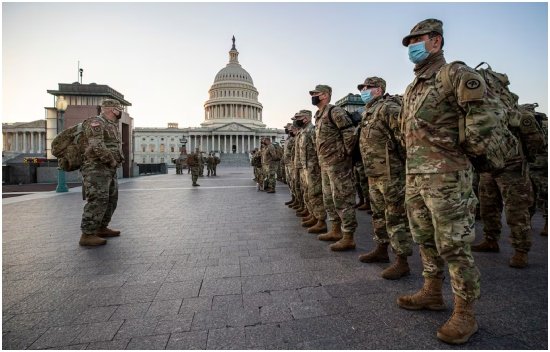
Final departure marks end of Operation Inherent Resolve, with Iran and allied militias seen as key beneficiaries
All remaining U.S. troops are set to leave their bases in Iraq by tomorrow, ending a military presence that has spanned more than two decades and leaving a power vacuum that analysts say will benefit Iran and its allied militias.
U.S. soldiers were first deployed to Iraq in 2003 in the operation that overthrew Saddam Hussein’s government. After withdrawing for a few years, U.S. forces redeployed in 2014 to fight ISIS under Operation Inherent Resolve.
Victoria Taylor, who served as U.S. Deputy Assistant Secretary for Iraq and Iran during the Biden administration and now directs the Iraq Initiative at the Atlantic Council, told The World that the 2003 invasion was launched amid debates over whether Saddam Hussein possessed weapons of mass destruction.
“There was certainly a discussion about regime change and the possibility of also bringing democracy to Iraq,” Taylor told The World. “I think the reality, of course, was much more complicated as the U.S. learned that some of the intelligence on which the assessments about weapons of mass destruction were based were faulty.”
She described Iraq today as “a flawed democracy” and “a complicated democracy,” adding that the government put in place “has not always been pro-U.S. or pro-Western in its approach.”
Operation Inherent Resolve: A Success?
Taylor said the 2014 mission to defeat ISIS could be considered successful. At the time U.S. troops returned, ISIS had taken over a third of Iraqi territory and held significant territory in Syria. The U.S.-led coalition was able to retake territory and “significantly degrade ISIS in Iraq as well as in Syria.”
By the end of the mission, there were under 5,000 troops, primarily focused on supporting the counter-ISIS mission, providing logistical support to operations in Syria and within Iraq.
Under the withdrawal agreement negotiated during the Biden administration, all counter-ISIS operations under Operation Inherent Resolve would end in September 2025, with one remaining year for troops to stay based in the Kurdistan region in Erbil to support Syria operations.
“The focus was on trying to secure as long a lead time as possible and then to retain the possibility that the U.S. military could remain in Iraq in a bilateral capacity,” Taylor said.
She noted that the Trump administration took a different approach, viewing Iraq as an example of the “forever war” that President Trump has said the U.S. should avoid.
Kurds Lose Sense of Protection
For the Kurds, the U.S. presence provided “a sense of protection against the possibility of Iranian attacks, which became very vivid during the Iran war as the region was continually hit by drones, rockets and missiles, both from the Iran-backed militias, but also directly from Iran,” Taylor said.
She added that the U.S. presence was also “very important symbolically as the Kurds continue to believe that their autonomy is at risk.”
Iran Benefits from Withdrawal
Taylor said Iran has been eager to pressure the U.S. military presence in the Middle East and has done so effectively in Iraq by arming militias that have launched numerous attacks against U.S. military and diplomatic facilities.
“The ultimate goal was to see the departure of U.S. troops, which I believe Iran views as a significant victory,” she said. “At a time when the U.S. is at war with Iran, it is giving up its foothold in Iraq to fight Iran-backed militias.”
She said the Iran war “has not prompted any reconsideration of the U.S. military presence and what role that could have played in the broader regional context.”
Iraq’s Balancing Act Increasingly Untenable
Iraq is one of the few countries with strong ties to both the U.S. and Iran. Taylor said maintaining those ties is “becoming increasingly untenable at a moment when the U.S. and Iran are in active conflict.”
She said the Trump administration is applying “greater pressure” to disarm militias and undermine Iranian influence, effectively trying to force the Iraqi government to pick a side.
“I think it will be increasingly challenging for the Iraqi government to maintain any kind of balance between these two powerful neighbors,” Taylor said.
Global Update
New Free Database Offers Nearly 4 Million Records of People Enslaved in British Colonies

Ancestry.com and UCL launch searchable archive spanning Caribbean, South Africa and beyond in early 1800s
A new online database containing close to 4 million records of people enslaved in British colonies from the Caribbean to South Africa during the early 1800s is now free and searchable, offering an unprecedented window into the lives of the last generation of Africans enslaved in British territories.
The database, titled “Former British Colonial Dependency Slave Registers 1813 to 1834,” was created by Ancestry.com in cooperation with the Centre for the Study of the Legacies of British Slavery at University College London. It draws on the registers of enslaved persons held principally at the National Archives in the UK under the T71 catalogue.
Matthew Smith, director of the UCL centre, told The World that the records are remarkable for their detail.
“You get details on all of the individuals who were enslaved, which essentially is the last generation of Africans brought to the British territories before slavery ended by abolition decree in 1834,” he said, noting that the apprenticeship system ended in 1838.
The records span roughly 1813 to 1840 and were compiled every three years. They generally include a name—not always a surname—age, and maternal lines. Some islands recorded occupations. They also include “increase and decrease” columns tracking births and deaths, which Smith described as “very upsetting aspects of this material.”
Why the Records Were Created
After the transatlantic slave trade was abolished in 1807, many abolitionists believed slavery would naturally end in British colonies. Instead, the system deepened, and officials worried about illegal trafficking. The registers were meant to monitor trafficking and keep control of enslaved societies.
Smith said digitization is a game changer.
“What we’re able to do is essentially use the database … to find connections in ways that would have been much more labor intensive using the paper records,” he said. Researchers can now trace family lines and community stories, and make detailed comparisons across colonies.
Ancestry decided to make the records free and open access globally, partnering with the National Archives UK. UCL was brought in to provide historical context for sensitive records. Smith said he was encouraged that Ancestry did not require payment to view the material.
“Everything we do is public history and it’s meant for free, open access,” he said.
Reparations and Public History
The database arrives amid renewed public reckoning with slavery’s legacy. Recent projects include the Register of British Slave Traders, the book “The Crown Silence” about the British monarchy’s role, and new DNA evidence reaffirming Thomas Jefferson had children with Sally Hemings. Caribbean nations have pushed for reparations from the UK.
Smith said the records could affect those debates by identifying enslaved people as individuals.
“When you begin to look at sets of records that actually identify human beings as individuals, as unique persons … that gives you a very different understanding of what the cost, the human cost of enslavement was,” he said.
He added that the records document the last phase of British slavery, and many people enslaved during centuries before will never be identified.
“That shadow has really been cast quite large,” he said.
Smith hopes the database will fuel generations of new research.
“We’ll begin to understand and learn more about the history of slavery and why we need to relate it to the afterlives that came long after the emancipation bills were passed,” he said.



-

 Health & Wellness2 days ago
Your Body Is Still Working While You Sleep — And Your Sleep May Matter More Than You Think
-

 Sights and Sounds1 day ago
Looking for a Different Day Out in Accra? Bambo’s Has You Covered
-

 Taste GH1 day ago
Ghanaian Tomato Stew: The Rich, Fragrant Sauce Everyone Should Try
-

 Homes & Real Estate1 day ago
Building in Stages? Why Your Concrete Slab Needs Protection Before the Next Floor
-
 Arts and GH Heritage12 hours ago
Zogbéadji opens Karp Kamina Residency 2026
-

 Ghana News7 hours ago
Ghana Moves to Establish National Space Agency
-
Fashion & Style11 hours ago
Forget Buying Every Wig You See: These Four Styles Could Build a Complete Hair Wardrobe
-

 Global Update7 hours ago
Death of Lab Worker From Suspected Pneumonic Plague in Siberia Prompts Quarantine of Nearly 200 People