
Ghana News
Ghana’s Black Stars in Crisis After Stunning 4-2 Defeat to The Gambia

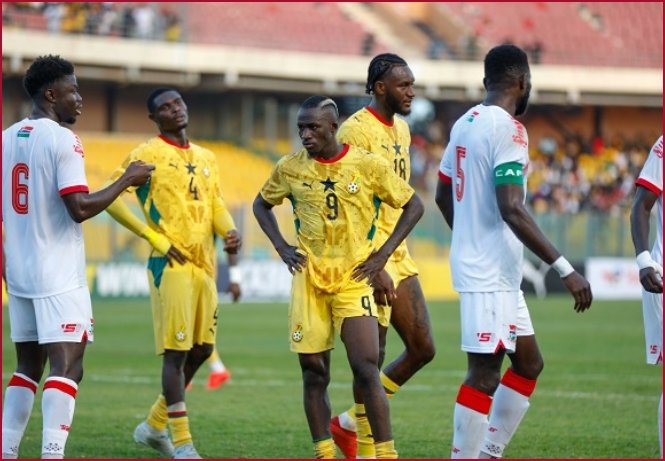
Communications Minister calls for national team to be disbanded as Ghana sits bottom of AFCON qualifying group with zero points
Ghana’s national football team is facing an unprecedented crisis after a shocking 4-2 home defeat to The Gambia intensified public anger and prompted a government minister to call for the team to be disbanded entirely.
The Black Stars suffered a stunning collapse at the Accra Sports Stadium on Tuesday, Sept. 29, 2026, blowing a 2-0 first-half lead to lose 4-2 in their 2027 Africa Cup of Nations qualifier. The defeat leaves Ghana bottom of Group C with zero points from their opening two matches.
The Match: From Dominance to Disaster
Ghana appeared in control after racing to a 2-0 lead through an Ernest Nuamah penalty and a Felix Afena-Gyan free-kick. However, The Gambia levelled before half-time, and Ebrima Colley struck twice after the break to seal a famous 4-2 victory—The Gambia’s first win over Ghana in 33 years.
The result came just days after Ghana opened their Group C campaign with a 2-0 defeat to Côte d’Ivoire in Bouaké under coach Carlos Queiroz.
| Metric | Detail |
|---|---|
| Matchday 2 Result | Ghana 2–4 The Gambia |
| Previous Result | Ivory Coast 2–0 Ghana |
| Group Position | Bottom of Group C (0 points) |
| Last Qualifier Win | September 2023 vs. Central African Republic |
| Qualification Impact | Early uphill battle for 2027 AFCON |
Political Firestorm: Calls for Disbandment
The defeat has triggered a wave of public and political backlash. Fans fiercely booed the players off the pitch at the Accra Sports Stadium following the final whistle.
Communications Minister Sam George publicly urged for the Black Stars to be completely disbanded and the Ghana Football Association (GFA) leadership sacked, even suggesting Ghana should accept a FIFA ban if it provides necessary time to rebuild from scratch.
“As for the Black Stars, my position before is my position today. Disband the team. Sack the FA,” George wrote on X.
He argued that Ghana should accept a two-year FIFA ban to allow for a proper rebuild, insisting that the current “patchwork approach” was worse than the painful truth. FIFA rules prohibit government interference in the running of national football associations, and breaches can lead to suspension.
Defensive and Leadership Failures
Analysts have pointed to tactical lapses, individual errors, and a lack of composure across the backline. Stand-in captain Gideon Mensah conceded a crucial penalty, compounding the team’s defensive woes. Questions are mounting over the current selection and readiness of the squad.
Ghana have not won an AFCON qualifier since beating the Central African Republic in September 2023—a drought that has left confidence in the current setup at an all-time low.
With zero points from two matches, Ghana faces an uphill battle to qualify for the 2027 Africa Cup of Nations. The calls for radical restructuring—including disbanding the national team and sacking the football association—reflect a deepening crisis that extends beyond the pitch.
The coming weeks will be critical as the GFA, government, and football stakeholders grapple with the fallout from one of Ghana’s most humiliating defeats in recent memory.







Ghana News
“Don’t Be Afraid”: Mahama Urges Ghanaians to Accept Clinical Trials at Commissioning of Ghana’s Groundbreaking Forensic mRNA Lab
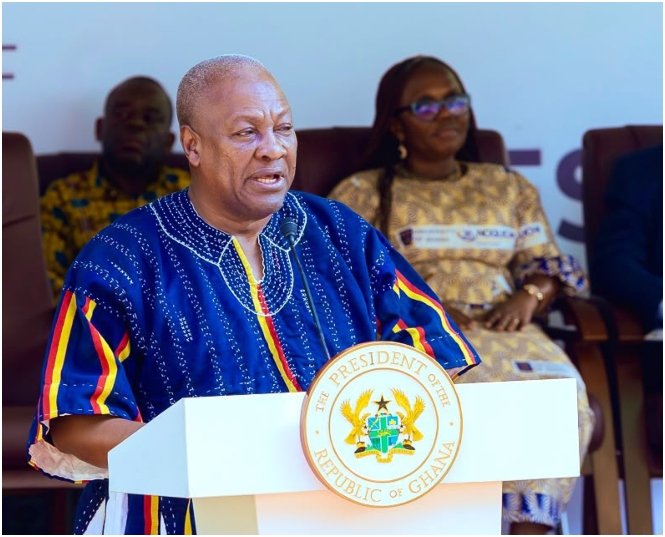
Ghana, Accra — President John Dramani Mahama has issued a passionate call to Ghanaians to overcome historical fears and embrace clinical trials.
The president described clinical trials as an indispensable foundation for Ghana’s push toward vaccine self-sufficiency.
He made the remarks on Wednesday, November 18, 2026, while commissioning the new Vaccine Research and Development (R&D) Laboratories and the Human Identification Laboratory at the Noguchi Memorial Institute for Medical Research (NMIMR) in Accra.

The event, which marked a significant milestone in Ghana’s scientific infrastructure, saw the President address a gathering of dignitaries, scientists, and international partners.
While the commissioning of the state-of-the-art mRNA and Protein Laboratories was the primary focus, President Mahama used the platform to tackle a lingering public health challenge: the distrust of clinical trials.
Essentially, mRNA and protein labs design, analyze, and test genetic instructions and proteins to support diagnostics, vaccine development, and targeted therapies.
Reflecting on a past Ebola outbreak, the President recalled a sobering moment when a planned vaccine trial in the Volta Region had to be relocated to East Africa due to public scaremongering. He noted that researchers, including the late Professor Fred Newton Binka, had intended to conduct the trials through the University of Health and Allied Sciences but were met with baseless fears that Ghanaians were being used as “guinea pigs.”
“I also urge Ghanaians not to be afraid of clinical trials,” President Mahama stated firmly. “We develop vaccines and an essential part of developing vaccines is clinical trials. And clinical trials are like immunization. The virus is weakened and so it’s not capable of invading and taking over your body. And so you have no risk of developing the disease, but it makes them see how their body reacts to the virus.”
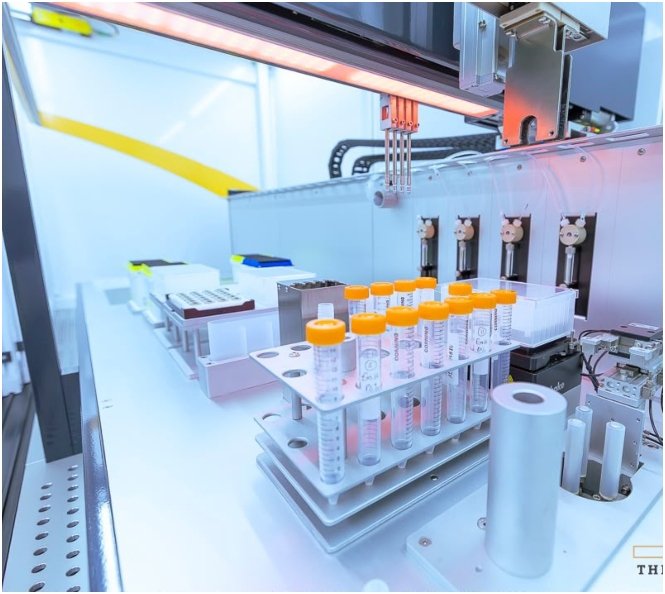
The President stated that the newly commissioned mRNA laboratories, which will provide scientists with a space to test new ideas and collaborate, will only reach their full potential if the public participates in the research process.
“If we are developing our own internal capacity to develop vaccines, we must accept to take part in the clinical trials,” he asserted. “Nobody will do the clinical trials for us to develop vaccines in our country. And so that is my message to you.”
President Mahama stressed that Ghana is now one of only five African countries using innovative mRNA technology, a status he described as a testament to the nation’s growing scientific resilience.
He commended the National Vaccine Institute (NVI), headed by Dr Sodzi Sodzi-Tettey, for its foresight in training five Ghanaian scientists in Brussels and Accra, who are now equipped to train their colleagues locally, a “training of trainers” model that ensures knowledge transfer.
The President also revealed that the NVI is in discussions with a European partner to collaborate on cancer vaccine research using mRNA technology, further solidifying Ghana’s role in global health innovation.
“By commissioning this equipment today, we are investing in the knowledge, innovation, and resilience on which our nation’s future depends,” he said. “We are making clear that Ghana is prepared to take greater responsibility for the health and well-being of our people and to play a leading role in shaping Africa’s scientific and public health future.”
The event also saw the commissioning of the Human Identification Laboratory, which will provide DNA testing capabilities locally, reducing the country’s reliance on foreign forensic facilities.
Ghana News
Ghana Joins Elite Group of Five African Nations Using mRNA Tech After Commissioning of Groundbreaking Lab

Ghana, Accra – Ghana has officially joined an exclusive club of just five African nations utilizing cutting-edge messenger RNA (mRNA) technology for vaccine research and development.
The announcement was made by Dr. Sodzi Sodzi-Tettey, Chief Executive Officer of the National Vaccine Institute (NVI), during the commissioning of the Vaccine R&D Laboratories at the Noguchi Memorial Institute for Medical Research on Wednesday, November 18, 2026.
In a speech that charted the country’s ambitious trajectory, Dr. Sodzi-Tettey declared that the commissioning of the lab marks the beginning of a new era for Ghanaian science.
He noted that the procurement of the equipment, the training of the scientists, and the installation of the equipment were all funded by the Government of Ghana, a testament to the nation’s commitment to health sovereignty.
“Today we want to give the President new words,” Dr. Sodzi-Tettey said, referencing President Mahama’s earlier speech at the African Union summit. “We want him to say in addition that we are catapulting messenger RNA sciences, not just from Cape Town, but from right here in Accra.”
The NVI CEO outlined five key areas of celebration, starting with the training of Ghanaian scientists. He revealed that five scientists had been trained in Brussels and Accra, and are now ready to train their colleagues locally, a “training of trainers” model that will rapidly expand the pool of expertise.
He also noted that the lab is already being linked with other mRNA hubs supported by the Africa CDC and the International Vaccine Institute.
Dr. Sodzi-Tettey then set a concrete timeline for the nation’s vaccine ambitions:
“We have set ourselves the timeline of 2027 to manufacture Ghana’s first vaccine, the Tetanus diphtheria vaccine. And we are really on track.”
He revealed that the first of three bulk substances required for the vaccine has already arrived in the country and is being stored at Atlantic Life Sciences. This milestone, he explained, was made possible through a grant agreement negotiated by the Health Minister, Kwabena Mintah Akandoh, with the government of Indonesia.
The plan is to manufacture the bulk substance in Indonesia and eventually reduce production costs, making the vaccines more affordable for the Ghanaian government.
The NVI CEO also highlighted a major policy victory: the passage of the Ghana Pharmaceutical Manufacturing Policy. After nearly a decade of discussions, the policy was passed about a month ago and is designed to usher in what he termed the “golden era of pharmaceutical manufacturing in the country.”
“The President’s vision is to make Ghana a pharmaceutical hub in Africa,” Dr. Sodzi-Tettey stated.

To demonstrate the policy’s practical impact, he noted that the bulk substance imported for the Tetanus Diphtheria vaccine was brought into the country tax-exempt, a key provision under the new policy.
He added that the policy also addresses critical skills gaps, ensuring that the workforce is ready for the expansion of the sector.
The event was attended by high-profile dignitaries, including representatives from the Africa CDC, the European Union, and GIZ.
With the lab now operational and the 2027 deadline in sight, Dr. Sodzi-Tettey’s message was one of confidence and determination.
Ghana is no longer just a recipient of global health solutions; it is becoming a producer, a leader, and a hub for mRNA science on the African continent.

Ghana, Accra –– The commissioning of Ghana’s first fully equipped Human Identification Laboratory at the Noguchi Memorial Institute for Medical Research (NMIMR) was not just a scientific achievement, it was born out of national tragedy and a father’s directive.
The story of how this groundbreaking facility came to be was recounted by the Minister of Health, Hon. Kwabena Mintah Akandoh, during the official commissioning ceremony on Wednesday, November 18, 2026.
In a speech that moved the audience, Akandoh recounted the devastating helicopter crash that occurred in Adansi Akrofuom, which claimed the lives of eight Ghanaian officials.

He read their names aloud, honoring their memory: Dr. Edward Omane Boamah, Dr. Alhaji Ibrahim Murtala Muhammed, Alhaji Muniru Mohammed, Dr. Samuel Sarpong, Samuel Aboagye, Squadron Leader Peter Bafemi Anals, Flying Officer Manaen Twum Ampadu and Sergeant Ernest Addo Mensah.
“Today we remember them. We hold your families in our hearts,” the Minister said solemnly.
But the tragedy, he revealed, exposed a critical gap in the nation’s forensic capabilities.
“Mr. President, you asked me to oversee their identification so their families could lay them to rest with dignity,” Akandoh recounted. “When I learned the DNA tests had to be done in South Africa, I asked why could we not do this here? Ghana had expertise. Our scientists needed the equipment.”
According to the Minister, President John Dramani Mahama’s response was immediate and definitive:
“Your directive was clear, Mr. President. Build that capacity here at home. Today at Noguchi, we have done so.”
The new Human Identification Facility is set to revolutionize forensic science in Ghana. Akandoh outlined its wide-ranging applications, noting that it will not only help families get answers sooner after disasters but will also assist in identifying missing persons, strengthening the work of the police and the courts, and resolving complex cases involving paternity and inheritance.
“We will work with our partners to secure accreditation,” Akandoh stated, adding that the facility will also serve as a training ground for forensic scientists, ensuring the sustainability of the expertise.
The Minister connected the new forensic lab to the broader theme of the day: health sovereignty.
He noted that just as Ghana had previously relied on foreign labs for DNA testing, the continent had long waited for vaccines made elsewhere. He praised the new Vaccine R&D Laboratories as the solution to that dependency.
“COVID-19 taught us another lesson. Africa waited for vaccines made elsewhere,” he said. “Our first vaccines bottled in Ghana are expected on the market in 2027 as indicated by the CEO for Vaccine Institute. I thank our Indonesian partners for helping us take that step.”
The Health Minister also lauded the collaborative effort that made the day possible, thanking the University of Ghana, the Noguchi team, MahamaCare, and all partners.
He assured the gathering that the government would invest in staff, equipment, maintenance, and reliable supplies to ensure the facilities operate at the highest standard.
As he concluded, Akandoh returned to the families of the eight crash victims, hoping that the new laboratory would provide them with the answers they deserve.
“May the answers this laboratory provide to our families become part of the lab’s legacy,” he said, before inviting the President to address the nation.


“Don’t Be Afraid”: Mahama Urges Ghanaians to Accept Clinical Trials at Commissioning of Ghana’s Groundbreaking Forensic mRNA Lab

Kingston to Accra Block Party Brings Jamaican Dancehall Culture to Accra

Ghana’s Timeline Had One Question Thursday: “What Has Changed?”
-

 Ghana News2 days ago
Ghana’s Sahel Problem: Why President Mahama Is Arming the BNI Now
-
 Opinion2 days ago
Governance Crisis Threatens Progress, Reputation of the University of The Gambia
-

 Homes & Real Estate2 days ago
Building Better Homes: Why Every Room Deserves a Different Design Approach
-

 Fashion & Style1 day ago
The Shirt Code: How Small Design Details Define the Difference Between Formal and Casual Style
-
 Festivals & Events2 days ago
Fetish Festival: Celebrating the Sacred Monkeys of Tafi Atome
-

 Ghana News18 hours ago
How a Helicopter Crash Sparked Ghana’s New Forensic DNA Lab
-

 Ghana News18 hours ago
Ghana Joins Elite Group of Five African Nations Using mRNA Tech After Commissioning of Groundbreaking Lab
-

 Health & Wellness1 day ago
Stronger Hands, Stronger Body: Why Grip Training Deserves a Place in Your Workout