
Arts and GH Heritage
The Stories Woven Into Every Strand at Annobil Contemporary Gallery

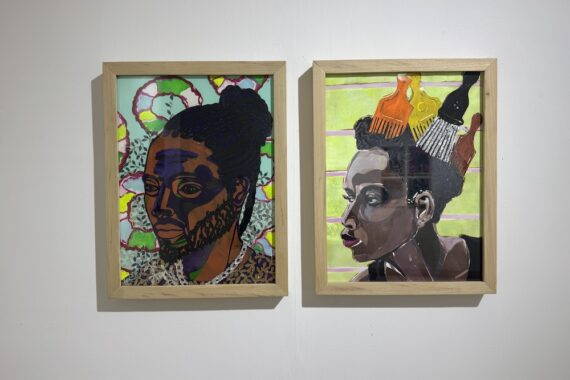
Before a single word is spoken, a hairstyle can announce belonging, confidence, rebellion—or memory.
That quiet truth sits at the heart of Hairstyle Politics, the new exhibition by German artist, anthropologist and historian Dr. Ilsmargaret Luttman at Annobil Contemporary Gallery in Accra, where African hair is treated not as fashion alone but as a living archive.
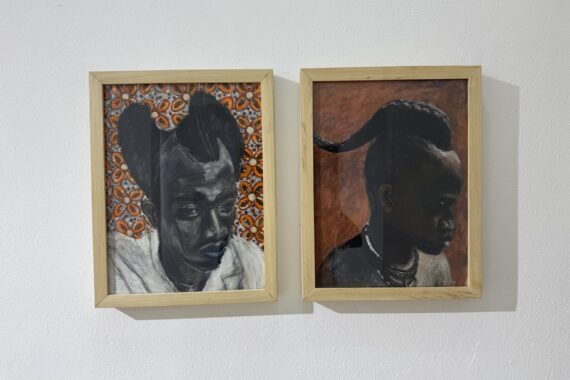
For generations across Ghana and the wider continent, hair has carried meanings that rarely appear in textbooks.
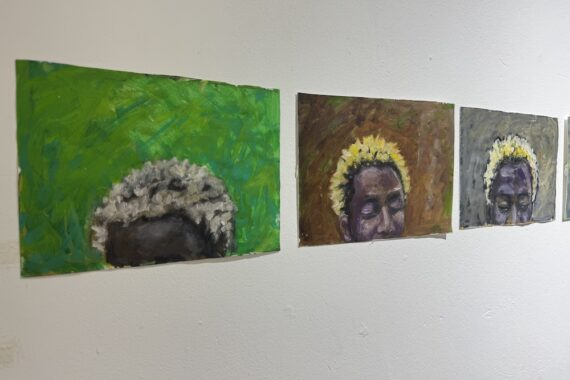
A braid could mark a life stage, an elaborate style could celebrate status, and adornments could signal identity long before introductions were exchanged.
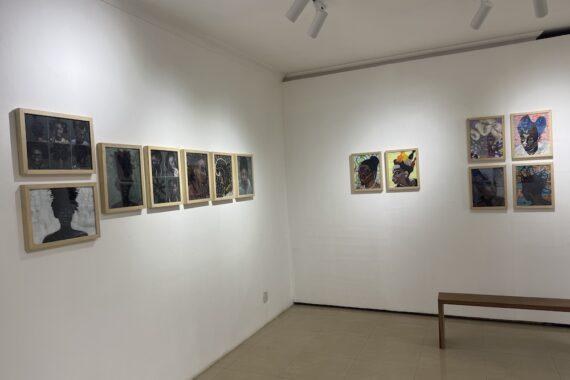
The exhibition invites visitors to see these traditions not as relics of the past but as an evolving language that continues to shape how people present themselves today.
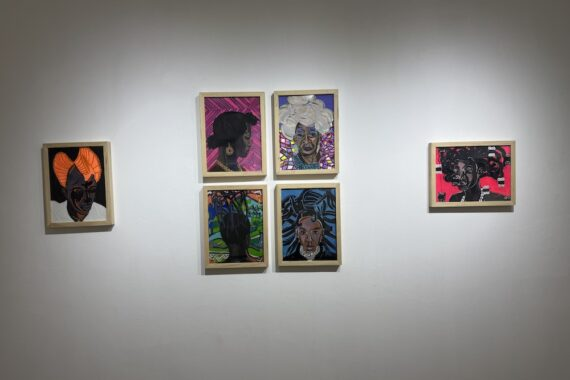
Art That Mirrors Cultural Memory
Luttman’s work gains its distinctive character through an unusual process that blends painting, stencil printing and paper cutting.
The layered compositions echo the very histories they explore—built, erased, reshaped and remembered.
Rather than presenting African aesthetics from a distance, the exhibition reflects decades of travel and engagement across Ghana, Cameroon, Mali, Côte d’Ivoire and Nigeria, allowing personal encounters to inform artistic interpretation.
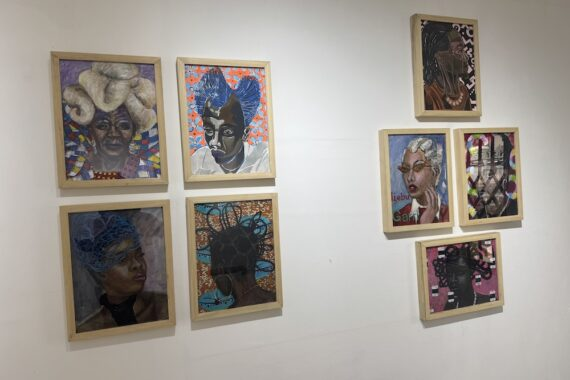
Installed in the gallery’s intimate Jill Silverman Room, the works encourage close looking.
Familiar hairstyles become symbols of resilience, creativity and self-definition, revealing how appearance has often served as a subtle form of negotiation in changing social and political landscapes.
As the exhibition runs until September 26, 2026, it offers something beyond an art viewing. It asks a simple but profound question: what histories are we carrying every time we style our hair?











Arts and GH Heritage
The KNUST Dean Who Rewrote the Rules of Art Education Wins 2026 Prince Claus Impact Award
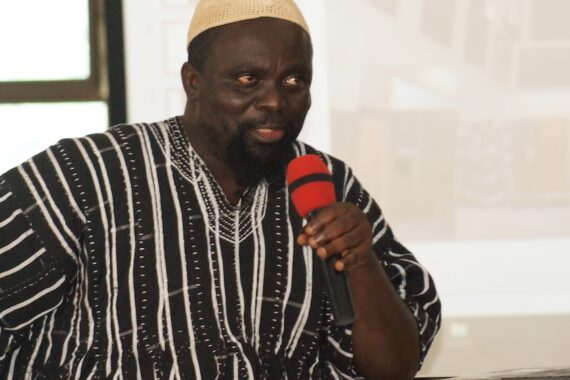
One of Prof. karî’kachä seid’ou’s most revealing observations is that he considers himself “exiled from the North Atlantic.”
It is a witty phrase, but it also captures a career built on an unusual conviction: that world-changing ideas do not need to leave Africa to matter.
That philosophy has now earned the Dean of KNUST’s Faculty of Art the 2026 Prince Claus Impact Award, recognising more than two decades of reshaping how art is taught, created and understood.
Rewriting who gets to define art
Rather than placing painting or sculpture at the top of an artistic hierarchy, seid’ou’s Emancipatory Art Teaching Project encouraged students to experiment across disciplines and collaborate across generations.
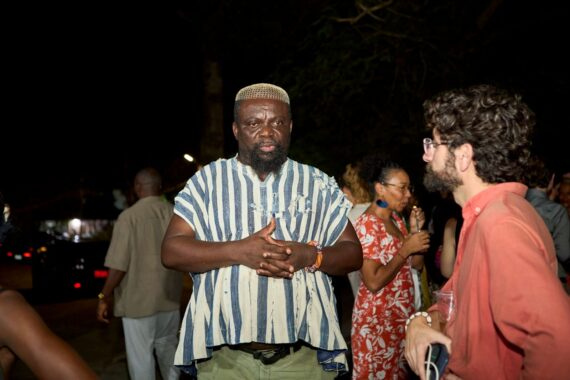
The initiative grew beyond the classroom into exhibitions, research projects and creative communities that challenged inherited ideas about who has the authority to define art.
Its influence transformed KNUST’s fine-art curriculum, producing artists, curators, scholars and educators who now shape Ghana’s contemporary art scene and contribute to wider conversations about decolonial practice across Africa.
A Ghanaian vision with global reach
His impact has drawn attention from publications including African Arts, ArtReview, The New York Times, The Guardian and the Financial Times.
The community-driven collective blaxTARLINES, which he co-founded, has appeared on ArtReview’s Power 100 list for four consecutive years.
As the Prince Claus Fund marks 30 years of celebrating changemakers, seid’ou’s recognition highlights something larger than an individual achievement.
It affirms that some of the world’s most influential cultural ideas are being imagined, debated and refined from Kumasi—and that Ghana’s classrooms can be as transformative as any global museum.
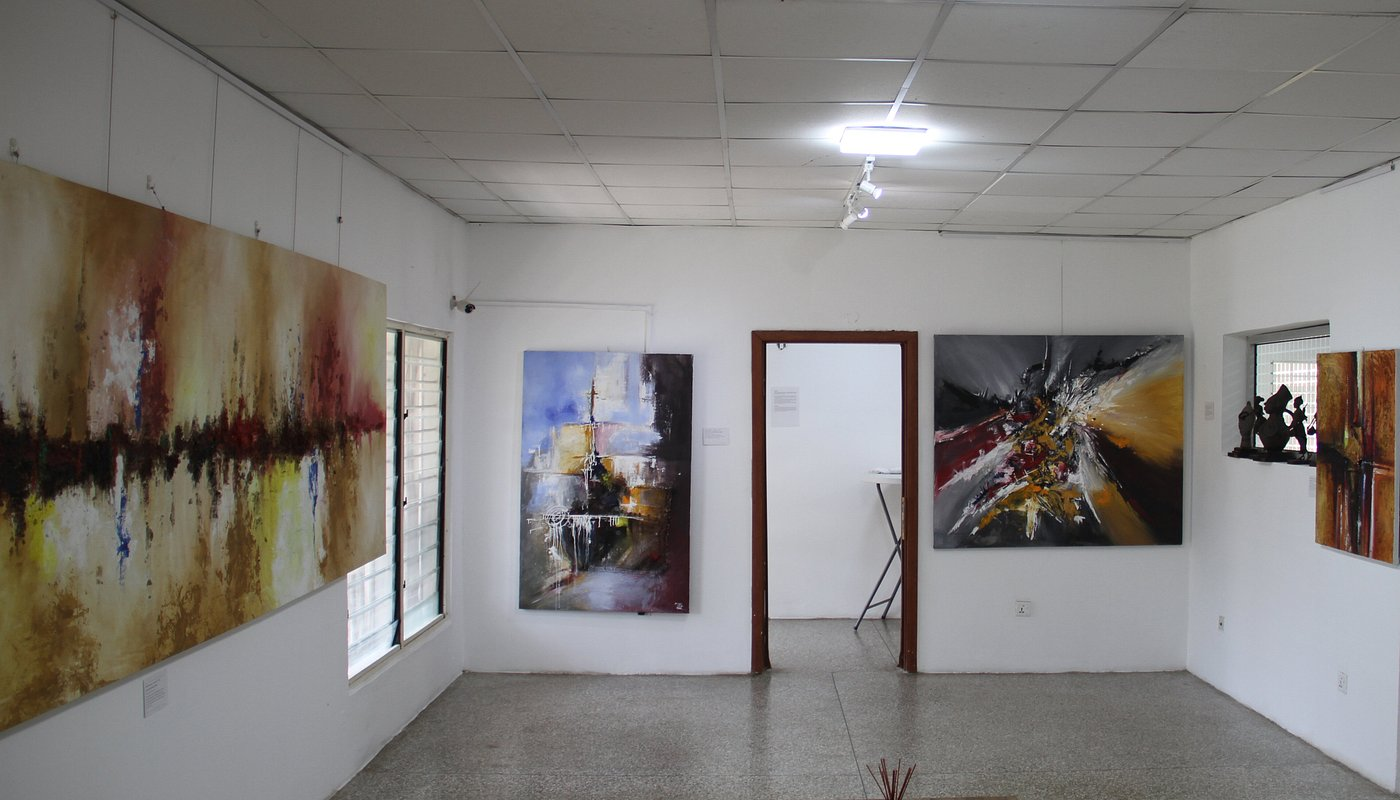
Every memorable art gallery begins with someone who believes a painting deserves more than a wall—it deserves an audience.
In Accra, that belief has shaped Berj Art Gallery into one of Ghana’s enduring champions of West African art.
Founded in 1996 by collector Joyce Quarshie, Berj emerged at a time when many Ghanaian artists were still searching for spaces that could connect their work with wider audiences.
More than three decades later, Quarshie’s commitment has grown into a gallery that celebrates both established masters and emerging voices under one roof.
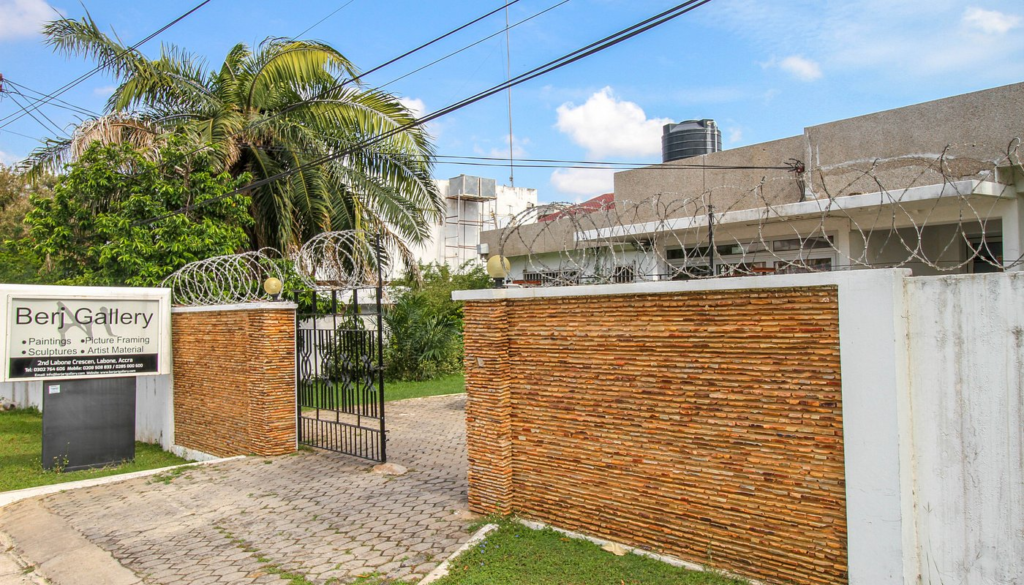
A Living Story of West African Art
Walking through Berj feels less like entering a showroom and more like stepping into a conversation across generations.
Bold paintings share space with finely carved wooden sculptures, bronze works catch the light from different angles, and photographs add contemporary perspectives to centuries-old artistic traditions.
The gallery’s strength lies in that balance. Acclaimed painters stand alongside rising talents, creating a rare opportunity for visitors to see Ghana’s artistic evolution unfolding in real time.
It is a reminder that culture is not frozen in history; it continues to grow with every new brushstroke and every fresh creative voice.
More Than a Gallery
For international visitors exploring Accra, Berj offers something deeper than a sightseeing stop. It opens a window into Ghana’s creative identity, where craftsmanship, storytelling and heritage intersect.
As the gallery continues hosting exhibitions that bring together local and international artistic influences, it reinforces a simple but powerful truth: preserving culture is not only about protecting the past.
It is about creating spaces where the next generation of artists can imagine—and exhibit—the future.
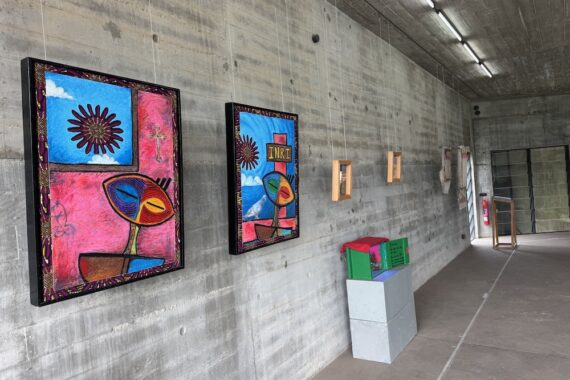
A family photograph resting on a shelf may look like decoration. A half-finished piece of woven cloth may seem incomplete. A living room may simply be a place to sit.
At Nubuke Foundation in Accra, however, these familiar things are being asked to tell deeper stories.
Weight of the Ordinary, a group exhibition featuring Josiah Tsibu Manu, Priscilla Agbeti, Blanche Boni-Mississo, King David Osabutey (Kakalicka) and Sena Burgundy Appau, turns its attention to the overlooked details of daily life—and finds history hiding there.
Manu’s domestic interiors are particularly evocative. Furniture, photographs and household details become unofficial archives, recalling how Ghanaian homes often carry memories that never enter formal histories.
In Agbeti’s unfinished woven works, meanwhile, labour refuses to disappear behind polished craftsmanship.
The incomplete becomes deliberate, leaving viewers to consider the economic and social histories carried by textiles.
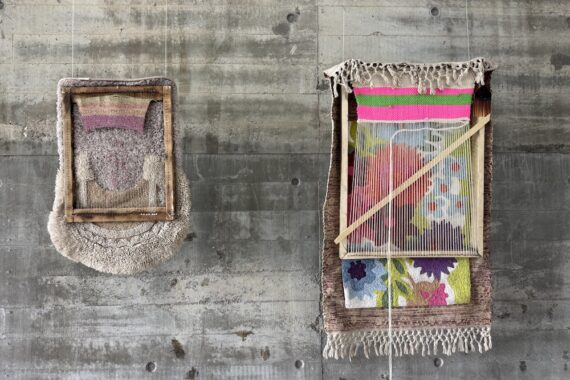
Elsewhere, Boni-Mississo examines how spaces determine who can move freely and who is kept at the margins. Kakalicka draws on Akan cosmology through his Ɔhɔhoɔ, or stranger, connecting questions of displacement and belonging with indigenous ideas.
Appau’s monumental blue figures turn inward, contemplating the uncertainty and possibility of becoming.
Together, the artists suggest that the everyday is not neutral. It is where memory is stored, identities are formed and social boundaries are experienced.
For audiences in Ghana and abroad, the exhibition offers an invitation to look again at what familiarity can conceal. Sometimes, the objects closest to us have the most to say.


In Ghana’s Online Politics, Personality Still Out-Engages Policy

Africa Digital Democracy: What Ghana’s Online Conversation Reveals About Elections in 2028

Trump Bans CNN, MS Now and Politico from White House in Escalating War on Press
-
 Ghana News8 hours ago
Africa Digital Democracy: What Ghana’s Online Conversation Reveals About Elections in 2028
-

 Ghana News1 day ago
Top Headlines From Ghanaian Newspapers: Friday, September 18, 2026
-
 Taste GH2 days ago
Red Red: The Ghanaian Bean Dish That Wins Hearts One Bite at a Time
-
Festivals & Events2 days ago
GJTI Expo 2026: Where Ghana and Japan Meet to Shape the Future of Trade
-

 Ghana News1 day ago
After Record Seizures, Ghana Tightens Ports in Global Drug War
-
 Ghana News9 hours ago
Trump Bans CNN, MS Now and Politico from White House in Escalating War on Press
-
 Ghana News8 hours ago
In Ghana’s Online Politics, Personality Still Out-Engages Policy
-
 Health & Wellness2 days ago
Before You Drink Activated Charcoal, Here’s What Science Actually Says