
Entertainment
Who Owns Afrobeats Now? The Debate Over Nigeria’s Biggest Music Export


“What started as a uniquely Nigerian cultural product has become a commodity controlled by people far beyond Nigeria’s borders.”
That claim has become a flashpoint in conversations about Afrobeats, the Nigerian-born sound that has grown from Lagos clubs into one of the world’s biggest musical movements.
While the statement is more opinion than settled fact, it captures a growing debate across Africa: as global music companies pour money into Afrobeats, who gets to shape its future?
A decade ago, artists like Wizkid, Davido and later Burna Boy helped push Nigerian music onto international charts with a sound that felt unmistakably homegrown.
Their blend of Afropop, highlife, dancehall and hip-hop resonated across West Africa before finding audiences in London, New York and beyond.
Today, Afrobeats fills stadiums, dominates streaming playlists and has its own Grammy category. But its global success has also brought questions about ownership and creative control.
One of the biggest turning points came in 2024 when Universal Music Group acquired a majority stake in Mavin Records, one of Nigeria’s most influential record labels founded by producer and executive Don Jazzy.
The deal symbolised a wider trend: international music giants increasingly investing in African talent and infrastructure.
Supporters argue that these partnerships give artists access to larger marketing budgets, global distribution networks and opportunities that were once out of reach.
Nigerian stars now headline international festivals, collaborate with global acts and earn revenues from audiences across continents.
Critics, however, worry that commercial success comes with trade-offs.
Some believe global executives and streaming platforms now wield enormous influence over which artists receive the biggest promotional push, which songs land on influential playlists and what version of Afrobeats reaches international listeners.
They argue that the genre’s rough-edged experimentation has gradually given way to a more polished sound designed to travel easily across global markets.
That concern extends beyond Nigeria.
For Ghana, the conversation feels familiar. Highlife, hiplife and the fast-rising Asakaa movement have all faced questions about how local sounds can grow internationally without losing the cultural identity that made them distinctive in the first place. Across the continent, artists increasingly navigate a delicate balance between staying authentic and appealing to worldwide audiences.
Not everyone agrees that Afrobeats has lost its identity. Many fans point out that Nigerian artists continue to dominate charts, create trends and influence global pop music rather than simply following it. They see the genre’s evolution as a natural consequence of reaching bigger audiences.
Still, the discussion reflects a broader reality facing Africa’s creative industries. As music becomes a billion-dollar global business, ownership matters almost as much as artistry. The question is no longer whether African music belongs on the world stage—it already does.
The bigger question is who gets to decide what the next chapter sounds like.












Arts and GH Heritage
Ghana Builds Its First Cinema Dedicated Entirely to African and Diasporic Films: The Falcon Rises in Berekuso

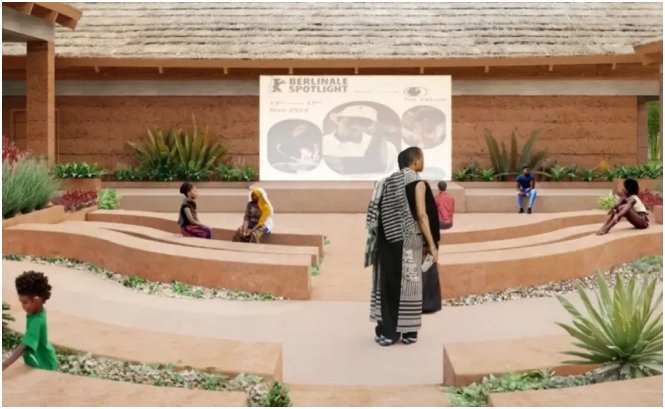
Ghana is building its first cinema space dedicated exclusively to African and diasporic cinema, a landmark cultural project that aims to do more than screen films: it seeks to house and preserve a film culture that has existed for decades without a purpose-built institution to call home.
Named The Falcon Cinema, the project is currently under development in Berekuso by Studio NEiDA, an architecture practice co-founded by Fabiola Büchele, former Creative Director of Studio Francis Kéré, and Jeanne Autran-Edorh, who has trained at Herzog & de Meuron and Kéré’s studio. The studio previously curated Togo’s first pavilion at the Venice Architecture Biennale.
A Cinema Built From Ghanaian Earth
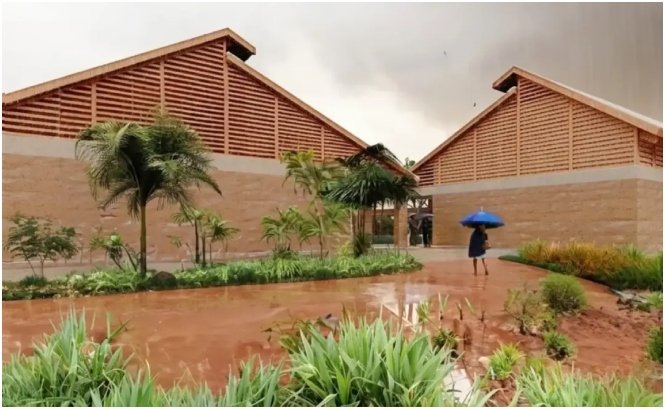
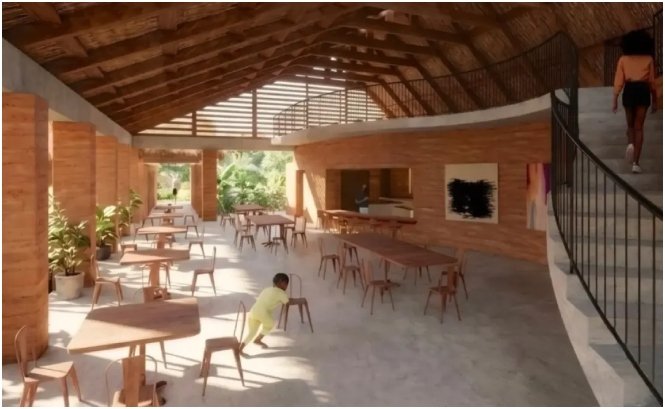
Inspired by the spatial organization of traditional Asante compounds, The Falcon is arranged as four earth-built structures surrounding a central courtyard. The venue will include two screening rooms, an outdoor cinema, communal spaces, a restaurant, and a film archive dedicated to African and diasporic cinema.
Constructed from locally sourced earth materials and topped with a palm-leaf thatched roof, the project combines passive ventilation strategies with contemporary screening facilities. The design prioritizes sustainability while honoring indigenous building traditions.
“The Falcon is not competing with a streaming subscription,” the project team noted. “It is making the case for cinema as a shared spatial experience.”
Programming With Rigo
The Falcon’s programming is led by Alice Otchere Johnson, a Ghanaian film critic and founder of AJ4short. Johnson is recognized as a Berlinale Talents 2026 fellow and was awarded the FIPRESCI Talent Press Award at Talents Durban 2025. Her involvement signals a commitment to curatorial excellence and a deep understanding of both African cinema and the global film landscape.
“This is what cultural infrastructure looks like when all the decisions are made from inside the culture it is meant to serve,” the project team stated.
Filling a Long-Standing Gap
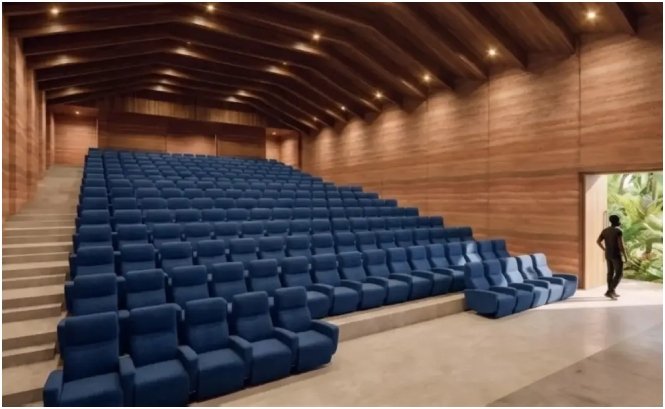
The Falcon will become the first cinema space in Ghana dedicated to African cinema and independent films—an ambition the team describes as anything but minor.
“Ghana has a film culture, with directors, critics, and audiences who have been building that culture for decades, without a purpose-built institution to house it,” the project revealed.
With screening rooms, an outdoor cinema, and a dedicated film archive focused on African storytelling, The Falcon aims to celebrate and preserve Africa’s rich cultural and cinematic heritage while providing a home for the next generation of filmmakers and audiences.
More Than a Cinema
Beyond film exhibition, The Falcon is designed as a community space for public gathering, archival preservation, and cultural exchange. The inclusion of communal areas and a restaurant reflects the traditional Asante compound’s role as a social hub—a place where people come together not just for a specific activity, but to share space, food, and conversation.
For a continent whose stories have too often been told by outsiders, The Falcon represents a different vision: a cinema built from local earth, programmed by local critics, and rooted in local architectural traditions. It is, in the project’s own words, cultural infrastructure designed from the inside out.
Construction is ongoing in Berekuso. Further details on opening dates and programming schedules are expected in the coming months.
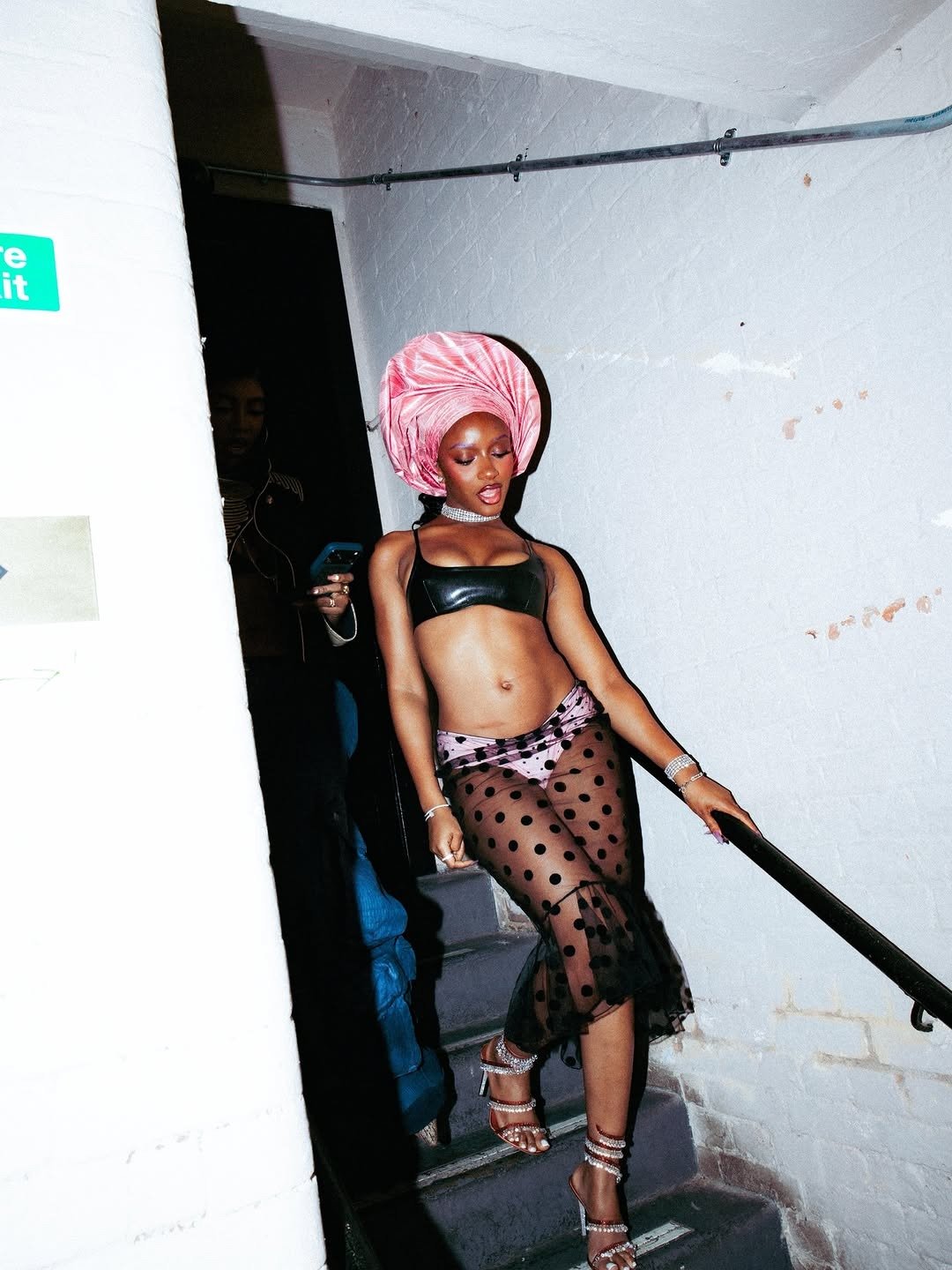
Nigerian music star Ayra Starr has sparked widespread debate across social media after appearing in a fashion look that blended a traditional Yoruba gele with revealing contemporary styling, reigniting conversations about cultural symbolism, celebrity image and support for African fashion designers.
The singer, one of Africa’s fastest-rising global music exports, appeared in a bra top, visible underwear, and a sheer polka-dot skirt while wearing the gele — a headwrap widely associated with elegance, celebration, and cultural identity in many West African communities, particularly among the Yoruba people of Nigeria.
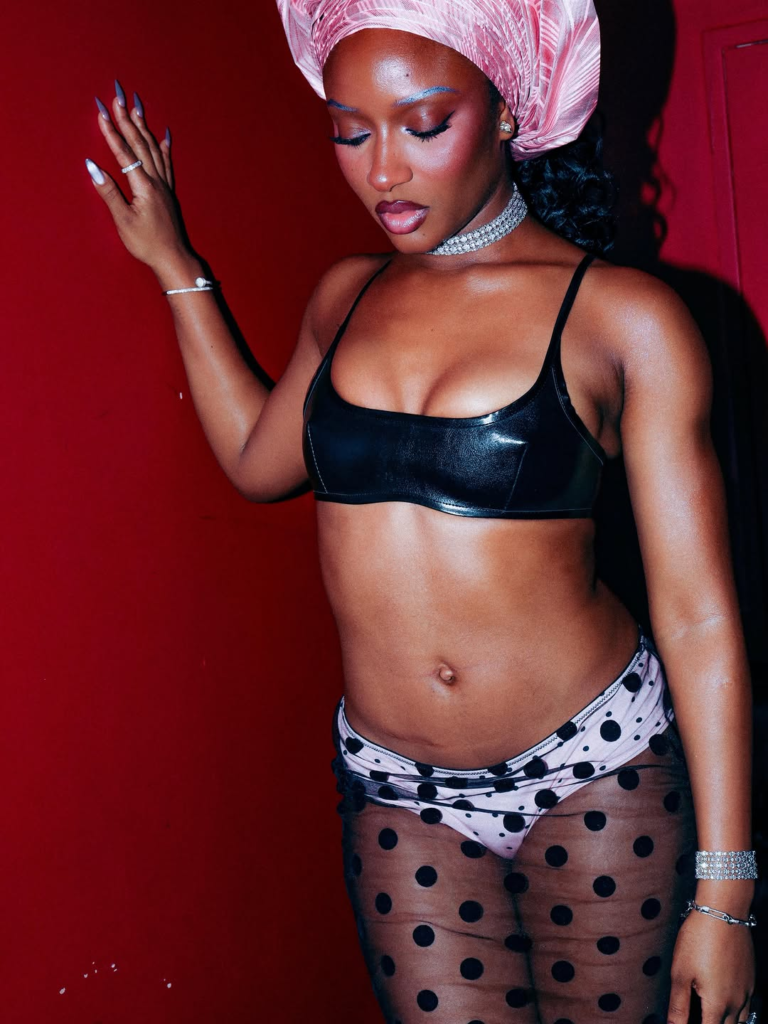
Images of the outfit quickly circulated online, drawing sharply divided reactions. Supporters described the styling as youthful self-expression and a modern interpretation of African fashion, while critics argued that pairing the gele with provocative clothing undermined the cultural significance traditionally attached to the headpiece.
For many Nigerians and West Africans, the gele carries meaning beyond fashion. Often worn at weddings, religious ceremonies and major celebrations, it has long been viewed as a symbol of pride, femininity and social prestige.
Critics of the outfit argued that removing the gele from its cultural context risked turning an important heritage item into a purely aesthetic accessory.
The controversy has also widened into a broader discussion about the relationship between African celebrities and the continent’s fashion industry.
Some fashion commentators and online users questioned why globally successful African artists do not more consistently spotlight local designers despite the international growth of African fashion.
Nigeria’s fashion industry has gained increasing global recognition in recent years, with designers appearing at international fashion weeks, celebrity events, and luxury retail platforms.

Industry observers say musicians and entertainers play a major role in shaping visibility for African brands and influencing how African culture is presented to global audiences.
The debate surrounding Ayra Starr’s outfit reflects a larger cultural conversation unfolding across Africa’s entertainment and fashion industries — one balancing creative freedom, global pop culture influences, and the preservation of traditional identity in an increasingly international spotlight.
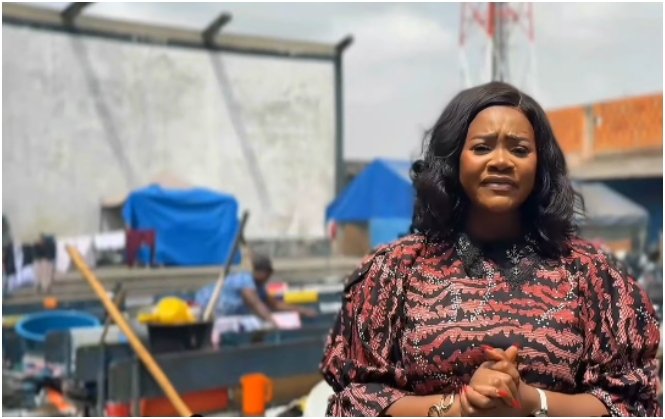
Abandoned historic venues like Roxy and Orion Cinemas highlight crisis as NFA moves to recover, renovate and reopen theatres across the country
Accra, Ghana – April 18, 2026 – The National Film Authority (NFA) has begun a major push to revive Ghana’s struggling cinema culture, starting with efforts to reclaim and restore long-abandoned cinema halls in Accra and other regions.
A recent documentary by the NFA revealed the dilapidated state of once-popular venues such as the Roxy Cinema and Orion Cinema in Accra. The Roxy, a former entertainment landmark, now stands derelict and unrecognizable as a cinema, while the Orion Cinema at Circle shares a similar fate. Similar abandoned cinemas exist in Kumasi, Takoradi, Cape Coast (including the historic Rivoli Cinema), and other cities.
Currently, Ghana has very limited functional cinema infrastructure. The only major operational cinemas are Silverbird outlets at Accra Mall and West Hills Mall, with a combined capacity of under 1,000 seats. Industry stakeholders say this severely restricts revenue for filmmakers, making it difficult to recoup production costs and sustain regular film output.
Recovery and Community Initiatives
NFA officials, including CEO, Kafui Danku, and her Deputy, James Gardner, have visited abandoned sites to assess their condition and signal the authority’s intention to take over, renovate, and reopen them. The goal is to create a network of cinemas that would allow simultaneous premieres in multiple cities including Accra, Kumasi, Takoradi, and Tamale.
As part of its broader revival strategy, the NFA organized community film screenings during Easter under the “Ghana Film Experience” initiative. A local film, Ramadan, directed by Kobbi Rana and shot in Nima, was screened for free in the Nima-Mamobi area, drawing strong community turnout. The authority is also promoting pop-up cinemas to rebuild public interest in Ghanaian movies.
NFA leaders say the strategy goes beyond reopening old buildings. It includes stimulating private investment, expanding cinema infrastructure, creating jobs, and positioning Ghana as a leading film hub in Africa. They are calling on investors, developers, and creative partners to help transform historic venues into modern cinemas and cultural centers.
Industry voices emphasize that success will depend on producing high-quality films, delivering strong audience experiences, and maintaining consistency in screenings.
The NFA’s multi-pronged approach aims to reverse years of decline and restore cinema-going as a vibrant part of Ghanaian cultural life.


In Ghana’s Online Politics, Personality Still Out-Engages Policy

Africa Digital Democracy: What Ghana’s Online Conversation Reveals About Elections in 2028

Trump Bans CNN, MS Now and Politico from White House in Escalating War on Press
-
 Ghana News8 hours ago
Africa Digital Democracy: What Ghana’s Online Conversation Reveals About Elections in 2028
-

 Ghana News1 day ago
Top Headlines From Ghanaian Newspapers: Friday, September 18, 2026
-
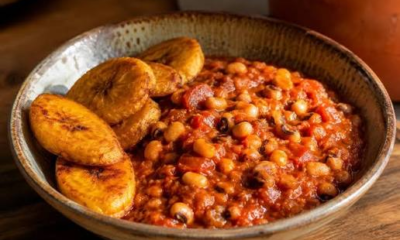
 Taste GH2 days ago
Red Red: The Ghanaian Bean Dish That Wins Hearts One Bite at a Time
-
Festivals & Events2 days ago
GJTI Expo 2026: Where Ghana and Japan Meet to Shape the Future of Trade
-

 Ghana News1 day ago
After Record Seizures, Ghana Tightens Ports in Global Drug War
-
 Ghana News9 hours ago
Trump Bans CNN, MS Now and Politico from White House in Escalating War on Press
-
 Ghana News7 hours ago
In Ghana’s Online Politics, Personality Still Out-Engages Policy
-

 Health & Wellness2 days ago
Before You Drink Activated Charcoal, Here’s What Science Actually Says