
Homes & Real Estate


For years, luxury living in Accra was closely associated with neighbourhoods such as Airport Residential Area, Cantonments, and East Legon. Today, a different trend is taking shape.
Homebuyers and investors are increasingly looking beyond the traditional high-end districts in search of developments that combine quality, accessibility, and long-term value.
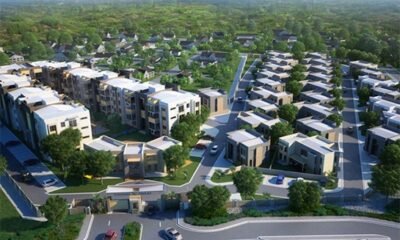
The launch of the 2-Bedroom London Residence at Lakeside Estate in Adenta reflects this shift and highlights how Ghana’s housing market is evolving to meet the demands of a changing urban population.
The Search for Modern Community Living
As Accra continues to expand, many residents are placing greater emphasis on lifestyle rather than location alone. Access to secure communities, reliable infrastructure, green spaces, and modern amenities has become just as important as proximity to the city centre.
The London Residence has been designed around this growing preference. Located within the established Lakeside Estate community, the development offers studio and two-bedroom apartments tailored to professionals, young families, returnees, and investors seeking a balance between convenience and comfort.
Its open-plan interiors, natural lighting, modern kitchens, and contemporary finishes reflect a broader trend in Ghanaian real estate, where buyers increasingly expect homes that support both work and leisure in an era of flexible lifestyles.
Adenta’s Growing Appeal
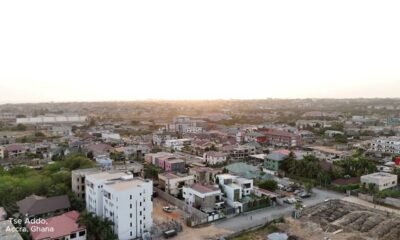
The choice of Adenta is significant. Once viewed primarily as a suburban residential area, the district has transformed into one of Accra’s fastest-growing property corridors.
Its location provides residents with relatively easy access to key commercial centres, educational institutions, healthcare facilities, and retail destinations while offering a quieter environment than many central neighbourhoods. For buyers priced out of some of Accra’s traditional luxury districts, areas such as Adenta present an attractive alternative.
Developments like the London Residence are helping to reinforce the area’s reputation as a destination for quality housing rather than simply an overflow residential zone.
A Market Driven by Investment Potential
The project also arrives at a time when interest in apartment ownership is growing among both local and diaspora investors. Demand for professionally managed, gated residential communities continues to rise, driven by expatriates, corporate tenants, and returning Ghanaians seeking secure accommodation.
With flexible payment options, modern amenities, and the backing of a developer with more than two decades of experience, the London Residence aligns with the type of property increasingly sought by investors looking for rental income and long-term capital appreciation.
More Than a Home
What makes projects like the London Residence important is what they reveal about the future of urban housing in Ghana. Buyers are no longer searching only for square footage; they are looking for community, security, convenience, and lifestyle.
As Accra grows outward and housing preferences evolve, developments in emerging residential hubs such as Adenta may well define the next chapter of Ghana’s real estate story.








Homes & Real Estate
Profit or Place-Making? The Debate Over Community Building in Ghana’s Fastest-Growing Suburbs
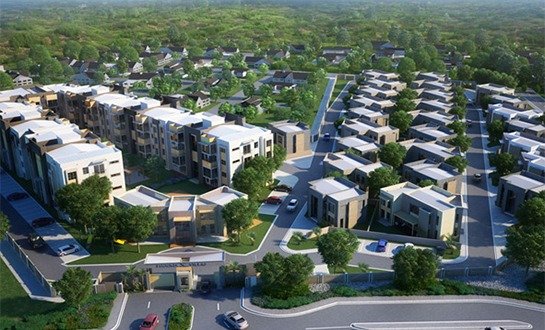
Drive through East Legon Hills on the outskirts of Accra and one thing quickly becomes clear: the area is growing at remarkable speed. New homes rise from once-open land, construction trucks move in and out of developing neighborhoods, and real estate advertisements promise secure, modern living.
Yet amid this expansion, a question is increasingly being asked: is East Legon Hills becoming a true community, or simply a collection of gated compounds?
The debate reflects a broader conversation about urban development in Ghana, where private developers are playing an increasingly influential role in shaping how and where people live.
The Business of Building Communities
Real estate development is, by nature, a profit-driven enterprise. Developers acquire land, build infrastructure, and sell homes to generate returns on investment. However, the most successful residential developments often offer more than houses. They create a sense of place.
In Accra, communities such as Airport Hills are frequently cited as examples of this approach. Beyond the homes themselves, the development was designed with a clear identity, shared amenities, and a recognizable community structure. Residents are not simply buying property; they are buying into a lifestyle.
The same perception exists for developments such as Trassaco, where carefully planned roads, security systems, and neighborhood management contribute to a distinct residential environment.
East Legon Hills and the Rise of the Mini-Enclave
East Legon Hills presents a different picture.
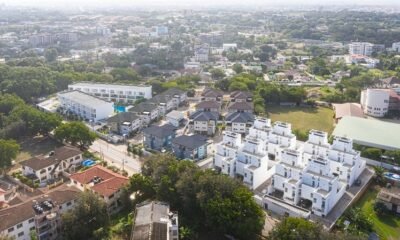
Rather than one unified master-planned community, the area increasingly consists of numerous smaller gated developments operating within a larger geographical location.
Each enclave has its own walls, security arrangements, and identity, creating what some observers describe as “communities within a community.”
For property buyers, these mini-enclaves offer clear advantages. Enhanced security, controlled access, and privately maintained infrastructure are attractive features in a city where public services can be uneven.
Developers have responded to market demand by delivering precisely what buyers are seeking.
Yet this model raises questions about long-term urban cohesion.
The Challenge of Creating Shared Spaces
Urban planners often argue that thriving communities require more than private compounds. Public spaces, pedestrian-friendly streets, recreational areas, and shared amenities help foster social interaction and neighborhood identity.
When residential growth is fragmented into multiple isolated developments, opportunities for broader community engagement can become limited. Residents may feel connected to their immediate gated estate but less connected to the wider area around them.
For East Legon Hills, the challenge may be balancing private investment with collective place-making. As the suburb continues to attract homeowners and investors, there is growing potential to develop amenities that serve the wider community rather than individual estates alone.
A Defining Moment for Accra’s New Suburbs
The conversation unfolding around East Legon Hills reflects a larger trend across Ghana’s expanding urban landscape.
As cities grow outward, developers are increasingly responsible not only for constructing homes but also for shaping how communities function.
The future success of emerging suburbs may ultimately depend on whether they can evolve beyond clusters of gated compounds and become places where residents share a genuine sense of belonging.
In the long run, that sense of community may prove just as valuable as the properties themselves.
At first glance, East Legon feels relentless.
Traffic crawls through Boundary Road. Cafés overflow with brunch crowds. Luxury SUVs weave past roadside vendors and delivery riders.
New apartment blocks rise beside unfinished developments, while restaurants and retail spaces compete for visibility in one of Accra’s busiest urban districts.
Then something unexpected happens.
You turn off the main road.
Within seconds, the noise fades into stillness. Tree-lined streets appear almost hidden behind the commercial energy. High walls, gated homes, and quiet cul-de-sacs create an entirely different atmosphere — one that explains why East Legon remains one of Ghana’s most desirable residential addresses despite years of rapid commercial expansion.
The Neighbourhood Built on Contrasts
East Legon has become a case study in how modern African cities evolve. Located in the eastern part of Accra, the area transformed over the last two decades from a primarily residential suburb into a mixed-use urban hub attracting investors, developers, expatriates, and Ghana’s growing upper-middle class.
Yet unlike many fast-developing neighbourhoods where commercial growth eventually overwhelms residential life, East Legon has managed to preserve pockets of calm within the chaos.
That duality is now central to its real estate appeal.
Residents often describe the area as “two different worlds.” A heavily congested commercial corridor can sit just metres away from a surprisingly peaceful residential enclave. For buyers and renters, that balance matters. Many professionals want easy access to restaurants, schools, banks, and nightlife without sacrificing privacy and quiet living.
Developers have noticed.
Why Investors Still Favour East Legon
Property prices in East Legon remain among the highest in Ghana, driven partly by land scarcity and sustained demand for gated communities, townhouses, and serviced apartments.
The neighbourhood’s proximity to Kotoka International Airport, major business districts, and international schools continues to attract both local and diaspora investors.
But the biggest selling point is increasingly lifestyle rather than location alone.
Real estate agents say buyers are no longer simply searching for square footage. They are searching for controlled environments within busy cities — spaces that offer security, walkability, and a sense of retreat. In East Legon, those quiet “pockets” have become valuable urban currency.
At the same time, the area reflects wider pressures facing Accra’s housing market. Infrastructure struggles to keep pace with development. Flooding, congestion, and rising rental costs remain ongoing concerns. Some longtime residents worry that unchecked commercial expansion could eventually erode the very tranquility buyers are paying for.
The Future of Urban Living in Accra
Still, East Legon’s evolution reveals something important about the future of housing in Ghana.
As Accra grows denser and faster, residents increasingly want neighbourhoods that function like self-contained ecosystems — places where work, leisure, and home life can coexist without feeling overwhelming.
East Legon may be crowded, noisy, and constantly changing. But tucked behind its busy roads is the reason people continue investing there: the rare promise of calm in the middle of a rapidly expanding city.
Homes & Real Estate
American Landowner Flies to Ghana to Sign Indenture, Citing Transparency as Key to Diaspora Investment


An American citizen who completed payment on a plot of land in Ghana in December 2025 has flown to the country to sign her indenture documents.
The move highlights a growing trend of diaspora land acquisition driven by demands for transparency and due diligence.
The client, identified only as Zenina in a video published by TBH Diaspora Center, a Ghana-based real estate firm serving diaspora clients, arrived in Accra and went directly to inspect her property. She signed her indentures, the formal land ownership documents, on the very day of her arrival.
“I finished paying off the land in December,” Zenina said during the site visit. “And I’m here now.”
The company stated that her indenture documents were ready within several weeks of her final payment. Zenina had previously used the firm’s land verification service, which includes a physical site visit and a written report, before committing to the purchase.
‘It is real’
Zenina, who receives regular video updates and newsletters from the company while abroad, praised the firm’s communication throughout the purchase process.
“Do you like the newsletters, by the way?” a company representative asked her during the tour.
“I do like the newsletters,” Zenina replied, “and I also would like to say that it is real.”
Her comment reflected a persistent concern among diaspora buyers: the risk of land scams, which remain a significant challenge in Ghana’s real estate sector. According to the Land Commission of Ghana, multiple land sales and fraudulent documentation have long plagued the industry, making verification services a critical value-add for absentee buyers.
A master plan and monthly dues
Zenina cited several factors that gave her confidence in the purchase. These included the existence of a formal master plan for the community, which designates areas for roads, schools, and mixed-use commercial zones, as well as the company’s requirement of monthly dues.
“I think these are the things that made me comfortable in purchasing here—the fact that there was a master plan,” she said. “A master plan community with things that a community should have: schools, roads.”
The monthly dues, the company explained, go toward land protection, including three security guards who patrol the property 24 hours a day, seven days a week. The firm has also installed perimeter fencing, road lighting, and a community office.
“Boundaries is really, really important,” a company representative said during the tour.
Beyond the plot
Zenina also revealed that she had used multiple services beyond land purchase. She had previously commissioned the firm to conduct land verification—a site visit with a formal written report—and had stayed at the company’s Airbnb property during a prior visit.
“I’ve done land verification,” she said. “We went all the way over there, and you gave us a report. You gave us everything.”
She added that she has consistently referred the company’s services to others. “I definitely refer your services as much as I possibly can,” she said.
The diaspora land market
The story of Zenina’s land purchase reflects a broader trend. Ghana has seen steady interest from members of the African diaspora, particularly African Americans, seeking to acquire property and, in some cases, relocate. The Ghanaian government has actively encouraged this through initiatives such as the “Year of Return” in 2019 and “Beyond the Return.”
However, diaspora land acquisition remains fraught with challenges, including unclear land titles, boundary disputes, and fraudulent sellers. Real estate experts advise that buyers conduct independent land searches at the Land Commission and work with verified, transparent partners.
Zenina summarised the advice she would give to other diaspora buyers considering land investment in Ghana. Her answer was brief: “Do it. Just do it.”
She added a qualification, however, grounded in her own experience.
“What I’m trying to do now is I just try to display your honesty,” she told the company representatives. “That’s the number one fear—that people have to be realistic. And so they get paralyzed. They don’t move.”
Formal documentation secured!
Having signed her indentures, Zenina now holds formal documentation for her plot. The property is located within a developing diaspora-focused community that includes river views, mountain backdrops, paved roads, and 24-hour security. The company stated that it continues to fence the community and has begun construction on multiple client homes in the same area.
For Zenina, the trip—a same-day arrival to sign documents before returning—was an investment of time and money she deemed worthwhile.
“You see? She got off the plane just to be here,” the company representative said. “Talk about dedication.”



-

 Ghana News2 days ago
Today’s Newspaper Headlines: Thursday, June 11, 2026
-
Ghana News16 hours ago
Today’s Newspaper Headlines: Friday, June 12, 2026
-

 Ghana News2 days ago
Ghanaian Activist ‘Attacked in South Africa’, Rainstorms from Nigeria and Benin Expected to Hit Ghana, and Other Big Stories
-

 Business7 hours ago
US Eyes AI, Drones, and Rural 5G as Next Frontier in Ghana Partnership
-

 Ghana News14 hours ago
US Pledges Enduring Partnership with Ghana at 250th Independence Fete: Amid Aid Policy Shifts, Envoy Cites $2.5bn Health Investment
-

 Ghana News10 hours ago
‘Migrants Are Being Scapegoated’: Nigerian Envoy Slams South Africa as it Starts Evacuating Nationals
-

 Health & Wellness2 days ago
The Morning Walk Advantage: How Timing May Influence Your Health Goals
-

 Ghana News2 days ago
French President Emmanuel Macron to Address Reparatory Justice Conference in Accra