
Business
How Ghana Is Selling Itself as Africa’s Factory Floor for Belarus

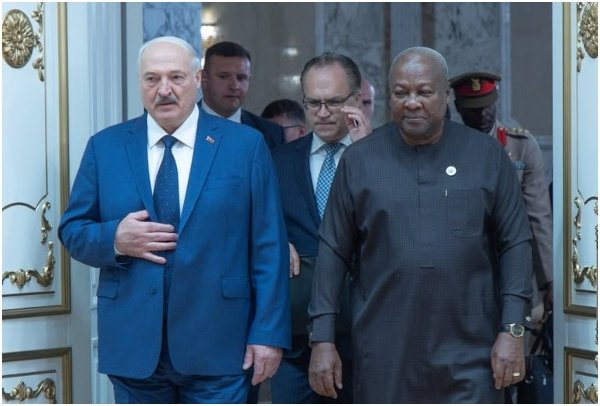
President John Dramani Mahama has positioned Ghana as a manufacturing and distribution gateway for Belarusian industry, pitching the country as a strategic entry point to Africa’s unified market of 1.4 billion people under the African Continental Free Trade Area (AfCFTA).
Speaking at the maiden Ghana–Belarus Business Forum in Minsk, President Mahama announced that Belarusian manufacturers of mining equipment will visit Ghana next week, following an agreement between both nations.
The visit signals a potential shift in how Belarusian heavy industry could serve African markets – not merely through exports from Eastern Europe, but through locally established operations within Ghana.
“The investors who establish operations in Ghana gain access not only to a domestic market of 34 million people, but also to the wider African market through the AfCFTA,” President Mahama told the forum. He noted that the trade bloc covers 1.3 billion people with a combined gross domestic product of US$1.3 trillion.
The President’s pitch rests on three pillars: market access, infrastructure investment, and regulatory stability. He highlighted Ghana’s US$10 billion five-year Big Push Infrastructure Programme, which prioritizes roads, railways, ports, airports, energy systems, and logistics networks.
These investments, he said, are designed to improve connectivity, reduce business costs, and enhance competitiveness for firms that establish local manufacturing or assembly operations.
“Investors today seek certainty, stability, and market access, and I can assure you Ghana provides all these three,” Mahama stated. “Our political credentials are strong, our legal and regulatory systems are transparent, investor protection is robust, and we guarantee repatriation of profits.”
The President also noted that Belarusian companies possess relevant expertise in transport infrastructure, power systems, industrial parks, logistics, road construction, railway development, and renewable energy – all sectors where Ghana is actively seeking foreign partnership.
For Belarus, a nation under sustained Western sanctions, deepening economic ties with Ghana offers an alternative channel to participate in one of the world’s fastest-growing continental markets. Rather than exporting finished mining equipment from Minsk, Belarusian manufacturers could establish assembly plants or joint ventures in Ghana, taking advantage of AfCFTA rules to distribute across the continent without the tariff barriers that would apply to direct exports from Europe.
President Mahama framed the opportunity in unequivocal terms: “For businesses seeking a strategic gateway into Africa, Ghana remains one of the continent’s most attractive destinations.”
The upcoming visit by Belarusian manufacturers will test whether that pitch translates into concrete investment. Industry observers will be watching for announcements on local assembly facilities, technology transfer agreements, and the scale of Belarusian commitment to Ghana’s industrialization agenda.
If successful, the partnership could serve as a template for how other non-African manufacturing nations – particularly those from Eastern Europe and Asia – use Ghana as a beachhead to serve the continent’s rapidly growing demand for industrial equipment, infrastructure inputs, and heavy machinery. If not, the visit may produce little more than diplomatic communiqués.
For now, Ghana has made its case. The next move belongs to Belarus.








Business
Ghana Beats the Odds: IMF Approves Final Review, Offering Blueprint for Africa’s Debt-Ridden Economies
Three years after defaulting on its debt, Ghana formally exits the IMF bailout program with a $318 million final disbursement—and a new reform framework that could show other distressed African nations the way forward
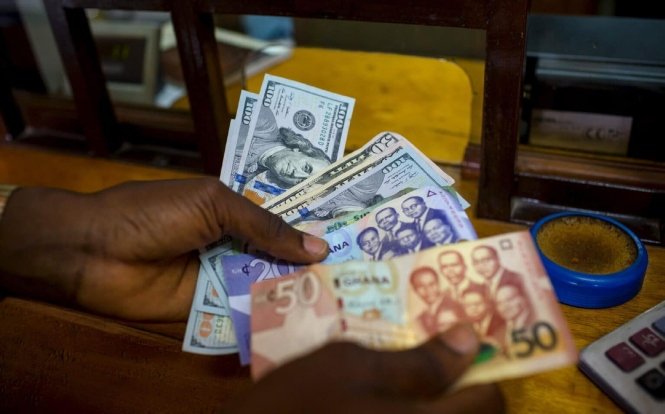
The Executive Board of the International Monetary Fund on Monday approved Ghana’s sixth and final review under the Extended Credit Facility (ECF) program, formally concluding the country’s three-year, $3 billion bailout arrangement and unlocking a final disbursement of approximately $318 million.
The Board also approved Ghana’s request for a 36-month Policy Coordination Instrument (PCI), a non-financing arrangement that will guide the country’s economic reforms now that the bailout has ended.
The approval marks the culmination of one of the most dramatic economic turnarounds in recent African history—a recovery that began in the depths of crisis in late 2022, when Ghana defaulted on most of its external debt, inflation topped 54%, and the cedi was in free fall.
“Ghana’s ECF-supported economic program has delivered substantial stabilization gains,” the IMF said in a May statement after reaching a staff-level agreement with the government. “Inflation has declined rapidly, international reserves have been rebuilt, and confidence in the cedi has improved.”
From Default to Credibility
Ghana entered the 36-month ECF arrangement in May 2023 with access to about $3 billion to help restore macroeconomic stability, implement fiscal reforms, and support the country’s debt restructuring program. At the time, the country was in the throes of its worst economic crisis in a generation.
The turnaround has been striking. Inflation has plunged from 54% in December 2022 to just 5.3% in June 2026. Gross international reserves have reached an all-time high of approximately $14.5 billion as of February 2026, providing nearly six months of import cover. The public debt-to-GDP ratio has fallen sharply from a peak of over 80% to 45% by June 2026.
Perhaps most significantly, Ghana’s sovereign credit ratings have improved from restricted default—”junk status”—to ‘B’ with a positive outlook, representing five distinct rating level upgrades.
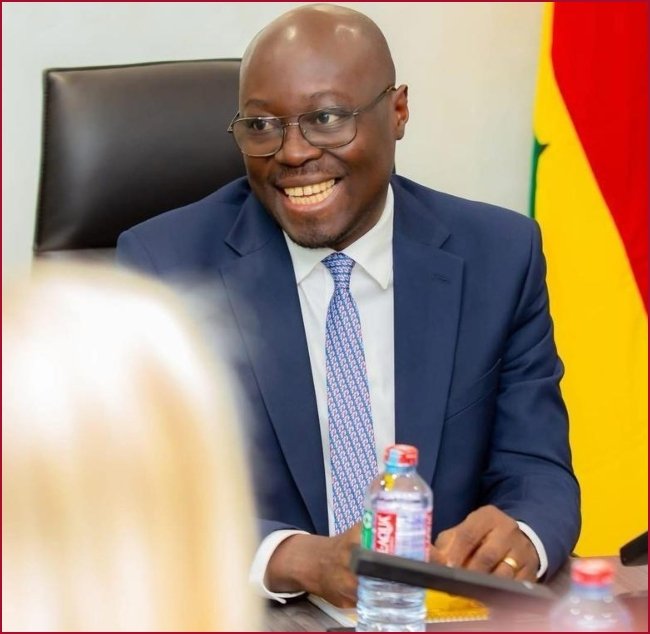
“Every quantitative performance criterion, but one, set for the final review has been met,” Finance Minister Dr. Cassiel Ato Forson told Parliament while presenting the 2026 Mid-Year Budget Review. He noted that Ghana achieved 10 out of 11 quantitative targets and 8 out of 10 structural benchmarks.
A Blueprint for Africa
For other African nations struggling with debt distress—including Zambia, Ethiopia, and Kenya—Ghana’s trajectory offers a potential roadmap. The country’s success demonstrates that aggressive fiscal consolidation, coupled with credible IMF engagement and good-faith debt restructuring, can restore market confidence within a relatively short timeframe.
The PCI framework that Ghana is now entering is particularly instructive. Unlike the ECF, the PCI does not provide direct funding. Instead, it offers closer policy engagement with the IMF and signals a country’s commitment to reforms, helping to strengthen investor confidence and attract support from development partners.
“Completing the ECF does not mean Ghana walks away from the IMF,” Forson explained. “It means Ghana changes the nature of the relationship.”
The new program will focus on six priority areas: growth-friendly fiscal consolidation, debt sustainability, fiscal transparency and governance, stronger monetary and exchange rate policy frameworks, financial sector stability, and economic diversification.
Forson described the PCI as “a structured, internationally monitored platform through which Ghana commits to a specific set of macroeconomic and structural reform policies, submits to regular independent review, and signals to the world that the discipline of the past eighteen months is not a temporary posture adopted under crisis conditions. It is a permanent feature of how this country will be governed.”
The Work Isn’t Over
Despite the celebration, the IMF has made clear that Ghana’s reform agenda is far from complete. The Fund has urged the government to press ahead with reforms in the energy sector, particularly efforts to improve efficiency at the Electricity Company of Ghana (ECG) through private sector participation.
“Priority should be given to tackling distribution and collection losses at ECG, including advancing private sector participation in the distribution segment,” the IMF stated.
The government has indicated that private sector participation in ECG is expected to commence by early 2027.
The PCI is also designed to help Ghana maintain macroeconomic stability, build resilience against external shocks, address structural imbalances, and support sustainable economic growth. With the global environment remaining uncertain—including potential spillovers from conflicts and volatile commodity prices—sustaining the reform momentum will be critical.
A New Chapter
Monday’s approval formally concludes Ghana’s 16th IMF program since independence. For a country that was written off by many international investors just three years ago, the milestone represents a remarkable redemption story.
“This milestone reflects improved fiscal performance, normalized relations with global creditors, and renewed market confidence,” said Felix Kwakye Ofosu, Minister of State for Government Communications.
Finance Minister Forson has already declared that Ghana does not expect to seek another IMF bailout in the foreseeable future. The country now aims to achieve “Investment Grade” status, a goal that would further lower borrowing costs and unlock long-term institutional investment for critical infrastructure.
For now, however, the immediate priority is clear: cement the gains, stay the course, and prove that Ghana’s recovery is not just a temporary reprieve—but a permanent transformation.
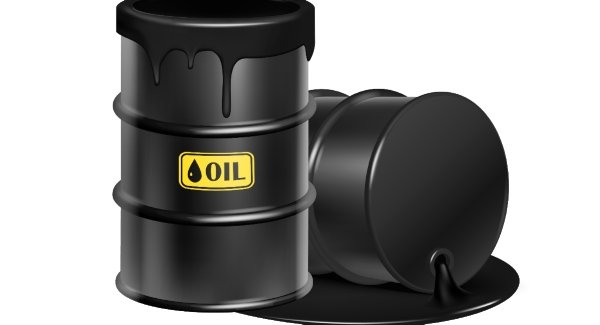
Ghana has lost more than US$16.5 billion in potential gross oil revenue over the past six years as crude oil production plummeted by nearly half from its 2019 peak, according to a devastating new report by the prominent Institute for Energy Security (IES).
The analysis, authored by energy experts Smith Prosper Boahene and Prince Lumor, paints a grim picture of a sector in freefall.
Crude oil output crashed from 71.44 million barrels in 2019 to just 37.30 million barrels in 2025, a staggering decline of almost 48 percent. The Energy Commission projects production will fall further to 34.83 million barrels in 2026, extending the downward trajectory into a seventh consecutive year.
The production collapse has delivered a hammer blow to government finances. Total petroleum receipts nosedived by 43.27 percent, from US$1.36 billion in 2024 to US$770.27 million in 2025. The decline was driven by both lower production volumes and a fall in the average realised crude oil price from US$86.12 to US$74.93 per barrel.
The first half of 2025 alone told a harrowing story: crude oil production declined by 26 percent year-on-year to 18.42 million barrels, while petroleum receipts collapsed from US$840 million to US$370 million.
IES described the prolonged downturn as “not a routine cyclical dip” but a structural crisis born of deep-rooted operational and policy failures.
“The decline is not attributable to one shock, but to several structural, operational, and policy failures compounding over an unusually long period,” the report stated.
Using an “illustrative counterfactual” model, IES projected a scenario in which Ghana maintained a modest annual production growth rate of three percent through sustained drilling, new petroleum agreements and improved reservoir management. Under that scenario, cumulative production would have exceeded actual output by approximately 221 million barrels—a missed opportunity that translates directly into the US$16.5 billion revenue hole.
Petroleum revenue contributes about 10 percent of total government income and supports critical public infrastructure and national development programmes. The sustained collapse therefore has far-reaching implications for Ghana’s fiscal stability, affecting everything from road construction to healthcare funding.
The report identified natural depletion of mature oil fields, insufficient replacement reserves and the failure to sign new petroleum agreements since 2018 as the principal causes. Ghana’s oil production remains dangerously concentrated in just three offshore fields—Jubilee, TEN and Sankofa Gye Nyame. Although Jubilee remained the country’s largest producing field in 2025 with 22.2 million barrels, it also recorded the sharpest year-on-year decline of more than 30 percent, partly due to a planned production shutdown between March 26 and April 8.
IES noted that the temporary production increase recorded in 2024 following drilling under the Jubilee South East project demonstrated that targeted investment can slow production decline. The report also clarified that while COVID-19 disruptions worsened the downturn in 2021, the decline had already begun before the pandemic.
“COVID-19 aggravated an already-declining trend rather than starting it,” the report noted.
Financial economist Professor Lord Mensah has attributed the sharp decline in petroleum revenues to inconsistent fiscal and investment policies, urging government to channel available oil revenues into infrastructure development, agriculture and export-led economic diversification.
IES concluded that Ghana’s prolonged decline in oil production requires urgent policy action.
“Ghana’s six consecutive years of crude oil production decline are far more than a cyclical fluctuation. The data show a structural crisis… Reversing it will require new licensing, accelerated investment, improved operational efficiency, strengthened institutional capacity, and diversified revenue management, implemented with the urgency the data clearly demonstrate is overdue,” the report said.
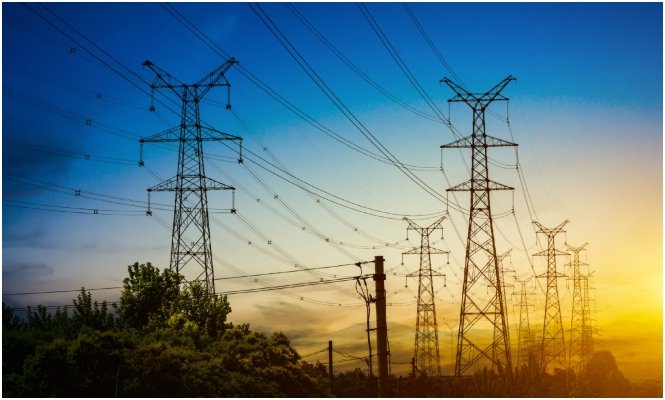
The World Bank has downgraded Ghana’s flagship Energy Sector Recovery Programme (ESRP) to “Unsatisfactory” status.
The World Bank has cited significant delays in implementation caused by financing constraints and new fiscal controls from the Ministry of Finance for the downgrade.
In its latest report dated June 30, 2026, the Bank highlighted how election-related disruptions and procurement restrictions have slowed key reforms aimed at improving the financial health of the country’s electricity sector.
Only one program indicator was fully achieved during the reporting period, with the Electricity Company of Ghana (ECG) publishing its 2025 audited financial statements. Progress on smart metering, customer service improvements, and the promotion of clean cooking solutions (LPG) remains behind target.
The combined financial losses of ECG and the Northern Electricity Distribution Company have continued to rise, reaching approximately $1.5 billion. The World Bank stressed the need for better coordination to accelerate structural reforms in the energy sector
Implications
The downgrade carries significant implications for the country.
Given that the energy sector has long been one of the largest drivers of Ghana’s national debt, this development signals mounting friction in the country’s economic recovery.
The key implications of this downgrade include:
1. Escalating National Debt and Fiscal Strain
- Accumulating Losses: With the combined financial losses of the Electricity Company of Ghana (ECG) and the Northern Electricity Distribution Company (NEDCo) rising to approximately $1.5 billion, the energy sector remains a massive financial black hole.
- Budgetary Pressure: Because these utilities cannot cover their operational costs, the Ministry of Finance is routinely forced to step in with emergency bailouts. This diverts scarce public funds away from critical sectors like healthcare, education, and infrastructure development.
2. Risk to Investor Confidence and Future Financing
- Negative Signaling: A World Bank downgrade acts as a warning flag to international financial institutions, bilateral donors, and private investors. It signals that structural reforms are stalling.
- Credit and Loan Conditions: This “Unsatisfactory” status could complicate or delay the disbursement of future tranches of financial support from the World Bank or make international credit more expensive for Ghana, as it raises the country’s perceived risk profile.
3. Increased Threat of Power Instability (Dumsor)
- Supply Chain Bottlenecks: The report highlights that implementation delays are caused by “financing constraints.” When ECG and independent power producers (IPPs) face severe liquidity crises, they struggle to maintain equipment, purchase fuel, or pay power generators on time.
- This directly increases the risk of operational disruptions, fuel shortages, and a return to erratic power outages (dumsor), which severely impacts businesses and households.
4. Stalled Modernization and Consumer Upgrades
The downgrade explicitly notes that crucial consumer-facing reforms have fallen behind target:
- Smart Metering & Customer Service: Delays in deploying smart meters mean that power theft, commercial losses, and inefficient billing will continue unchecked.
- Clean Cooking Clean Energy Transition: Delays in promoting clean cooking solutions (like LPG) slow down Ghana’s broader environmental and climate goals, keeping vulnerable populations reliant on biomass (wood and charcoal).
5. Exposure of Political and Structural Roadblocks
- Election-Year Friction: The World Bank explicitly pointed to “election-related disruptions and procurement restrictions” as primary bottlenecks. This implies that political cycles and the resulting strict fiscal controls from the Ministry of Finance are actively hampering long-term economic planning.
- Lack of Institutional Alignment: The call for “better coordination” highlights a friction point between utility management (ECG/NEDCo) and state oversight (Ministry of Finance), suggesting that bureaucratic silos are paralyzing necessary reforms.
The Silver Lining
The only silver lining noted was ECG finally publishing its 2025 audited financial statements.
While this satisfies a basic transparency indicator, it essentially only provides a clearer, official look at how deep the financial deficit actually is, rather than solving the underlying structural crisis.


Ghana Government Evacuates 200 Ghanaians from South Africa, Vows to Pursue Justice for Victims

Russian Envoy Pushes for Russia-Ghana Extradition Pact After Sex Scandal Exposes Legal Gaps

Top 10 Headlines in Ghana Today: Tuesday, July 28, 2026
-
 Ghana News1 day ago
Ghana’s AG Office Drops Major Hint: 30 Corruption Cases in the Pipeline, Including Some ‘Interesting’ Names
-
 Ghana News1 day ago
Ghana’s Economy is Booming, but Nearly Half of Citizens Aren’t Feeling It – New Poll
-

 Ghana News1 day ago
Ghana’s Tallest Man, Awuche, Dies at 33 After Battle With Gigantism
-

 Ghana News1 day ago
Top 10 Headline Stories From Ghanaian Newspapers: Monday, July 27, 2026
-

 Festivals & Events1 day ago
Where History Walks Again: Inside Saltpond’s Colourful Odambea Festival
-

 Commentary1 day ago
What Ghana’s World Cup ‘juju man’ tells us about sport and spirituality in Africa
-

 Fashion & Style1 day ago
How Snitramasan Turned Oversized Fashion Into Africa’s Boldest Style Statement
-
 Ghana News5 hours ago
Top 10 Headlines in Ghana Today: Tuesday, July 28, 2026