
GH Living
U.S. Diasporan in Ghana Alleges Landlord Demanded Extra Fees After Paying Rent


A U.S.-based diasporan living in Ghana has taken her dispute with a landlord to court, alleging that after paying $1,532 in agreed rent, the property owner demanded additional, unagreed fees, a situation she describes as a potential rental scam.
According to reports, the American resident, who goes Courtney Paige on TikTok, says she fulfilled her rental obligation as initially negotiated but was later confronted with unexpected charges by her landlord.
These extra demands, she claims, were justified by shifting interpretations of payment terms and living costs tied to the value of the dollar — an argument that has since become central to her legal complaint.
The matter has now been brought before a Ghanaian court, underscoring growing tensions in the country’s booming rental market, where both local and foreign tenants frequently encounter complex fee structures and landlord demands that go beyond initial agreements.
A Broader Strain in Ghana’s Rental Landscape
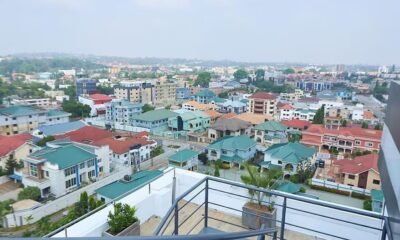
Ghana’s rental sector has been under scrutiny as urban housing demand and prices surge, especially in Accra and Kumasi. Tenants — including many in the diaspora — often face advance payment requirements of one year or more, and landlords sometimes attempt to collect extra service fees, maintenance costs or other charges not clearly agreed upon in written contracts.
Experts say such disputes often stem from unclear contracts or verbal agreements that lack formal documentation or fail to articulate when and how additional charges may apply. Without a written tenancy agreement specifying fees and services, tenants can be vulnerable to unexpected demands.
Legal Protections and Challenges
Under Ghana’s rental laws, landlords may charge fees tied to services provided — such as security, maintenance, or utilities — if these are explicitly included in a tenancy agreement or documented in writing. However, disputes over what constitutes a legitimate service fee often end up in court.
The diasporan plaintiff’s decision to pursue legal action highlights not only her personal frustration but also broader anxieties among expatriates and global residents investing time and money in Ghana’s housing markets. Legal clarity and enforceable contracts remain critical, especially for foreigners unfamiliar with local practices.
Why This Matters Globally
This case resonates beyond Ghana’s borders. As more expatriates and diaspora members return or relocate to Ghana under initiatives like Year of Return and Beyond the Return, clear and fair landlord-tenant relationships become essential to boosting confidence in the country’s real-estate ecosystem. Legal disputes — especially those that go public — can affect perceptions of Ghana as a safe and reliable place to live, work, and invest.
For now, the courts will weigh the evidence on whether the landlord’s demands were lawful and contractually justified, a decision that could offer more clarity on how similar disputes should be handled in Ghana’s rapidly evolving housing market.









GH Living
From Zero Dollars to Full-Time Entrepreneur: How One American Mom Made the Leap to Ghana with Nothing in the Bank

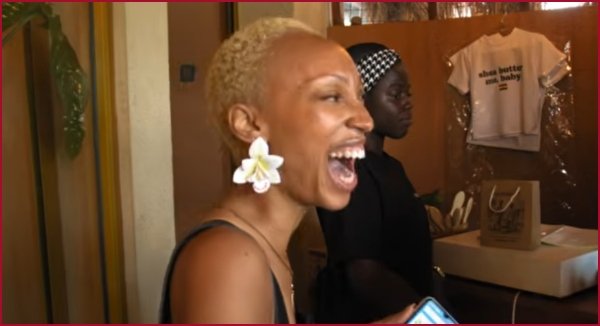
When Jamia Kirk called her family to tell them she was moving to Ghana, she hadn’t saved up for months. She hadn’t lined up a remote job. She hadn’t even budgeted for the move.
“I had zero dollars to my personal name,” Kirk admits in her YouTube video documenting the journey. “I was moving off of money and my partner taking care of me.”
The Virginia native arrived in Accra with nothing in her bank account—a confession that runs counter to every expat handbook ever written. No safety net. No cushion. Just a “calling” she couldn’t ignore and a willingness to figure it out as she went.
It’s the kind of leap most people only dream about. Kirk actually took it.
The Unconventional Path
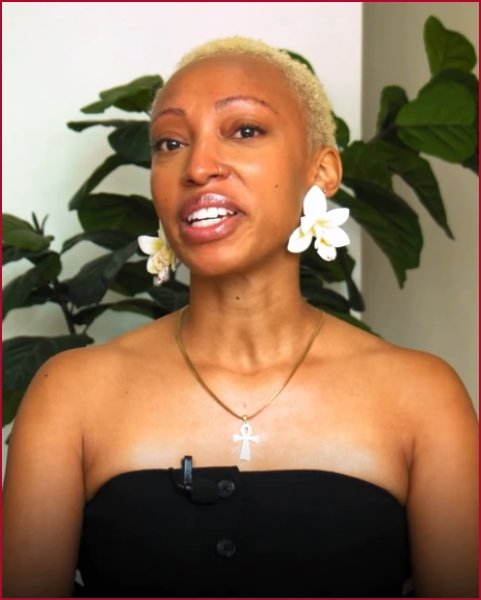
Kirk’s move wasn’t calculated. It wasn’t strategic. It was, in her words, “a subconscious thing”—a pull toward something she couldn’t name until she landed.
“I came here a little different than most people,” she says. “I didn’t have a whole lot of planning. Things were kind of strategically aligned so that it worked out.”
That alignment included a supportive partner, a Liberian mother-in-law who understood the terrain, and—most importantly—a willingness to build from zero.
From Zero to Case Study
Today, Kirk isn’t just surviving in Accra. She’s thriving as an entrepreneur, teaching others how to land remote jobs and use AI tools to generate income. Her pivot from stay-at-home mom to full-time business owner happened after the move, not before it.
“I’m very candid about that even in my content when I talk about what I do for work,” she says. “I am an actual case study. You can go from not having any income and making income remotely and make good income remotely.”
Her programs target Ghanaians specifically—not because she wants their money, but because she understands what access to remote work can mean in a country where the average monthly salary hovers well under $1,000 USD.
“The value that I bring to them and how it can change their lives, change their families’ lives—that’s important to me,” Kirk explains.
The Risk Factor
Would she recommend her approach to others? Not exactly.
Kirk is careful to acknowledge that her path worked—but it could have gone differently. She advises potential expats to visit first, save up, and secure their income before making the jump.
“It’s much easier when you don’t have to worry about things on the back end,” she says. “Make sure you have the means to sustain because it’s unfortunate if you have to go back home or end up having a possibly negative experience because those things aren’t in order.”
Still, her story resonates with a specific kind of dreamer—the one who feels the pull but can’t check every box. The one who knows they’re being “called back” but doesn’t know how they’ll make it work.
To that person, Kirk has a message:
“It’ll all work out.”
Kirk now pays $500/month for a two-bedroom apartment in Accra—a fraction of what she paid in the DC area. She’s built a women’s empowerment group spanning 10 countries. She’s regained time with her daughter. And she did it starting from zero.
Her story doesn’t advocate for recklessness. It advocates for faith—backed by hustle.
“I don’t look at anything as a mistake,” Kirk says. “It’s a part of the story. It’s a part of your experiences and it’s a part of how you grow.”
For more stories on expat life, relocation resources, and building community in Ghana, visit our GH Living section here on GhanaNewsGlobal.Com.
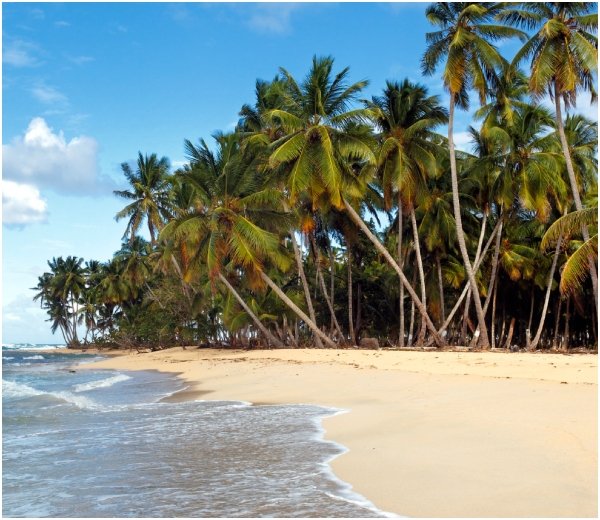
Exploring the emotional shift from permanent return to visitor status (this is a long read, but it’ll be worth your time).
The invitation was historic. When Ghana launched the Year of Return in 2019, it extended a powerful call to the global Black community: come home. Come see where your ancestors walked. Come invest. Come stay.
And thousands came. They packed up apartments in Atlanta, London, and Toronto. They landed at Kotoka International Airport weeping. They bought land. They started businesses. They believed they had found home.
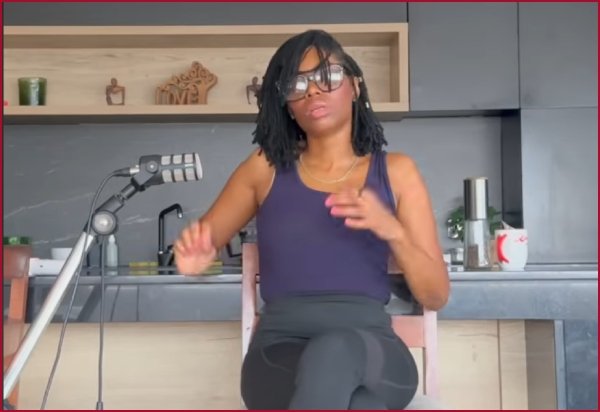
But five years later, a quieter conversation is emerging—one that YouTube creator Dela, of the channel More To Dela, is giving voice to. In a video that has resonated across the diaspora, she asks a provocative question:
Has Ghana changed from being a place that people want to return to and live, into more of a holiday breakaway destination?
Her answer, drawn from countless conversations and her own experience living in Accra, suggests a profound shift is underway.
The Sentiment That Brought Everyone Here
Dela begins by acknowledging the dream that brought so many to Ghana’s shores.
“Ghana was the gateway to seeing what Africa has to offer,” she explains. “It was people’s first initiation point into understanding more of Africa. A lot of people were coming back and saying, ‘I’m going to leave everything behind because Ghana is a dream. I’ve seen it on YouTube. It looks amazing. This is where I can live.'”
The emotion was real. The pull was real. And for a time, the momentum seemed unstoppable.
But now, Dela observes, “there’s some reality that is setting in.”
The Price of the Dream
That reality has many faces, but one of the most unforgiving is economics.
“Ghana has outpriced itself for the diaspora being able to move back and make it a place of permanence,” Dela states plainly.
The math is brutal. You arrive with savings—maybe a respectable sum by Western standards. Then you buy a car. You put a deposit on an apartment. You furnish it. You pay for permits, for connections, for the endless small expenses that come with establishing a life.
“The head start that you thought you had? You don’t have it,” Dela says.
And if you’re relying on local income? That’s its own challenge. A well-paying job in Ghana might offer 5,000 or 7,000 cedis monthly. But with the cost of living where it is, and families to support.
“How many of us can live off that?” she asks. “We can’t.”
The result is a quiet economic truth: to live in Ghana sustainably, you likely need foreign income. A remote job. A business that earns in dollars or pounds. Without that, the dream becomes financially unsustainable.
When Business Becomes a Battle
For those who came to build businesses, the challenges run even deeper.
“People who have wanted to bring business here see the challenges,” Dela explains. “Things are not going well for them. They can’t get supplies. Trying to recruit staff, trying to get customers—it’s very, very difficult.”
The operating environment is simply different from what diaspora entrepreneurs expect. Supply chains that should be reliable aren’t. Staffing is unpredictable. Customer acquisition follows different rules. And slowly, the optimism drains away.
“You can’t necessarily run businesses the same way they were run in the West,” Dela says. “If the money’s not coming as you expect, it makes it feel like maybe Ghana’s not for me. Maybe I should try somewhere else.”
She speaks from experience.
There was a time when Dela worked extensively with people outside her immediate circle—collaborations, partnerships, hires. It became so frustrating that she made a fundamental change.
“I cut back a lot of the people that I was working with,” she admits. “I just said, ‘No, I need to take this back for myself.’ That was easier for me than trying to do it the other way.”
Today, she lives what she calls “a bit of a Ghana bubble.” And she’s honest about it:
“I like it that way. Most of the things I work on, I can pretty much do myself. I don’t need too much outside help.”
It’s a survival strategy—but not one everyone can replicate.
The Floating Feeling
Perhaps the most emotionally complex challenge is psychological.
When you move somewhere intending to stay, you expect to eventually feel settled. You expect to stop feeling like a visitor. But for many in Ghana, that moment never comes.
“It never feels 100% home,” Dela says. “Not for the long term.”
She points to housing as a vivid example. In the West, renting often implies stability. You sign a lease expecting to stay for years. In Ghana, even year-to-year renting feels temporary.
“You don’t rent and think, ‘Okay, I’ll be here for two years and then move somewhere else,'” she explains. “But here? That’s exactly what happens. Prices shoot up. The currency becomes unstable. The area changes. Traffic patterns shift. You’re always floating.”
Even buying a house doesn’t guarantee permanence. You might build in an area that seems promising, only to realize later that there are no shops nearby, no places to hang out, no community. The isolation wears on you. Then you face the nightmare of trying to sell.
“So because of things like that,” Dela says, “it puts people off putting down a permanent stamp in Ghana.”
The Shift: From Living to Visiting
All of these forces are converging into a new pattern.
“Now people are talking about small doses,” Dela observes. “Even those of us that are Ghanaian—we’re coming and we’re like, Ghana is a great holiday destination. I love the food, the people, the culture. But when it comes to living, they don’t necessarily want to do that.”
What’s emerging instead is a different model: Ghana as a base, not a permanent home. People are buying property, even building houses, but they’re not staying full-time. They’re traveling to other African countries. They’re going back to the West to make money. They’re living a holiday lifestyle for a few months, then leaving when the funds run low, then returning again.
“That’s the shift that’s happening,” Dela says. “Doing business here is very, very difficult. And that journey is not for everybody. It’s a special kind of journey given to a special kind of people.”
The Complicated Love
None of this means the love for Ghana has died. Far from it.
“The reason they want Ghana in small doses and can’t cut Ghana off completely,” Dela explains, “is because Ghana brings you something. A sense of peace. That belonging. It brings you those things.”
The food, the culture, the way it feels to walk down a street and see faces that look like yours—these are not small things. They are the reasons people keep coming back, even when the frustrations mount.
But the tension is real. “When you’re in Ghana, you’re faced with reality,” Dela says. “That’s where it gets hard.”
A Call for Something Better
For Dela, the solution isn’t to give up on Ghana. It’s to build something better—together.
“We have to think about how we can make Ghana better,” she urges. “Not just for us in our own tiny spaces. If we can put things into place to make it easier for other people to follow behind us, then we’re doing something good.”
She envisions a network of diaspora businesses supporting each other—a delivery service that entrepreneurs can rely on, a community that collaborates instead of competes. “We have to be links for each other,” she says. “Hold each other strong. When we work together as a team, we build a better Ghana. Eventually, things have to get better for us.”
Because there are people who want to come back permanently. People for whom “small doses” will never be enough.
“They want to come back,” Dela says. “But the reality right now is that they can’t. Financially, it doesn’t make sense for them.”
The Truth-Teller’s Burden
Dela knows that conversations like this can be uncomfortable. She’s heard the criticism.
“I know some of you are going to be like, ‘Dela, you come on here and say so many negative things about Ghana,'” she says, anticipating the response.
Her answer is simple:
“No. I tell you the truth about Ghana. So that you’re not surprised when you come here. Because I want you to have the best experience possible.”
She lives in Ghana. She loves it. She doesn’t see that changing in the foreseeable future. But she also refuses to sugarcoat the reality of diaspora life in 2024.
Ghana is for a certain type of person, she concludes. If you can get over the hurdles, if you can navigate the challenges, it can be beautiful. The food, the culture, the sense of belonging—these are real, and they are powerful.
But the hurdles are also real. And for a growing number of people who love this country, the honest answer is this:
Ghana is home—just not the kind you live in full-time anymore.
For more perspectives on diaspora life in Ghana, stick with Ghana News Global (@ghananewsglobal on all social media platforms).
GH Living
“Living in Ghana Taught Me to Slow Down”: Diaspora Creator Shares How She Found Patience and Purpose in Everyday Life
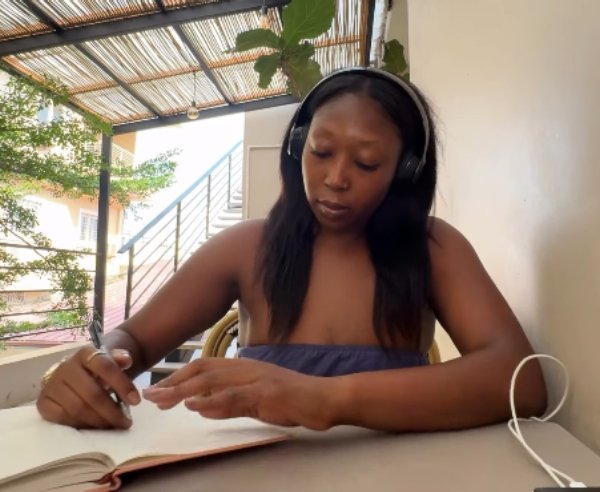
For many in the diaspora, moving to Ghana comes with dreams of reconnection, culture, and community. For lifestyle creator @simplyysong, it also came with an unexpected lesson: patience.
In a warm and widely shared Instagram post, the content creator documented a quiet moment making sobolo, Ghana’s popular hibiscus drink, while reflecting on how daily life in the country has reshaped her relationship with time.
“Living in Ghana requires a lot more patience than I’m used to,” she wrote. “Every day is teaching me how to slow down.”
Culture Shock, One Queue at a Time
In the accompanying video, @simplyysong speaks candidly about the everyday realities that initially tested her nerves — and eventually softened her outlook.
“If you don’t have patience and you want to learn patience in three months, book a ticket to Kotoka International Airport in Accra,” she joked.
From salon visits that stretch far beyond the expected timeframe to quick grocery runs delayed by offline payment systems, she describes a rhythm of life that doesn’t bend to urgency.
“At first, it really irritated me,” she admitted. “I honestly thought that would be one thing that would make me want to move home.”
From Frustration to Reflection
But instead of pushing her away, the slower pace forced deeper reflection.
“Why do I want to move so fast?” she asked in the video. “What is going on that I need to rush through life like this?”
Over time, the inconveniences became lessons — reminders to be present, to breathe, and to reconsider a culture of constant motion many in the West take for granted.
While she doesn’t romanticize the challenges — noting that some things can still be annoying — she frames the experience as transformative rather than burdensome.
“Life is once,” she said. “We have to enjoy it.”
A Familiar Story for the Diaspora
Her reflections are consistent accounts of many other diasporan returnees, particularly those navigating life in Ghana or considering relocation.
The post, tagged #DiasporaLife, #SlowLiving, and #GhanaExperience, taps into a broader conversation about returning home — not just geographically, but emotionally and spiritually.
For @simplyysong, Ghana has become more than a destination. It’s a teacher — one that insists on stillness, resilience, and appreciation for the moment, even when the POS is down and the line isn’t moving.
And sometimes, that lesson comes best with a glass of sobolo in hand.


Renowned Global Bodies Warn Middle East War Will Scuttle Africa’s 2026 Growth

Ex-President Akufo-Addo and President Mahama Exchange Pleasantries on Easter
