
Ghana News
Chief Destooled Over Alleged Affair with Priestess, Fuel Tanker Topples on Accra-Kumasi Highway and Other Top Stories in Ghana Today (March 10, 2026)

Stay informed with the top stories from Ghana. This rolling news update will be refreshed regularly with new developments. Return often for the latest updates.
Traditional Chief Destooled in Ghana’s Central Region Over Alleged Misconduct
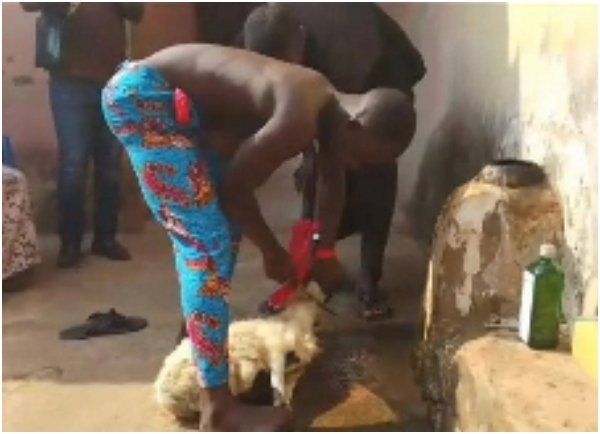
The Odompem Adwenadze Royal Family in Abura Dunkwa, Abura-Asebu-Kwamankese District, has officially removed Nana Obo Kwefuah VIII as Gyasehene (sub-chief) following claims he failed to perform required traditional rites during festivals and was involved in an inappropriate affair with a community priestess. Family leaders, including Abusuapanyin Kwame Essoun and Obaapanyin Aba Appiawa, stated that repeated invitations to address the issues over five months went unanswered, and they have urged the public not to recognise him in the role. Efforts to reach the former chief for comment were unsuccessful.
Read the full story here
Ghana Finance Ministry Declares War on GH¢8.1bn Audit Irregularities
In a strong address to Parliament, the Ministry of Finance has vowed to end systemic plunder after the Auditor-General flagged GH¢8.1 billion in questionable arrears and payables out of GH¢68.7 billion reviewed for 2024. Deputy Minister Thomas Nyarko Ampem outlined a new “Triple-Lock” policy requiring full verification, budgetary allocation and strict accountability for all payments, while referring cases for prosecution by the Attorney-General. The move signals a decisive break from past practices under President John Dramani Mahama’s administration.
Read the full story here
Baba Jamal Sworn in as New MP for Ayawaso East
Baba Jamal M. Ahmed of the National Democratic Congress was officially sworn in as Member of Parliament for Ayawaso East Constituency by Speaker Alban Bagbin on Tuesday. The swearing-in follows his victory in the by-election held after the passing of the previous MP; he had resigned as Ghana’s ambassador to Nigeria to contest and win the NDC primary. Speaker Bagbin reminded the new MP of his duty to serve constituents and pledged to hold him accountable.
Read the full story here
Labour Minister Urges CLOGSAG to Suspend Strike and Return to Talks
Labour Minister Abdul-Rashid Hassan Pelpuo has appealed to the Civil and Local Government Staff Association of Ghana (CLOGSAG) to immediately suspend its nationwide strike, assuring members that government is committed to resolving their concerns through dialogue. He acknowledged breakdowns in communication with the Fair Wages and Salaries Commission and noted recent engagements with Finance Minister Dr Cassiel Ato Forson. The union’s executive has not yet called off the action, warning that prolonged disruption could affect public services and workers alike.
Read the full story here
Fuel Tanker Crash Blocks Accra-Kumasi Highway as Fire Service Warns of Explosion Risk

A fuel tanker overturned on the Accra-Kumasi highway while travelling from Tema to Kumasi, spilling petrol and completely blocking the route. The Ghana National Fire Service arrived quickly and is cooling the tanker while transferring fuel to prevent an explosion from sun-heated vapour expansion. Motorists have been urged to avoid the area, with diversions in place via Koforidja or Kwabenya. Police are also stopping bystanders from siphoning fuel.
Former President Kufuor Calls for Stronger Separation of Powers and Greater Parliamentary Budget Control
Former President John Agyekum Kufuor has renewed calls for constitutional reforms to strengthen the separation between Ghana’s executive and legislative branches. Speaking on The AM Show on Joy TV, he criticised the 1992 Constitution for allowing too much overlap, especially the appointment of ministers from Parliament, which he says weakens oversight. He urged Parliament to take full control of the national budget before funds are spent.
Congo FA President Blaise Mayolas Sentenced to Life in Prison for Embezzling COVID Funds for Women’s Football
Jean-Guy Blaise Mayolas, President of the Congolese Football Federation since 2018, has been handed a life prison sentence for embezzling $1.3 million in FIFA funds, including nearly $500,000 meant for the national women’s team under a 2021 COVID relief programme. Only $20,000 reached the intended purpose. His wife and son also received life sentences, while two other officials were jailed for five years. Mayolas was absent from court.
Kufuor Proposes Non-Partisan Chamber to Vet Presidential Nominees
Former President John Agyekum Kufuor has suggested creating a non-partisan second chamber of experienced professionals to vet presidential nominees instead of relying on Parliament’s Appointments Committee. He argued that party loyalty currently allows nominees to sail through without genuine scrutiny, undermining accountability.
Haruna Iddrisu Hints at Revealing ‘Mystery Woman’ Who Sat in Adwoa Safo’s Seat in 2021
Minister of Education and former Minority Leader Haruna Iddrisu says he will soon name the female MP who allegedly occupied Sarah Adwoa Safo’s seat during the controversial 2021 Budget approval in a hung Parliament. The incident sparked weeks of public debate at the time. Iddrisu stated the woman “knows herself” and that he protected her seat to ensure the budget passed.
Ghana Police Leadership Dragged to Attorney General’s Office for Allegedly Disrespecting Court Order
Forty police officers have petitioned the Deputy Attorney General, accusing the leadership under Inspector-General Christian Tetteh Yohuno of ignoring a Court of Appeal ruling. The officers say a recent directive forcing them to sit a competitive examination contradicts the January 2026 appellate order granting them promotion without exams.
Tema Oil Refinery Plans Major Capacity Boost to 45,000 Barrels Per Day

The Tema Oil Refinery (TOR) is integrating an additional F61 processing unit to raise its capacity from the current 28,000 barrels per stream day to 45,000 barrels per stream day, with further expansion to 60,000 barrels targeted in the medium term. Operating under a tolling arrangement where private firms supply crude and handle marketing, the upgrade aims to boost efficiency and support Ghana’s petroleum sector. Corporate Affairs Officer Godwin Mahama Ayaba confirmed engineers are already working on the technical integration.
Read the full story here
IGP Explains Withdrawal of Special Operations Taskforce from Tamale
Inspector-General of Police Christian Tetteh Yohuno has clarified that the Police Special Operations Taskforce (“Black Maria”) was withdrawn from Tamale after successfully completing its anti-drug mandate. The temporary unit is not meant for permanent deployment and has now handed over to local police for ongoing operations. The decision sparked youth demonstrations in Tamale demanding its return, but the IGP urged the public to support regular policing efforts.
Read the full story here
Ghana Lost Billions by Delaying Windfall Tax on Mining – Steve Manteaw
Policy analyst Dr Steve Manteaw says Ghana forfeited billions in revenue by failing to implement a windfall or extra-profit tax on mining despite proposals dating back over a decade. Speaking on Joy News, he noted that while the petroleum sector successfully introduced a similar mechanism, mining relied only on a 5% royalty until a recent sliding-scale system. He warned that delays during commodity booms cost the country significantly.
Read the full story here
Local Mining Firms Face Discrimination Under New Royalty Regime – Steve Manteaw
Dr Steve Manteaw has criticised the new sliding-scale royalty regime for discriminating against smaller and Ghanaian-owned mining companies. Major producers like Newmont, AngloGold and Goldfields are protected by stability agreements, while local firms such as Adamus Resources and Asante Gold face up to 12% rates. He called for better consultation on price thresholds, noting the system could threaten smaller operators already struggling.
Read the full story here
Rawlings Never Flew Under Adomi Bridge – Retired Air Commodore Sets Record Straight
Retired Air Commodore K.K. Pumpuni has debunked longstanding claims that the late President Jerry John Rawlings flew an aircraft under the Adomi Bridge. In a recent interview, Pumpuni, who was Chief of Air Staff at the time, stated the feat was structurally impossible and would have resulted in immediate court-martial. He revealed Rawlings was upset with him for publicly refuting the story.
Read the full story here
Counsellor Lutterodt Arrested
Popular marriage counsellor and media personality Cyril George Carstensen Lutterodt (Counsellor Lutterodt) has been arrested and detained by the Ghana Police Service for allegedly inciting violence and conduct likely to cause a breach of the peace. The arrest follows his reported call on Ga youth to exhume the remains of late Highlife legend Daddy Lumba from an East Legon residence, claiming it violated Ga traditions.
Read the full story here
Prophet Amoako Attah Predicts Death in White House Amid US-Iran War
Prophet Francis Amoako Attah of Parliament Chapel International has prophesied that the US-Iran conflict will lead to the death of one of President Donald Trump’s sons, specifically claiming the eldest son will be shot in the chest. In a widely circulated video, he stated Trump would “go crazy” and lose control if the prediction occurs. The prophecy has sparked mixed reactions online.
Read the full story here
BoG Will Stick to Data-Driven Policy to Stabilise Economy – Governor Asiama
Bank of Ghana Governor Dr Johnson Pandit Asiama has reaffirmed the central bank’s commitment to a prudent, data-driven monetary policy to stabilise the economy. Briefing Parliament, he highlighted inflation dropping from 23.8% in December 2024 to 3.3% in February 2026, cedi appreciation, and gross reserves reaching US$13.8 billion. The Monetary Policy Rate was cut by 900 basis points to 18%, with further focus on banking sector strength.
Read the full story here
Return often for the latest updates.







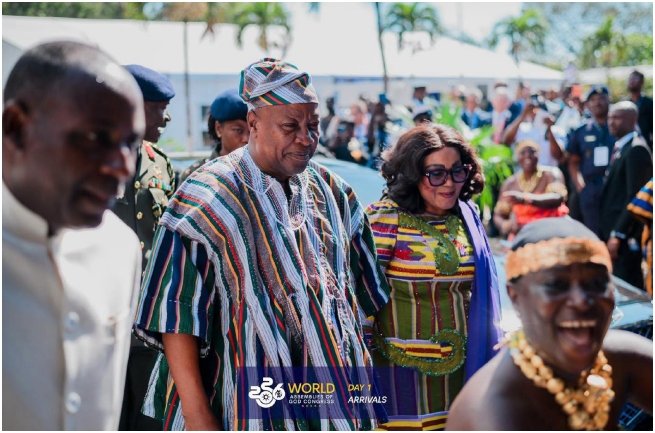
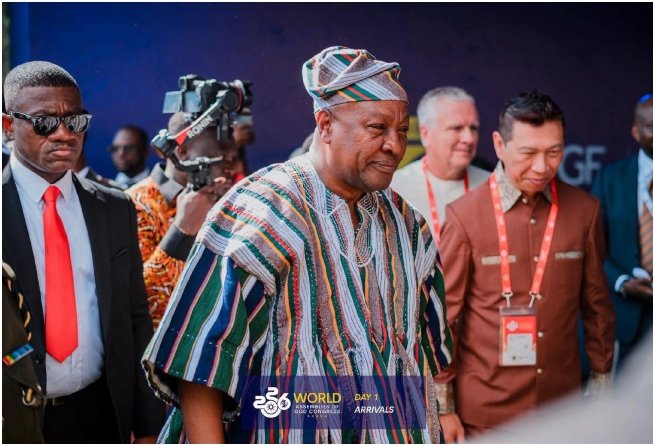
President John Dramani Mahama has challenged thousands of church delegates gathered in Ghana’s capital to measure the success of their global congress not by the eloquence of its sermons, but by the lives they transform after the final prayer is said.
“The lasting story of this conference, this congress, will be written in the lives that we touch after the closing prayer,” Mahama told more than 10,000 participants at the opening ceremony of the 10th Triennial Congress of the World Assemblies of God Fellowship on Wednesday, October 14, 2026.
The president urged delegates to return to their home countries with concrete plans to serve their communities — mentoring young people, supporting schools, strengthening health ministries and standing beside congregations serving under difficult conditions.
Faith Must Be Tangible
Mahama argued that faith becomes real only when it meets human need. He offered a vivid portrait of what practical Christianity looks like: a hungry child receiving a meal, a patient treated with compassion, a young person acquiring a skill, a widow finding companionship, and a struggling family receiving support from its community.
He called on the church to give greater attention to the relationship between preaching the gospel and serving people in practical ways, saying the two must not be separated.
“Spiritual authority entails a duty of care,” the president said, stressing that churches must provide safe environments for children and vulnerable people. He warned that spiritual leadership carries a responsibility to protect the trust placed in it through responsible conduct.
A Warning on Youth and Technology
Turning to youth development, Mahama acknowledged that young people today are growing up in a world of extraordinary opportunity, but also considerable pressure. Technology, he said, connects young people across continents while simultaneously exposing them to constant comparisons, misinformation and competing expectations about who they should become.
He urged churches and families to create environments where young people can ask questions freely, receive guidance, develop their abilities and take on meaningful responsibilities. Delegates, he said, should mentor young people by listening to them, offering opportunities for service and modelling integrity.
The president also called on the church to recognise the contributions of women of faith, saying their wisdom, talents and leadership deserve full recognition.
A Call for Global Solidarity
Addressing the global nature of the fellowship, Mahama expressed hope that members with greater resources would find ways to support those with fewer. The fellowship, he said, would grow stronger when its members shared their gifts and stood with one another through difficult times.
He also spoke directly to the responsibility of public office, saying those entrusted with power had a particular duty to serve with humility, honesty and integrity. Faith, he added, should deepen respect for citizens and concern for those whose voices are least likely to reach the centres of power.
Historic Honour for a Pentecostal President
At the ceremony, the World Assemblies of God Fellowship presented Mahama with its maiden Global Leadership Excellence and Trailblazer Award. The citation described him as the first member of the Assemblies of God worldwide to become president of a country — a milestone for the denomination.
Organisers also presented him with a Bible and urged him to allow the Word of God to guide his leadership.
The fellowship honoured First Lady Mrs. Lordina Mahama for her work supporting vulnerable people through her compassion ministry.
Former Malawian President Dr. Lazarus Chakwera also received the Global Leadership Excellence Award. His citation described him as the second member of the denomination — and the first minister of the gospel within the fellowship — to become president of a country.
Prayers for Wisdom and Redistribution
Following the awards, general superintendents and Ghanaian church leaders gathered around Mahama to pray for him. The prayer leader, Reverend Dominic Yeo, the fellowship’s Global Chairman, asked God to grant the president “divine wisdom” and prayed for the continuation of what he described as a reformation agenda.
He also prayed for “a redistribution of wealth throughout this nation so that all Ghanaians will be blessed,” a prayer that resonated beyond the sanctuary walls in a country where economic inequality remains a pressing concern.
A Global Gathering in Accra
The 10th Triennial Congress has drawn more than 10,000 participants to Accra, making it one of the largest Pentecostal gatherings on the continent this year. The event brings together delegates from across the global fellowship, reflecting the denomination’s growing presence in Africa and beyond.
For Mahama, however, the congress’s true significance will not be found in its attendance figures or its ceremonies — but in what delegates do once they return home.
“Faith becomes tangible,” he said, “when a hungry child receives a meal, a patient is treated with compassion, a young person acquires a skill, a widow finds companionship and a struggling family receives support from its community.”
The closing prayer, it seems, is only the beginning.
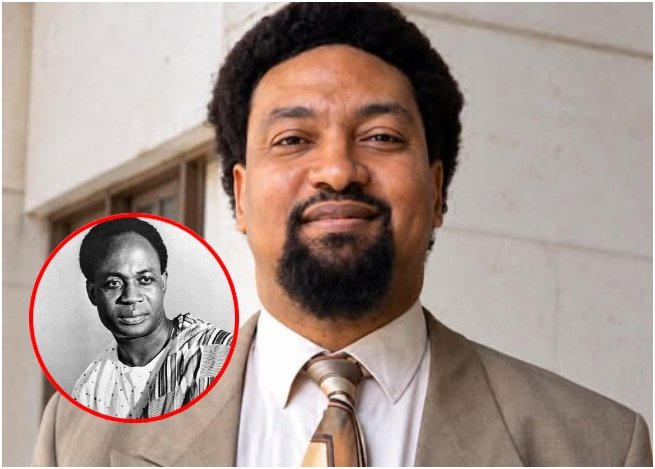
Gamal Gorkeh Nkrumah, the journalist, writer, and intellectual son of Ghana’s founding president, Osagyefo Dr. Kwame Nkrumah, has died in Cairo, Egypt, following a prolonged illness. He was 67.
The Nkrumah family announced his passing in a statement released Tuesday, describing it as “a profound loss not only to our family and loved ones, but also to the wider community of friends, colleagues and readers who valued his insight, humanity and unwavering engagement with the great questions of our time.”
According to the family, Gamal Nkrumah passed away peacefully after receiving care at a rehabilitation centre, where he had been recovering from a stroke.
A Life of Intellectual Engagement
Born in 1958, Gamal Nkrumah carved out a distinct identity as a newspaper journalist and commentator, dedicating his voice and intellect to examining the political, social, and cultural forces shaping Africa and the wider world.
Throughout his life, the family said, he remained “deeply committed to the ideals of justice, human dignity, African unity and international solidarity.”
Described as a man of “profound intellectual curiosity, independence of thought and quiet conviction,” Gamal carried forward the legacy of his father in his own distinctive way, while building a reputation firmly grounded in his own principles and achievements.
His passing marks the loss of a respected voice in African journalism and intellectual life, one whose work spanned continents and engaged deeply with the pressing issues of his time.
A Family in Mourning
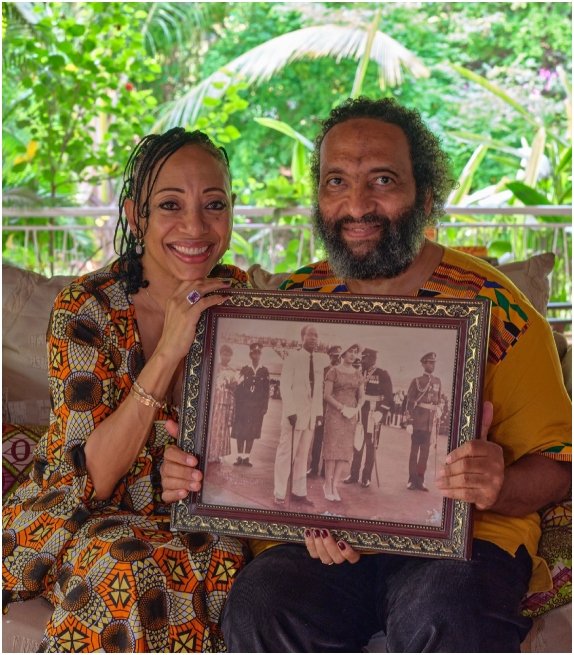
Gamal was one of the acknowledged children of Kwame Nkrumah and Fathia Nkrumah. He is survived by his siblings: Samia Nkrumah (born 1960), a politician and former leader of the Convention People’s Party (CPP); Dr. Francis Nkrumah (born 1962), a paediatrician; and Sekou Nkrumah (born 1964), a politician and photographer.
The Nkrumah family remembered Gamal “with immense love, gratitude and pride,” stating that “his wisdom, kindness and devotion to the values he held dear will remain an enduring source of inspiration.”
Gratitude and Requests for Privacy
In their statement, the family expressed heartfelt appreciation to all those who stood with Gamal throughout his illness, particularly the medical professionals and caregivers in Cairo who provided him with care and dignity.
They also extended “deepest thanks” to the governments and people of his two countries, Egypt and Ghana, for their generous support.
The family has kindly requested privacy as it mourns this deeply personal loss. Details concerning memorial arrangements and opportunities to pay tribute to his life and legacy will be communicated in due course.
“May he rest in eternal peace,” the statement concluded.
Ghana News
Ohio Court Orders Ghanaian Care Worker to Repay $53,278 After Workers’ Compensation Fraud Conviction
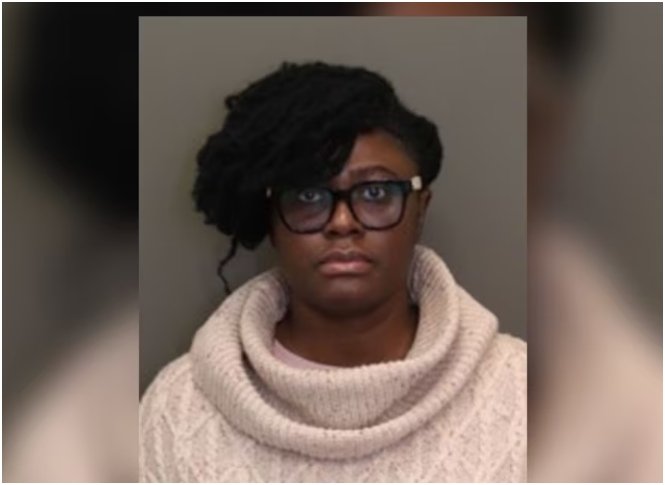
Betty Boateng, 50, of Columbus, pleaded guilty to a fifth-degree felony after investigators found she collected disability benefits while working for two in-home care employers
A US-based Ghanaian woman has been ordered to repay more than $53,000 to the state of Ohio after admitting she collected workers’ compensation disability benefits while simultaneously holding paid jobs, authorities announced.
Betty Boateng, 50, of Columbus, pleaded guilty to one count of Workers’ Compensation Fraud, a fifth-degree felony, following an investigation by the Ohio Bureau of Workers’ Compensation (BWC) Special Investigations Department, the agency said in a news release dated October 9, 2026.
Investigators found that Boateng “knowingly and with fraudulent intent returned to work for two different employers during periods when she was receiving BWC disability benefits to which she was not entitled.”
Evidence gathered during the probe showed she earned wages while continuing to accept disability checks, resulting in improper payments totaling $53,278.40.
Sentencing in Franklin County
On September 23, 2026, a judge in the Franklin County Court of Common Pleas accepted Boateng’s guilty plea and proceeded directly to sentencing, ordering:
- A 12-month suspended sentence
- 60 months of community control
- Mandatory reporting requirements
- Restitution of $53,278.40 to the Ohio BWC
- Waiver of fines, with court costs imposed
The case centered on Boateng’s work providing non-medical in-home care services for multiple employers, work she performed while receiving disability benefits she was not entitled to.
“Fraud Hurts Honest Workers”
BWC Administrator Stephanie McCloud said the agency remains committed to protecting the state’s workers’ compensation fund.
“Fraud against the workers’ compensation system hurts honest Ohio workers and employers,” McCloud said. “We are committed to holding accountable those who abuse the system and ensuring that funds remain available for individuals truly in need.”
The BWC urged anyone who knows of or suspects workers’ compensation fraud to contact its Special Investigations Department at 1-800-OHIO-BWC.
A Cautionary Tale for the Diaspora
The conviction adds to a growing list of cases involving Ghanaian nationals abroad facing fraud-related charges in the United States. Ghanaian communities in the US — particularly in cities such as Columbus, which has a sizable Ghanaian population — have increasingly been urged to understand the strict compliance rules attached to public benefit programs.
Workers’ compensation fraud in Ohio can be prosecuted as a felony depending on the amount involved, and convictions typically require full restitution in addition to any criminal penalties.

-

 Reels & Social Media Highlights2 days ago
Ghana’s Timeline Erupts: Showboy’s Crude Plea, Asantewaa’s Silence, and a Nation Divided
-

 Health & Wellness2 days ago
The Scale Can Lie: Why Lifting Weights May Help You Lose More Fat
-
 Festivals & Events1 day ago
Velukusi Festival: Re-enacting the Ewe Escape to Freedom in Ve-Deme
-

 Taste GH1 day ago
Simple, Nourishing and Rooted in Tradition: Discover Ghana’s Kapala
-

 Fashion & Style2 days ago
Dressing for Your Shape: How Strategic Styling Can Transform Everyday Fashion
-

 Health & Wellness1 day ago
The Weight-Loss Plateau: How Daily Movement and Hidden Calories Can Matter