
Travel
Ghana Launches Passenger Complaints Portal to Hold Airlines Accountable


Passengers flying through Ghana who feel stranded by delays or frustrated by poor service now have a new place to turn—one designed to make their voices harder to ignore.
The Ghana Civil Aviation Authority (GCAA) has launched an airline passenger complaints portal, a move aimed at strengthening consumer protection and boosting trust in the country’s aviation sector. The platform was introduced during World Consumer Rights Day 2026, under the theme “Safe skies, confident passengers.”
For many travelers, filing complaints about cancellations, lost baggage, or poor service can be confusing or fruitless. The new system seeks to change that by offering a structured and transparent way to escalate unresolved issues.
Speaking at the launch, GCAA’s Director of Economic Regulations and Business Development, Pat Bonsu, said the initiative is meant to ensure passengers are treated fairly and have a clear path to seek redress.
“It is a reminder that when passengers feel respected and protected, they travel with greater confidence,” she said.
Under the new process, passengers must first report their concerns directly to the airline, airport operator, or service provider involved. If the issue is not resolved, they can then escalate the complaint through the GCAA’s portal, which will act as a central platform for tracking and addressing cases.
The regulator says the system will also help monitor service standards across the industry, improve transparency, and speed up dispute resolution. It forms part of Ghana’s broader effort to align its aviation sector with international consumer protection practices.
Officials emphasized that the success of the initiative will depend on cooperation among airlines, airport authorities, service providers, and consumer groups—especially as global passengers increasingly demand accountability and better service.
The launch positions Ghana as one of the countries in West Africa working to strengthen passenger rights enforcement, at a time when aviation regulators worldwide are under pressure to respond more effectively to traveler complaints.












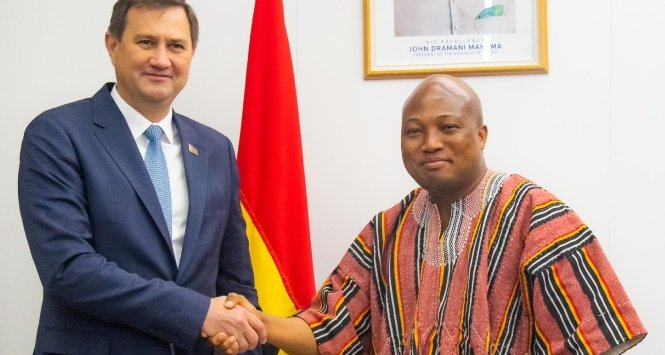
Accra, Ghana – Ghana has formally commenced negotiations with Belarus on a visa waiver agreement that would significantly ease travel between the two nations, Foreign Minister Samuel Okudzeto Ablakwa announced following high-level talks in Minsk.
The announcement came after a bilateral meeting between Minister Ablakwa and his Belarusian counterpart, Foreign Minister Maxim Ryzhenkov, where the two sides agreed to fast-track discussions on mutual visa exemption alongside expanded cooperation in education, defence, cybersecurity, and agricultural mechanisation.
“This visa waiver negotiation is a key step toward strengthening people-to-people contacts and facilitating business, academic and cultural exchanges,” Ablakwa stated. “Both countries are committed to deepening our historic friendship through practical, mutually beneficial partnerships.”
The talks also produced concrete commitments to advance educational exchange programmes, joint defence initiatives, and cybersecurity collaboration. A major focus was placed on agriculture, with Belarus offering expertise in tractor manufacturing, modern farming technologies, and mechanised services to support Ghana’s Feed Ghana initiative under President John Dramani Mahama.
“Ghana and Belarus cherish our strong relations and we are poised to enhance our cooperation particularly in the area of mechanized agriculture and tractor production as we aim to anchor President Mahama’s Feed Ghana initiative,” the minister added.
Diplomatic relations between the two countries were established on June 5, 1992. Since then, Ghana and Belarus have held regular political consultations, including meetings on the margins of the Munich Security Conference and bilateral rounds in Accra and Minsk covering education, medicine, trade and security.
The visa waiver talks form part of Ghana’s broader visa diplomacy strategy, which has already seen negotiations launched with Pakistan and the Republic of Korea to improve global mobility for Ghanaian passport holders and attract investment and tourism.
Belarus, a major producer of agricultural machinery and tractors, is positioning itself as a strategic partner for Ghana’s push toward food security and agricultural transformation.
Officials from both sides described the current engagements as “very productive” and expressed optimism that the visa waiver and other agreements could be finalized within the coming months.
Tourism
U.N. Chief António Guterres Calls for Peace as Global Tourism Emerges as Bridge Between Nations

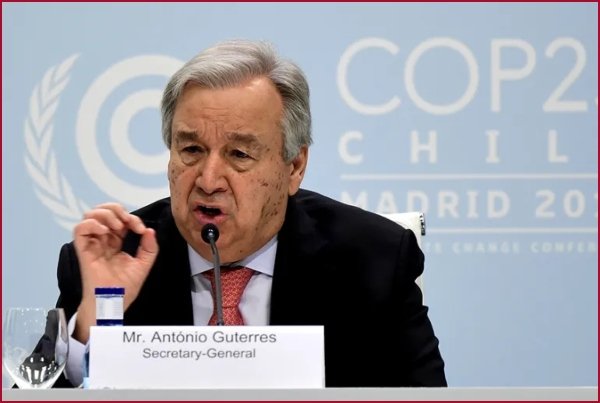
António Guterres has renewed calls for peace amid rising global tensions, warning that escalating conflicts threaten international cooperation while highlighting the need for dialogue and solidarity across cultures.
Speaking during a period when Muslims observe Ramadan and Christians mark the season of Lent, Guterres expressed concern about growing violence in Lebanon and called for an end to war.
“These sacred weeks are meant for compassion, generosity and solidarity — not war,” Guterres said, urging global leaders to pursue peace.
A Consistent Call for Global Cooperation
Since becoming secretary-general of the United Nations in 2017, Guterres has repeatedly warned that geopolitical rivalries are weakening the systems of international cooperation established after World War II.
Before assuming the role, Guterres led the United Nations High Commissioner for Refugees for a decade, where he witnessed firsthand the humanitarian consequences of conflict.
During the COVID-19 pandemic, he issued a global appeal for a ceasefire, urging countries to halt armed conflicts and focus on the shared threat posed by the virus.
While the call did not stop all conflicts, it reinforced the UN’s role as a moral voice advocating for peace and cooperation.
Tourism’s Emerging Diplomatic Influence
At the same time, leaders in the global tourism sector say the travel industry may play a growing role in promoting international understanding.
Officials with UN Tourism argue that travel fosters connections between cultures and helps break down stereotypes by allowing people to experience other societies firsthand.
Former UN Tourism chief Taleb Rifai often described tourism as a “passport to peace,” emphasizing that travelers build trust between societies through direct interaction.
Other global leaders have also highlighted tourism’s diplomatic value. Former UN Secretary-General Kofi Annan promoted the concept of global citizenship, while his successor Ban Ki-moon designated 2017 as the International Year of Sustainable Tourism for Development.
Changing Leadership in Global Tourism
More recently, the UN tourism sector has shifted focus toward economic recovery following the pandemic’s devastating impact on travel.
Under former UN Tourism chief Zurab Pololikashvili, the organization concentrated on rebuilding tourism economies and encouraging investment and innovation.
Leadership has since transitioned to Shaikha Al Nowais, who now faces the challenge of strengthening tourism’s development role while navigating complex international politics.
Private Sector’s Growing Role
Alongside UN institutions, private travel organizations are increasingly involved in global tourism diplomacy.
One of the most influential groups is the World Travel & Tourism Council, led by Gloria Guevara.
Guevara previously served as Mexico’s tourism minister and is widely recognized as a key figure connecting public and private sectors within the global travel industry.
The council represents major airlines, hotels, cruise lines and tourism operators, giving it significant influence within an industry that supports hundreds of millions of jobs worldwide.
Tourism as a Bridge Between Cultures
Analysts say tourism’s global reach positions the industry as a potential force for peace and stability.
Travel networks connect countries and cultures in ways that transcend political divisions, making the industry dependent on international stability and open borders.
As global conflicts and political tensions continue to challenge traditional diplomacy, observers say partnerships between international organizations and the tourism sector could play a role in fostering dialogue and mutual understanding.
Tourism
Colombia’s Hidden Black Heritage: City of Cartagena Challenges Everything You Thought You Knew About the Country
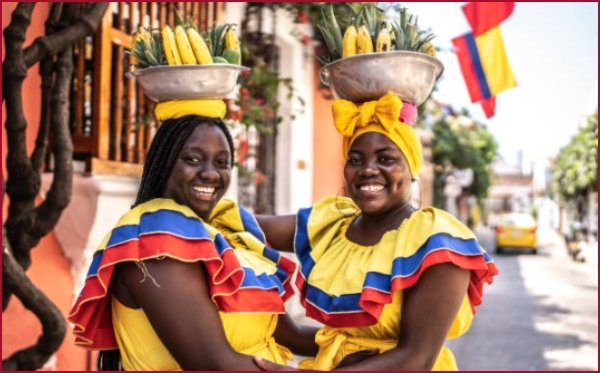
Cartagena, Colombia – March 6, 2026 – When most people picture a “typical” Colombian, images of global superstars like Karol G, J Balvin, or Shakira often come to mind.
But step into the colorful streets of Cartagena and the reality is far more diverse—and far richer.

In a compelling video posted by journalist and travel storyteller Nicole Philip (@ncolphillip), the Afro-descendant population of Colombia—among the largest outside Africa—takes center stage.
“Colombians also look like me,” Philip says, highlighting a truth often overshadowed by media representation and complexion privilege.
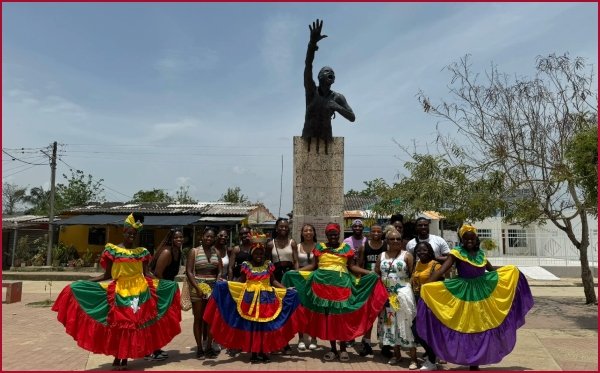
Just outside Cartagena lies San Basilio de Palenque, the first legally free Black town in the Americas.
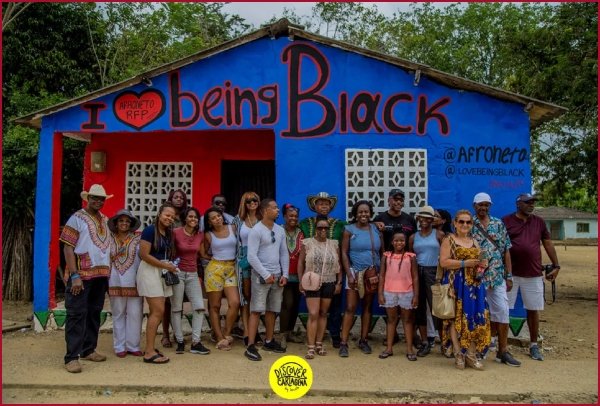
Founded in the early 1600s by formerly enslaved Africans who escaped Cartagena under the leadership of Benkos Biohó, Palenque resisted Spanish attempts to destroy it for decades. Eventually, Spain signed a treaty recognizing its freedom—making it a historic beacon of Black self-determination long before Haiti became the first free Black republic.
Inside Palenque, residents developed their own governance systems and created Palenquero, a Creole language blending Spanish with Bantu roots from Central Africa.
Today, the vibrant Palenquero dresses—bold, multicolored, and instantly recognizable—are a national symbol of Colombia, appearing in advertisements, fashion campaigns, and across social media.
Yet Philip’s message is clear: these cultural icons represent far more than aesthetics.
“Their existence is more than a photo op,” she says. “It symbolizes Black history and pride in a nation that owes its entire existence to both.”
The video has sparked renewed conversation about Colombia’s Afro-descendant heritage, urging travelers to look beyond Cartagena’s famous walled city and explore Palenque, a living testament to resistance, resilience, and cultural survival.


Global Arts Community Condemns Police Assault on Ghanaian Artist Ibrahim Mahama

Renowned Civil Rights Attorney Ben Crump to Join Global Leaders at UN Panel As Ghana Presents Motion for Reparatory Justice for Slave Trade

Rev Al Sharpton Backs Ghana’s UN Slave Trade Initiative, Attorney-General Dragged to Court Over Kotoka Airport Renaming, and Other Big Stories in Ghana Today (March 24)
-

 Business22 hours ago
KNUST Graduates Build Ghana’s First AI-Powered Farming Robot
-

 Ghana News2 days ago
This is How Airline Passengers Can Access Ghana’s Newly Launched Dedicated Complaints Portal
-
 Ghana News1 day ago
Ghana Confident UN Will Back Slave Trade Resolution as Mahama Presents Draft March 25
-
 Ghana News2 days ago
Brazil Joins Ghana’s UN Campaign to Declare Transatlantic Slave Trade the Gravest Crime Against Humanity
-

 Diaspora Investment Guide2 days ago
Ghana’s “Raw Material” Export Era Ends: These 3 Value-Added Products Emerge as 2026 Goldmines
-
 Ghana News2 days ago
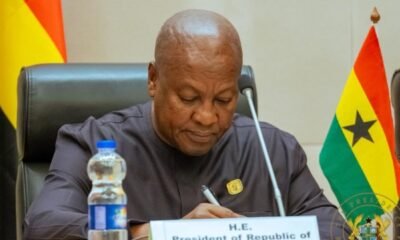
President Mahama Responds to Calls to Seek 3rd Term, Three-Year-Old Killed in Bee Attack, and Other Big Stories in Ghana Right Now (March 22)
-
 Ghana News2 hours ago
Renowned Civil Rights Attorney Ben Crump to Join Global Leaders at UN Panel As Ghana Presents Motion for Reparatory Justice for Slave Trade
-

 Business1 day ago
The $1 Billion Forecasting Error That Exposed Ghana’s Broken Cocoa Model