
Ghana News
Ghana Government Evacuates 200 Ghanaians from South Africa, Vows to Pursue Justice for Victims

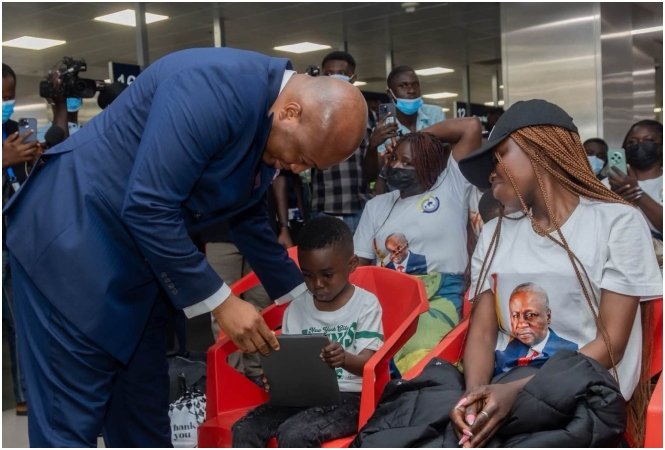
The Government of Ghana has received the second batch of approximately 200 citizens evacuated from South Africa following renewed xenophobic attacks that have claimed the lives of two Ghanaians and displaced hundreds more.
The evacuees arrived in Accra on Monday, July 27, 2026, where they were received by the Minister for Foreign Affairs, Mr. Samuel Okudzeto Ablakwa, who assured them of the state’s unwavering commitment to their welfare and the pursuit of justice for those who lost their lives.
Addressing the returnees upon arrival, Mr Ablakwa led a minute’s silence in memory of the two Ghanaians killed during the attacks: Mr Bashiru Isaak and Mr Kojo Antwi.
“We are still demanding justice and have written to the South African authorities to ensure that the killings of Mr Bashiru Isaak and Mr Kojo Antwi are not covered up. There has to be justice, and we will continue to demand thorough investigations, the arrest and prosecution of those who killed our beloved compatriots,” he said.
Repatriation of Remains Underway
The Minister disclosed that while the body of Mr Bashiru Isaak had already been returned to Ghana, arrangements were still ongoing to repatriate the remains of Mr Kojo Antwi. The government has formally written to South African authorities demanding accountability and transparency in the investigations into both deaths.
“On behalf of President John Dramani Mahama and the people of Ghana, I assure you that you have never been orphaned. You have never been refugees. You have never been people without a home, without a country or without a government. We are honoured and privileged to welcome you, our brothers and sisters, back to the motherland,” Mr Ablakwa told the emotional returnees.
Large-Scale Evacuation Effort
The latest group forms part of Ghana’s second evacuation exercise from South Africa. According to the Minister, approximately 900 Ghanaians were brought home during the first phase, while the current operation is expected to return about 1,000 more citizens who fled violence in different provinces across South Africa.
Many of the affected Ghanaians had abandoned their homes after coming under attack and sought refuge in churches and other safe locations while awaiting evacuation. The Minister expressed profound gratitude to the Church of Pentecost in Pretoria and Johannesburg for opening its premises to displaced Ghanaians.
“The Church of Pentecost demonstrated what it means to be Christlike. They suspended church services and offered their premises as shelter to fleeing Ghanaians awaiting government evacuation,” he said.
Reintegration Support Package
Mr Ablakwa announced that every returnee would receive the same travel and reintegration support package provided to those evacuated during the first exercise, emphasising that the government would not reduce or alter the assistance.
“We are not reducing or changing the package. You are all valuable Ghanaians whom we cherish very much,” he stated.
Beyond financial support, the Minister disclosed that the government has begun working with private companies and state institutions to help returnees secure employment. Those with vocational skills and business experience would receive assistance to restart their livelihoods.
“We are compiling a database and working with corporate Ghana. Some of your compatriots have already secured jobs, and we will continue to ensure that everyone is properly reintegrated,” he said.
Legal Action and Compensation
Mr Ablakwa also assured the evacuees that the government has assembled a legal team to pursue compensation for properties, businesses, and other investments destroyed or abandoned during the attacks. The government is exploring every available legal avenue to address the violation of the fundamental human rights of affected citizens.
“We are exploring every available legal avenue to ensure that this violation of your fundamental human rights is addressed and that you are duly compensated for your losses,” he said.
The evacuation exercise comes amid heightened tensions in South Africa, where xenophobic violence has periodically targeted foreign nationals, particularly those from other African countries. The Ghanaian government has consistently condemned the attacks and called on South African authorities to protect the lives and property of all foreign nationals within their borders.
The development has drawn praise from civil society organisations in Ghana, who have commended the government’s swift response in evacuating its citizens and its commitment to securing justice for the victims. However, some have called for stronger diplomatic measures to prevent future attacks on Ghanaians living abroad.








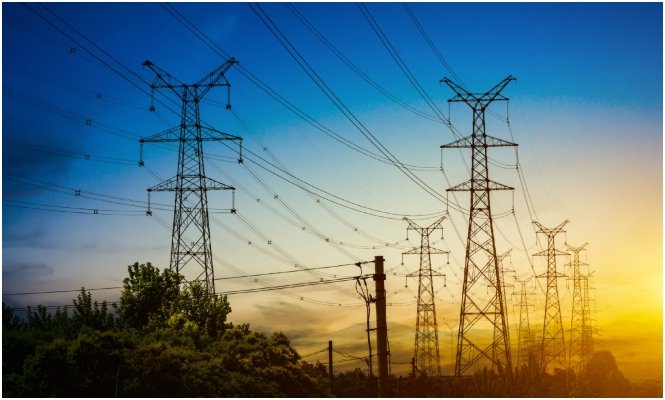
Ghana is embarking on a dual energy strategy aimed at processing its own crude oil domestically and expanding electricity generation, as President John Dramani Mahama positions energy security at the centre of his economic transformation agenda.
In June 2026, President Mahama broke ground on the Phase 2 expansion of the Sentuo Oil Refinery in Tema, following the delivery of the first-ever Jubilee crude oil for local refining at the facility. The expansion is expected to increase the refinery’s processing capacity from 40,000 to 100,000 barrels per day upon completion.
“This expansion is not merely an investment in infrastructure; it is an investment in Ghana’s future,” President Mahama said at the ceremony. “By increasing domestic refining capacity, we reduce our dependence on imported petroleum products, strengthen our fuel supply chains, and retain more value within our economy”.
The government’s strategy also includes directing the Tema Oil Refinery and Sentuo to process approximately 100,000 barrels of locally sourced crude per day. The return of locally sourced crude processing at TOR has been presented as an important milestone in Ghana’s quest for energy self-reliance. The government has said it aims to slash fuel imports by 70 per cent through this strategy.
Mr Xu Ningquan, Executive Chairman of the Sentuo Group, said the project will support thousands of jobs, improve foreign-exchange retention, and enhance Ghana’s competitiveness in the Sahel and West Africa. “We are not simply cutting sod for an industrial project; we are laying a foundation stone for Ghana’s future,” he said.
A second major policy proposal involves a planned 1,200-megawatt state-owned power plant, intended to improve the reliability and affordability of electricity. The dissolution of boards at institutions including BOST, VALCO and GNPC has also brought institutional governance directly into the energy conversation.
The IMANI PULSE report, recently released by renowned Ghanaian think tank, IMANI Africa, recorded 349 mentions of energy themes, with a substance index of 0.51 and sentiment of -0.16, placing it almost exactly at the boundary between policy and personality. The substantive energy agenda centred on domestic crude processing, electricity generation and institutional restructuring.
However, the report cautioned that the energy figures were significantly affected by the multiple meanings of the word “power.”
Political power, religious power and references to the Power Cathedral generated content that was technically captured by the thematic keyword system but had little to do with electricity or energy policy. The approximately equal policy-personality split does not entirely represent a genuine division over energy policy, as part of the personality component reflects keyword collision.
Nevertheless, the energy theme also contained genuine political accountability disputes, including allegations concerning ECG and Ghana Water Company losses linked to Minority Leader Alexander Afenyo-Markin, as well as the Arksa Energy and “Holy Rain” allegations.
The Minister for Energy and Green Transition, John Abdulai Jinapor, has said the expansion of the Sentuo Oil Refinery will enable Ghana to reduce its reliance on imported finished petroleum products.
As global energy volatility and geopolitical tensions continue to shape commodity markets, Ghana’s ability to refine its own crude and generate reliable electricity has become both an economic imperative and a political test.
Ghana News
“It Slipped Through”: Ghana Customs Boss Admits Airport Security Failure After 3.9-Ton Drug Bust
Acting Customs Commissioner Aaron Kanor acknowledges narcotics evaded detection as Ghana faces three major drug cases in three weeks
A senior Ghanaian customs official has admitted that a major narcotics shipment evaded airport security, acknowledging a systemic failure as the country confronts a surge in drug trafficking cases that has damaged its international reputation.
“It slipped through,” said Aaron Kanor, Acting Commissioner of the Customs Division of the Ghana Revenue Authority (GRA), during an interview on Joy News. “This particular one is just unfortunate that it slipped through.”
Kanor was responding to questions about a 3.9-ton drug consignment intercepted by French customs that originated from Ghana and was partly destined for Belgium, according to official public communication from the Narcotics Control Commission.
The admission came as Ghana grapples with three major drug-related cases in three weeks, prompting calls for a total overhaul of the country’s airport security system.
The 3.9-Ton Shipment: From Ghana to France and Belgium
Kanor confirmed that French customs intercepted approximately 3.9 tons of narcotics, with the consignment originating from Ghana and partly destined for Belgium. The disclosure links Ghana directly to a sophisticated transnational drug trafficking network operating between West Africa and Europe.
“From the official public communication by the Narcotics Control Commission, French customs intercepted some drugs, almost about 3.9 tons in France, and the consignment came from Ghana and partly destined for Belgium,” Kanor said.
The scale of the shipment, nearly four metric tons, represents one of the largest drug seizures linked to Ghana in recent years and raises serious questions about the effectiveness of the country’s export screening processes.
The Oti Region Bust: 5,164 Parcels in Secret Truck Compartments
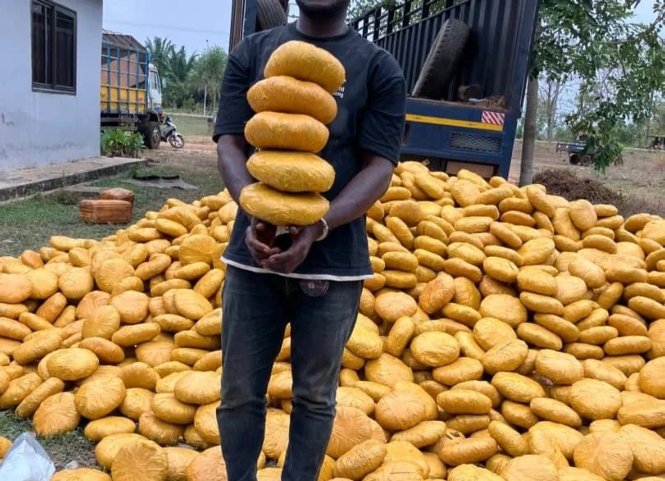
Separately, the Oti Regional Police Command intercepted an articulated truck loaded with 5,164 compressed parcels suspected to contain narcotic substances. The truck was intercepted following an intelligence-led operation, according to a police statement.
Three suspects have been arrested, while one person remains on the run. The drugs were concealed in secret compartments within the truck, suggesting sophisticated concealment methods used by trafficking networks.
The Oti Region bust represents one of the largest domestic drug seizures in Ghana’s recent history, underscoring the scale of trafficking operations moving through the country.
Kotoka Airport Arrest: South African National with 2 Million Rand Heroin
The third case involves the arrest of a 52-year-old South African national at OR Tambo International Airport after allegedly finding suspected heroin worth more than R2 million in his luggage.
The arrest followed an intelligence-led operation at the airport on Sunday, September 20, 2026, shortly after the suspect arrived on a flight from Accra, Ghana.
Three Massive Drug Busts in Three Weeks: A Pattern Emerges
The three cases, the 3.9-ton shipment to France, the 5,164-parcel bust in Oti, and the OR Tambo International Airport arrest linked to Ghana, have occurred within a three-week period, suggesting either a surge in trafficking activity or increased enforcement efforts, or both.
The frequency of these cases has prompted urgent calls for reform.
“Calls are mounting for a total overhaul of Ghana’s airport security system,” Joy News reported, following the arrest of the South African national.
The reputation damage is already being felt.
“Ghana is claiming a very bad tag for the drug busts that are happening recently,” noted a Member of Parliament co-hosting the Joy News segment, acknowledging the international reputational cost.
Customs Officers Picked Up by BNI: Internal Complicity Suspected
In a significant development, Kanor revealed that customs officers have been detained by the Bureau of National Investigations (BNI) in connection with the drug shipment.
“We have already initiated investigations by firstly querying our officers, awaiting them to respond because when the issue happened, they were picked by the BNI,” Kanor said. “So they couldn’t respond to our query.”
The involvement of the BNI (Ghana’s premier investigative agency) suggests authorities suspect internal complicity in facilitating the drug shipment’s passage through airport security. The officers’ detention raises questions about whether customs personnel were either negligent or actively involved in the trafficking operation.
Kanor said the Customs Division is “putting a lot of measures in place” and will “move officers around” to prevent future incidents.
Systemic Gap: Narcotics Control Commission Sidelined from Cargo Screening
In a striking admission, Kanor acknowledged that the Narcotics Control Commission, the agency with specialized expertise in drug detection, is not routinely involved in cargo screening at Ghana’s airports.
“We are working hard to ensure that other agencies like the Narcotics come on board as quickly as possible since they have the expertise,” Kanor said. “So going forward, before any cargo exit our port, would like them to come on board and give their verdict.”
The admission reveals a critical gap in Ghana’s airport security architecture: customs officials have been screening cargo without the specialized narcotics expertise that the Narcotics Control Commission possesses. This systemic weakness may have contributed to the 3.9-ton shipment evading detection.
Kanor explained the standard process: “Usually when cargo are destined for exports, they have to go through a scan where the scan image will be analyzed as to whether the container has any concealment. But like I said, this particular one is just unfortunate that it slipped through.”
The Frank Danquah Allegation: Aviation Security Official Implicated
During the interview, a co-hosting Member of Parliament raised a potentially explosive allegation: that a young man named Frank Danquah, who works with aviation security, was involved in a drug bust in Belgium.
“It has come to the attention of the customs division about some drugs that have also been busted at the Kotoka International Airport involving a young man called Mr. Frank Danquah who works with the aviation security,” the MP said. “That drug was actually busted in Belgium.”
Kanor appeared caught off guard by the question.
“This particular one I will not be able to speak to it,” he said. “I also saw it last night. So I’ve asked the sector commander of Accra International Airport to furnish me with the necessary information.”
The commissioner’s admission that he only learned of the allegation “last night” suggests a lack of internal communication and raises questions about whether rogue elements within Ghana’s aviation security apparatus are facilitating drug trafficking.
Political Dimension: Mahama Meets Security Chiefs
The drug crisis has reached the highest levels of government. President John Dramani Mahama recently met with top security officials just days before the recent busts in Oti and South Africa.
Kanor was careful not to speak for the president.
“I will not put words in the mouth of the president. His Excellency John Mahama’s position on narcotics trafficking has been consistent and clear: that Ghana will not be allowed to become a safe haven for such activity, especially narcotics,” Kanor said. “And any official statement from the presidency may come later. That is what I can say for now.”
The president’s engagement on the issue signals that the administration recognizes the severity of the crisis and the reputational threat it poses to Ghana’s international standing.
What Happens Next
The Customs Division has initiated internal investigations, with officers already detained by the BNI. The sector commander of Accra International Airport has been asked to provide information on the Frank Danquah allegation. President Mahama is expected to issue an official statement on the drug crisis.
Ghana’s reputation as a drug transit hub, a label the country has worked for years to shed, is now at risk. The coming weeks will determine whether the government can demonstrate the political will and operational capacity to dismantle the trafficking networks operating through its airports and borders.
As Kanor himself acknowledged, the stakes could not be higher: “It slipped through” is not a phrase any customs commissioner wants to utter, and it is not one the Ghanaian public wants to hear again.
Ghana News
Philanthropy vs. Tradition: What MrBeast’s $10M Ghana Village Reveals About the Child Labor Debate

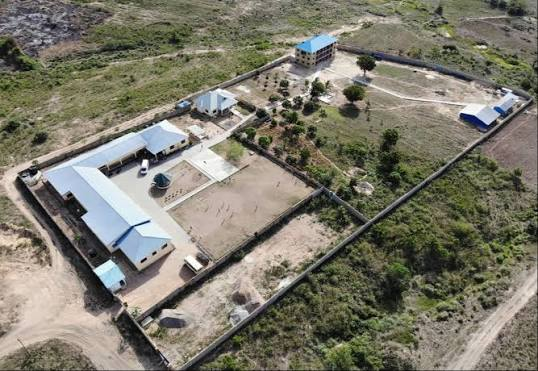
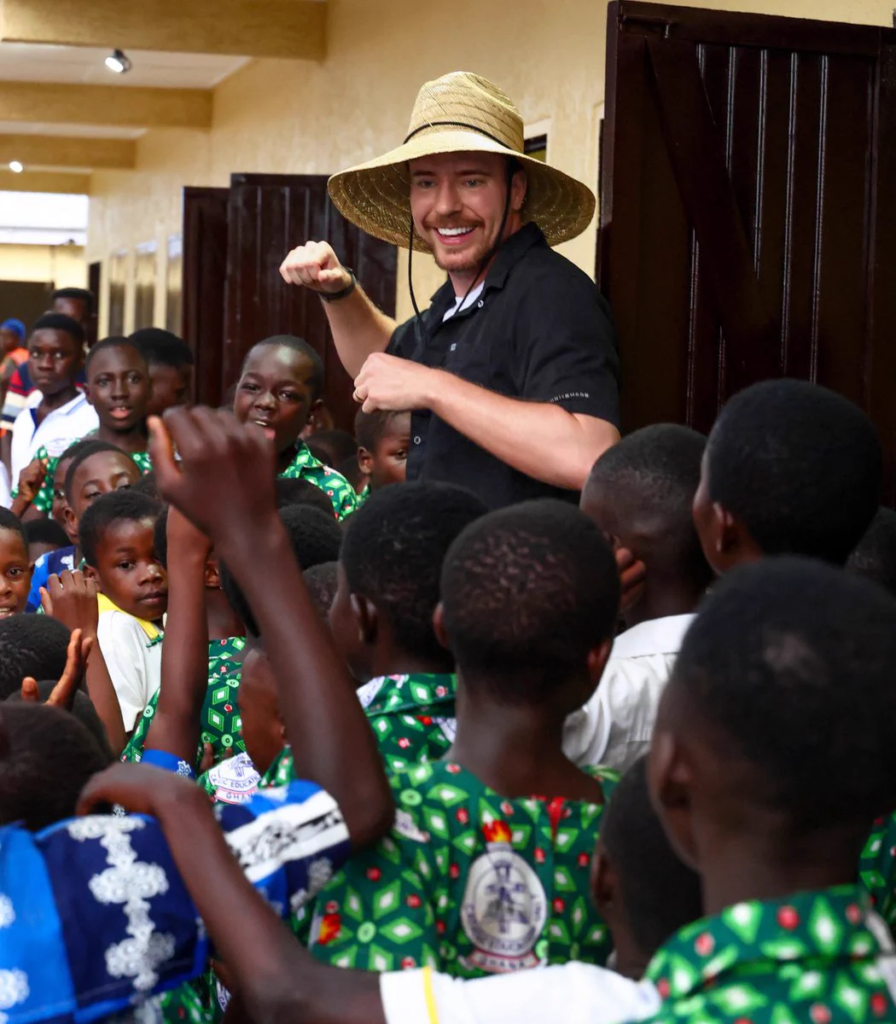
When YouTube mega-star MrBeast unveiled Abna Dakwa Village—a nearly US$10 million custom-built enclave in Ghana’s Eastern Region—the internet erupted.
Equipped with a school for over 300 students, ten homes for teachers, a health clinic, solar grid, and free meals supported by the Rockefeller Foundation, the development is explicitly framed as an intervention against child labor in cocoa farming.
Yet beneath the viral cameras and impressive infrastructure lies a fundamental cultural tension: where does western intervention draw the line between rescuing children from exploitation and dismantling traditional community schooling?
The distinction is critical. International bodies like the International Labour Organization (ILO) explicitly differentiate between hazardous child labor and age-appropriate community participation.
In many Ghanaian rural settings, assisting elders on family farms, helping at market stalls, or learning local fishing techniques isn’t exploitation—it is an essential, intergenerational education.
It transfers survival skills, business acumen, and cultural responsibility that no standardized textbook can replicate.
While combatting dangerous work in mines or unsafe cocoa plantations is undeniably urgent, heavy-handed western philanthropy often collapses all physical work into a single negative category.
This raises an essential question about the $10 million project: what kind of education will Abna Dakwa Village actually deliver?
If the school focuses solely on a homogenized, westernized curriculum designed to service global tech or corporate markets, it risks alienating youth from their local roots.
Instead of strengthening the village’s agricultural and economic engine, it could encourage a brain drain—driving young people away from their home communities toward overcrowded cities or abroad in search of relevance.
True development must harmonize modern academic tools with local agrarian livelihoods.
For philanthropy to build lasting, self-sustaining autonomy rather than dependence, it must respect traditional community work as valid learning, ensuring the next generation is empowered to build up their own backyards.


Can Ghana Process Its Own Crude and Fix Its Power Supply?

“It Slipped Through”: Ghana Customs Boss Admits Airport Security Failure After 3.9-Ton Drug Bust

White House Launches ‘Trump TV’ on YouTube After Banning Three News Outlets: Here’s What It’s Showing
-
 Sights and Sounds1 day ago
Why Bliss Family Entertainment Is Airport City’s Go-To Haven
-

 Opinion6 hours ago
African Blood for Other People’s War?
-

 Health & Wellness2 days ago
First In, Last Out: Understanding Your Body’s Natural Fat Storage Blueprint
-
 Festivals & Events20 hours ago
Accra Welcomes New York Leadership for a Historic Night of Community
-
 Global Update6 hours ago
White House Launches ‘Trump TV’ on YouTube After Banning Three News Outlets: Here’s What It’s Showing
-
 Taste GH20 hours ago
The Timeless Appeal of Koose and Spiced Millet Koko
-

 Homes & Real Estate8 hours ago
How Mechanical, Electrical, and Plumbing Audits Protect Your Real Estate Investment
-
 Festivals & Events1 day ago
Where Cascades Meet Culture: The Majestic Grandeur of the Wli Falls Festival