
Arts and GH Heritage
Born in a Time of Freedom: The Origins and Meaning of Kpanlogo

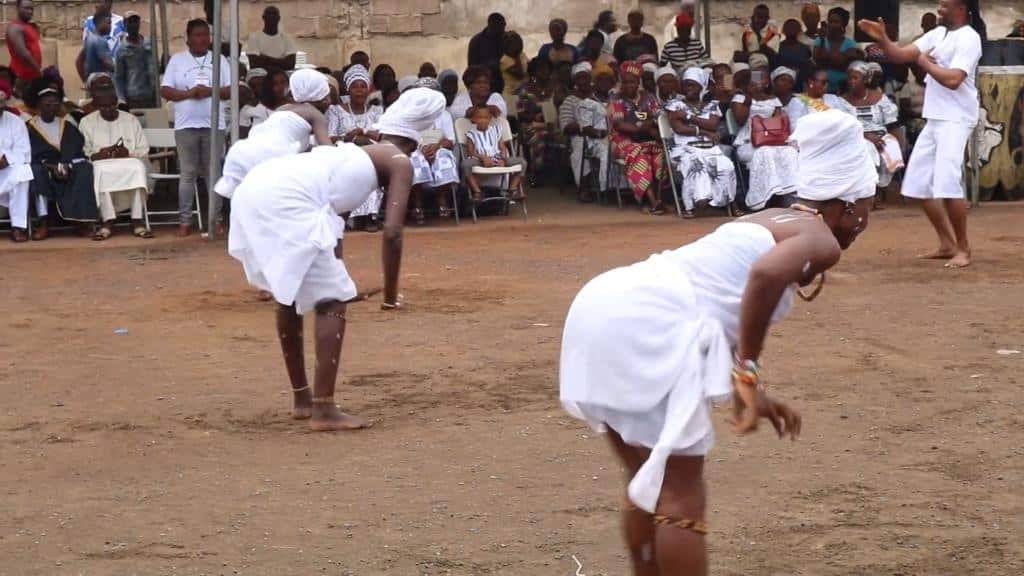
On a warm evening along the coast of Accra, the beat of hand-played drums begins to ripple through the air. Young dancers gather in a loose circle, their shoulders rolling, hips snapping sharply to the rhythm, while friends clap and cheer.
The dance is playful, confident, and unmistakably Ghanaian. This is Kpanlogo, one of the most recognizable cultural expressions of the Ga people, and a dance whose roots lie in youthful rebellion, post-independence optimism, and the vibrant social life of Accra in the 1960s.
Kpanlogo emerged during a transformative period in Ghana’s history. The country had just gained independence from Britain in 1957 under Kwame Nkrumah, and a wave of cultural confidence swept through the nation.
In the working-class neighborhoods of Accra—particularly communities like Jamestown and Teshie—Ga youth began experimenting with new ways to express themselves through music and dance.
At the time, traditional Ga dances were often tied to rituals, festivals, or community ceremonies led by elders. But younger people wanted something different: a dance that reflected their generation’s energy and the rapidly changing social scene in the city.
They began blending older Ga rhythms with new influences from Highlife music, Caribbean sounds, and even elements of American pop culture that had started to reach Ghana’s shores.
Out of this creative ferment came Kpanlogo.
The dance was bold and modern for its time. Its movements—characterized by bent knees, rhythmic hip swings, and expressive arm gestures—broke away from the stricter patterns of older ceremonial dances.
The drumming style was equally distinctive, built around a lively ensemble of hand drums and percussion instruments that drove the dancers forward with infectious energy.
But Kpanlogo was more than entertainment. In its early years, it became a symbol of youthful freedom and social change.
Some elders initially viewed the dance as rebellious or even inappropriate because of its energetic movements and playful interactions between male and female dancers. Yet its popularity spread quickly, turning street corners, beaches, and community gatherings into impromptu dance grounds.
Within a few years, what began as a youth craze had become a cultural phenomenon. The rhythms and choreography were eventually embraced by cultural troupes and national dance ensembles, helping introduce Kpanlogo to audiences across Ghana and beyond.
Today, the dance holds a special place in Ga cultural identity. It is often performed during community celebrations, national events, and cultural festivals across Accra.
Schools and cultural groups teach the dance to younger generations, ensuring that the rhythm continues to echo through the city’s neighborhoods.
For the Ga people, Kpanlogo represents more than movement—it reflects the spirit of Accra itself. The dance captures the city’s coastal vibrancy, its humor, its openness to new ideas, and its ability to transform tradition without losing its roots.
When the drums begin, and dancers step forward, Kpanlogo tells a story that began decades ago with the dreams of young people in a newly independent nation. Today, that story continues each time the rhythm rises, and the crowd gathers to move as one.










Arts and GH Heritage
Global Arts Community Condemns Police Assault on Ghanaian Artist Ibrahim Mahama


Leading international galleries and cultural institutions have issued a joint statement condemning the alleged police brutality against the renowned artist and calling for an immediate, independent investigation.
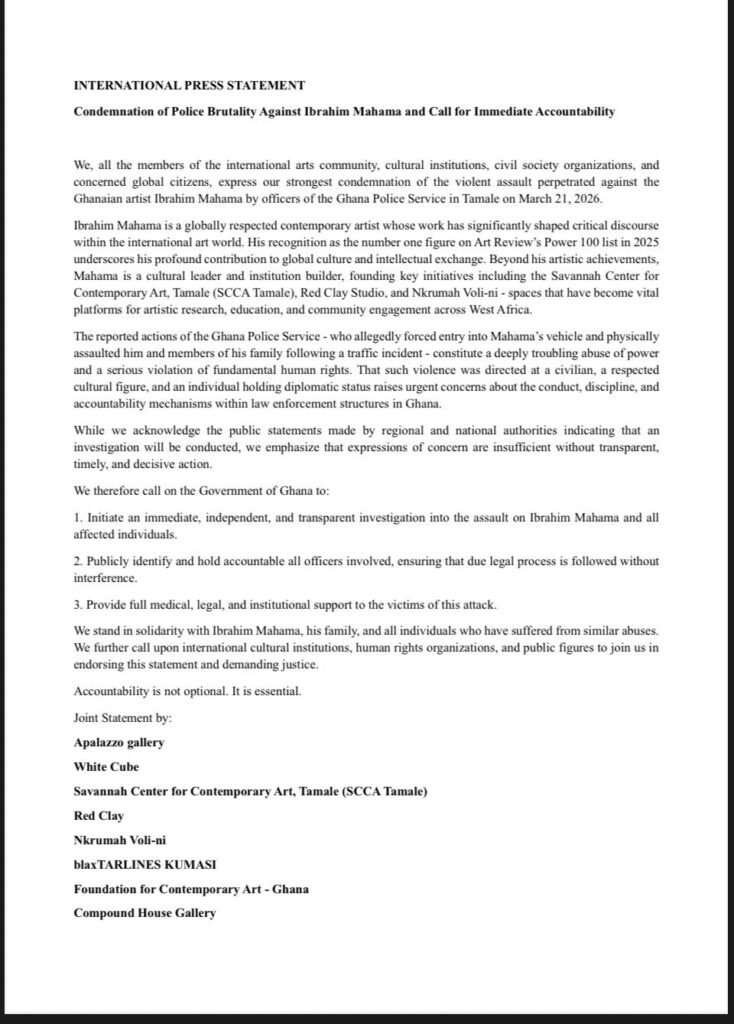
Accra, Ghana / International – A coalition of prominent international arts institutions, galleries, and cultural organizations has issued a powerful joint statement condemning the alleged violent assault of Ghanaian artist Ibrahim Mahama by officers of the Ghana Police Service in Tamale on March 21, 2026, and demanding urgent accountability.
The statement, released on March 23, 2026, brings together some of the most influential names in the global art world, including White Cube, Apalazzo Gallery, the Savannah Center for Contemporary Art (SCCA Tamale), Red Clay, Nkrumah Voli-ni, blaxTARLINES KUMASI, the Foundation for Contemporary Art – Ghana, and Compound House Gallery.
Mahama, a globally respected contemporary artist who was named the number one figure on Art Review’s prestigious Power 100 list in 2025, was reportedly assaulted following a traffic incident in Tamale. According to accounts, police officers allegedly forced entry into his vehicle and physically assaulted him and members of his family. Mahama, who holds diplomatic status, has since cancelled all international lectures and exhibitions due to injuries sustained in the incident.
The joint statement describes the alleged actions as “a deeply troubling abuse of power and a serious violation of fundamental human rights.”
“That such violence was directed at a civilian, a respected cultural figure, and an individual holding diplomatic status raises urgent concerns about the conduct, discipline, and accountability mechanisms within law enforcement structures in Ghana,” the statement read.
While acknowledging that regional and national authorities have indicated that an investigation will be conducted, the signatories emphasized that “expressions of concern are insufficient without transparent, timely, and decisive action.”
The coalition issued three specific demands to the Government of Ghana:
– Initiate an immediate, independent, and transparent investigation into the assault on Ibrahim Mahama and all affected individuals.
– Publicly identify and hold accountable all officers involved, ensuring due legal process without interference.
– Provide full medical, legal, and institutional support to the victims of the attack.
The statement highlighted Mahama’s significance beyond his artistic practice, noting his role as a cultural leader and institution builder. He founded the Savannah Center for Contemporary Art (SCCA Tamale), Red Clay Studio, and Nkrumah Voli-ni — spaces described as “vital platforms for artistic research, education, and community engagement across West Africa.”
The Inspector-General of Police has since directed the Police Professional Standards Bureau (PPB) to investigate the allegations, but the international arts community insists that accountability must follow swiftly.
“We stand in solidarity with Ibrahim Mahama, his family, and all individuals who have suffered from similar abuses,” the statement concluded. “Accountability is not optional. It is essential.”
The signatories also called on international cultural institutions, human rights organizations, and public figures to endorse the statement and join the demand for justice.
The case has drawn global attention to police accountability in Ghana, with cultural leaders framing Mahama’s treatment as a bellwether for broader concerns about law enforcement conduct, the protection of civilians, and the state’s responsibility to safeguard its citizens — regardless of their public stature.
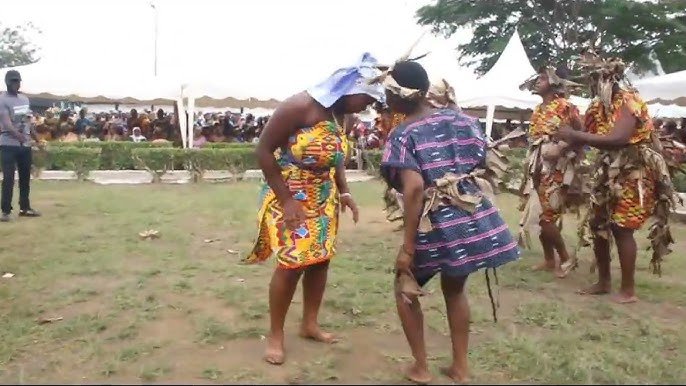
Long before the streets of coastal western Ghana burst into dancing and the steady pulse of drums, the Kundum Festival began as a quiet moment of discovery.
Among the Ahanta and Nzema people along Ghana’s Atlantic coast, Kundum is more than a celebration—it is a story passed down through generations, a reminder that festivals often begin with simple human encounters with the natural world.
Local tradition traces the origin of Kundum to a hunter from the Nzema area who made an unusual discovery while roaming the forest. One day, he came upon a strange plant whose pods produced a rhythmic sound when struck.
Curious, he plucked the pods and brought them back to his community. When people shook and struck them together, the sound was lively and compelling.
The community began to dance to the rhythm, and the pods became part of their musical expression. That sound, many believe, gave birth to the early form of Kundum.
From that moment, the rhythmic shaking of the pods—combined with drums, songs, and dance—grew into a communal ritual.
The festival gradually took on a deeper meaning among both the Ahanta and Nzema people who inhabit Ghana’s western coastline, particularly in towns such as Axim, Shama, and surrounding communities.
Over time, Kundum evolved into a seasonal celebration marking the end of the farming season and the beginning of a new cycle of life.
The name “Kundum” itself is often associated with the distinctive drum rhythms and movements that accompany the festival.
What began as a simple musical discovery eventually became a structured cultural event observed over several weeks. During this period, communities perform purification rites, honor ancestors, and reaffirm their bonds with the land and sea that sustain them.
Today, Kundum carries layers of meaning. For the Ahanta and Nzema people, it is both a thanksgiving and a time for reflection. Elders pour libations to remember ancestors, chiefs appear in colorful regalia, and families reunite in their hometowns.
The festival also acts as a social reset: old disputes are settled, friendships are renewed, and the community collectively prepares for the future.
One of the most striking moments during Kundum is the dancing. Groups move through the streets in coordinated steps, their bodies responding to deep drumbeats that echo through the coastal air.
The music is joyful but purposeful—every rhythm recalling the story of how sound first united the community.
For visitors, Kundum offers a window into the cultural heartbeat of Ghana’s western coast. Yet for the people who celebrate it, the festival is something far more personal.
It is a living memory—one that begins with a hunter, a forest plant, and a rhythm that refused to be forgotten.
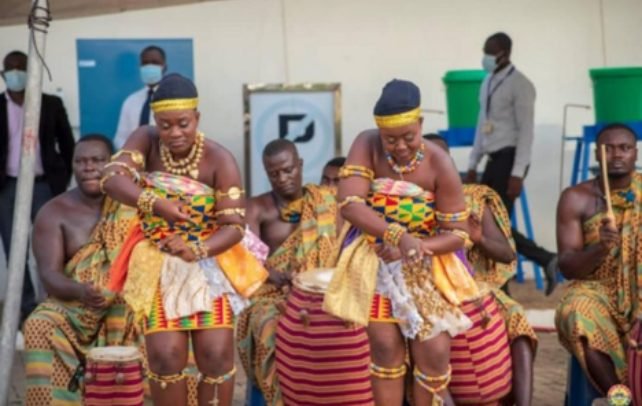
Imagine a dying queen mother, a desperate kingdom, and a frantic search for a miracle. This is where the story of Ghana’s most beloved dance begins. It wasn’t in a rehearsal hall, but in the quiet depths of an Ashanti forest.
The year is lost to memory, but the tale remains. The Ashanti Kingdom’s Queen Mother, Abrewa Tutuwa, lay gravely ill.
Her healers had failed. In their desperation, the elders turned to the gods. The message was clear: find a live antelope, a creature of the wild, to be part of a sacred healing ritual.
The kingdom’s bravest warriors, the Asafo companies, were dispatched into the thick forest . For days, they searched with no luck.
Defeated and tired, they decided to turn back home. But on their return journey, something strange happened.
Read Also: The Whispering Rocks of Tengzug: Invoking the Rain at the 2026 Gologo Festival
They saw it—an antelope, moving through the undergrowth with a grace they had never witnessed.
It wasn’t just walking; it was performing. It dipped and swayed, its feet tracing patterns on the earth, its head turning with a quiet dignity.
The warriors froze. They watched, mesmerized, and began to quietly mimic the animal’s movements, committing them to memory.
When they finally arrived back in the village without the antelope, they didn’t come empty-handed. They brought something far more lasting: a dance.
In front of the anxious household, they re-enacted the antelope’s mesmerizing performance, a gift of movement to lift the queen mother’s spirit.
The elderly women of the village watched the warriors’ imitation and saw its beauty.
They took these raw, masculine movements, softened them, and gave them rhythm and expression. They perfected the steps, shaping them into the dance we now call Adowa—the Twi name for that very same royal antelope.
Today, Adowa has travelled far beyond that forest encounter. It has become the voice of the Akan people, speaking at funerals, festivals, and the durbar of chiefs.
But if you watch closely, you can still see its origins. When a dancer bends low, you see the antelope bowing its head. The subtle, fluttering gestures of a white handkerchief?
Perhaps an echo of an animal twitching an ear in the quiet bush. The flick of a foot, the proud arch of a neck—it is all there.
A living, breathing memory of a moment when nature taught us how to move, and a dying queen mother was gifted a dance that would outlive us all.


Global Arts Community Condemns Police Assault on Ghanaian Artist Ibrahim Mahama

Renowned Civil Rights Attorney Ben Crump to Join Global Leaders at UN Panel As Ghana Presents Motion for Reparatory Justice for Slave Trade

Rev Al Sharpton Backs Ghana’s UN Slave Trade Initiative, Attorney-General Dragged to Court Over Kotoka Airport Renaming, and Other Big Stories in Ghana Today (March 24)
-

 Business22 hours ago
KNUST Graduates Build Ghana’s First AI-Powered Farming Robot
-

 Ghana News2 days ago
This is How Airline Passengers Can Access Ghana’s Newly Launched Dedicated Complaints Portal
-
 Ghana News1 day ago
Ghana Confident UN Will Back Slave Trade Resolution as Mahama Presents Draft March 25
-
 Ghana News2 days ago
Brazil Joins Ghana’s UN Campaign to Declare Transatlantic Slave Trade the Gravest Crime Against Humanity
-

 Diaspora Investment Guide2 days ago
Ghana’s “Raw Material” Export Era Ends: These 3 Value-Added Products Emerge as 2026 Goldmines
-
 Ghana News2 days ago
President Mahama Responds to Calls to Seek 3rd Term, Three-Year-Old Killed in Bee Attack, and Other Big Stories in Ghana Right Now (March 22)
-
 Ghana News2 hours ago
Renowned Civil Rights Attorney Ben Crump to Join Global Leaders at UN Panel As Ghana Presents Motion for Reparatory Justice for Slave Trade
-
 Business1 day ago
The $1 Billion Forecasting Error That Exposed Ghana’s Broken Cocoa Model