
From the Diaspora
Backyard Inventor Julian Brown Turns Plastic Waste into Usable Fuel – A Potential Game-Changer for Africa’s Pollution Crisis


Julian Brown, a 22-year-old self-taught inventor from Georgia, USA, has developed a solar-powered microwave pyrolysis system.
His groundbreaking invention converts plastic waste into usable fuels like diesel, gasoline, and jet fuel—offering hope for regions battling severe plastic pollution, including Africa.
Brown, founder of NatureJab, began experimenting in high school and has built multiple prototypes of his “Plastoline” reactor. The process uses microwave heating—powered by solar panels—to break down plastics in an oxygen-free environment, producing refined fuels that independent lab tests confirm are functional and cleaner-burning than some conventional options.
Despite suffering second-degree burns from an early explosion and facing funding challenges (raising only tens of thousands toward a $1 million goal), Brown has demonstrated the fuel powering vehicles, including a recent test in a Dodge Scat Pack.
His innovation builds on established pyrolysis technology but focuses on small-scale, renewable-powered units suitable for local waste management.
In Africa, where massive plastic dumps contribute to environmental and health issues, such decentralized solutions could transform waste into affordable energy while reducing pollution.
Brown gained viral fame on social media in 2025 but briefly went offline amid personal security concerns, later confirmed safe by family.
Experts note scalability and safety challenges remain, but his work highlights grassroots innovation in sustainable energy.

From the Diaspora
Ghana’s Beloved Jason Arday: The Rise and Fall of Cambridge’s Youngest Black Professor
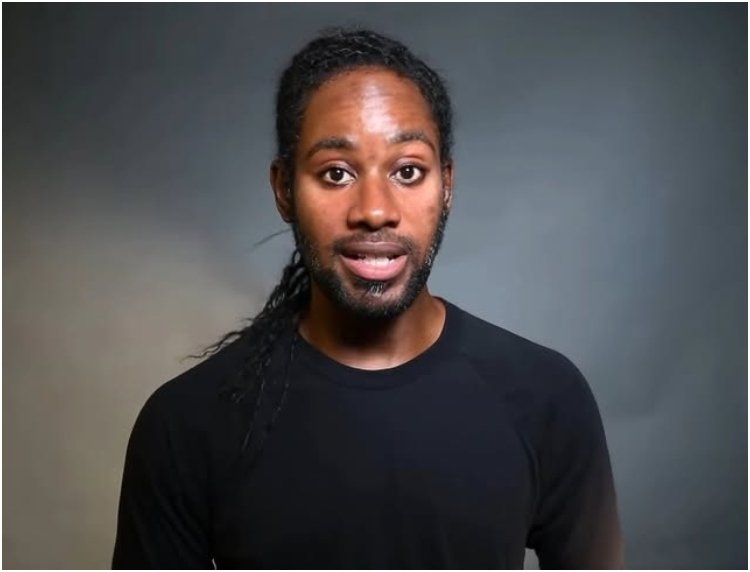
When Jason Arday was appointed Professor of Sociology of Education at the University of Cambridge in 2023, it was hailed as a landmark moment both in Ghana and across the world.
At just 37, he became the youngest Black professor ever appointed at the prestigious 800-year-old institution, a milestone that resonated far beyond the world of academia.
The announcement made international headlines and was celebrated as evidence of progress, diversity and the democratisation of elite higher education. Arday’s personal story, a young man from south London who had overcome childhood adversity and was said to have not learned to read or write until age 18, captured the public imagination.
Two years later, Arday has resigned from Cambridge, and the narrative that once celebrated him has been replaced by one of scandal. Allegations of academic plagiarism, resume embellishments and fabrication of personal background stories have brought his career crashing down.
This explainer examines the core allegations, the institutional response and the broader questions the controversy raises for higher education.
Who is Jason Arday?
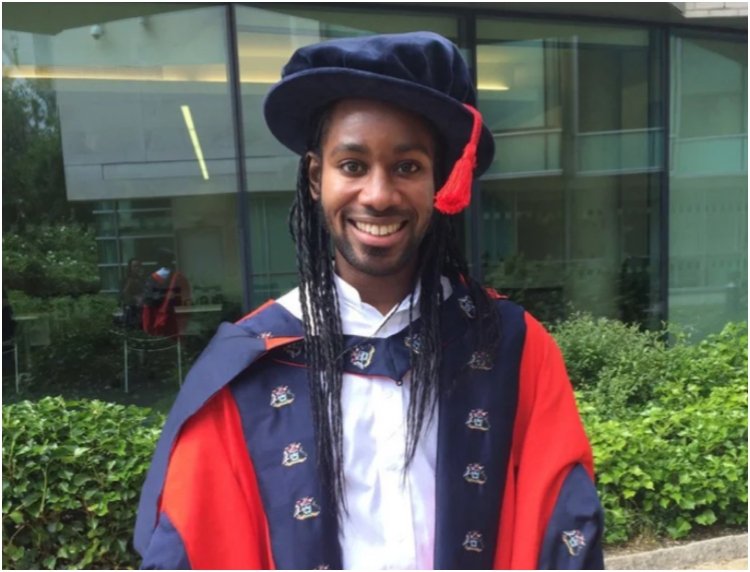
Before the allegations emerged, Arday had established himself as a prominent figure in sociology, focusing on race, inequality and access to higher education. The Ghanaian earned his PhD from Liverpool John Moores University in 2015 and had held academic positions at the University of Roehampton, Durham University and the University of Glasgow before his appointment at Cambridge.
His research on widening participation, social mobility and racial disparities in education had earned him recognition as one of Britain’s leading young academics. His appointment at Cambridge was seen as a significant step in the university’s efforts to diversify its faculty.
The Core Allegations
1. Academic Misconduct and Plagiarism
The first cracks in Arday’s academic reputation emerged when investigators and journalists identified over 100 passages in his 2015 doctoral dissertation that heavily mirrored work previously published by another academic.
The similarities were not limited to his dissertation. Further scrutiny flagged data errors, inconsistencies and uncredited source borrowings in several of his subsequent research articles. Accusations of academic misconduct, the most serious charge in scholarly circles, threatened the foundation of his entire body of work.
2. Resume Embellishments and Unverified Titles
Official biographies had long claimed Arday held prestigious visiting professorships and fellowships at institutions including Ohio State University, Durham University and the University of Glasgow. However, when reporters and university investigators checked these claims, several of these institutions publicly denied that he had ever held those roles.
Questions also emerged about a master’s degree in psychodynamic practices listed in his biographies as having been awarded by Birkbeck, University of London. Birkbeck stated they had no record of him attending the institution.
3. Embellished Personal Background
Perhaps the most striking allegations concerned the personal story that had helped define his public image. Accounts of his athletic achievements came under scrutiny, including claims that he had:
- Run 30 marathons in 35 days
- Run 600 miles in six days
- Raised millions of pounds for charity
When pressed on these claims, Arday later walked back or altered the details.
Claims regarding threats he reportedly received after joining Cambridge, including the delivery of a severed pig’s head to his parents’ home, could not be verified by independent investigations.
Institutional Response
Cambridge initially defended Arday, praising his expertise and reaffirming their confidence in his appointment. However, as new evidence emerged and the allegations mounted, the university announced formal investigations into his background.
The investigations reportedly examined both his academic record and the veracity of the personal claims that had featured prominently in his public profile. The pressure proved overwhelming. In what some described as a “quiet resignation,” Arday stepped down, stating that the public scrutiny and toll on his family had forced him to step away. He has consistently denied intentionally committing academic misconduct.
The university has not released its final investigative findings, but Arday’s departure suggests the allegations were considered sufficiently serious to make his continued tenure untenable.
Broader Implications and Debate
The Arday scandal has ignited a fierce debate in British higher education and beyond.
Institutional Vetting Failures
Critics argue the case highlights systemic failures in academic vetting. The fact that Arday’s resume claims, his dissertation, and his personal narratives were not thoroughly examined before his appointment to one of the world’s most prestigious universities raises uncomfortable questions.
How was a candidate with such significant unverified claims appointed to a professorship at Cambridge? Who was responsible for conducting background checks, verifying credentials and scrutinising publications? The scandal suggests that in the rush to embrace diversity, due diligence may have been compromised.
The DEI Controversy
The scandal has also become entangled in the broader culture war over Diversity, Equity and Inclusion (DEI) initiatives in higher education.
Some of Arday’s supporters and fellow Black scholars have expressed concern that the scandal is being weaponised by critics of diversity initiatives. They argue that the intense scrutiny of Arday is disproportionate and reflects a desire to undermine progress in diversifying elite institutions.
Conversely, critics of DEI argue the scandal is evidence of lowering standards and prioritising representation over merit. They contend that if institutions are not applying the same rigorous vetting processes to diverse candidates as they do to others, they are doing a disservice to both the individuals appointed and the institutions themselves.
A Cautionary Tale
For the academic community, the Arday case serves as a cautionary tale. It demonstrates the dangers of relying too heavily on compelling personal narratives without verifying the underlying facts. It also highlights the need for robust institutional processes to prevent similar situations from occurring in the future.
The most troubling question the case raises is: if a candidate’s background and publications can pass scrutiny at Cambridge, what does that say about the rigour of the academic hiring process elsewhere? The implications extend far beyond one individual or one institution.
What Happens Next
Arday’s resignation has effectively ended his academic career at Cambridge. Whether he will be able to continue in academia elsewhere remains uncertain, but the reputational damage may be irreparable. The universities that publicly denied his alleged visiting professorships have already distanced themselves from him, and the plagiarism allegations cast doubt on his scholarly contributions.
For Cambridge, the episode has been damaging. The university that celebrated Arday’s appointment as a milestone now faces questions about its own vetting processes and its handling of the controversy. An internal review is likely, and the outcome could lead to changes in how the institution vets appointments.
More broadly, the Arday scandal has exposed uncomfortable tensions in higher education: between the pursuit of diversity and the maintenance of standards; between compelling narratives and verifiable facts; and between the desire for progress and the need for accountability.
It is a story that will continue to resonate as the academic community grapples with its lessons.
From the Diaspora
‘They Started From Here and Built Their Way Up’: Creator Says West Africa’s Lebanese Community Offers a Lesson in Building Wealth

A creator known as Africana Grande is pointing to West Africa’s Lebanese communities as an example of how immigrant communities can overcome economic hardship, establish businesses and build wealth across generations.
In a video shared online, Africana Grande argued that the Lebanese experience in countries including Ghana, Senegal and Côte d’Ivoire offers a lesson that other African communities could learn from.
“If there is a community that should inspire all of us Africans in Africa, that is the Lebanese community,” the creator said.
Africana Grande traced the origins of many Lebanese families in West Africa to migration during the 19th century, when people were leaving Lebanon amid economic instability, political unrest, famine and other hardships under the Ottoman Empire.
The creator also linked the migration to the decline of Lebanon’s silk industry, arguing that increased competition from Chinese producers hurt a traditional source of income and forced people to seek opportunities elsewhere.
According to Africana Grande, some migrants initially looked toward destinations in Latin America before eventually establishing communities in West Africa.
But once they arrived, the creator said, many focused on building businesses.
“When they arrived in Africa, they were locked in,” Africana Grande said. “Their immediate intention was to create successful businesses.”
From Starting Over to Building Businesses
Africana Grande said Lebanese migrants identified commercial opportunities in areas where European businesses, particularly French interests, were less established.
The creator highlighted trade and retail as important parts of the community’s economic development, while also pointing to the presence of Lebanese-owned restaurants and other businesses across West Africa.
Senegal, Côte d’Ivoire and Ghana are among the countries where established Lebanese communities have become prominent in commerce.
Africana Grande’s broader argument is that the community’s success demonstrates how entrepreneurship can transform a family’s economic circumstances over multiple generations.
“They were able to start from scratch with not having that much money and create successful businesses,” the creator said.
That generational aspect was central to the message.
Africana Grande pointed to families whose businesses and assets have been passed down to children and grandchildren, creating economic foundations that continue long after the original migrants have died.
“They did not start from here,” the creator said. “They started from here and built their way up to here.”
A Lesson for African Entrepreneurs?
Africana Grande presented the Lebanese experience not simply as a story about migration, but as an example of long-term wealth creation through business ownership.
The creator argued that African communities could draw inspiration from the emphasis on entrepreneurship, commercial networks and passing economic assets from one generation to the next.
The video also highlighted the particularly significant presence of the Lebanese community in Côte d’Ivoire, which has one of the largest Lebanese populations in West Africa.
Africana Grande claimed that the Lebanese community controls more than 50% of Côte d’Ivoire’s economy, although that figure was not independently established in the information provided and should be treated as the creator’s characterization rather than a verified economic statistic.
Still, the larger point of the video was clear: Africana Grande believes the Lebanese experience in West Africa demonstrates what can happen when immigrants arrive with limited resources, identify economic opportunities and build enterprises designed to outlast the founders.
For the creator, the story is ultimately about more than the Lebanese community.
It is a challenge to Africans to consider how today’s businesses, investments and economic opportunities can be transformed into lasting wealth for future generations.
“They started from here and built their way up to here,” Africana Grande said.
Background
The Lebanese community in West Africa represents one of the most economically influential diaspora groups in the region. Arriving as early as the late 19th century, Lebanese migrants built widespread commercial networks that grew from modest trading operations into major industrial and corporate holdings across nations such as Nigeria, Côte d’Ivoire, Ghana, Senegal, and Sierra Leone.
1. History and Initial Settlement
- Origins: Initial migration waves began around the late 1880s due to economic hardship under the Ottoman Empire, political instability, and the decline of the domestic silk industry.
- Early Trade: Migrants initially operated as itinerant peddlers, small traders, and commercial intermediaries. They bridged gaps between rural producers, urban markets, and colonial-era trading houses by supplying imported consumer goods, textiles, and hardware.
- Credit Extension: Early Lebanese traders gained a strong foothold by extending credit terms to local merchants and farmers—a practice uncommon among European firms at the time.
2. Core Sectors of Enterprise
Over generations, Lebanese businesses diversified beyond retail trading into major industrial and commercial sectors:
| Sector | Primary Focus & Examples |
|---|---|
| Import / Export & Retail | Wholesale distribution, supermarket chains, general goods, and food distribution networks. |
| Manufacturing & Industry | Building materials, paints, plastics, food processing, pharmaceuticals, packaging, and textiles. |
| Construction & Infrastructure | Commercial real estate development, hotel construction, and major infrastructure projects (e.g., Chagoury Group in Nigeria). |
| Hospitality & Services | Restaurants, hotels, logistics, shipping, and telecommunications services. |
3. Strategic Business & Growth Factors
- Family Enterprise & Wealth Transfer: Most businesses are operated as multi-generational family enterprises where ownership, capital, and institutional knowledge are retained and passed down through generations.
- Adaptation to Policy Shifts: When local legislation (such as Ghana’s Business Promotion Act or Nigeria’s indigenization policies in the 1970s) restricted foreign ownership in small retail, many Lebanese businesses successfully pivoted into higher-value capital-intensive sectors like manufacturing and real estate.
- Diaspora & Regional Networks: Strong commercial connections across West African borders enable seamless supply chains, import-export financing, and cross-border trade.
4. Regional Economic Impact & Integration
In several countries, Lebanese-owned businesses generate substantial employment, tax revenues, and industrial output. For example, in Côte d’Ivoire and Senegal, Lebanese firms hold long-standing positions in urban retail and real estate. In Nigeria and Ghana, Lebanese industrial houses manufacture key domestic goods and infrastructure inputs. While discussions around economic concentration and local integration remain ongoing, the community’s entrepreneurial legacy is widely studied as a primary example of long-term wealth creation through commercial persistence.
From the Diaspora
‘This Moment Is Bigger Than Relocation’: Kea Wakesho Simmons Says Africa-Diaspora Connections Should Be Built on Legacy

As more people of African descent explore reconnecting with the continent through travel, investment and relocation, entrepreneur Kea Wakesho Simmons says the conversation should be about more than simply moving abroad.
The founder and CEO of Traverze Culture, a company focused on helping people make informed decisions about relocating and building connections in Africa, recently shared a message aimed at reshaping how people view the growing diaspora return movement.
Her message began with a statement that may seem unexpected coming from someone who helps people relocate:
“You don’t need to move to Africa.”
Simmons explained that her work is not about persuading people to leave their current lives behind, but about helping them understand their options and make decisions that align with their personal goals.
“Relocation isn’t for everyone, and I’ve never believed in convincing people otherwise,” she wrote.
She said her role is not to promote one destination, but to provide guidance based on practical considerations such as finances, healthcare needs, lifestyle preferences and long-term plans.
“The right decision is an informed one,” Simmons said, describing that principle as central to the mission of Traverze Culture.

While she emphasized that relocation is not the only path, Simmons said she believes the increased interest among members of the African diaspora in reconnecting with the continent represents a significant historical moment.
“For the first time in hundreds of years, people of African descent are returning back to a continent that our ancestors never had the chance to do,” she said.
Simmons said that return can take many forms, including visiting African countries, investing in local economies, creating partnerships and sharing knowledge.
She argued that the relationship between Africa and its global diaspora should be based on collaboration rather than short-term experiences.
“I don’t want this to become a trend,” Simmons said. “I don’t want history to look back and say, they came a few years and then they left.”
Instead, she said she hopes future generations see this period as one when diaspora communities contributed to building stronger connections and opportunities.
“I want history to say that we came back and built something,” she said. “That we created opportunities. That we transfer knowledge. That we strengthened relationships between Africa and its global diaspora.”
Simmons also pushed back against narratives that portray Africa as a place dependent on outside intervention.
“Africa doesn’t need saving. Africa needs partnerships.”
Her comments come as interest grows among members of the global African diaspora in exploring ancestry, cultural ties, business opportunities and possible relocation options across African nations.
For Simmons, the movement is not simply about changing addresses — it is about creating lasting relationships.
“This moment is bigger than relocation,” she said. “It’s about legacy.”



-

 Ghana News1 day ago
OBITUARY: Gamal Gorkeh Nkrumah, Son of Ghana’s Founding President, Dies in Cairo
-

 Sights and Sounds2 days ago
EPP BookShop at Legon: A Destination for Students, Families and Book Lovers
-

 Health & Wellness1 day ago
Walking Is More Than Exercise: Small Steps That Can Transform Your Health
-

 Festivals & Events1 day ago
MaddFest 2027: Welcome the New Year with a Night of Celebration in Accra
-
 Homes & Real Estate2 days ago
Building Smarter in Ghana: Could Plastic Rebar Clips Improve Construction Efficiency?
-
 Arts and GH Heritage1 day ago
Inside Togo’s Abandoned Colonial Building, African Artists Reclaim Cultural Memory
-

 Global Update1 day ago
Wave of Student Killings at Mexico Universities Raises Safety Concerns
-

 Ghana News1 day ago
Mahama to Churches: The Real Sermon Is Written After the Closing Prayer