
Perspectives
Ghana’s security strategy has kept terror attacks at bay: what other countries can learn from its approach


Ghana stands out in west Africa as a nation that has not experienced terrorist attacks, even though it’s geographically close to countries that have. In Burkina Faso, Mali and Nigeria, extremist groups such as Boko Haram and Islamic State in West Africa (ISWAP) have wreaked havoc.
This resilience is not accidental. It is the result of deliberate counter-terrorism strategies employed by Ghana’s security institutions.
Ghana’s counter-terrorism framework was set out in 2020. It has four pillars: prevent, pre-empt, protect, and respond. The idea is to coordinate multiple agencies, including the Ghana Police Service, Ghana Immigration Service, Ghana Armed Forces and the National Intelligence Bureau.
These pillars guide strategies to address both immediate threats and underlying vulnerabilities. Poverty, religious radicalism and porous borders are common drivers of terrorism in west Africa.
I am an international security and global governance researcher. My co-author is a government and international studies scholar.
Four years ago we wrote a paper examining Ghana’s resilience against terrorist attacks. Our findings are still relevant given the increasing activities of terror groups in the west African region.
We wanted to identify what works as a potential model for other countries.
Using a qualitative methodology, we interviewed stakeholders — including police officers, members of the armed forces, Muslim community leaders, and immigration officials. We also analysed the national framework for preventing and countering violent extremism and terrorism.
Our findings showed that Ghana’s success is traceable to an approach that integrates community engagement with advanced border technology, inter-agency training, media collaboration and intelligence operations. And it addresses both immediate and underlying threats.
We argue that Ghana’s ability to balance prevention with security offers solutions for stability in a geopolitically volatile region.
Community engagement
One of the standout strategies is community engagement. This serves multiple purposes, from guiding people away from extremism to gathering intelligence.
The Ghana Police Service, for instance, engages Muslim-dominated communities, known as “Zongos”, to counter radical Islamic ideologies that could be exploited by terrorist groups.
By collaborating with local religious leaders, police make communities aware of the dangers of radicalisation. They foster trust and encourage residents to report suspicious activities. This approach also works in tackling illegal arms circulation.
Ghana has an estimated 2.3 million small arms in circulation – 1.1 million of them illegally possessed. The availability of so many weapons fuels terrorist activities across west Africa.
Community based de-radicalisation aligns with global best practices. In Norway, for instance, it was used to disengage youth from extremist groups.
Technology at borders
Ghana’s border control management is another part of its counter-terrorism strategy. Ghana Immigration Service uses advanced security software and integrated systems like the “Immigration 360” system, designed to fully automate passenger processing and data management.
The system manages records of fingerprints and other data to improve reporting and intelligence sharing between Ghana Immigration and other security agencies.
The technology makes it possible to quickly identity individuals on terrorist watchlists and detects concealed goods. This helps prevent illegal cross-border movements.
There are gaps in Ghana’s defences, however. The influx of migrants fleeing extremist violence in Burkina Faso, Mali and Niger in 2024 highlights the urgency of scaling up investments in the technology.
Training for preparedness
Ghana combats new and varying forms of terrorism by uncovering trends and training personnel to deal with them.
A notable example was the six-day joint training in 2022 involving the Ghana Immigration Service, Police Service, Customs, Economic and Organised Crime Office, and the National Intelligence Bureau.
The country also works with regional neighbours like Burkina Faso, Togo and Benin, and partners such as the United States, through initiatives like “Operation Epic Guardian”.

Media as a strategic partner
Terrorists rely on media to amplify fear and publicise their causes. Ghana’s security agencies counter this tactic by actively engaging media houses to report accurately.
The Ghana Armed Forces, for instance, works with media to debunk false reports, which can cause public panic and inadvertently aid terrorists.
The Ghana Police Service emphasises regular dialogue with media to ensure sensitive information is verified before publication, reducing the risk of tipping off suspects. However, media competition for viewers poses a challenge.
Surveillance and intelligence gathering
Surveillance and intelligence gathering is critical. Plainclothes armed forces and immigration personnel blend into communities to monitor potential threats. The approach has worked but is constrained by resources.
It can also risk human rights violations, such as wrongful profiling, and is less effective against multiple targets compared to technological solutions like facial recognition or CCTV.
Challenges and regional implications
Despite its successes, Ghana’s counter-terrorism framework faces challenges that could undermine its long-term efficacy:
- logistical and financial constraints
- the influx of migrants fleeing regional violence
- a lack of harmonised security cultures within the regional body, Ecowas.
In all, Ghana’s strategies offer lessons for west Africa, where terrorism is a growing threat.
Its community engagement model could be followed in Nigeria, Burkina Faso, Mali and Niger to counter radicalisation and arms proliferation, provided it avoids religious stereotyping.
Article by Paa Kwesi Wolseley Prah, Postdoctoral Fellow, Dublin City University; and Timothy Chanimbe, PhD Candidate, Hong Kong Baptist University
This article is republished from The Conversation under a Creative Commons license. Read the original article.









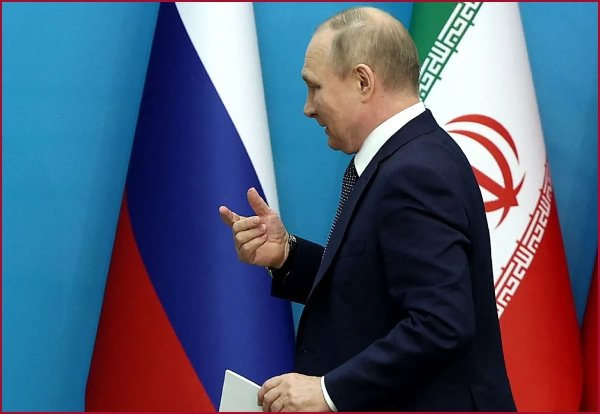
Can Moscow host Africa under drone threat? As Moscow prepares to welcome African leaders to the third Russia-Africa Summit on October 28 to 29, Ukrainian drone strikes have reportedly hit Yandex data centres and targeted the capital region, exposing a delicate contradiction at the heart of the gathering. Russia pitches itself as Africa’s security partner while its own infrastructure proves vulnerable. In this opinion piece, analyst Joseph McCarthy examines the security dilemma facing both Moscow and African governments, arguing that leaders weighing the trip must confront a deeper question: what does it mean to tie your nation’s safety to a partner that is itself under sustained attack? Read the full article below.
Yandex Strikes: Can Moscow Host Africa Under Drone Threat?
Moscow pitches itself as Africa’s security partner while its own infrastructure is exposed
By Joseph McCarthy · Analyst, Sahel governance & security
| 3YANDEX DATA CENTRES REPORTEDLY STRUCK, 8–11 OCT | 650DRONES STRUCK MOSCOW REGION, 6 OCT | 28–29 OctTHIRD RUSSIA-AFRICA SUMMIT, MOSCOW |
Every summit is a performance of strength. The third Russia-Africa Summit, due in Moscow on 28 and 29 October, is meant to show African leaders that Russia remains a confident, well-connected partner despite sanctions, isolation and a costly war. Between 8 and 11 October, Ukrainian drones complicated that script. Three data centres operated by Yandex, the technology giant behind much of Russia’s digital economy, were reportedly struck in the Ryazan, Kaluga and Vladimir regions. For Moscow and for its African guests, the episode poses a security dilemma that no communiqué will resolve.
The first attack, on the night of 7 to 8 October, reportedly set fire to a facility in Sasovo, in Ryazan region, and suspended operations. A second strike hit a site in Kaluga; a third, in Vladimir region, followed on 11 October. Yandex runs payments, email, navigation, ride-hailing, delivery and cloud computing, so the effects spread quickly. Meduza reported disruptions to Yandex Pay, Mail, Disk and Go, while businesses that depend on Yandex Cloud described outages of their own. One user told the outlet: “All my money is on Yandex, so I have no money for food.” The company says customers’ funds are safe, but the episode shows how one point of failure can become hardship for ordinary people within hours.
Recovery may be slow. Reports suggest that replacing specialised equipment could take months, and Russian officials have reportedly acknowledged the difficulty. That matters beyond one company. Moscow has spent years encouraging reliance on domestic platforms as Western technology withdrew. The Yandex strikes show that domestic ownership is not the same as security. Technological sovereignty also means being able to protect, maintain and restore systems under attack.
Moscow will call such strikes aggression against civilian targets. Yet they come after years of Russian missile and drone attacks on Ukrainian cities and energy infrastructure, so the exposure Russia now faces cannot be separated from the war it chose to launch. That context does not make the risk to visitors any smaller; it explains why it is unlikely to disappear before the summit.
Here lies the first half of the dilemma, and it is Moscow’s. Hosting African leaders in the capital is a statement of confidence, but it also puts that confidence on display. Russia must keep airspace open, transport moving and digital systems running while the war reaches ever deeper into its territory. On 20 September, roughly 450 drones were reportedly aimed at the capital; on 6 October, around 650 struck the Moscow region. Every intercept shows that defences work. Every strike that lands, and every airport closure, suggests the opposite. The summit cannot merely proceed; it must avoid becoming a showcase for exposure. Moscow will almost certainly respond with heavy security, restricted airspace and tightly managed movement. That may protect delegates, but it also turns the gathering into a fortress, held in spite of the war rather than in a country at ease with itself.
None of this proves that Russia cannot protect the summit. Vulnerability to long-range drones is not the same as losing the ability to defend territory, and the more widely a country’s civilian and commercial infrastructure is distributed, the harder it is to shield. Delegations may well land, meet and leave without incident. But that is a probability, not a guarantee, and guarantees are precisely what Russia is selling.
That brings us to the second half of the dilemma, which belongs to African governments. The immediate question is personal safety. In early September, Air Tanzania suspended its Dar es Salaam to Moscow route after a risk assessment, then resumed it days later. Further attacks could prompt airspace restrictions, diversions and tighter security that complicate movement between airports, hotels and venues. These are scenarios, not confirmed disruptions, yet every government weighing the trip must price them in, including the level at which it chooses to be represented.
The deeper question is strategic. Security cooperation is the core of Russia’s offer to Africa: Moscow says it has military agreements with more than 40 African states, and Russian security personnel are embedded in countries such as Mali and the Central African Republic. Governments that rely on that protection are tying their own security to a partner that is itself under sustained attack. A security provider at war is also a provider that is stretched, distracted and targeted. The more a government leans on Russia to guarantee its safety, the more it imports the risks of Russia’s war.
“The more a government leans on Russia to guarantee its safety, the more it imports the risks of Russia’s war.”
Call it a dilemma of dependence. The relationship meant to be a source of protection can become a channel for exposure, and the closer the embrace, the harder it is to step back.
What should African governments do? Engage, but with open eyes. They can ask for written security and contingency arrangements for their delegations, diversify their security partnerships so that no single patron’s vulnerability becomes their own, and insist that cooperation strengthens national institutions rather than simply protecting incumbent governments. Strategic autonomy means having choices. It does not mean choosing between Moscow and everyone else, or accepting one patron’s risks as the price of its protection.
The Kremlin wants the summit to show that sanctions have not isolated Russia. The Yandex strikes complicate that message without defeating it. They pose a simple test for any partner who offers security: can it secure itself? The answer will not come from speeches in Moscow. It will come from whether the summit runs smoothly, and from what follows. Until then, African leaders have every reason to listen politely, travel carefully and commit slowly.
■
Joseph McCarthy is an analyst and researcher specialising in governance, security and political transitions in the Sahel. He writes on geopolitics, development and African diplomacy. joecarthy30@gmail.com
Perspectives
Policy Brief: ‘A Test of Agency: Ghana’s BRICS Application and the Future of Strategic Diversification’ | By Col Festus Aboagye (rtd)

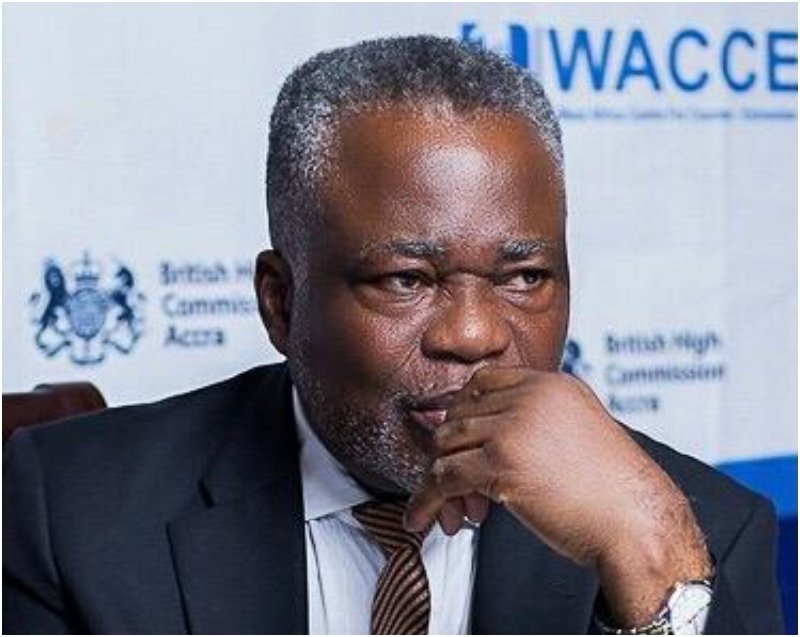
Ghana’s proposed BRICS membership has generated considerable debate. Yet the issue is often presented as a binary choice between traditional Western partnerships and emerging powers.
In ‘A Test of Agency: Ghana’s BRICS Application and the Future of Strategic Diversification’, Colonel Festus Aboagye (Retired) argues that a more useful lens is strategic agency: Ghana’s capacity to choose, manage, and, where necessary, disengage from external partnerships to pursue its national interests.
The brief explores the potential benefits, risks, and policy choices surrounding BRICS engagement. It offers a framework for evaluating future commitments through the lenses of accountability, transparency, sovereignty, and strategic flexibility.
‘A Test of Agency: Ghana’s BRICS Application and the Future of Strategic Diversification’ | By Col. Festus Aboagye (rtd)
Ghana’s decision to seek BRICS membership is a significant foreign-policy initiative. Public discussion has tended to fall into two camps. One sees BRICS as an escape from excessive dependence on Western institutions and markets.
The other sees a step towards alignment with China, Russia and other emerging powers. Both could be oversimplifications. The more important question is whether participation would strengthen Ghana’s strategic agency: its ability to choose, scrutinise, alter and, where necessary, exit external partnerships in pursuit of national interests.
This brief argues that the application is best understood as a test of agency rather than alignment.
- An announcement, not yet an application. On 6 October 2026, Ghana announced a Cabinet decision to apply. On the available evidence, no formal application had been submitted by 10 October 2026.
A forum, not an alliance or a common market. BRICS confers no automatic trade preferences, finance or security guarantees. Most gains would depend on agreements with individual members and institutions.
The benefits lie in diversification, not replacement. Membership could broaden Ghana’s partners, strengthen its bargaining position, and provide a platform to push for global governance reform.
The risks are real but conditional. They include new dependency, fiscal exposure, technology lock-in, diplomatic pressure, and reactions from Western partners, including a United States tariff threat.
Outcomes, not symbolism. Membership should be judged by whether it broadens options, strengthens leverage and preserves accountability.
Click here to read the full article.
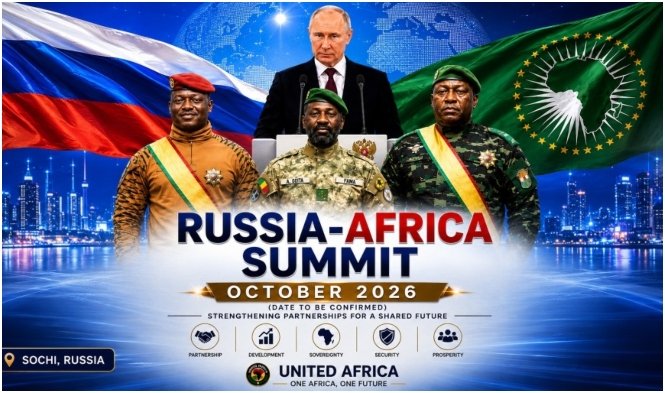
As Moscow prepares to host the third Russia-Africa Summit on 28–29 October 2026, the gathering arrives at a moment of heightened scrutiny. Nearly five years into its war in Ukraine, Russia is seeking to prove that its partnerships with African states have survived Western sanctions and remain strategically valuable. But the deeper question is what Africa gains in return. Drawing on trade figures, security partnerships in the Sahel, and the intersection of military cooperation with resource interests, this analysis by Joseph McCarthy examines whether the relationship is genuinely reciprocal or whether Africa is becoming an increasingly important source of the political influence, strategic resources, and economic resilience that Moscow needs to sustain its own geopolitical ambitions. Read the full article below.
Russia-Africa Summit: The Search for Resources, Influence and War Resilience
As the Ukraine war deepens Russia’s search for strategic resources, political allies and economic resilience, the third Russia-Africa Summit raises a difficult question: what does Africa gain in return?
Russia’s renewed engagement with Africa should be understood against the backdrop of a war in Ukraine that has become a test of Moscow’s economic, military and political endurance. Since the invasion of Ukraine, Russia has faced extensive Western sanctions, restrictions on trade and finance, and increasing pressure on the sources of revenue that sustain its war effort. In this environment, Africa has acquired a significance that extends beyond traditional diplomacy. The continent offers Moscow political partnerships, alternative markets, military cooperation and, critically, access to valuable natural resources and potential revenue streams that can help Russia withstand external pressure.
This helps explain the evolution of the Russia-Africa summits. The first summit, held in Sochi in 2019, was largely presented as an effort to rebuild and institutionalise Russia’s relationship with Africa, with trade, investment, security and political cooperation at the centre of the agenda. By the time of the second summit in St Petersburg in 2023, however, the geopolitical context had changed dramatically. Russia was already deep into its war in Ukraine and under extensive Western sanctions. The summit therefore served not only to deepen economic and political relations but also to demonstrate that Moscow remained capable of maintaining significant partnerships outside the Western bloc.
The third summit schedule on 28-29 October 2026, comes at an even more consequential moment. Russia is seeking to demonstrate that its relationship with Africa has survived the prolonged Ukraine war and remains capable of producing strategic benefits. The question for African governments should increasingly be whether the relationship is producing comparable benefits for them. Moscow’s partnership with Africa cannot be assessed only through diplomatic declarations, military agreements or high-level summits. It should also be judged by what African states receive in return and by what Russia gains from the relationship.
One of the most important areas to examine is natural resources. Russia’s interest in Africa is not simply about obtaining diplomatic support. Access to gold and other strategic commodities can provide alternative sources of revenue at a time when Moscow is seeking to reduce the impact of Western sanctions. Gold is particularly important because it can be traded through opaque networks and converted into revenue outside conventional financial channels. The U.S. Treasury has previously linked Wagner-associated gold operations in Africa to the financing of the group’s activities, including its operations in Ukraine. This does not mean that every Russian engagement with an African resource-producing state is designed to finance the Ukraine war.
It does, however, demonstrate why African resources can have strategic value for a Russia seeking to sustain its power and resilience under sanctions. The same logic extends beyond gold. Russia has increasingly shown interest in energy and critical raw materials, while its security partnerships in countries such as Mali and the Central African Republic have created relationships in which military and political cooperation can intersect with economic and resource interests. The emerging model therefore deserves closer scrutiny, Russia provides security assistance and political backing, while gaining influence, commercial opportunities and potentially privileged access to resources.
Mali provides one of the clearest case studies. Russia’s military presence in the country began with the arrival of Wagner personnel in 2021 and subsequently evolved into the Africa Corps structure. Moscow has presented this relationship as an alternative to Western security partnerships and as evidence of Russia’s willingness to assist African states in defending their sovereignty. Yet the relationship also raises a fundamental question: what does Russia receive in return for its military and political support?
That question becomes particularly important when the wider context of the Ukraine war is considered. If Russia can secure access to gold and other strategic resources, strengthen relationships with resource-rich governments and establish alternative economic channels, those relationships can help Moscow mitigate the effects of sanctions and sustain its broader strategic capacity. The relationship should therefore not be viewed solely through the narrow lens of counterterrorism. It is also part of a wider contest over resources, influence and economic resilience.
The economic figures contained in the summit case study reinforce the need to ask what kind of partnership Moscow is actually building. At the 2019 Sochi summit, Vladimir Putin announced a target of increasing Russia-Africa trade to $40 billion. According to Russian data cited in the document, trade stood at $27.7 billion in 2025, while Russia accounted for less than 1 percent of foreign direct investment in Africa. These figures do not prove that Russia’s Africa strategy has failed, nor do they capture every form of strategic value that Moscow derives from the continent. If Russia’s conventional economic footprint remains relatively modest, why is Moscow investing so heavily in strategic relationships with African states? One answer is that the value of Africa to Russia cannot be measured by trade and investment alone. Political influence, military access, diplomatic support, alternative markets and access to natural resources can all have strategic value. For a country fighting a prolonged war under sanctions, these forms of influence can become as important as conventional economic indicators.
This is why the third Russia-Africa Summit should be examined as more than another diplomatic gathering. Moscow wants to use the summit to demonstrate that its partnership with Africa remains strong despite the Ukraine war. The circumstances surrounding the meeting expose the tension at the heart of that claim. African officials are being asked to travel to Moscow while Ukrainian drone attacks have repeatedly disrupted air traffic around the Russian capital. On September 20 an attack involving more than 450 drones caused fresh disruption in the Moscow region, while Air Tanzania temporarily suspended its Moscow route following a risk assessment. The irony is difficult to ignore. Russia presents itself as a security partner for Africa, yet some African officials must consider their own security when travelling to the Russian capital. More importantly, African governments must now assess whether the strategic benefits of their relationship with Moscow justify the risks and costs associated with it.
For Ghana, this calculation is particularly important. The security consequences of Russia’s growing involvement in the Sahel cannot be separated from Ghana’s own national and regional security interests. A source close to the Ghanaian delegation cited in the summit document questions whether the relationship is genuinely “win-win” and points directly to the deteriorating security situation in the Sahel and its spillover towards Ghana’s northern borders. This should concern African governments is Russia’s engagement with Africa primarily delivering security and development benefits to African states, or is Africa increasingly becoming an important source of the political influence, strategic resources and economic resilience that Moscow needs to sustain its own geopolitical ambitions?
The answer is unlikely to be simple. Russia’s relationship with Africa serves multiple purposes, and resource access is only one component of a broader strategy. But the Ukraine war has changed the calculation. What may once have been presented principally as an effort to expand trade, investment and diplomatic relations now also has to be viewed through the lens of Russia’s need to preserve strategic autonomy, withstand sanctions and maintain the capacity to wage a prolonged war.
The third Russia-Africa Summit therefore represents a test not simply of whether African leaders will continue to engage Moscow, but of whether Russia can convince them that this engagement is genuinely reciprocal. For African states, the critical question is no longer whether Russia wants a deeper relationship with Africa. It clearly does. The more important question is what Moscow needs from Africa, what Africa receives in return, and whether the balance between the two is becoming increasingly unequal.
Joseph McCarthy is an analyst and researcher specialising in governance, security and political transitions in the Sahel. He writes on geopolitics, development and African diplomacy. joecarthy30@gmail.com

-
 Arts and GH Heritage2 hours ago
Beyond the Gallery: Karp Kamina Turns Cultural Memory into Contemporary Art
-
 Sights and Sounds1 day ago
Planning a Family Day Out in Accra? Lakeside Marina Park Offers Fun for All Ages
-
 Fashion & Style8 hours ago
Malian Businesswoman’s Reported $1.5 Million Gold Jewellery Stuns Wedding Guests
-
 Global Update1 hour ago
Huge Storm Kills Two in the UK as 90,000 Properties Left Without Power
-
 Festivals & Events1 day ago
Ahukan Festival: Honouring Chiefs and Celebrating Akyem Heritage in Kibi
-

 Ghana News1 hour ago
Ghana’s President Congratulates Brazil’s Lula on Historic Fourth Term, Vows to Champion Global South Agenda
-

 Health & Wellness43 minutes ago
Four Weight-Loss Mistakes That Could Be Holding Back Your Progress
-

 Ghana News31 minutes ago
Can Ghana Kill the Dollar ‘Wahala’? TOR’s Cedi-for-Crude Gamble Explained