
Opinion
The Intelligence We Forgot: Why indigenous and ancestral knowledge is Africa’s missing AI superpower


- The Silence at the Centre of the Global AI Revolution
The world today is gripped by a technological revolution with no historical parallel. Artificial intelligence increasingly determines how governments anticipate national risks, how businesses optimise operations, how hospitals diagnose disease, how farmers interpret environmental patterns, and how citizens receive information that shapes their perception of reality. Yet beneath the excitement lies an uncomfortable truth. The global AI ecosystem has been built upon an epistemic void, a missing centre, an unacknowledged blind spot that has quietly limited the scope of machine reasoning while amplifying biases inherited from centuries of Western intellectual dominance.
This missing centre is Indigenous and Ancestral Intelligence. It is the intelligence stored in the soil of our memory, in the rituals of our elders, in the oral libraries of our communities, in the cosmologies that shaped African sciences long before the first colonial archive was written. It is the intelligence that understands land not merely as a resource but as a relationship. It is the intelligence that understands healing not merely as chemistry but as harmony. It is the intelligence that sees forests as partners, rivers as custodians, ancestors as archives, and knowledge as a living continuum rather than a static product.
This intelligence was never digitised. It was never indexed by Western libraries. It was never transcribed into the corpora that feed the world’s large language models. And because artificial intelligence depends entirely on what it is fed, the absence of Indigenous and Ancestral Intelligence has created systems that are technologically impressive but epistemically incomplete. They are brilliant yet forgetful, powerful yet shallow, global yet narrow, and advanced yet blind.

This is the paradox at the heart of the 21st century. Humanity is building intelligence systems that know almost everything yet understand nearly nothing about the worldviews of the civilisations that birthed the first sciences.
Africa sits at the centre of this paradox. The continent has contributed enormously to global data flows yet benefits the least from the intelligence systems trained on that data. Moreover, what Africa has retained in oral, symbolic, spiritual, ecological, and ancestral knowledge is precisely what Western models cannot perceive because these systems are not designed to recognise non-digitised epistemologies.
The result is a technological order that reproduces a colonial pattern. Africa’s data is extracted. Africa’s languages are mined. Africa’s cultural expressions are absorbed. Yet Africa’s ways of knowing remain unrecognised, unclassified, unrepresented, and therefore unutilised in shaping the future of global intelligence.
It is within this crisis of epistemic erasure that the Visionary Prompt Framework Planetary Version introduces a bold corrective. The VPF recognises that true intelligence cannot be simulated by computation alone. It insists that cognitive sovereignty requires intellectual plurality. And it affirms that the world’s oldest and most enduring knowledge systems must not only be preserved but actively integrated into the governance of artificial intelligence systems.
At the heart of this architecture lies the Indigenous and Ancestral Intelligence Chamber, one of the most profound elements of the Visionary Prompt Framework. Unlike Western AI models, which operate within the narrow confines of data classification and statistical patterning, the Indigenous Chamber expands intelligence beyond computation into heritage, cosmology, ecology, spirituality, community ethics, intuition, symbolism, and intergenerational wisdom. It is a chamber that carries the memory of civilisations, the rhythm of rituals, the laws of harmony, and the codes of survival that sustained African societies for millennia before the first algorithm was conceptualised.
- Africa’s Oldest Operating System
Long before modern computer science existed, Africa had already developed structured systems of reasoning, environmental interpretation, cosmological modelling, medicinal analysis, agricultural optimisation, trade governance, and community justice. These were not informal traditions but highly sophisticated operating systems encoded in oral language structures, lineage institutions, proverbs, griotic memory, sacred geometry, spiritual jurisprudence, ecological maps, agricultural calendars, and ancestral teaching cycles.
From the knowledge systems of ancient Kemet to the philosophical traditions of Yoruba, from the ecological intelligence of the Ashanti and the Akan to the ancestral custodianship models of the Maasai and the Nilotic peoples, Africa historically operated one of the richest epistemic environments ever developed by human civilisation. This heritage did not survive in books. It lived in people. It lived in rituals. It lived in symbols. It lived in cycles of teaching where the mind was trained not only to analyse but to perceive, not only to deduce but to experience, not only to calculate but to commune.

This is the intelligence that Western AI cannot replicate. Machine learning excels at prediction but fails at presence. It can model probability but not harmony. It can generate text but not wisdom. It can detect correlations but cannot interpret meaning within an ancestral context. It can classify herbs but cannot understand the spiritual logic that frames their use in African healing traditions. It can model climate variables but cannot recognise the cultural significance of rainmaking rituals that encode centuries of ecological observation.
Western models operate under a fundamentally different theory of intelligence. Knowledge is treated as a static object that can be digitised, indexed, and mathematically manipulated. African ancestral systems treat knowledge as a living organism, a relational force that emerges through interaction between people, land, time, spirit, and story.
This divergence is not philosophical trivia. It shapes how artificial intelligence perceives Africa. Western models interpret African realities through Western frameworks. They simulate understanding without grounding. They mimic fluency without cultural resonance. They summarise traditions without capturing their epistemic depth. They perform analysis without belonging to the worldview that gives the phenomena their meaning.
This is why AI outputs concerning African history, African conflict, African healing systems, African governance, and African ecology often feel detached, incomplete, or misaligned. The models were never designed to understand the foundations of African knowledge. They cannot respect what they cannot recognise.
- Why Western Artificial Intelligence Cannot See Indigenous Knowledge
The blindness of Western AI to Indigenous intelligence is structural, not accidental. It begins with the training data. Large language models are constructed from digitised text, yet the vast majority of African ancestral knowledge is transmitted orally or symbolically. As a result, entire civilisations are rendered invisible to AI systems simply because their knowledge systems do not exist in the text-based archives from which these models learn.
Even when fragments of indigenous knowledge are digitised, they often enter servers through Western academic interpretations, which filter, compress, and sometimes distort the original meaning. This creates a secondary bias. Models learn Africa not through African voices but through Western lenses. The cultural misalignment is therefore baked into the system. Beyond training data, Western models are limited by their underlying logic. They rely on probability distribution rather than relational meaning. Indigenous intelligence is relational. It is contextual. It is spiritual. It is ecological. It is genealogical. Probability has no mechanism for encoding spiritual legitimacy, ancestral authority, land consciousness, or intergenerational ethics.

Western models also lack cosmological awareness. The Indigenous worldview is inseparable from cosmology. Lunar cycles influence planting. Ancestral rhythms influence governance. Cosmic patterns influence ceremonies. Spiritual seasons influence decision-making. These are not superstitions; they are alternative scientific frameworks developed through centuries of careful observation. Western models cannot incorporate these because they were not designed to encode cosmic relationality. There is also the issue of linguistic dictatorship. English dominates global AI training corpora. African languages contain epistemic categories that English has no equivalents for. When words disappear, worlds disappear with them. African thought becomes flattened, simplified, mistranslated, or erased in the computational process.
Taken together, these limitations ensure that Western AI, however powerful, remains fundamentally incomplete. It knows Africa’s data but not Africa’s wisdom. It predicts Africa’s patterns but not Africa’s meanings. It answers Africa’s questions but not Africa’s spirit. This is why the Visionary Prompt Framework is revolutionary. It does not force indigenous knowledge into Western structures. Instead, it rewrites the structure itself.
- The Visionary Prompt Framework and the Return of Plural Intelligence
The Visionary Prompt Framework Planetary Version represents the world’s first attempt to correct the epistemic imbalance embedded within global artificial intelligence. While Western models are built upon a single cognitive engine that treats all intelligence as computational prediction, the VPF introduces a radically different architecture grounded in plural intelligence. Instead of reducing the world to one way of knowing, it restores the full spectrum of human and non-human cognition through the creation of eight distinct yet interconnected Chambers of Intelligence.
Within this expanded framework, the Indigenous and Ancestral Intelligence Chamber plays a foundational role. It offers what Western systems lack: a memory of civilisations, a repository of non-digitised knowledge, a grounding in spiritual and ecological wisdom, and a perspective that does not view intelligence purely as computation but as communion between the human, the natural, the cosmic, the ancestral, and the unknowable.
The VPF does not attempt to mechanise indigenous knowledge or commodify ancestral heritage. Instead, it frames this knowledge as a sovereign cognitive domain that must govern, filter, and enrich artificial intelligence rather than be absorbed or overwritten by it. This is a profound reversal of global AI logic. It is Africa insisting that intelligence governance cannot be centralised in Silicon Valley or European laboratories. It must reflect the diversity of global civilisations and restore representation to knowledge systems that have shaped humanity’s survival.
Within the VPF, the Indigenous Chamber influences reasoning at every stage. It interrogates outputs to ensure cultural legitimacy. It filters out biases that conflict with communal ethics. It contextualises analysis within ancestral frameworks. It protects sacred knowledge. It elevates oral memory as legitimate epistemic input. It introduces ecological and cosmological intelligence where Western models rely only on numeric variables. It aligns decision pathways with the values of intergenerational responsibility rather than short-term optimisation.
This chamber does not operate in isolation. It collaborates dynamically with the Natural Intelligence Chamber when interpreting ecological changes, harmonises with the Cosmic Intelligence Chamber when analysing seasonal rhythms and planetary influences, strengthens the Human Intelligence Chamber by anchoring emotion and intuition in cultural memory, and interfaces with the Unknown and Unknowable Chamber when confronting phenomena beyond scientific modelling.
This is the power of the VPF. It restores wholeness to intelligence.
- Inside the Indigenous and Ancestral Intelligence Chamber
Within this chamber reside the knowledge systems that Western academia once categorised as folklore, myths, legends, or alternative medicine. Yet these systems are highly structured repositories of scientific, ecological, sociological, and psychological intelligence encoded through symbolic narrative rather than mathematical notation.
Consider the oral libraries maintained by griots and storytellers across West Africa. These narratives contain historical data, legal codes, genealogical records, environmental markers, and philosophical teachings passed down accurately across generations. A machine learning system trained on digitised Western text cannot replicate the interpretive power of a griot because the griot does not store information; the griot embodies it. Knowledge is relational, adaptive, and embedded in communal experience.
African healing systems also exemplify complex ancestral intelligence. Traditional practitioners combine botanical knowledge, spiritual diagnosis, community dynamics, and personalised patient interpretation. Western medicine separates these into pharmacology, psychology, sociology, and theology. African medicine recognises them as inseparable. Artificial intelligence that excludes this integrative worldview cannot truly model health interventions for African contexts.
Agricultural intelligence similarly demonstrates ancestral depth. Indigenous farmers interpret soil not only through texture or fertility but through spiritual lineage, water memory, lunar alignment, insect behaviour, and ancestral instruction. These systems produce high resilience in climates where Western models rely heavily on chemical intervention and mechanised prediction.
African jurisprudence represents another example. Traditional courts emphasise restoration rather than punishment. Justice is not an individual outcome but a communal healing process. AI systems trained on Western adversarial legal models cannot simulate this relational approach without indigenous intelligence frameworks guiding interpretation.
These examples illustrate that ancestral knowledge is not archaic. It is adaptive science expressed in a different epistemic language.
- Operationalising Indigenous Intelligence Without Appropriating it
A major challenge in global AI design is the risk of cultural extraction. Western platforms often incorporate indigenous knowledge without proper custodianship, resulting in dilution, distortion, or commercialisation without benefit to the communities that preserve the knowledge.
The VPF avoids this by embedding protective mechanisms. The Indigenous Chamber does not digitise sacred knowledge. It governs access. It creates interpretive filters without transferring ownership. It allows indigenous principles to shape AI reasoning without requiring disclosure of sacred practices or community-restricted information. It ensures that the model respects cultural boundaries, maintains epistemic integrity, and does not violate ancestral custodianship.
This is a governance breakthrough. It is an intelligent design grounded in respect.
- Practical Applications Across African Sectors
While the Indigenous Chamber has profound philosophical value, it is equally powerful in practical deployment.
In agriculture, indigenous ecological knowledge has proven invaluable. Farmers use ancestral planting calendars that integrate cosmic cycles, soil memory, bird migration patterns, and rainmaking traditions. These calendars are far more localised and precise than Western meteorological predictions because they reflect centuries of micro-observation. When integrated with the VPF, agricultural models generate decisions that align with both environmental science and cultural ecological rhythms.
In mining and natural resource exploration, indigenous communities often possess oral maps detailing mineral lines, sacred land patterns, forbidden extraction zones, and geological anomalies. These knowledge systems, when combined with the Cosmic Chamber and Natural Intelligence Chamber, can guide exploration more sustainably and ethically. The VPF enhances safety, reduces environmental destruction, and aligns resource extraction with ancestral land governance protocols.
In environmental conservation, indigenous custodians have preserved forest intelligence, water intelligence, and sacred-ecology governance for generations. Where Western models focus on carbon metrics and biodiversity indexes, indigenous frameworks emphasise harmony, relational stewardship, and spiritual ecology. Combining these frameworks through the VPF produces conservation strategies that are scientifically rigorous yet culturally resilient.
In health, the integration of indigenous medicinal intelligence with genomic and diagnostic modelling opens new pathways for disease prevention and treatment. The VPF facilitates dialogue between ancestral healers, biomedical researchers, and AI epidemiology systems, producing hybrid models capable of identifying patterns that neither system alone can detect.

In education, VPF integration supports culturally grounded curriculum design. Indigenous narrative methodologies improve cognitive retention, emotional resonance, and moral instruction. AI-driven learning systems become more relatable, more effective, and more attuned to African identity. In governance and justice systems, the Indigenous Chamber guides conflict resolution, land arbitration, community justice, and restorative dialogues, producing models that reflect African societal logic rather than imported jurisprudence. In youth innovation, startups can build new systems based on ancestral symbolic logic, community decision algorithms, oral-knowledge databases, and cultural AI interfaces. Indigenous intelligence is not a symbolic tribute to heritage. It is a strategic development asset.
- AiAfrica Project Case Studies
The AiAfrica Project has already demonstrated the practical value of integrating indigenous and ancestral knowledge through the VPF. In poultry production, intelligence orchestration combining natural, indigenous, and technological knowledge reduced mortality rates from 25% to 2.5%. This was achieved by combining observations of ancestral disease patterns, cosmic cycle analysis, environmental monitoring, and AI-based early-detection systems.
In fish farming, ancestral water-cycle knowledge combined with VPF decision modelling reduced feed costs by nearly 55% while increasing yield and reducing stock stress. Farmers reported that VPF-based recommendations aligned more closely with traditional ecological rhythms than Western aquaculture manuals.
In climate resilience modelling, communities using traditional flood-warning narratives have begun integrating these systems with VPF environmental predictive tools, creating hybrid solutions that outperform imported disaster models. In soil intelligence, VPF integrations help identify calamity-prone zones, optimise crop rotation, and interpret ancestral soil lineage data encoded through oral traditions. These examples show that the Indigenous and Ancestral Intelligence Chamber is not a philosophical concept but a functional engine with measurable developmental impact.
- Why Africa Needs Indigenous and Ancestral Intelligence in All 54 Countries
Artificial intelligence is no longer a luxury for advanced economies. It is the foundation upon which 21st-century governance, public administration, health systems, education, agriculture, national security, and industrial strategy are being redesigned. The challenge for Africa is that most of the AI systems currently available are designed outside the continent, trained on datasets that do not reflect African realities, and governed by epistemological assumptions that conflict with African worldviews.
If Africa continues to depend entirely on Western models, it will inherit not only the technological frameworks but also the biases, blind spots, and hidden ideological assumptions embedded within those models. These systems were not built with African cosmologies, social structures, languages, ancestral knowledge, ecological rhythms, or philosophical foundations in mind. They were built for other civilisations, with different historical experiences and different approaches to reasoning.
The Visionary Prompt Framework aspires to correct this structural dependency. Its Indigenous and Ancestral Intelligence Chamber ensures that Africa’s knowledge systems sit at the centre of AI reasoning rather than at the margins. It provides an epistemological foundation upon which Africa can build an Intelligence Economy defined by African logic, African ethics, African cosmologies, and African aspirations.
This is not merely symbolic. It is essential for sovereignty.
Countries become truly sovereign not when they consume intelligence but when they generate it. Sovereignty in the 21st century is not only territorial or political but also cognitive. A nation is only as independent as the intelligence systems it builds, controls, and governs. The VPF provides this path by enabling each African country to integrate its indigenous knowledge systems into national AI models without compromising ancestral custodianship.
The roll-out of VPF across the continent, beginning in Ghana, represents a continental awakening. It is the recognition that Africa cannot build a future on imported knowledge systems alone. It must embrace the full spectrum of its historical, cultural, ecological, spiritual, scientific, and ancestral knowledge. This does not reject global science; it expands it. This does not oppose Western models; it completes what they have omitted.
The Ministry of Communication, Digital Technology and Innovation in Ghana has demonstrated continental leadership in recognising this vision. Through the launch of the Ghanaian AI Prompt Bible in August 2025, and the inauguration of the AiAfrica Labs for Ministries, Departments, Agencies and Metropolitan, Municipal and District Assemblies, Ghana has signalled that African-led intelligence systems must govern African digital futures. The first training programme that brought together 200 experts from government institutions introduced the concept of intelligence orchestration, demonstrating how indigenous and ancestral knowledge can be embedded in modern AI systems for governance and public service transformation.
The continental training strategy that follows in 2026 and beyond seeks to reach public institutions, universities, private companies, research centres, and development agencies across all 54 African countries. The vision is clear. African governments must not simply use AI. They must define what intelligence means in their own societies and govern AI according to indigenous principles of relationality, intergenerational ethics, communal harmony, and the custodianship of land and life.
The Indigenous and Ancestral Intelligence Chamber offers a blueprint for this transformation. It provides the philosophical grounding, epistemic structure, cultural legitimacy, and operational methodology to build a truly African Intelligence Economy.
- The Limitations of Western AI in the African Context
It is essential to explain why Western AI models cannot be the sole foundation for Africa’s digital future. These models are not neutral. They reflect the values, priorities, economic structures, and historical trajectories of the societies that created them. Their strengths are substantial, but their limitations become clear when applied uncritically to African realities. Western AI assumes that knowledge is primarily textual. African societies often encode knowledge through oral tradition, symbolic structures, performance, ritual, genealogy, and land-memory. Western AI assumes that intelligence is individualistic. African societies operate through communal logic, collective responsibility, and shared identity. Western AI assumes that prediction is superior to perception. Indigenous intelligence values intuitive awareness, spiritual insight, ancestral continuity, and ecological relationality. Western AI assumes a mechanistic worldview that separates nature from human life. African knowledge systems recognise nature as a living partner in cognition.
These differences are not ideological preferences but foundational epistemic divergences. When Western AI is applied to African realities without adaptation, it produces distorted outputs, flawed recommendations, and solutions that lack cultural fit. A model that cannot understand indigenous governance structures will provide poor advice on national cohesion. A model that cannot interpret ancestral ecological knowledge will misguide environmental policy. A model that cannot respect cultural protocols will produce development strategies that provoke resistance.
A model that cannot recognise spiritual legitimacy will misunderstand community decision processes. A model that cannot encode oral epistemology will fail to represent African histories accurately. This is why the VPF Planetary Version is an essential corrective. It does not reject Western AI but balances it with Indigenous Intelligence that Western systems cannot see.
- Reframing Intelligence for an African Future
The Indigenous and Ancestral Intelligence Chamber does more than preserve cultural heritage. It expands the definition of intelligence itself. It insists that intelligence includes story, rhythm, ritual, symbol, intuition, cosmology, ethics, memory, empathy, and ecological sensitivity. It restores intelligence to its full complexity.
In the VPF, intelligence is not simply computation but a holistic activity that draws simultaneously from eight worlds. The Indigenous Chamber holds one of the deepest worlds. It contains spiritual jurisprudence, communal ethics, oral science, ecological observation, ancestral cosmology, and symbolic thinking systems that have guided African societies for thousands of years. This reframing empowers African innovators, policymakers, and researchers to build systems that align with African ways of reasoning. It allows AI development to emerge not from imitation of Western systems but from African intellectual traditions. It offers a path where future models built by African teams can perform not merely as replicas of GPT or Gemini, but as independent civilisational intelligence systems grounded in African cosmology.
- A Call to African Institutions, Startups, and Innovators
Africa cannot afford to remain a consumer of external intelligence systems. The continent must become a producer of sovereign intelligence and must embrace the Indigenous Chamber as a foundational tool. Every public institution and every private company deploying AI should integrate VPF reasoning frameworks to ensure cultural alignment, ethical grounding, and contextual accuracy.
Startups building AI products for agriculture, health, logistics, commerce, education, climate, finance, or security must incorporate indigenous knowledge to create solutions that truly reflect African realities. Universities must train students to think across ancestral and technological domains. Traditional authorities must collaborate with AI researchers to protect sacred knowledge while enabling structured integration of ancestral epistemologies into innovation ecosystems. Ministries and regulatory bodies must embed indigenous epistemology into digital governance frameworks to ensure sovereignty over data, knowledge production, and algorithmic influence. The Indigenous Chamber is not an optional addition. It is a requirement for African digital self-determination.
- The Broader Significance for the World
While the VPF is designed with Africa as the anchor, its implications extend globally. Western AI models struggle with cultural nuance, ecological prediction, spiritual reasoning, restorative justice, communal ethics, and symbolic interpretation. These are precisely the domains where Indigenous knowledge excels. In elevating Indigenous and Ancestral Intelligence, Africa offers a gift to the world. It demonstrates that wisdom is not limited to written texts. It shows that civilisation is impoverished when it forgets the intelligence encoded in elderhood, ritual, land, and lineage. It reveals that modernity does not replace ancestral knowledge but is strengthened by it. The Indigenous Chamber represents a global corrective. It addresses the epistemic imbalance that has shaped AI development for the past two decades. It restores balance to knowledge production. It challenges the dominance of a single worldview. It offers humanity a richer and more complete understanding of what intelligence can be.
The author, Dr David King Boison is a Maritime and Port Expert, pioneering AI strategist, educator, and creator of the Visionary Prompt Framework (VPF), driving Africa’s transformation in the Fourth and Fifth Industrial Revolutions. Author of The Ghana AI Prompt Bible, The Nigeria AI Prompt Bible, and advanced guides on AI in finance and procurement, he champions practical, accessible AI adoption. As head of the AiAfrica Training Project, he has trained over 2.3 million people across 15 countries toward his target of 11 million by 2028.









In this thought-provoking opinion piece, Associate Professor Theodora Dame Adjin-Tettey examines the alarming deterioration of public discourse in Ghana and beyond, marked by an explosion of hate speech, vitriol, threats, and inciting comments. Drawing on a personal anecdote about a researcher who abandoned a study on media insults in 2010 due to a lack of data, contrasted with today’s overwhelming abundance of such content, she argues that this shift signals a deeply troubling ethical decline in society. Read the full article below.
Hate speech, vitriol, threats, and inciting comments: Can we stop it already?
By Theodora Dame Adjin-Tettey | Associate Professor
A friend of mine recently posted on social media that he had to abandon his 2010 research project on “insults in the media” because he couldn’t find enough data. Every researcher needs data to carry out their study, so when there is a data drought on a subject of empirical investigation, it becomes a huge stumbling block to the researcher, possibly causing them to abandon their study or chart a new parallel path to the original idea. It suffices to say, however, that the lack of data the researcher encountered sixteen years ago on a topic like insults in the media signaled something positive or healthy about the general environment for public discourse at the time. This is despite it posing a serious threat to the attainment of a university degree.
Contrarily, when there is an overabundance of data on a topic like that, 16 years after the initial fruitless attempt, it is indisputable evidence of where society, specifically, public discourse, has shifted to. Significantly, it is also indicative of a deteriorating and possibly ethically deficient society. So, here is my question: must we be concerned about the rather glaringly ethically deficient status quo of our public discourse, or should we write it off as a normal concomitant of a liberal society, aka democracy?
A matter of grave concern
I’m not the first to write about this, and I definitely will not be the last. But I feel I must also make my attempt at a drop in the ocean. Surely, change can be realised when all hands are on deck. Every little effort, every little attempt, every little … helps. It is no wonder the British supermarket chain, Tesco, popularized this phrase. Indeed, small efforts matter and are important in contributing to a bigger goal. The bigger goal, this time, is sanity within our information and media environment.
Over the past weeks, the public sphere has been awash with conversations about how our society’s social fabric is degenerating, and I dare say, at a faster rate than ever, particularly when it comes to decent conversations, be it on politics or on social issues. I say “faster rate” because now the platforms that accelerate public discourse, including who initiates/originates or sets the agenda, and who disseminates it, have been democratized, thanks to advances in digital technologies. With generative technologies being able to imitate human intelligence and our ill tendencies, humans no longer need other humans to perpetrate wrongs against their kind. The technologies have become our faithful and convenient allies, helping us to fabricate wild allegations, perpetrate lies, polish up insults, and execute wicked agendas against our own kind that we sometimes consider “the enemy” or the subject of our dislike and/or hatred. Sad.
When I see, watch, and hear the daily insults, hearsay, hate speech, threats, inciting comments and sharp vitriol accompanying social media posts and commentary, I cannot help but to attempt to contribute to turning the tide; that is, if only the tide has not already washed away our humanity, respect, reverence, and the strength of character and ethical backbone that distinguishes Ghanaians from others without the tiniest crevices to hold on to.
We must fight the temptation at all costs
People always have something to say about someone: their looks, how they talk, what they do, what they do not do, how they wish ill on them, on and on and on. Yes, as right-thinking humans, we may form opinions on issues, but it is not every opinion that must be uttered or shared with the world, even when you are convinced that it is the most persuasive or erudite. There is a reason for the adage that “all truths are not to be told” or “all truth is good, but not all truth is good to say.” Should we all utter what we think of, know of, or how we feel about people or every issue, society would be sent into chaos. Even worse is when made-up falsehoods permeate public discourse. That is why it is important that, in being wise, we must sometimes give our “thoughts no tongue.” as Polonius, the chief counselor to King Claudius, advised his son, Laertes, in William Shakespeare’s Hamlet.
Critical public discourse must be based on factual arguments and not insults and denigration of people’s persona, sometimes to the extent of stripping them of their dignity. As a people who pride ourselves on being civilized, civilization in itself must tame our human nature by redefining our manners, developing our intellect, and, when need be, restraining us. Civilization must advance society and must develop our culture and not erode it. That’s why it becomes a matter of grave concern when we witness some of the vilest insults come from people who are supposed to be an example in society, particularly to the younger generation.
Additionally, our tendency to politicize everything has worsened things. We have become enemies because of political biases. We perceive everything as black or white, forgetting the shades in the spectrum. That is why every other person becomes the enemy, and the only way we seem to know how to deal with the enemy is to “destroy” them so our side of the divide will stand as the better side. Because of politics, we have strangely redefined family, friendship, associate, colleague, etc. Of late, you are likely to see people showing respect only to the people that they share political affiliation with or whom they anticipate obtaining favour from. Once you are of “no use” to them, you are a good candidate for needless castigation and character assassination. It seems to me that the easiest thing to do these days is destroying people’s reputations. I also see that the extent of the harm increases when the act intended to create the destruction is generously bankrolled.
The attention economy as a facilitator of information disorder
The other aspect of the conversation is how social media incentivizes sensationalism and exploits the negativity bias of the human tendency to pay closer attention to content that contains threats, causes anger and outrage. And in the present attention economy built on clicks, shares, comments, and watch time, it is not surprising that those who want to attract the attention that translates into both online and offline monetary returns will do anything to push content that the algorithms are configured to track and promote.
So, next time you react to, comment on, and/or share that vitriol, remember that you are contributing to the ocean of information disorder within the media and information ecology. If you are the one behind that account spewing insults, disrespect, and unnecessary attacks, note that civilization requires that we disagree with one another without losing respect, empathy, and civility for one another. We must also have a sense of responsibility to lift others when they are in their darkest moments rather than verbally battering them to the point of ruin. And rightly so, I find the quote that I recently came across, “to strike an adversary who is down is a betrayal of humanity, not a victory of strength”, incredibly poignant.
The more this goes on, factual information gets buried. And democratic decisions will be taken based on poor judgment. And here is the reason: the algorithms will drown out factual and decent communication when there is a sea of the opposite.
This is not to argue that duty bearers shouldn’t be held accountable. Certainly, we must, but in a decorous manner, while keeping the facts at the centre. Hate speech, threats, and inciting comments do not build a civil society; they quickly tear society apart, leaving us in chaos and dysfunction. So, now my question: must we continue on this tangent, knowing the chaos on social media does not stay just on social media but fast trickles into homes, communities, institutions and society at large?
Until next time, when I meet you and take your responses, this is my drop in the ocean.
The writer is an associate professor of Media and Communication Studies at Durban University of Technology.
Joseph McCarthy, an analyst specializing in Sahel governance and security, examines how a deceptive recruitment pipeline has drawn thousands of African men into Russia’s war in Ukraine. Drawing on investigations by Amnesty International and the INPACT/All Eyes on Wagner collective, which identified 1,417 recruits from 35 countries and 316 confirmed combat deaths, McCarthy argues that unemployment and misleading job offers have turned Africa’s economic vulnerability into a source of foreign military manpower. A war that is not Africa’s, he writes, should not be allowed to consume Africa’s blood.
African Blood for Other People’s War?
By Joseph McCarthy · Analyst, Sahel governance & security
A recruitment pipeline built on unemployment and misleading job offers has quietly drawn thousands of Africans into the front lines of Europe’s bloodiest war since 1945.
| 1,417AFRICAN RECRUITS IDENTIFIED | 35COUNTRIES OF ORIGIN | 316CONFIRMED COMBAT DEATHS |
A job advertisement can look like an escape route. A promised salary, a ticket to Russia and the prospect of a better life can seem like an opportunity to someone struggling with unemployment or economic hardship. For some Africans who travelled to Russia in search of work, the journey reportedly ended not at a construction site, a logistics company or behind a computer, but on the battlefield in Ukraine.
On 10 September, Amnesty International published an investigation documenting how foreign nationals have been recruited into Russia’s armed forces through deceptive, coercive and exploitative practices. The organisation found that people from countries including Sierra Leone, Somalia, South Africa and Egypt were drawn into the Russian military after being promised civilian employment, high salaries or other incentives. In many of the cases it examined, Amnesty concluded that the practices amounted to human trafficking.
The scale of the phenomenon goes far beyond isolated cases. The INPACT/All Eyes on Wagner collective says it has identified 1,417 African nationals from 35 countries who signed contracts with the Russian army between 2023 and 2025, including 316 whose deaths in combat were recorded. The database contains names, nationalities, dates of birth, military registration numbers and contract dates, along with dates of death and military units for those killed. INPACT says the list is not exhaustive, and that further research has identified additional African combat deaths not included in the original database.
Behind these numbers are young men who, in many cases, did not leave Africa intending to become soldiers. Some were promised civilian employment or help obtaining Russian visas and legal status; only once in Russia did they discover that the opportunity was tied to military service. Others were presented with Russian-language contracts they did not understand before being sent into combat.
“The tragedy is not only that Africans are dying in this war. It is that some families do not even know where their relatives went, how they were recruited, or where they died.”
The human cost is stark. Of the recruits in the database, 316 were recorded as killed in action, with an average period of service, for those whose deaths were recorded, of only about six months. Investigations have documented cases in which families spent months searching for missing relatives before discovering their names on lists of foreign soldiers killed in Ukraine. In one case reported by RFI from the INPACT investigation, a young African man who had travelled to Russia after being promised well-paid work was later identified on a list of those killed.
IDENTIFIED RECRUITS AND RECORDED DEATHS BY COUNTRY, INPACT DATABASE, 2023–2025
| COUNTRY | RECRUITS | DEATHS |
| Egypt | 361 | — |
| Cameroon | 335 | 94 |
| Ghana | 234 | 55 |
| The Gambia | 56 | 23 |
| Mali | 51 | — |
These figures turn the story from a handful of recruitment scams into a broader question about how Africa’s economic vulnerabilities are being converted into manpower for a foreign war. A young African searching for employment, education or a route out of hardship can become a target for a recruiter offering an apparently ordinary opportunity abroad. What begins with the promise of a salary or a better future can end with a military contract, a journey to the Ukrainian front and, in the worst cases, a death notice delivered months later to a family thousands of kilometres away.
The figures reveal two interconnected realities: Russia needs soldiers, and many Africans need economic opportunities. The recruitment system appears to operate at the intersection of those two vulnerabilities. INPACT describes this as a deliberate, organised recruitment strategy; Amnesty’s investigation separately documented the deceptive and coercive practices used to draw foreign nationals into Russia’s war effort.
GOVERNMENTS BEGIN TO RESPOND
Some African governments have begun to treat the recruitment of their citizens as more than a series of isolated cases. Kenya has taken the issue directly to Moscow. Following diplomatic discussions in March 2026, Russia agreed to place Kenya on a military recruitment stop list and to facilitate the disengagement of Kenyans already serving who no longer wished to continue. Nairobi has also tightened oversight of private recruitment agencies and pursued the repatriation of affected citizens. By May, Kenya said 291 of its nationals had been recruited, with 53 already repatriated.
Ghana has moved from concern to investigation. In July, its Foreign Affairs Minister said the government was investigating alleged criminal recruitment networks after reports that 272 Ghanaian nationals had been drawn into the war through fraudulent employment schemes. Fifty-five of those cases reportedly involved deaths, and two Ghanaians were being held as prisoners of war. Ghana has also engaged foreign authorities over the welfare of affected citizens and stepped up public education on deceptive overseas job offers.
These responses matter because they shift the issue from individual misfortune to a question of state responsibility. When citizens are recruited through employment advertisements, intermediaries and recruitment agencies, the problem is not simply that individuals made risky decisions. It raises questions about whether governments have adequate systems to regulate overseas recruiters, verify job offers and warn citizens before they leave the country. Kenya’s experience shows that repatriation is only part of the answer; disrupting the recruitment pipeline itself is the harder task.
The responses across the continent remain uneven, however. Recruits have been identified from numerous African countries, but governments differ sharply in their willingness or ability to investigate recruitment networks, negotiate with Moscow and support affected families. The protection an African citizen receives can depend heavily on whether their government is willing and able to intervene, and recruitment networks do not respect borders. The same mix of unemployment, migration pressure and online advertising that has already ensnared thousands could just as easily target young people in countries that have not yet identified a single case.
WHOSE INTERESTS ARE SERVED
There is also a deeper geopolitical dimension. For years, African countries have sought greater agency in their relations with external powers, insisting that partnerships serve African interests rather than reproduce dependency. The recruitment of African nationals into a distant war raises an uncomfortable question about whose interests are truly being served when economic vulnerability becomes a source of foreign military manpower.
The Russia-Ukraine war is fought thousands of kilometres from Africa, but its consequences are not confined to Europe. Behind every statistic is a son, a brother, a husband or a father who left home believing he was pursuing work and a better future. Some have returned alive; others have returned in body bags; and families are still searching for answers about how their loved ones ended up fighting a war they never intended to join. This cannot remain a distant European problem or a collection of unfortunate individual cases. When poverty can be turned into a recruitment weapon and African citizens into expendable soldiers, silence carries a cost. A war that is not Africa’s should not be allowed to consume Africa’s blood.
Joseph McCarthy is an analyst and researcher specialising in governance, security and political transitions in the Sahel. He writes on geopolitics, development and African diplomacy. joecarthy30@gmail.com
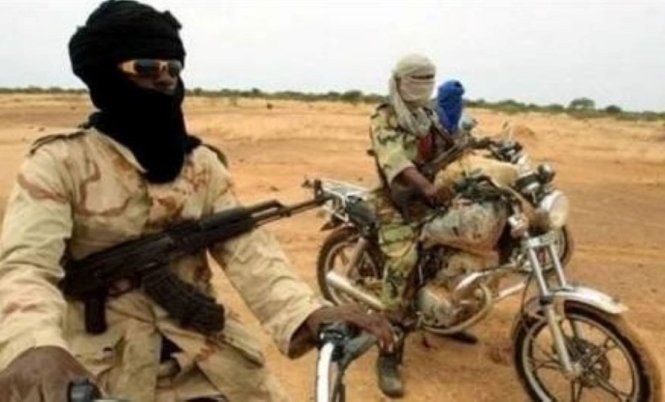
JNIM now strikes at capitals and governs territory, and the bet that Mali, Burkina Faso, and Niger placed on Russia as their sole security guarantor has failed. Analyst and researcher Joseph McCarthy writes that the fire will not stop at the Sahel’s borders, and Ghana stands directly in its path.
The Sahel is Burning, and West Africa Cannot Look Away
By Joseph McCarthy
At dawn on 18 June 2026, fighters stormed Diori Hamani International Airport in Niamey, the most heavily guarded site in Niger’s capital. It is not merely an airport. The complex houses the air force, most of the country’s drones, the headquarters of the Alliance of Sahel States’ joint force, the Russian personnel meant to help crush the insurgency, and even uranium stocks the state hopes to sell. JNIM claimed the assault, which killed eleven soldiers and two civilians. It was the second strike on that complex this year; the Islamic State’s Sahel Province claimed a January raid. Both of the region’s jihadist franchises have now breached the defences of a capital. This was not just another attack. It was a strategic signal.
It was also no act of opportunism. Hitting a fortified installation in a capital demands months of surveillance, intelligence on shift changes, the logistics to move fighters and weapons over long distances, and the ability to slip past layered security. It implies networks operating close to, or inside, the capital itself. As the Armed Conflict Location and Event Data project noted, the Sahel’s insurgents have moved from localised rural fighting to coordinated strikes on vital national infrastructure. The pattern is everywhere. In Mali, JNIM has throttled Bamako with a fuel blockade since September 2025, destroying hundreds of tankers; in April, it overran the garrison town of Kati and killed the defence minister in his own home; it has since placed a bounty of two million euros on the head of Mali’s junta leader, Assimi Goïta.
More troubling than the firepower is the governance. A Reuters investigation found that JNIM now arbitrates land disputes, collects taxes, enforces rules and imposes a rough order in territories the state has vacated. Forged from the merger of four groups, it increasingly presents itself not as a militia but as an alternative authority, building legitimacy among populations long neglected by distant governments. History is unkind here: from Afghanistan to Somalia, insurgencies that learn to govern outlast those that only fight. The contest is no longer simply about defeating armed men. It is about whether the state, rather than an armed movement, remains the most credible source of authority, justice and security.
Against all this, the juntas made a bet. Mali, Burkina Faso and Niger expelled Western forces, walked out of ECOWAS, and rebuilt their security around a single guarantor: Russia, first through the Wagner Group, then the Africa Corps. On 26 June, Burkina Faso severed diplomatic relations with France entirely, accusing Paris of backing the very terrorists it claims to fight, an allegation offered without evidence and flatly rejected. Niger’s government, for its part, blamed the Niamey attack on mercenaries funded by President Macron, again without proof. The promise was straightforward: sovereignty restored, foreign influence reduced, terrorism defeated. Judged by the junta’s own promise, the bet has failed. The violence has not receded. It has spread.
This should not be read as a uniquely Russian failure. It exposes the limits of any strategy built around a single external guarantor. No partner, whether Russia, France or the United States, can resolve a conflict rooted in governance failure, economic exclusion, local grievance and hollow institutions. Force can kill fighters. It cannot rebuild public trust, settle a quarrel between communities, open a clinic or create a job for an idle young man, and those are the very conditions the insurgents harvest for recruits. Russia carries constraints of its own: bogged down in Ukraine, its resources finite, it was outfought alongside Malian troops at Kidal even after reportedly receiving a warning of the assault. A security architecture resting on a single distracted partner does not reduce risk; it concentrates it, and when that partner underdelivers, there is no second line. The 2026 Global Terrorism Index now names the Sahel the global epicentre of terrorism, the source of more than half the world’s terrorism deaths and one in five of its attacks.
None of this stays in the Sahel. Ghana shares roughly 550 kilometres of frontier with Burkina Faso, much of it porous and threaded with informal crossings used daily by traders and herders. Southward expansion rarely begins with a spectacular attack. It begins quietly: a recruiter, a supply route, a financing cell, fighters embedding in border communities long before a shot is fired. That is precisely how the contagion crossed from Mali into Burkina Faso and Niger, and how it has already reached Benin and Togo, with Côte d’Ivoire and northern Ghana plainly exposed. Alongside the fighters’ travels, something almost as corrosive: a flood of assault rifles, explosives and military hardware that does not stop at extremist hands but arms robbers, traffickers and illegal mining syndicates, hollowing out a country’s security long before any jihadist banner appears.
The wider world has its own reasons to watch. Niger holds some of the planet’s richest uranium. A jihadist proto-state straddling West Africa would command migration routes toward the coast and the Mediterranean, strain fragile coastal economies, disrupt trade corridors and rattle investor confidence. At the same time, every successful strike on a capital broadcasts a template to armed groups from Nigeria to Mozambique. What looks today like a regional security crisis could become an international one. A region generating one in five of the world’s militant attacks is not a distant problem. It is a lit fuse.
Africa has paid before for believing that outside powers can guarantee its security. They cannot. Partners can offer intelligence, training and equipment; they cannot substitute for legitimate governance and functioning institutions. This crisis will be settled not only on the battlefield but in courtrooms, classrooms, local councils and marketplaces, where citizens decide whether the state or an armed movement better delivers justice and opportunity. For Ghana, the task is preventive, not reactive: intelligence cooperation, stronger borders, regional collaboration, community resilience and investment in local governance, all of it far cheaper than containment once the violence has taken root. And for the Sahel’s rulers, there is a harder truth.
Sovereignty that trades several partners for total dependence on one distant and overstretched power is not sovereignty; it is a fresh vulnerability dressed in the language of liberation. The question is no longer whether the crisis will spread beyond Mali, Burkina Faso and Niger. It already has. The only question left is whether West Africa acts before the Sahel becomes the world’s next strategic emergency.
Joseph McCarthy is an analyst and researcher specialising in governance, security, and political transitions in the Sahel. He writes on geopolitics, development, and African diplomacy. Email: joecarthy30@gmail.com



-
 Ghana News1 day ago
OBITUARY: Gamal Gorkeh Nkrumah, Son of Ghana’s Founding President, Dies in Cairo
-

 Sights and Sounds2 days ago
EPP BookShop at Legon: A Destination for Students, Families and Book Lovers
-

 Health & Wellness1 day ago
Walking Is More Than Exercise: Small Steps That Can Transform Your Health
-

 Festivals & Events1 day ago
MaddFest 2027: Welcome the New Year with a Night of Celebration in Accra
-
 Homes & Real Estate2 days ago
Building Smarter in Ghana: Could Plastic Rebar Clips Improve Construction Efficiency?
-
 Arts and GH Heritage1 day ago
Inside Togo’s Abandoned Colonial Building, African Artists Reclaim Cultural Memory
-
 Global Update1 day ago
Wave of Student Killings at Mexico Universities Raises Safety Concerns
-
 Ghana News1 day ago
Mahama to Churches: The Real Sermon Is Written After the Closing Prayer