
Ghana News
NVI and Africa CDC Convene Regional Procurement Meeting in Accra to Bolster Ghana’s Quest to Strengthen Local Vaccine and Pharmaceutical Production


Ghana is positioning its vaccine and pharmaceutical manufacturers for greater access to African markets as the National Vaccine Institute (NVI) and the Africa Centers for Disease Control and Prevention (Africa CDC) prepare to convene a regional meeting in Accra on November 10 and 11, 2026.
The two-day meeting will focus on expanding the African Pooled Procurement Mechanism (APPM). It will bring together government representatives, manufacturers, regulators, health and procurement officials, and regional institutions to agree on the practical arrangements needed to make the continental procurement mechanism operational across participating African Union Member States.
For Ghana, participation in the APPM could open a significant market opportunity for qualified local manufacturers, providing a pathway beyond the country’s domestic market of approximately 33 million people to a potential continental market of about 1.4 billion.
In a press statement, the NVI said discussions would cover country enrolment, the APPM Supply Catalogue, technical specifications, demand aggregation and forecasting, quality assurance, regulatory requirements, tendering, financing and implementation timelines.
Approximately 70 participants are expected, including about 40 delegates from Member States and regional institutions.
A continental market for African-made health products
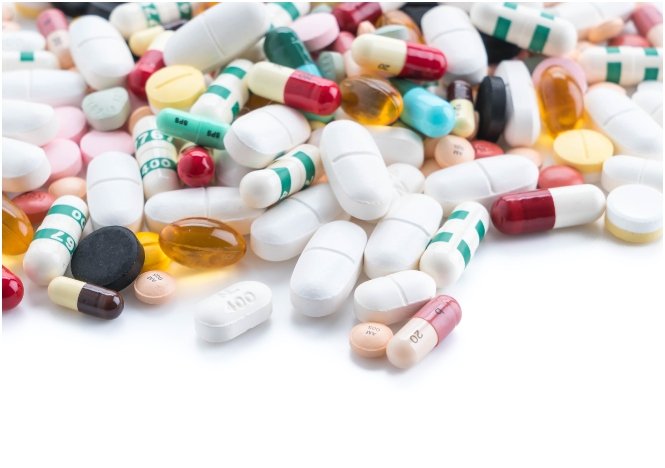
Established by Africa CDC pursuant to African Union decisions, the APPM is designed to combine purchasing demand across participating countries, strengthening their collective bargaining power while improving access to affordable, quality-assured health products.
By coordinating demand, the mechanism also aims to create a more predictable market for African manufacturers, potentially encouraging investment in local production and reducing reliance on external suppliers.
The mechanism has already recorded an early result. Its first tender, announced in May 2026, covered 10 priority medicines for reproductive, maternal, newborn and child health across 10 Member States. According to the information provided by the NVI, the tender secured average savings of 45 per cent below Member State benchmarks, with African manufacturers featuring in five of the 10 products.
The APPM forms part of the African Union’s wider ambition to meet 60 per cent of the continent’s health product needs through local production by 2040.
Ghanaian manufacturers eye regional opportunities
Ghana signed a Memorandum of Understanding with Africa CDC on August 21, 2026, to participate in the APPM. The agreement advances the government’s commitment to prioritizing locally produced vaccines and pharmaceuticals while supporting Ghanaian manufacturers seeking access to regional markets.
The country’s participation complements efforts to establish more predictable domestic demand through an Advance Purchase Commitment mechanism and other market-shaping interventions.
Speaking ahead of the meeting, NVI Chief Executive Officer Dr. Sodzi Sodzi-Tettey described the development as an opportunity for Ghanaian and West African manufacturers to expand their reach.
“Just a year ago, access to a continental market seemed like a distant dream. Today, not only is Ghana a member of the APPM, a few products are reaching millions in Africa,” he said.
“With this meeting, we expand the opportunity to all pharmaceutical and vaccine manufacturers in Ghana and West Africa. It is an opportunity to scale for impact.”
The meeting is expected to give local manufacturers a clearer understanding of the requirements for participating in pooled procurement, including quality standards, regulatory compliance, product pre-qualification, supply capacity and tender participation.
Three areas of focus
The workshop will organise its technical discussions around three main areas: country enrolment and readiness; manufacturer readiness and market access; and sustainable procurement and implementation.
The country enrolment track will address national participation requirements, the designation of focal points, demand forecasting, product prioritisation and the information needed from participating governments.
The manufacturer readiness discussions will examine quality assurance, regulatory and pre-qualification requirements, product pipelines, supply capacity and the procedures for participating in APPM tenders.
The third track will focus on the financial and operational arrangements needed to sustain pooled procurement, including affordability, procurement planning, contract arrangements, implementation responsibilities and timelines.
Plenary sessions are also expected to feature presentations from Africa CDC on the strategic direction of pooled procurement, country enrolment and onboarding, the APPM Supply Catalogue and the status of tendering.
Ghana’s Ministry of Health will outline the country’s policy commitment and preparedness, including demand planning and financing considerations. The NVI will address how local vaccine and biological-product manufacturing can be positioned within the mechanism.
PharmaVax will present the manufacturers’ perspective, examining opportunities and challenges for African producers seeking to participate in pooled procurement.
Regional and international participation
The meeting is expected to attract representatives from Africa CDC, Ghana’s Ministry of Health, the Food and Drugs Authority and the NVI, alongside Ghanaian vaccine and pharmaceutical manufacturers, including emerging producers under the Ghana Pharmaceutical Hub.
Delegations from West African countries, regional manufacturers and African Union institutions are also expected. These include the African Continental Free Trade Area (AfCFTA) Secretariat and the African Medicines Agency (AMA), as well as the Economic Community of West African States (ECOWAS), the West African Health Organisation (WAHO) and the African Association of Central Medical Stores for Essential Drugs (ACAME).
Development partners expected to participate include the European Union, Germany’s Federal Ministry for Economic Cooperation and Development (BMZ), and the German development agency Deutsche Gesellschaft für Internationale Zusammenarbeit (GIZ).
A roadmap for implementation
Beyond discussions, the organisers expect the meeting to produce practical agreements to guide the APPM’s implementation.
Expected outcomes include a common understanding of country enrolment procedures, the Supply Catalogue and tendering status; clearer institutional responsibilities for Africa CDC, Member States, procuring entities and manufacturers; and agreement on priority health products, demand aggregation and forecasting requirements.
Participants are also expected to clarify technical specifications, quality assurance and regulatory requirements, alongside procurement and financing arrangements.
A time-bound implementation roadmap, with assigned responsibilities across participating institutions and Africa CDC, is among the anticipated deliverables. A meeting report and joint communiqué or outcome statement will document the agreements reached.
The two-day meeting at Alisa Hotel in Accra is supported by PharmaVax Ghana, a program co-financed by the European Union and German Development Cooperation (BMZ), and implemented by GIZ GmbH.






Ghana News
Africa Cannot Build Its Pharmaceutical Future on Imports: Ghana and Africa CDC Seek a New Way Forward

Ghana is positioning itself to become a major pharmaceutical manufacturing and distribution hub for Africa, with an ambitious government plan to increase the proportion of medicines produced locally from an estimated 30 per cent to 70 per cent within five years.
Dr. Bernice Makafui Brempong, Presidential Staffer for Health and Pharmaceuticals and Presidential Coordinator of the Ghana Pharmaceutical Hub, reiterated the government’s vision at the opening ceremony of a regional meeting on the African Pooled Procurement Mechanism (APPM), held at the Alisa Hotel in Accra on November 10 and 11, 2026.
Her comments come as Ghana and the Africa Centers for Disease Control and Prevention (Africa CDC) advance efforts to build a more integrated market for medicines manufactured on the continent.
At the heart of the strategy for an integrated market for Ghana-made medicines is the Ghana Pharmaceutical Hub, a presidential initiative designed to connect domestic and regional demand for medicines with investment, manufacturing capacity, procurement and access to markets.

The initiative is intended to address a longstanding obstacle facing African pharmaceutical manufacturers: the difficulty of securing predictable demand and reliable purchasing commitments that would give companies the confidence to invest in production, expand operations and compete with established international suppliers.
President John Dramani Mahama has set a target for Ghana to produce 70 per cent of the medicines it consumes locally within five years. With local production currently estimated at approximately 30 per cent, achieving the target would require a substantial expansion of the country’s pharmaceutical manufacturing capacity.
Brempong described the Pharmaceutical Hub as a coordinated, demand-led initiative built around five pillars: a trading platform, pharmaceutical manufacturing, an industrial estate, a dedicated Hub Fund and a training institute.
Together, these components are intended to create an ecosystem in which manufacturers can access infrastructure, financing, skilled workers and markets rather than having to overcome each obstacle independently.
“The president’s ambition is a national ambition for health sovereignty and pharmaceutical industrial growth. A stronger pharmaceutical sector should create lasting work, grow Ghanaian businesses, support Ghanaian manufacturers and importers, strengthen domestic demand and regional market access, and deliver measurable patient benefits,” said Dr Brempong.
The trading platform is expected to help connect verified demand with available manufacturing capacity, while the industrial estate would provide facilities and shared infrastructure for companies seeking to establish or expand production. The proposed Hub Fund is intended to support investment, and the training institute would help develop the technical workforce required by the industry.
The strategy also recognizes that expanding local production will require more than factories. Manufacturers need credible purchase commitments, clear procurement arrangements and payment systems that make long-term investment commercially viable.
That challenge is central to the African Pooled Procurement Mechanism (APPM), an initiative being advanced by Africa CDC to aggregate demand from participating African countries and create a larger, more predictable market for quality-assured medicines and other health products manufactured in Africa.
By bringing together purchasing requirements from multiple countries, the mechanism seeks to strengthen the collective negotiating power of African buyers, improve affordability and give manufacturers greater visibility of potential demand.
For pharmaceutical companies, predictable orders can make a significant difference. Manufacturing facilities, specialized equipment, regulatory compliance and product development require substantial upfront investment. Without confidence that products will be purchased over time, companies can struggle to secure the financing needed to expand production.
The problem was highlighted by Dr Sodzi Sodzi-Tettey, Chief Executive Officer of Ghana’s National Vaccine Institute (NVI) at the event at Alisa Hotel on Tuesday, November 10. He described how manufacturers had pursued development financing for nearly two years, only for prospective deals to collapse because they could not demonstrate a sufficiently reliable revenue stream backed by multi-year purchase agreements.
The experience illustrates why the development of African pharmaceutical manufacturing cannot depend on production capacity alone. A functioning market, supported by credible procurement commitments, is equally important.
Africa CDC’s APPM is intended to help address that gap by coordinating demand across participating countries and creating opportunities for African manufacturers to supply markets beyond their own national borders.
Dr Mariatou Tala Jallow, Director of the APPM at Africa CDC, said the mechanism had moved into its operational phase and was now focused on consolidation and expansion.
The mechanism is working with member states and manufacturers to connect demand with supply, strengthen access to affordable, quality-assured health products and create more predictable market opportunities for African producers.
Ghana formally signed a memorandum of understanding with the APPM on August 21, 2026, marking its participation in the continental procurement initiative.
The engagement is expected to help Ghanaian manufacturers understand the requirements for supplying participating African markets, while enabling the country to contribute to a wider system for sourcing medicines from manufacturers across the continent.
However, participation in the mechanism does not automatically guarantee contracts. Suppliers must satisfy applicable product approval, quality-assurance and technical requirements, as well as the conditions established through competitive procurement processes.
The APPM has been building its manufacturer base. According to figures presented by Sodzi-Tettey, 108 companies had registered under the mechanism, including 19 from West Africa. Only three of the registered companies were Ghanaian, representing approximately 2.8 per cent of the total.
The figures highlight both the opportunity available to Ghanaian manufacturers and the need for more companies to strengthen their capacity to compete for continental procurement opportunities.
For Ghana, the Pharmaceutical Hub is intended to provide part of the infrastructure needed to respond to that opportunity.
Its proposed industrial development includes manufacturing facilities, modular factory shells, shared laboratories and utilities, as well as warehousing and cold-chain infrastructure. The first phase is planned for Kwanyarko in the Eastern Region, with a subsequent phase in the Central Region expected to support the production of active pharmaceutical ingredients, plant-based medicines and other essential manufacturing inputs.
The government has also identified the need to make the facilities accessible to smaller manufacturers, including a proposal to reserve a portion of shared capacity at subsidized rates.
The broader ambition is to create a pharmaceutical ecosystem that can attract domestic and international investment, encourage technology transfer, support contract manufacturing and improve the availability of medicines produced within Ghana and across Africa.
Brempong’s presentation at the event also outlined the potential employment benefits of the initiative, with an indicative target of 20,000 jobs by the tenth year. The projections include 8,000 jobs for women and 12,000 for young people. These are future targets rather than jobs already created.
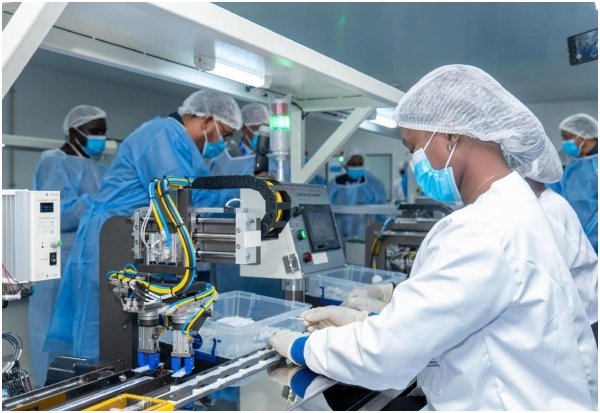
The proposed Hub is also expected to create opportunities for businesses involved in packaging, raw materials, distribution, logistics, research and other services supporting pharmaceutical production.
Nevertheless, the success of the initiative will depend on translating its plans into commercially sustainable operations. Manufacturers will need access to finance, reliable infrastructure, appropriate technology, skilled personnel and a regulatory environment capable of supporting products that meet international quality standards.
The procurement mechanism will also need to establish arrangements that give manufacturers sufficient certainty about demand, contract terms and payment timelines.
The Ghana-Africa CDC engagement therefore represents more than an effort to increase the number of medicines manufactured in one country. It is part of a wider attempt to build the market conditions that could allow African pharmaceutical producers to serve multiple countries and compete more effectively.
If the Ghana Pharmaceutical Hub and the APPM deliver on their respective objectives, manufacturers could gain access to a broader customer base, while participating countries could benefit from stronger regional supply chains and greater access to affordable, quality-assured medicines.
The longer-term significance lies in whether Africa can move from fragmented national markets and heavy dependence on imported medicines towards a more coordinated system in which African manufacturers have both the capacity and the commercial incentive to supply the continent.
For Ghana, the 70 per cent local production target provides a national measure of that ambition. For the APPM, the challenge is to help create a continental market capable of making African pharmaceutical manufacturing economically viable.
Ghana News
After COVID-19 Exposed Africa’s Vaccine Dependence, Ghana’s NVI and Africa CDC Embark on a New Path to Secure Health Sovereignty

The COVID-19 pandemic exposed one of Africa’s most consequential vulnerabilities: a continent of more than a billion people could not rely on having timely access to the vaccines and essential medical products it needed during a global health emergency.
As wealthier countries secured substantial early supplies of COVID-19 vaccines, African nations faced difficult procurement conditions, supply shortages and delays, reinforcing concerns about the continent’s dependence on pharmaceutical products manufactured elsewhere.
Five years after the pandemic began, the question of who produces Africa’s medicines and vaccines, and who controls access to them during a crisis, remains central to the continent’s public-health and economic future.
Ghana, through the National Vaccine Institute (NVI) is now seeking to position itself as part of the solution through an expanding pharmaceutical manufacturing agenda.
The NVI, working with the Africa Centers for Disease Control and Prevention (Africa CDC), is striving to strengthen local production and connect manufacturers in Ghana and elsewhere in Africa to a larger continental market.
The effort was at the center of an opening ceremony of a regional meeting on the African Pooled Procurement Mechanism (APPM), held at the Alisa Hotel in Accra on November 10 and 11, 2026.
The gathering brought together government officials, pharmaceutical manufacturers, procurement specialists, regulators and representatives of ECOWAS member states to discuss how African countries can turn domestic manufacturing ambitions into practical supply arrangements.
For Ghana, the initiative comes amid a broader ambition by the John Mahama administration to transform the country’s pharmaceutical industry and reduce dependence on imported medicines.
President Mahama has set a target for 70 per cent of medicines used in Ghana to be produced locally within five years. The reported current share is approximately 30 per cent, meaning the target requires a substantial expansion of domestic production capacity.
The National Vaccine Institute’s Chief Executive Officer, Dr Sodzi Sodzi-Tettey, described the country’s recent pharmaceutical policy developments as the beginning of what he called a golden era for the industry.
He pointed to the launch of Ghana’s Pharmaceutical Manufacturing Policy, government support for biological products, regulatory improvements, investment in clinical research and plans for specialised biomanufacturing training as important elements of the transformation.
Among the developments he highlighted was the production of Ghana’s first biological product, snake venom antiserum, in May 2025, with production of anti-tetanus serum and tetanus-diphtheria vaccine also underway and scheduled for completion in 2026.
He also cited Ghana’s achievement of World Health Organization Maturity Level 3 status for its National Regulatory Authority, an important development in strengthening the country’s capacity to regulate medical products, disclosing that there was ongoing effort by the National Vaccine Institute to strengthen clinical trials in Ghana which will lay the foundation for end-to-end production.
“We just completed a nationwide assessment of 15 clinical trial sites in Ghana in partnership with WHO–Ghana,” he disclosed.
The nationwide assessment of the clinical trial sites is expected to strengthen the clinical research environment required for pharmaceutical and vaccine development.
He also cited “plans by the National Vaccine Institute to launch a Ghana Biomanufacturing Training Consortium aka ‘Ghana Bio Mat’ this year made up of academia and industry, to build the requisite knowledge, competency and skills needed for industrial manufacturing.”
Such infrastructure is important because vaccine manufacturing requires more than production facilities. It depends on scientific research, clinical evaluation, regulatory oversight, specialized personnel, quality assurance and reliable systems capable of supporting products throughout their development and distribution.
These initiatives reflect an understanding that health sovereignty cannot be achieved simply by announcing new factories. It requires an integrated system capable of developing, testing, regulating, manufacturing and distributing products to internationally recognized standards.
From national ambitions to continental cooperation
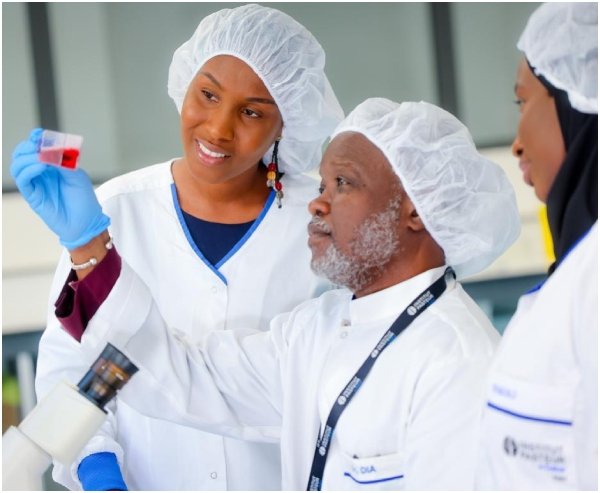
Ghana’s strategy is also being linked to a wider African effort to reduce the fragmentation of pharmaceutical procurement.
The African Pooled Procurement Mechanism, established by Africa CDC, is designed to aggregate demand from participating countries, strengthen purchasing power, improve access to affordable quality-assured health products and create more predictable markets for African manufacturers.
The mechanism is particularly significant for a continent where individual national markets can be too small or commercially uncertain to support large-scale pharmaceutical investment.
Dr Mariatou Tala Jallow, Director of the APPM at Africa CDC, said the initiative had moved beyond its initial conceptual stage and has progressed towards consolidation and expansion.
“We are pleased to welcome Ghana into the African Pooled Procurement Mechanism and to engage directly with its manufacturers,” she said.
“Our focus is on working with Member States and African manufacturers to connect demand with supply, strengthen access to affordable, quality-assured health products and create predictable market opportunities for African producers.”
Her remarks highlight an important connection between public-health security and industrial development: manufacturers need dependable markets, while governments need reliable suppliers capable of meeting quality and regulatory requirements.
The APPM is intended to help bridge that gap by coordinating purchasing opportunities across national borders.
Ghana signed a memorandum of understanding with Africa CDC to participate in the mechanism on August 21, 2026. Its participation creates an opportunity for eligible Ghanaian manufacturers to compete for procurement opportunities beyond the domestic market.
The challenge of financing pharmaceutical independence
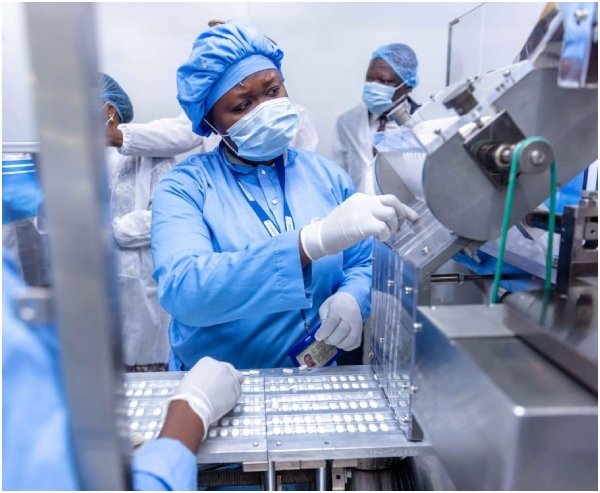
Despite the momentum, Sodzi-Tettey warned that manufacturers across the region continue to face a major obstacle: uncertainty about future demand.
He said some companies had pursued development financing for almost two years, only for their financing arrangements to collapse at the last moment because lenders lacked confidence in their future revenue.
“The absence of a robust revenue line from multi year agreements gave the bank no comfort that these companies had sufficient financial health to pay back,” he explained.
The problem is particularly important in vaccine manufacturing, where production facilities, research, regulatory compliance and technology development can require substantial long-term investment.
Without credible purchasing commitments, manufacturers may struggle to convince banks and development finance institutions that their proposed investments will generate sufficient returns.
This is one of the reasons the APPM is attracting attention as a potential instrument for pharmaceutical industrialization, rather than merely a procurement arrangement.
By aggregating demand and developing more predictable purchasing frameworks, the mechanism could help provide manufacturers with the commercial certainty required to attract investment.
A continental opportunity
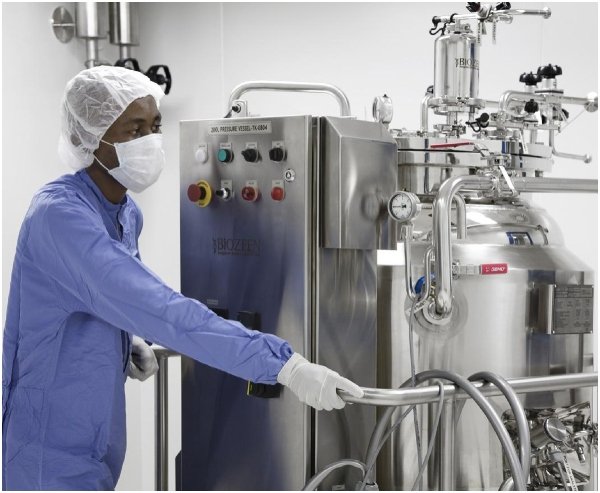
Sodzi-Tettey welcomed the progress made by the APPM, acknowledging the leadership of Dr Tala and her team in moving the mechanism towards actual tendering and supplier onboarding.
He said Ghanaian manufacturers were already winning new tenders to supply Uganda, South Sudan, the Democratic Republic of the Congo and Ethiopia.
However, he also highlighted a significant participation gap. Of 108 companies registered under the APPM, only 19 were from West Africa, representing 17.6 per cent, while Ghana accounted for just three companies, or 2.8 per cent.
The figures underline the need for Ghanaian and West African manufacturers to become more actively involved if they are to benefit from the continental procurement opportunities being developed.
For Ghana, the broader ambition is to connect pharmaceutical manufacturing with national economic development, job creation, research capacity and the security of essential medical supplies.
The government’s proposed Ghana Pharmaceutical Hub is expected to bring together manufacturing facilities, shared laboratories, utilities, warehousing, cold-chain infrastructure, investment financing and workforce training.
The proposed development is structured around an initial phase in Kwanyarko in the Eastern Region, with a second phase in the Central Region envisaged for pharmaceutical inputs, active ingredients, plant-based medicines and packaging materials.
These plans remain part of a longer-term industrial development agenda, but they demonstrate the scale of infrastructure and coordination required to expand domestic production.
The COVID-19 pandemic demonstrated the risks of depending excessively on external suppliers when global demand suddenly exceeds available supply. Ghana’s current strategy is an attempt to address that vulnerability through stronger domestic capabilities and regional cooperation.
The ultimate test will be whether the policies, institutions and procurement mechanisms being developed can translate into sustained production, affordable medicines and dependable access for patients before another pandemic hits.
Ghana News
Ghana’s Youth Caught in Growing Sports Betting Culture as Smartphones and Mobile Money Make Gambling Easier

Sports betting is becoming increasingly embedded in the everyday lives of young Ghanaians, with smartphones, mobile money and the popularity of football making gambling more accessible and raising concerns about its financial, social and public health consequences.
A 2026 survey involving 2,866 respondents across Ghana, Kenya, Nigeria, South Africa, Tanzania and Uganda found that 60 per cent of respondents in Ghana had bet on football in the preceding year, placing the country among those with the highest reported participation in the six-country study.
The findings were highlighted by Franklin Glozah, an Associate Professor of Behavioural Science in Health at the University of Ghana, in an article published by The Conversation. Glozah, who has been involved in research examining gambling among young people in sub-Saharan Africa, argues that the growing betting culture cannot be understood simply as an issue of individual addiction or poor decision-making.
Instead, he says, the phenomenon is shaped by economic insecurity, social relationships, digital technology, football culture and the commercial activities of gambling companies.
Ghana among countries with high football betting participation
The survey found that 64 per cent of respondents in Kenya, 60 per cent in Ghana and 54 per cent in Nigeria reported betting on football during the previous 12 months.
The figures should be interpreted with caution: the survey was not nationally representative and therefore cannot be treated as a definitive measure of gambling participation across Ghana’s entire population.
Nevertheless, the findings offer an indication of the scale of football betting among the people surveyed.
In an earlier study involving 770 young people in Ghana, Glozah and his colleagues found that sports betting was the most common form of gambling. He said more recent surveys suggest that the pattern continues.
The six-country survey also found that 95 per cent of active bettors surveyed placed bets using mobile devices, while 67 per cent identified football as the activity on which they bet most frequently.
Football’s popularity, regular fixtures, extensive media coverage and betting promotions have helped create an environment in which gambling can become part of the routine experience of following the sport.
Smartphones and mobile money transform access to betting
One of the most significant changes in Africa’s gambling industry has been the shift from physical betting shops to digital platforms.
Young people no longer need to visit a betting outlet to participate. A smartphone, internet connection and mobile money account can provide access to betting services from almost anywhere.
For Ghana, where mobile money has become an important part of everyday financial transactions, the combination of digital payments and online betting platforms creates an environment in which placing bets can be quick and convenient.
The survey’s finding that 95 per cent of active bettors used mobile devices illustrates how central smartphones have become to the betting experience among participants.
Glozah also points to the relationship between mobile money use and gambling participation, raising questions about how digital financial services are facilitating access to betting.
The expansion of these services has broader implications for consumer protection, particularly when people can deposit money, place bets and potentially lose funds with very little interruption to their daily activities.
Economic insecurity makes betting attractive to some young people
A central argument in Glozah’s analysis is that some young people do not approach sports betting purely as entertainment. For those facing unemployment, financial pressure or uncertain economic prospects, gambling can appear to offer a possible source of income.
The prospect of turning a relatively small stake into a much larger amount can be attractive, particularly when conventional opportunities to earn money appear limited.
However, betting is not a dependable income-generating activity. Losses can deepen financial difficulties, especially when the money being wagered is already needed for essential expenses.
Glozah argues that public discussion should therefore move beyond blaming young people for gambling and examine the social and economic conditions that make betting appealing.
His research also highlights the importance of family relationships, friendships and social support. Young people experiencing conflict or a lack of support at home were more likely to view gambling positively, while those who felt valued and supported showed less interest in it.
He connects these findings to his wider research on young Ghanaians, which found that stronger social support was associated with lower stress and better health and wellbeing.
The gambling industry and the regulation gap
Glozah also raises questions about the responsibilities of gambling operators and whether existing regulatory systems are keeping pace with the industry’s rapid expansion.
Africa’s betting market includes locally owned companies and international operators, some of which enter national markets through subsidiaries, partnerships or locally licensed businesses.
Their presence has expanded through online platforms, football sponsorships, advertising and mobile technologies.
Industry estimates cited in the article suggest that annual gambling revenue across Africa could rise from $3.5 billion in 2021 to $19.4 billion by 2030, with Ghana, Nigeria and South Africa among the continent’s largest markets.
A separate study by Glozah and his colleagues examined gambling regulation across 49 African countries. It found that 41 had legal frameworks regulating gambling, but only 15 of those 41 had legislation explicitly addressing online gambling. Eighteen had legislation covering gambling advertising.
The research also identified differences in regulatory oversight, with some countries operating dedicated gambling regulators while others relied on government departments. Public reporting on gambling activities was limited in many jurisdictions.
These gaps raise concerns about whether existing safeguards adequately address the realities of digital betting, including the volume of advertising, the influence of sports sponsorships and the ease with which users can access gambling platforms.
For Ghana, the findings underline the importance of examining not only individual betting behaviour but also the commercial and technological environment in which gambling takes place.
Why public health and economic policy must work together
Glozah argues that gambling should be treated as more than an individual behavioural problem, calling for a broader public health and regulatory response.
He recommends that governments scrutinise how betting is advertised and promoted, particularly its links with football and other popular sports. Age restrictions, he says, must be enforced in practice rather than existing only as formal requirements.
He also calls for regulators to improve the collection of information about who is gambling, how much they spend and the harms associated with betting.
But regulation alone may not address the reasons some young people turn to gambling.
Where unemployment and economic insecurity make the possibility of a quick financial gain attractive, governments must also consider policies that expand employment opportunities and improve young people’s economic prospects.
The challenge for Ghana is therefore twofold: strengthen safeguards around a rapidly expanding digital betting environment while addressing the economic and social pressures that can make gambling appear to be an alternative source of livelihood.
Glozah’s findings point to a need for a more comprehensive national conversation about youth gambling, public health, consumer protection and the future of Ghana’s young population.


Building in Ghana? How to Test Your Blocks Before They Become Part of Your Home

Samanpiid Festival: Bawku’s Celebration of Harvest, Renewal and Kusasi Heritage

Vegan Kontomire Stew: A Ghanaian Classic Reimagined with Tofu and Melon Seeds
-

 Ghana News7 hours ago
After COVID-19 Exposed Africa’s Vaccine Dependence, Ghana’s NVI and Africa CDC Embark on a New Path to Secure Health Sovereignty
-

 Ghana News2 days ago
Ghana’s Youth Caught in Growing Sports Betting Culture as Smartphones and Mobile Money Make Gambling Easier
-

 Business2 days ago
Ghana Seeks Investors to Revive National Airline After Advanced Talks with Boeing
-

 Business7 hours ago
Ghanaian Pharmaceutical Manufacturers Begin Breaking Into African Markets Thanks to Africa CDC’s Pooled System
-

 Ghana News7 hours ago
Africa Cannot Build Its Pharmaceutical Future on Imports: Ghana and Africa CDC Seek a New Way Forward
-

 Festivals & Events5 hours ago
Ghana Food Festival: Diaspora Experience 2026 Celebrates Food, Culture and Connection
-
 Taste GH5 hours ago
Vegan Kontomire Stew: A Ghanaian Classic Reimagined with Tofu and Melon Seeds
-
 Festivals & Events2 hours ago
Samanpiid Festival: Bawku’s Celebration of Harvest, Renewal and Kusasi Heritage