
Arts and GH Heritage
Inside Nkwaye Ansah’s Dreamlike World Where Watercolor Defies Expectations

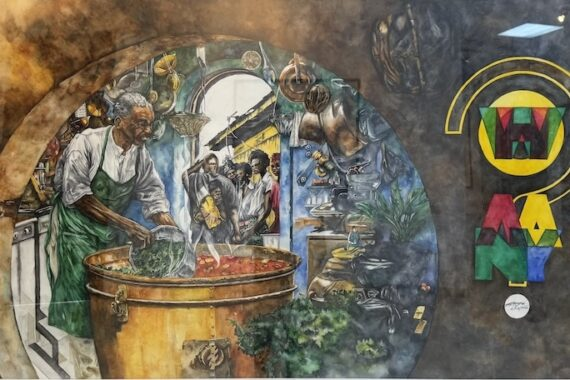
The most arresting figure in So Real – Surreal does not speak. It watches.
Standing with the quiet confidence of someone who has mastered the urge to react, Nkwaye Ansah’s recurring gorilla becomes an unexpected guide through an exhibition where familiar faces dissolve into psychological landscapes.
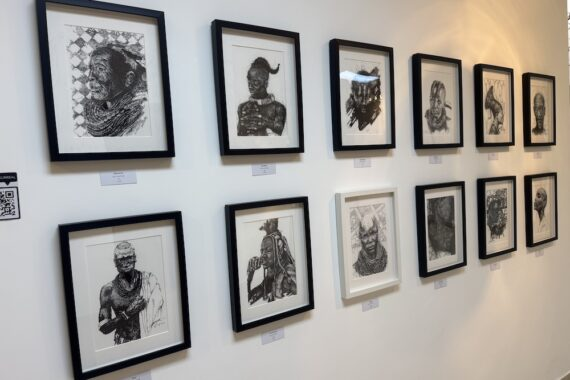
At The Dei Center in Accra, the artist’s watercolor and ink paintings ask viewers to question whether a portrait can reveal more than a likeness.
Ansah’s answer is found in exaggeration. Eyes linger longer than expected, gestures carry emotional weight, and everyday African scenes slip into dreamlike territory. His subjects seem suspended between memory and possibility, occupying worlds that feel recognisable while refusing to obey ordinary logic.
Watercolor with surprising force
The choice of watercolor is central to the exhibition’s effect. Rather than treating the medium as soft or decorative, Ansah pushes it toward remarkable intensity.
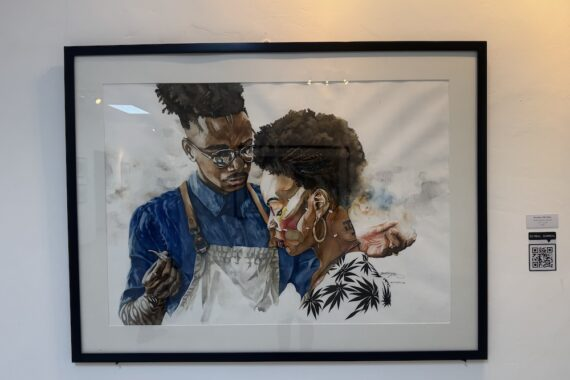
Transparent washes build unexpected depth, while carefully placed ink introduces sharp definition that anchors each composition.
The contrast creates paintings that appear effortless from a distance but reveal painstaking control up close.
Imagining tomorrow without abandoning today
The exhibition’s Afro-futurist thread avoids polished sci-fi spectacle. Instead, it imagines futures that grow naturally from present-day African life, where tradition, urban experience, and imagination coexist without contradiction.
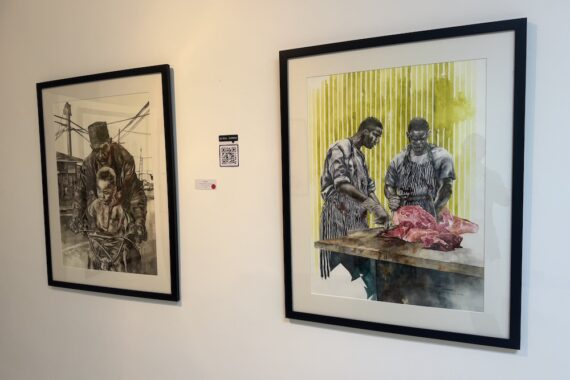
That same philosophy echoes through the gorilla’s imposing presence. Here, strength is measured less by aggression than by restraint—a timely reflection in an age of constant noise.
By refusing to settle into realism, surrealism, or expressionism alone, So Real – Surreal leaves viewers with a provocative thought: perhaps the truest portrait is the one that reveals what cannot be seen at first glance.






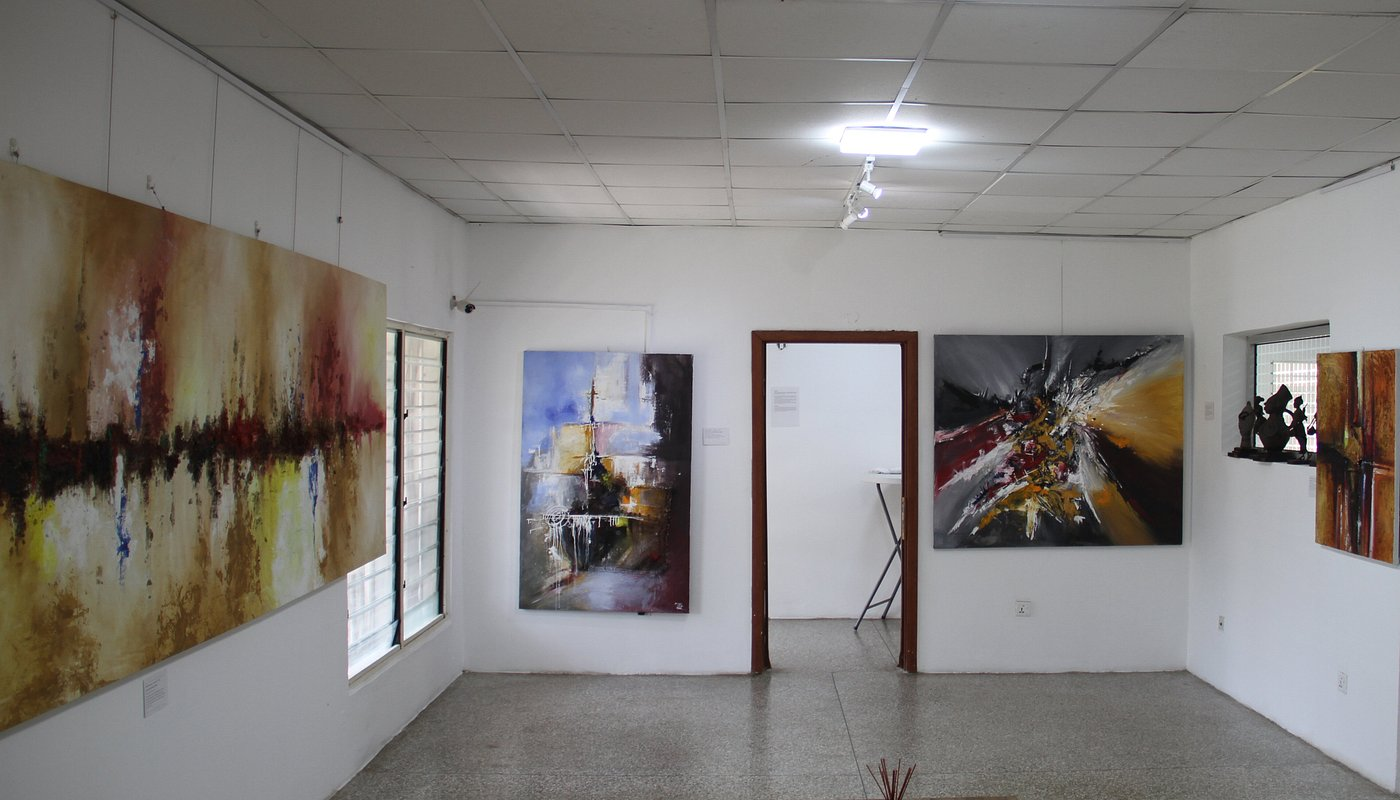
Every memorable art gallery begins with someone who believes a painting deserves more than a wall—it deserves an audience.
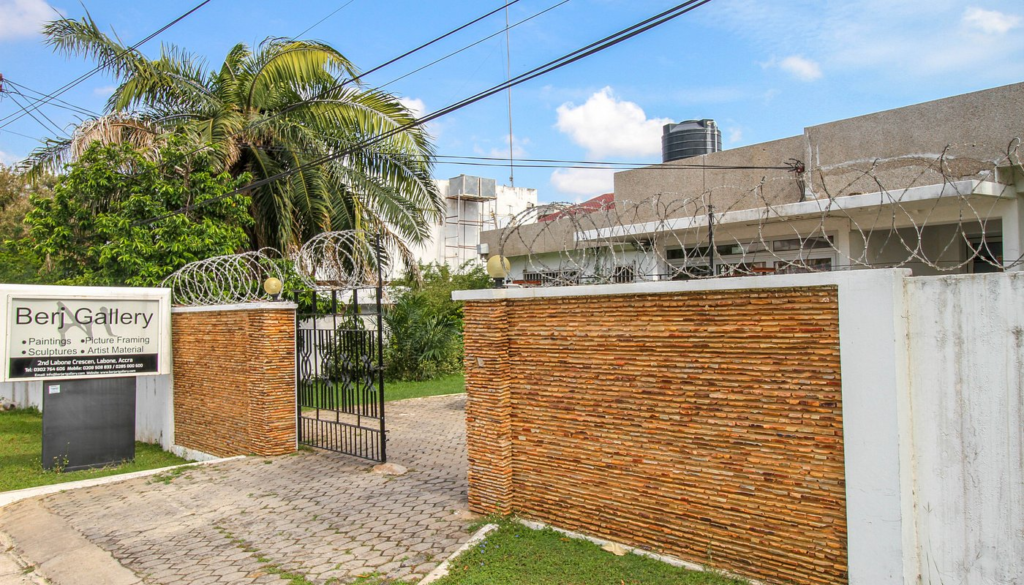
In Accra, that belief has shaped Berj Art Gallery into one of Ghana’s enduring champions of West African art.
Founded in 1996 by collector Joyce Quarshie, Berj emerged at a time when many Ghanaian artists were still searching for spaces that could connect their work with wider audiences.
More than three decades later, Quarshie’s commitment has grown into a gallery that celebrates both established masters and emerging voices under one roof.
A Living Story of West African Art
Walking through Berj feels less like entering a showroom and more like stepping into a conversation across generations.
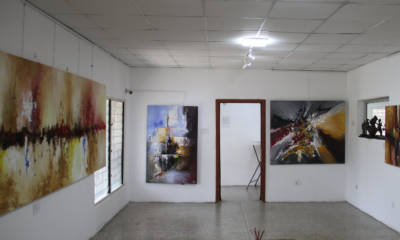
Bold paintings share space with finely carved wooden sculptures, bronze works catch the light from different angles, and photographs add contemporary perspectives to centuries-old artistic traditions.
The gallery’s strength lies in that balance. Acclaimed painters stand alongside rising talents, creating a rare opportunity for visitors to see Ghana’s artistic evolution unfolding in real time.
It is a reminder that culture is not frozen in history; it continues to grow with every new brushstroke and every fresh creative voice.
More Than a Gallery
For international visitors exploring Accra, Berj offers something deeper than a sightseeing stop. It opens a window into Ghana’s creative identity, where craftsmanship, storytelling and heritage intersect.
As the gallery continues hosting exhibitions that bring together local and international artistic influences, it reinforces a simple but powerful truth: preserving culture is not only about protecting the past.
It is about creating spaces where the next generation of artists can imagine—and exhibit—the future.
A family photograph resting on a shelf may look like decoration. A half-finished piece of woven cloth may seem incomplete. A living room may simply be a place to sit.
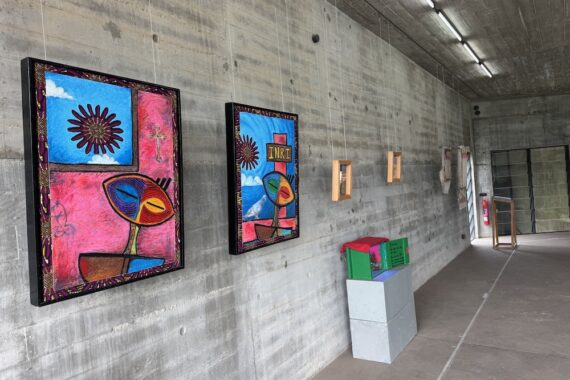
At Nubuke Foundation in Accra, however, these familiar things are being asked to tell deeper stories.
Weight of the Ordinary, a group exhibition featuring Josiah Tsibu Manu, Priscilla Agbeti, Blanche Boni-Mississo, King David Osabutey (Kakalicka) and Sena Burgundy Appau, turns its attention to the overlooked details of daily life—and finds history hiding there.
Manu’s domestic interiors are particularly evocative. Furniture, photographs and household details become unofficial archives, recalling how Ghanaian homes often carry memories that never enter formal histories.
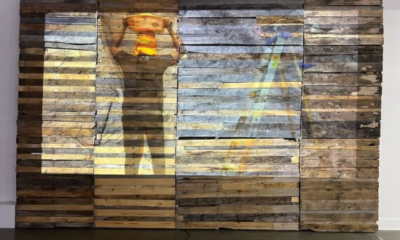
In Agbeti’s unfinished woven works, meanwhile, labour refuses to disappear behind polished craftsmanship.
The incomplete becomes deliberate, leaving viewers to consider the economic and social histories carried by textiles.
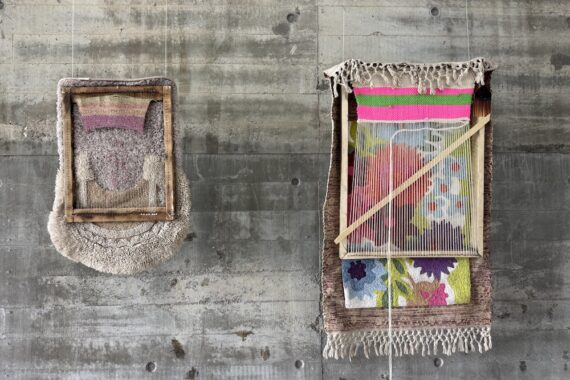
Elsewhere, Boni-Mississo examines how spaces determine who can move freely and who is kept at the margins. Kakalicka draws on Akan cosmology through his Ɔhɔhoɔ, or stranger, connecting questions of displacement and belonging with indigenous ideas.
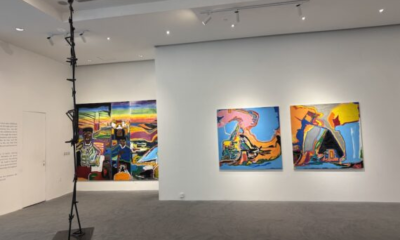
Appau’s monumental blue figures turn inward, contemplating the uncertainty and possibility of becoming.
Together, the artists suggest that the everyday is not neutral. It is where memory is stored, identities are formed and social boundaries are experienced.
For audiences in Ghana and abroad, the exhibition offers an invitation to look again at what familiarity can conceal. Sometimes, the objects closest to us have the most to say.
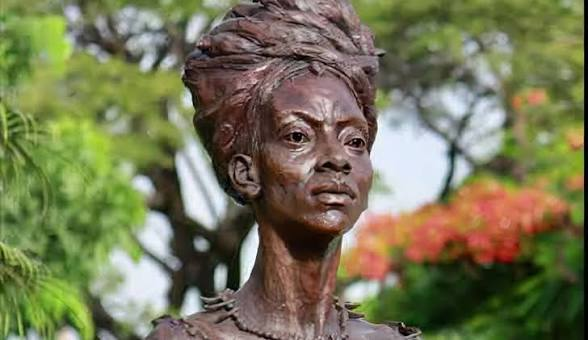
Sometimes history survives not in monuments, but in memory. In Ghana, the beat of the atumpan once carried messages across kingdoms.
In Jamaica’s mist-covered Blue Mountains, that same language of rhythm became a weapon of survival.
Queen Nanny’s story begins in oral tradition, which holds that she was born among the Akan people before being captured during the transatlantic slave trade and forced to Jamaica.
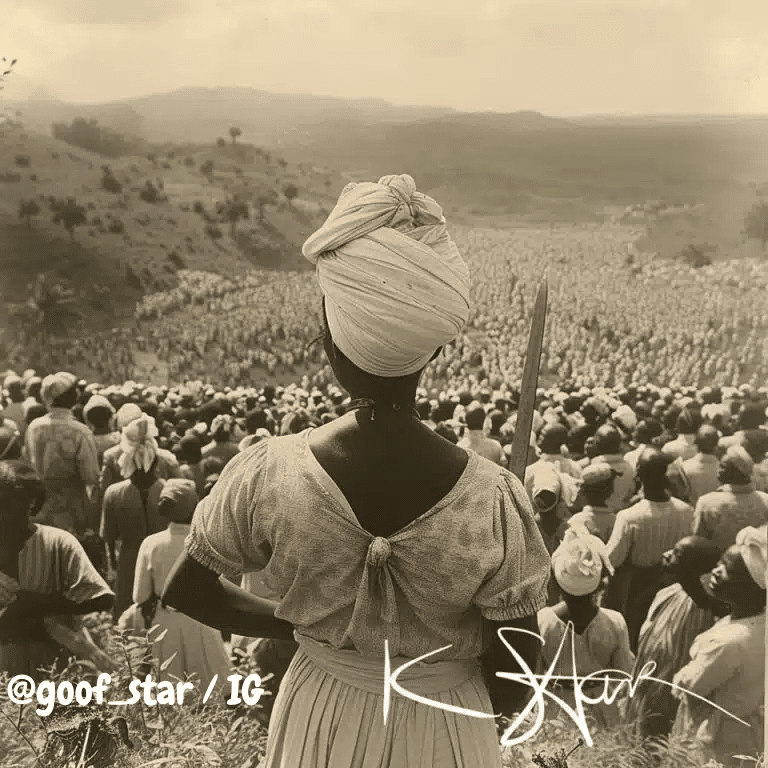
What followed transformed her into one of the Caribbean’s most celebrated freedom fighters.
When the drum became a battlefield language
Leading the Windward Maroons, Nanny turned the rugged mountains into a fortress. British troops struggled against hidden trails, surprise attacks and a commander who understood that knowledge of the landscape could outweigh military strength.
Just as remarkable was her reported use of the atumpan, the Akan talking drum. What colonial forces dismissed as eerie sounds echoing through the hills became a coded communication system that helped coordinate resistance.
Years of failed campaigns eventually forced Britain to negotiate. The 1739 peace agreement with the Maroons remains one of the most striking acknowledgements that enslaved Africans had built a resistance too formidable to erase.
A bridge between Ghana and Jamaica
Today, Queen Nanny is Jamaica’s only female National Hero, and her portrait appears on the Jamaican $500 banknote.
Her legacy also reaches back across the Atlantic, reminding Ghanaians that culture can outlive displacement.
The rhythms that once echoed through Akan communities did not disappear at the coast.
They crossed an ocean, climbed a mountain, and became part of one of history’s most remarkable stories of resistance.


Game-Changing Move: Ghana Sets Up New Fiscal Council to Scrutinize Government Spending and Win Back Investors

Ghana’s Persistence Pays Off: AU Formally Commits to Tabling Xenophobia Petition in January 2027

Top Headlines From Ghanaian Newspapers: Wednesday, Sept. 9, 2026
-

 Ghana News1 day ago
Top Headlines From Ghanaian Newspapers: Tuesday, Sept. 8, 2026
-

 Ghana News1 day ago
How Ghana’s Government Pressured MTN, Telecel, and AirtelTigo to Cut Data Prices
-
 Taste GH2 days ago
Tubaani Beans: Northern Ghana’s Hearty Answer to Rice and Beans
-
 Festivals & Events2 days ago
Lagos Meets Accra: Zephans & Co Brings Summer Style to the City
-
 Arts and GH Heritage1 day ago
The Stories We Live With: Inside Nubuke Foundation’s Weight of the Ordinary
-

 Ghana News1 day ago
Buckingham Palace Responds to Jamaica’s $10 Billion Reparations Demand, But the UK Government’s Wallet Remains Shut
-
 Ghana News4 hours ago
Ghana’s Persistence Pays Off: AU Formally Commits to Tabling Xenophobia Petition in January 2027
-

 Africa Watch1 day ago
British-Nigerian Influencer Dies After Penis Enlargement Procedure in Thailand