
Ghana News
Banks, Insurers, and Universities Face New UN Demand to Pay for Historical Slave Profits

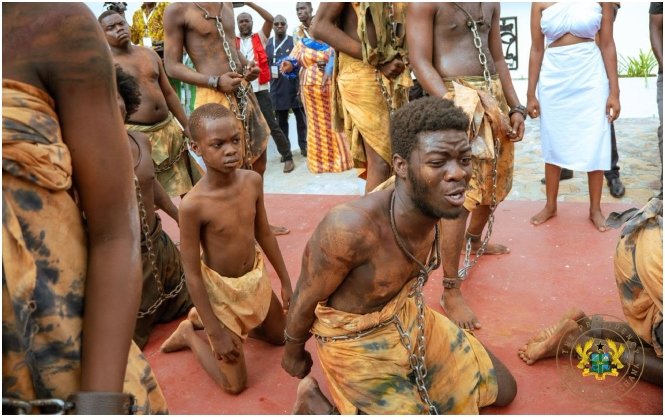
A United Nations committee has issued a sweeping directive demanding that private actors—including banks, insurers, and universities—contribute to reparations for the transatlantic slave trade.
The committee is arguing that institutions which profited from the enslavement of Africans have a present-day legal obligation to address its enduring consequences.
In a landmark recommendation published on Monday, the UN Committee on the Elimination of Racial Discrimination (CERD) declared that the responsibility for reparative justice extends beyond national governments to the private sector entities that participated in, facilitated, or financially benefited from the trafficking of enslaved Africans.
A Legal Obligation, Not Just Historical Responsibility
The committee’s findings, contained in a document titled General Recommendation No. 40, represent what officials describe as “a paradigm shift” in the framing of reparatory justice—moving it from a debate over historical responsibility to a legal obligation under the 1969 International Convention on the Elimination of All Forms of Racial Discrimination.
“States parties must implement comprehensive reparatory measures for people of African descent, covering all aspects of remedies,” the committee stated, pointing out that reparatory justice combines “a wide range of measures conceived as monetary, non-monetary and structural”.
The convention counts 182 countries as parties, including the United States, Britain, France, and Portugal—nations heavily involved in the transatlantic slave trade, which saw millions of Africans forcibly shipped to the Americas between the 16th and 19th centuries.
Private Sector Faces Direct Scrutiny
Crucially, the committee’s directive extends beyond state actors. CERD examined the responsibility of private and non-State actors including religious organizations, universities, businesses, banks, insurers, and other financial institutions that profited from slavery.
The committee urged States to ensure these actors contribute effectively to restorative justice by:
- Acknowledging their historical roles in the slave trade
- Opening relevant archives for public scrutiny
- Contributing to reparation measures “in a manner proportionate to their involvement and the benefits they have derived from it”
“The elimination of racial discrimination cannot be effective, complete or sustainable without a full commitment to review and redress the ongoing harms and consequences of the trafficking of enslaved Africans and racialised slavery,” the experts said in a statement.
Structural Inequalities Persist
The committee stated that the harms linked to the slave trade persist in the form of systemic racial discrimination and structural inequalities. Experts specifically pointed to racialized violence, stereotypes, and structural barriers that fuel disparities in education, health, economic mobility, and environmental security—harms that have been “reinforced by policies perpetuating anti-Black racism”.
“The transatlantic slave trade distorted global economic relations by distributing unjustly accumulated wealth across societies and borders, creating shared responsibility for its enduring effects,” the document notes.
Widening the Scope of Accountability
The recommendation arrives following a landmark UN General Assembly resolution in March 2026 that recognized the transatlantic slave trade as “the gravest crime against humanity”. That resolution, championed by Ghana, passed with 123 votes in favor, though several European nations and the United States abstained or opposed.
The CERD document now provides what legal experts describe as a “powerful new tool” supporting reparations claims. While the findings are not legally binding, committee member Pela Boker-Wilson stressed that they carry “significant authoritative weight” and could be used by courts as an interpretive tool or to support litigation.
The committee’s stance aligns with the African Union’s recently activated Decade of Action on Reparations (2025-2035), which seeks to coordinate multilateral efforts across institutions including the AU, CARICOM, and the United Nations.
Next Steps for Institutions
As the directive signals a new era of corporate accountability for historical injustices, financial institutions and educational bodies implicated in the slave trade now face mounting pressure to demonstrate their commitment to restorative justice through concrete measures—opening archives, funding compensation mechanisms, and participating in truth-telling processes.
The question remains how these private actors will respond to the UN’s call, and whether states will move to compel their participation through legislation and regulatory frameworks.










In a decisive move to fulfill President John Dramani Mahama’s digital transformation agenda, the government has successfully pressured the nation’s leading telecommunications operators into slashing broadband prices and increasing data allocations, marking a major political and policy victory for the administration.
Minister for Communications, Digital Technology and Innovations, Samuel Nartey George, announced the sweeping changes during the Government Accountability Series in Accra on Monday, framing the outcome as a direct result of the government’s successful negotiation tactics and strong-arm leverage over the telecom sector.
The Minister revealed that MTN, facing the sharpest government intervention, increased its mobile data volumes by 15 per cent, while Telecel and AirtelTigo also bowed to pressure, increasing theirs by 10 per cent.
Most notably, MTN’s fibre broadband tariffs have been dramatically revised. The 100 Mbps unlimited package has been slashed from GH¢987 to GH¢299 per month, representing one of the largest residential broadband price reductions in recent years and a massive 70% drop in cost for consumers.
Presenting the reductions as a fulfillment of the Mahama administration’s core policy promises, Minister George emphasized that the interventions are part of a broader mission to force the private sector to align with the government’s public interest goals.
“These interventions form part of President Mahama’s digital transformation agenda to make internet access more affordable and expand opportunities for education, business and innovation,” Mr George stated.
He added that the government’s objective is to ensure that digital connectivity becomes a tool for inclusive economic growth rather than a luxury available to only a few, directly warning the telecom giants that the state will not tolerate the exclusion of ordinary Ghanaians from the digital economy.
The Minister assured Ghanaians that his Ministry will continue to exert regulatory and negotiating pressure to improve digital infrastructure, expand access to reliable, high-speed internet, and ensure that the government remains the ultimate arbiter of affordability for the citizenry.
Ghana News
Buckingham Palace Responds to Jamaica’s $10 Billion Reparations Demand, But the UK Government’s Wallet Remains Shut
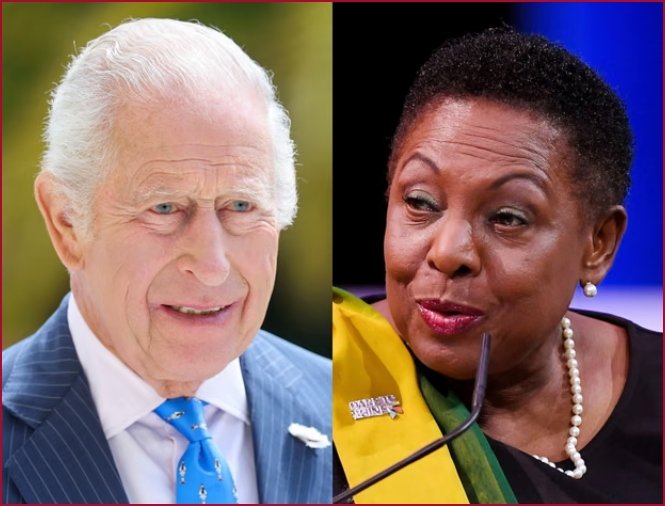
A historic diplomatic maneuver that highlights the stark contrast between UK’s royal sympathy and governmental policy has been triggered by Jamaica’s official petition to King Charles III on Monday, September 7, 2026.
The petition formally requests that the UK’s highest court review the legality of the transatlantic slave trade and whether Britain has a legal obligation to pay reparations.
However, while Buckingham Palace has pledged its engagement with the process, the United Kingdom government immediately reiterated its firm position that its “wallet remains shut”.
Led by Jamaica’s Minister of Culture, Gender, Entertainment and Sport, Olivia Grange, the delegation filed the petition in London, marking the first time a Commonwealth country has utilized this specific legal route to advance the cause of reparatory justice.
The petition seeks an advisory opinion from the Judicial Committee of the Privy Council (JCPC), Jamaica’s highest court of appeal based in London, on three pivotal questions: whether the enslavement of Africans in Jamaica was legal under English common law, whether it breached international law, and whether the UK is currently legally obligated to provide a remedy for the harm caused.
While initial reports suggested Jamaica was seeking a $10 billion settlement, Minister Grange clarified to journalists that no specific sum is attached to the petition; instead, it aims to establish a legal foundation for determining what, if anything, is owed.
The Royal Response
The response from Buckingham Palace was characterized by procedural engagement coupled with royal distance. Contrary to some initial headlines, King Charles III—who is currently in Scotland and was not present for the delivery—will not personally receive the petition.
A palace spokesperson clarified that the process requires the petition to be lodged directly with the Judicial Committee under Section 4 of the 1833 Act, rather than being handed to the King.
The spokesperson emphasized that the King has “on many occasions expressed his personal and wholehearted commitment to promoting greater understanding around the issue of slavery and finding ways to address historic wrongs for the benefit of communities today”.
The Palace also confirmed that the Jamaican representatives would be received by the Foreign, Commonwealth and Development Office for bilateral discussions.
The Government’s Hardline Stance
While the Palace signaled engagement, the response from the British government was unequivocal and immediate. A spokesperson for Prime Minister Andy Burnham’s Downing Street office stated, “The UK does not and will not pay reparations”.
The spokesperson added, “The transatlantic slave trade was abhorrent and of course it’s right that we acknowledge the wrongs of the past, but we’ll continue to face forward and work with other countries on our current shared challenges”.
This stance remains unchanged despite recent acknowledgements that the UK significantly benefitted from the trade, and the fact that British institutions, such as the Church of England, have previously pledged funds to address their historical links.
A Historical Irony
The refusal comes against a backdrop of historical precedent that critics and advocates often highlight. In 1833, the British government agreed to a compensation package of £20 million (worth approximately $2.6 billion today) to be paid to British slave owners for the “loss of their property” after the abolition of slavery legislation.
“Encouraged” but Firm
Despite the government’s refusal to entertain financial compensation, Minister Grange expressed optimism about the engagement from Buckingham Palace.
“We’re not pre-empting the process, but we are encouraged,” she told Reuters, noting the Palace’s role in ensuring the petition was properly lodged through the Governor-General.
The move is seen as a significant escalation in the wider Caribbean reparations campaign. By seeking a legal opinion, Jamaica aims to bypass the political impasse that has blocked progress at Commonwealth summits.
If the JCPC rules in Jamaica’s favor, it could provide a powerful legal platform not only for Jamaica but for other former British colonies in the Caribbean demanding reparations, potentially paving the way for litigation in British courts.

Here are the top headline stories pulled from the front pages of the provided Ghanaian newspapers.
The Dispatch
- Main: GHANA MUST KEEP TWO TERM PREZ LIMITS – ASIEDU NKETIA
- Secondary: IGP YOHUNO PROMOTES SEVEN POLICE OFFICERS WHO ARRESTED SUSPECTS IN CONNECTION WITH MURDER
- Also: MY JOURNEY FROM RUNNING MATE TO FORMER VEEP IS BY GOD’S DIVINE WILL – DR. BAWUMIA; BLACK STARS COACH QUEIROS TO STAY; REV. STEPHEN WENGAM LAUNCHES THE 10TH TRIENNIAL CONGRESS…
The Hawk Newspaper
- Main: MAHAMA DUMPS ASHIE MOORE (Over ‘Incompetence’ At Sankofa Gold)
- Secondary: FORMER CDS OFFERS BOOZ AND CASH TO KILL STORY; MAHAMA, OPEN YOUR EYES! – Obiri Boahen’s Chilling Warning: NPP ‘Mulling Evil’; SILENT THEN. OUTRAGED NOW – Anin-Yeboah’s Praise Exposes Critics’ Double Standards
The Overseer
- Main: MAHAMA SACKS NDC ‘SERIAL TROUBLEMAKER’ ASHIE-MOORE FROM SANKOFA GOLD
- Secondary: Free Primary Healthcare To Reach All 216 Districts By 2027 – Akandoh; Mahama Has Mobilized $1.7bn For Accra-Kumasi Expressway – Tamakloe; Ato Forson Thanks Constituents For 18 Years Of Support
The New Trust
- Main: Over 300k candidates chose category A schools despite 76,417 vacancies – Education Ministry
- Secondary: Ashanti NPP Women’s Wing cautions “Prophet” Owusu Bempah over attacks on Ayew Afriyie & Bawumia; Govt spent GH¢49.7m on 1,964 Ghanaians evacuated from SA – Ablakwa reveals; COKA swears in appointed deputy regional executives & others…urges them to work hard in unity
The National Enquirer
- Main: DON’T PAY ANYONE FOR SHS PLACEMENT – Dr. Apaak warns parents
- Secondary: National Security Nabs Notorious Illicit Drugs Pusher; TOR Seeks Strategic Int’l Partners; Minerals Commission Pushes Deeper Ghana-UK Mining Cooperation; NPA Gears Up – Takes petroleum safety campaign to Fetu Afahye in Cape Coast
The Spyder
- Main: Ayariga’s Cathedral Slip-Up: Chieftaincy Minister Tenure Starts on Wrong Footing
- Secondary: Controversial ‘Witches Conference’ Set for Accra; Former Army Boss’ Cash-And-Booze Trap Fails – Oppong-Peprah’s Journalist Trap Lands Him in Trouble; Do the Math: Students are Getting Smarter in Numbers, Dumber in Words – WAEC
Daily Graphic
- Main: Free Primary Healthcare goes live (Over 4,500 facilities ready • 135 Districts implement policy)
- Secondary: 53,000 Grade 9 BECE graduates given lifeline – They can do self-placement; Amansie Community Bank mobilises GH¢1bn deposits – Highest in Ashanti Region for 2025
Economy Times
- Main: BoG develops regulatory framework for cedi-backed stablecoins
- Secondary: Ghana’s 4-Year Bond issuance settles at 12% – …govt accepts bids of GH¢3.15 billion; Cedi turnaround delivers GH¢23.7bn FX upswing for SOEs
Day Break (Dated September 2, 2026)
- Main: Mahama Sued – …Over Council of State Vacancy
- Secondary: 1 In 4 Fibre Cuts By Galamsey – …Sam George Reveals; Be Like Zijin! – …Armah Buah Charges Ghanaian Mining Companies; Galamsey To Worsen – …Without Right Intelligence Architecture


How Ghana’s Government Pressured MTN, Telecel, and AirtelTigo to Cut Data Prices

Buckingham Palace Responds to Jamaica’s $10 Billion Reparations Demand, But the UK Government’s Wallet Remains Shut

Top Headlines From Ghanaian Newspapers: Tuesday, Sept. 8, 2026
-

 Ghana News1 day ago
Top Headlines From Ghanaian Newspapers: Monday, Sept. 7, 2026
-

 Festivals & Events1 day ago
Dzawuwu: The Volta Festival That Celebrates Agave Bravery
-

 Sights and Sounds1 day ago
Trade Accra’s Traffic for Treetops at Legon Botanical Gardens
-

 Health & Wellness1 day ago
Why 500 Sit-Ups a Day Won’t Reveal Your Abs
-

 Ghana News1 day ago
Ghanaian Vaccine and Medicine Manufacturers Get Ready Market After NVI Clinches Historic Deal to Sell to Africa’s Bulk Buying Group
-

 Taste GH17 hours ago
Tubaani Beans: Northern Ghana’s Hearty Answer to Rice and Beans
-

 Festivals & Events17 hours ago
Lagos Meets Accra: Zephans & Co Brings Summer Style to the City
-

 Arts and GH Heritage5 hours ago
The Stories We Live With: Inside Nubuke Foundation’s Weight of the Ordinary