
Ghana News
Ghana Government Evacuates 200 Ghanaians from South Africa, Vows to Pursue Justice for Victims

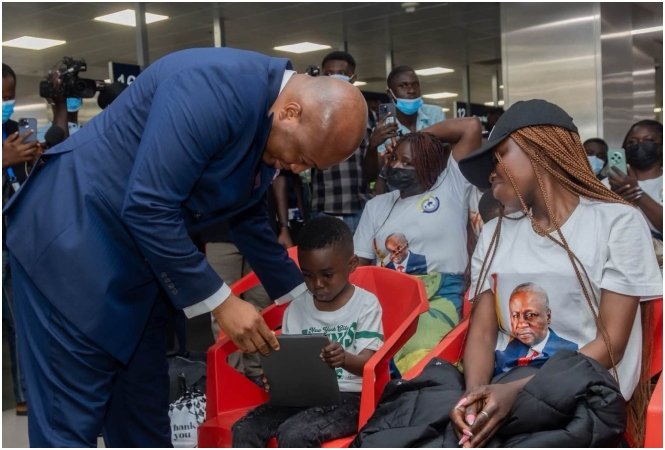
The Government of Ghana has received the second batch of approximately 200 citizens evacuated from South Africa following renewed xenophobic attacks that have claimed the lives of two Ghanaians and displaced hundreds more.
The evacuees arrived in Accra on Monday, July 27, 2026, where they were received by the Minister for Foreign Affairs, Mr. Samuel Okudzeto Ablakwa, who assured them of the state’s unwavering commitment to their welfare and the pursuit of justice for those who lost their lives.
Addressing the returnees upon arrival, Mr Ablakwa led a minute’s silence in memory of the two Ghanaians killed during the attacks: Mr Bashiru Isaak and Mr Kojo Antwi.
“We are still demanding justice and have written to the South African authorities to ensure that the killings of Mr Bashiru Isaak and Mr Kojo Antwi are not covered up. There has to be justice, and we will continue to demand thorough investigations, the arrest and prosecution of those who killed our beloved compatriots,” he said.
Repatriation of Remains Underway
The Minister disclosed that while the body of Mr Bashiru Isaak had already been returned to Ghana, arrangements were still ongoing to repatriate the remains of Mr Kojo Antwi. The government has formally written to South African authorities demanding accountability and transparency in the investigations into both deaths.
“On behalf of President John Dramani Mahama and the people of Ghana, I assure you that you have never been orphaned. You have never been refugees. You have never been people without a home, without a country or without a government. We are honoured and privileged to welcome you, our brothers and sisters, back to the motherland,” Mr Ablakwa told the emotional returnees.
Large-Scale Evacuation Effort
The latest group forms part of Ghana’s second evacuation exercise from South Africa. According to the Minister, approximately 900 Ghanaians were brought home during the first phase, while the current operation is expected to return about 1,000 more citizens who fled violence in different provinces across South Africa.
Many of the affected Ghanaians had abandoned their homes after coming under attack and sought refuge in churches and other safe locations while awaiting evacuation. The Minister expressed profound gratitude to the Church of Pentecost in Pretoria and Johannesburg for opening its premises to displaced Ghanaians.
“The Church of Pentecost demonstrated what it means to be Christlike. They suspended church services and offered their premises as shelter to fleeing Ghanaians awaiting government evacuation,” he said.
Reintegration Support Package
Mr Ablakwa announced that every returnee would receive the same travel and reintegration support package provided to those evacuated during the first exercise, emphasising that the government would not reduce or alter the assistance.
“We are not reducing or changing the package. You are all valuable Ghanaians whom we cherish very much,” he stated.
Beyond financial support, the Minister disclosed that the government has begun working with private companies and state institutions to help returnees secure employment. Those with vocational skills and business experience would receive assistance to restart their livelihoods.
“We are compiling a database and working with corporate Ghana. Some of your compatriots have already secured jobs, and we will continue to ensure that everyone is properly reintegrated,” he said.
Legal Action and Compensation
Mr Ablakwa also assured the evacuees that the government has assembled a legal team to pursue compensation for properties, businesses, and other investments destroyed or abandoned during the attacks. The government is exploring every available legal avenue to address the violation of the fundamental human rights of affected citizens.
“We are exploring every available legal avenue to ensure that this violation of your fundamental human rights is addressed and that you are duly compensated for your losses,” he said.
The evacuation exercise comes amid heightened tensions in South Africa, where xenophobic violence has periodically targeted foreign nationals, particularly those from other African countries. The Ghanaian government has consistently condemned the attacks and called on South African authorities to protect the lives and property of all foreign nationals within their borders.
The development has drawn praise from civil society organisations in Ghana, who have commended the government’s swift response in evacuating its citizens and its commitment to securing justice for the victims. However, some have called for stronger diplomatic measures to prevent future attacks on Ghanaians living abroad.









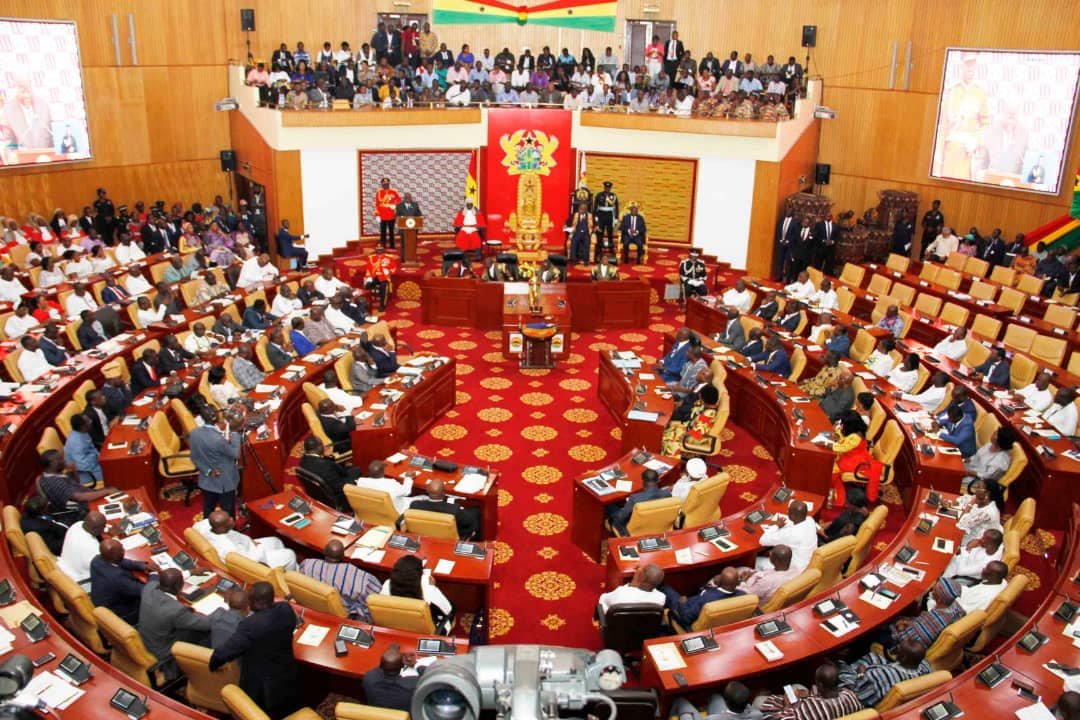
Ghana’s Parliament could be recalled for an emergency sitting as early as next week to examine growing concerns over the country’s worsening narcotics and national-security crisis, according to Ranking Member of Parliament’s Defence and Interior Committee, Rev. John Ntim Fordjour.
The Assin South MP says the Minority has secured more than the constitutionally required 15% of lawmakers needed to request a parliamentary recall under Ghana’s Constitution.
Fordjour said the required signatures, petition and memorandum were submitted to Speaker Alban Bagbin last week and that the Speaker has acknowledged receipt. He expects the formal notice of recall to be issued before the end of this week.
“Yes, we got more than 15%,” Fordjour said. “So the Speaker is expected to quickly issue a notice of recall for us to have an emergency recall, to constitute a committee, a bipartisan committee in Parliament, to dig into it, have a full inquiry into it, a transparent inquiry, so that we will be able to offer solutions.”
Fordjour Calls for Bipartisan Inquiry
The proposed recall follows a series of major narcotics seizures involving consignments linked to Ghana. Parliament has been asked to examine questions surrounding national security, border and port controls, intelligence gathering and the effectiveness of enforcement institutions.
A petition submitted by MPs in September invoked Article 112(3) and Parliament’s Standing Orders in seeking an extraordinary sitting. The petitioners said the developments warranted urgent parliamentary scrutiny in the national interest.
Fordjour stressed that any parliamentary investigation should not become another partisan confrontation.
“We are interested in solutions that restore Ghana to its glory,” he said.
He called for a transparent, bipartisan process capable of identifying weaknesses and producing practical recommendations.
‘The Government Hasn’t Acted’
Fordjour also accused the government of failing to take sufficiently decisive action against officials within institutions involved in Ghana’s security and enforcement chain.
“No, the government hasn’t acted. Who has been fired? Has there been any agency head fired in the value chain? No,” he said.
He argued that officials connected to the institutions responsible for addressing the crisis should face scrutiny rather than simply remaining in their positions while being tasked with addressing the problem.
Fordjour called on President John Mahama to demonstrate what he described as stronger leadership after returning from the United Nations General Assembly.
“We need strong leadership, and we need President Mahama on his return from UNGA to act decisively, and to act as a leader who is fully aware of the repercussions of this cartel,” he said.
His criticism comes amid renewed scrutiny following major international seizures involving consignments that reportedly originated from or passed through Ghana. A September 10 seizure of nearly 3.9 tonnes of cocaine at France’s Port of Dunkirk has been a particular focus of the parliamentary petition.
Warning of Wider Security Consequences
Fordjour said the issue should not be viewed solely as a matter of narcotics enforcement, arguing that illicit financial activity associated with organised crime can have broader national-security consequences.
“Wherever there are drugs, there is money laundering, and wherever there is money laundering, it is linked to terrorism,” he said.
He also connected the wider criminal economy to illegal mining communities and warned that the scale of the alleged trafficking could increase Ghana’s vulnerability to non-state actors.
Earlier this month, Fordjour warned that repeated international seizures were damaging Ghana’s reputation and called for investigations into the networks behind the consignments.
‘They Should Come and Not Make It Politics’
As Parliament considers a possible emergency sitting, Fordjour urged MPs to approach the issue as a matter of national interest rather than partisan competition.
“When Parliament comes, and for every 276 MPs, and for those watching us, when your MPs are coming, if indeed you did not send them to come to Parliament to endorse drug shipment and drug trafficking, then in your interest, in the interest of the constituency and the larger interest, the grand interest of Ghana, they should come and not make it politics,” he said.
He added that MPs should put Ghana and their constituencies ahead of party interests when considering the crisis.
The constitutional provision being invoked allows at least 15% of MPs to request a meeting of Parliament during a recess, with the Speaker required to summon the House within seven days of receiving the request.
As of September 23, Fordjour said the Speaker had acknowledged receipt of the recall request but had not yet issued the formal notice.
“So, certainly, by next week, you expect Parliament to have been recalled?” he was asked.
“Absolutely. But within this week, that notice of recall is expected. It must go,” Fordjour responded.
If the recall proceeds, lawmakers would be expected to determine the scope of any inquiry and consider measures to strengthen oversight and Ghana’s response to the security concerns surrounding the trafficking allegations.

A Ghanaian-born forestry professor at Southern Illinois University Carbondale was fatally shot during a custody exchange involving his two children, according to prosecutors, in a case that has devastated the university community in Illinois and drawn attention in Ghana.
Dr. Kofi Akamani, 48, was shot multiple times Saturday evening, September 20, 2026, after dropping off his children at the residence of his estranged wife, Betty Akamani, according to prosecutors. Authorities say the couple had been separated for about two years and had a pending dissolution case.
Betty Akamani, 35, has been charged with two counts of first-degree murder and one count of endangering the life or health of a child.
She appeared in Jackson County court Monday, where a judge granted the state’s request to detain her without bail pending trial. Her preliminary hearing is scheduled for October 6.
The Shooting

According to prosecutors, Dr. Akamani had completed a scheduled visitation with his two children and was driving away from his wife’s apartment when he was allegedly shot.
Jackson County State’s Attorney Marsha Cascio-Hale said the shooting occurred after Dr. Akamani dropped the children off at his wife’s residence.
Jackson County Sheriff’s Office deputies responded to reports of a shooting around 5 p.m. Saturday near Lake Road between Murphysboro and Carbondale. Dr. Akamani was transported to Memorial Hospital of Carbondale, where he was pronounced dead.
Authorities have not disclosed what they believe precipitated the shooting, and the investigation remains ongoing.
During Monday’s court proceedings, prosecutors also said Betty Akamani had made allegations about her husband during police interviews that investigators examined but could not substantiate. Prosecutors further referenced concerns about her conduct documented during a 2024 order-of-protection proceeding.
The allegations remain accusations. Betty Akamani is presumed innocent unless proven guilty in court.
A Scholar With Ties to Ghana and the United States
Dr. Akamani was a professor in SIU Carbondale’s Department of Forestry, where he taught forest recreation and conservation social science.
He joined the university in 2011 and was promoted to full professor in 2024. He also served as director of graduate studies.
His academic work focused on natural-resource management and the resilience of rural communities confronting environmental and economic change. His research included work in both Ghana and the United States involving forests, water resources and climate change.
Akamani published more than 30 research papers and contributed to national and international environmental assessments.
Born in Ghana, he earned his undergraduate degree from Kwame Nkrumah University of Science and Technology in 2003. He later earned an MPhil in Culture and Environmental Sustainability from the University of Oslo in 2006 and a PhD in Natural Resources from the University of Idaho in 2011.
‘We Have Lost a Truly Brilliant Light’
News of Akamani’s death prompted an outpouring of grief from colleagues, students and members of the Southern Illinois University community.
The forestry department described him as a kind and gentle professor whose work had earned respect at the university and internationally.
“We are grieving the loss of one of our beloved forestry professors, Dr. Kofi Akamani,” the department said. “The forestry family loved him at the university and across the world.”
More than 200 people gathered Tuesday evening at the Agriculture Building for a candlelight vigil honoring Akamani.
His brother, Solomon Abache, thanked the university and wider community for supporting the family.
“This is truly a devastating loss to us, but we have your words of encouragement and support,” Abache said.
Kristina Boone, dean of SIU’s College of Agricultural, Life and Physical Sciences, said Akamani’s legacy extended beyond his academic accomplishments.
“While anyone with his academic record would be known as a leading scholar, what resonates with us is his warmth and generosity,” Boone said. “We have lost a truly brilliant light in our lives.”
‘I Love My Southern Illinois’
Rebecca Kagaris, a PhD candidate in forestry, recalled speaking with Akamani only weeks before his death about whether he might eventually move to a larger university.
According to Kagaris, Akamani told her that he loved Southern Illinois, SIU and the local work he was doing with the Cache River.
“I’m going to take that with me the rest of my life,” Kagaris said of the conversation.
Logan Park, an associate professor in forestry, said Akamani had a distinctive ability to challenge people to see their surroundings differently.
“He’d start talking about what we were looking at, and in about 90 seconds, everybody’s world got a little bit bigger,” Park said.
The candlelight vigil ended with a singing of “Amazing Grace” and the playing of a Ghanaian tune.
A memorial service for Akamani will be announced at a later date.
Investigation Continues
Betty Akamani remains held at the Jackson County Jail without bond. She is scheduled to return to court October 6, and no trial date has been set.
The Jackson County Sheriff’s Office said the investigation is still in its early stages. The Jackson County Ambulance Service, Jackson County Coroner’s Office and Jackson County State’s Attorney’s Office assisted with the investigation.
Akamani’s death has resonated in both the United States and Ghana, linking a fatal domestic shooting in Southern Illinois to the loss of an academic whose career and research connected communities across two continents.


Ghana’s government is advancing consultations on an ambitious $10 billion “New Economy” program aimed at transforming the country from a raw commodity exporter into a value-added industrial economy, even as the World Bank warns of significant infrastructure and fiscal risks.
President John Dramani Mahama has said the plan will mobilize roughly $10 billion in investment across key sectors, with full details due in the 2027 Budget in November. The program is intended to mark a shift in economic policy, moving the government’s focus from macroeconomic stabilization toward production, investment and job creation.
Finance Minister Dr. Cassiel Ato Forson has begun consultations with key ministries, including the Trade, Agribusiness and Industry Ministry and the National Development Planning Commission, to align the next phase of economic policy around expanding productive capacity, attracting private investment, and strengthening local industries.
The program’s priority areas include commercial agriculture, value addition in mining, energy development and transport infrastructure.
Government has said it plans to draw funding from a mix of sources, including export credit agencies, hedge funds and private investors, though the financing structure has not yet been finalized.
The industrialization agenda is built around three flagship value-addition chains: transforming cocoa into chocolate, bauxite into aluminium, and critical minerals into batteries. A target of 250,000 jobs has appeared in monitored content, alongside references to approximately $2.5 billion in annual investment across seven strategic sectors, with agriculture and agro-processing positioned as lead sectors.
Forson has framed the shift as the next stage of a longer process.
“Stabilization was never the destination. It was the price of entry,” he said, arguing that Ghana had already paid that price and must now pursue what he called transformation.
The government has indicated the program would use roughly one percent of GDP to develop key economic pillars intended for private-sector use in job creation. Officials have emphasized that the private sector will be expected to respond through investment, innovation and job creation, with government providing policy stability, infrastructure and efficient regulation.
However, the World Bank has issued warnings concerning infrastructure and fiscal risks associated with the program, introducing an important counter-narrative. International institutional assessments are increasingly being incorporated into domestic political arguments over the government’s economic strategy.
The IMANI PULSE report, published by Ghanaian think tank, IMANI Africa, which monitored Ghana’s digital political conversation from August 8 to September 7, 2026, identified the New Economy program as the dominant international-facing policy story in that period, with foreign policy mentions reaching 1,180 and a substance index of 0.63.
The report noted that the conversation was less focused on traditional diplomacy and more closely connected to Ghana’s economic relationship with the international system, with value addition and industrialization placed at the center of Ghana’s international economic positioning.
The program has also generated significant discussion in the jobs theme, which recorded 212 mentions with a high substance index of 0.84 and positive sentiment of 0.11.
Unlike the elections and party theme, personality content remained comparatively limited in the jobs conversation, with the political significance of jobs expressed more through competing claims about policy delivery than through direct personality attacks.
As consultations continue ahead of the 2027 Budget presentation, the central question remains whether Ghana can convert an ambitious industrial vision into durable economic transformation, or whether fiscal constraints and infrastructure gaps will undermine the dream of turning cocoa, bauxite and minerals into finished products.



-

 Ghana News1 day ago
“It Slipped Through”: Ghana Customs Boss Admits Airport Security Failure After 3.9-Ton Drug Bust
-

 Opinion1 day ago
African Blood for Other People’s War?
-
 Festivals & Events2 days ago
Accra Welcomes New York Leadership for a Historic Night of Community
-

 Homes & Real Estate1 day ago
How Mechanical, Electrical, and Plumbing Audits Protect Your Real Estate Investment
-

 Global Update1 day ago
White House Launches ‘Trump TV’ on YouTube After Banning Three News Outlets: Here’s What It’s Showing
-

 Taste GH2 days ago
The Timeless Appeal of Koose and Spiced Millet Koko
-
 Ghana News8 hours ago
Ghana Parliament Faces Emergency Recall Over Heightening Narcotics Crisis
-

 Fashion & Style1 day ago
When Aesthetics Backfire: What the Converse Imagery Controversy Teaches the Global Style Industry