
Taste GH
Poloo: The Crunchy Coconut Treat That Brings Sweet Memories
Golden, crunchy, and lightly sweet, this coconut snack has long been a favorite at family gatherings, roadside stalls, and school lunch breaks.


In many Ghanaian homes, the sound of something sizzling in hot oil often signals a familiar pleasure: poloo.
Golden, crunchy, and lightly sweet, this coconut snack has long been a favorite at family gatherings, roadside stalls, and school lunch breaks. One bite is enough to understand why it has earned a loyal following.
Popular across towns and cities in Ghana, poloo is less a meal and more a comforting nibble that carries the warm flavors of coconut and spice. Its most distinctive ingredient is freshly grated coconut, which gives the snack its fragrant aroma and gentle sweetness.
Mixed with flour, sugar, and a touch of nutmeg—the spice that gives poloo its unmistakable character—the dough comes together with coconut milk or butter before being shaped and fried.
@cooking.with.efya Ghana poloo recipe / coconut biscuit #ghana #ghanafood #explore #reels ♬ original sound – cooking with efya
The process itself is simple but satisfying. The dough is rolled out, cut into small shapes, and dropped into hot oil, where it turns crisp and golden. What emerges from the pan is a crunchy snack with a slightly nutty taste and a sweetness that never feels overwhelming.
But poloo is more than just a fried treat. For many Ghanaians, it carries the comfort of childhood. It might remind someone of snacks shared with classmates during break time, or the smell drifting from a neighborhood kitchen on a quiet afternoon.
Vendors sometimes sell it in small transparent bags, stacked neatly on tables along busy streets.
Its charm lies in its texture as much as its flavor. The outside is crisp, while the coconut within adds a pleasant chewiness.
Paired with tea, enjoyed with soft drinks, or simply eaten by the handful, poloo fits almost any moment.
For visitors discovering Ghanaian snacks for the first time, poloo offers a small but memorable introduction to local flavors—proof that sometimes the simplest treats leave the strongest impression.

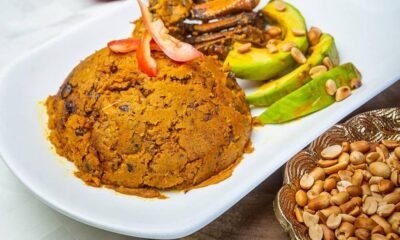

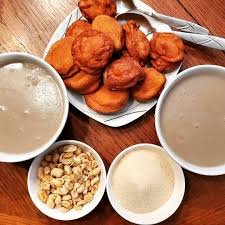





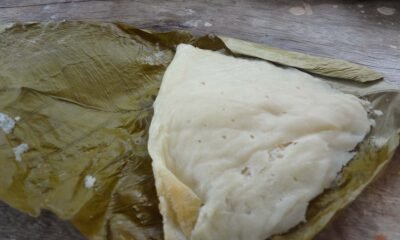




Some meals demand a table, a fork, and a certain amount of ceremony. Then there is Kofi Broke Man.
No plate. No cutlery. No pretence. Just a man—or a woman—with a wooden bowl, a coal pot, and an understanding that the best things in life require nothing more than your hands and a moment of patience.
The name itself tells you everything. Kofi Broke Man is the meal for the days when your pockets are light, but your spirit refuses to go hungry.
It is roasted plantain served alongside a generous handful of roasted groundnuts. That is it. No fish. No stew. No embellishment. And yet, it is one of the most satisfying things you will ever taste.
Read Also: Experience the Rare Texture of Apapransa the Celebratory Roasted Corn Delicacy
The plantain arrives hot, its skin blistered black from the coals, the flesh inside transformed into something soft and almost honey-sweet. The groundnuts are warm, salted, each kernel offering a buttery crunch. You pull off a piece of the plantain, press a few groundnuts into it, and let the combination do its work. Sweet meets savoury. Soft meets crisp. Heat meets salt.
You eat it standing by the roadside, balancing the paper cone in one palm, using the other to peel back the charred skin. There is no conversation for the first few minutes. Just the quiet focus of someone who knows they have stumbled upon something perfect.
Kofi Broke Man does not try to impress you. It does not need to. It is the taste of resourcefulness, of joy found in simplicity, of a country that knows how to turn two humble ingredients into a moment worth crossing town for.
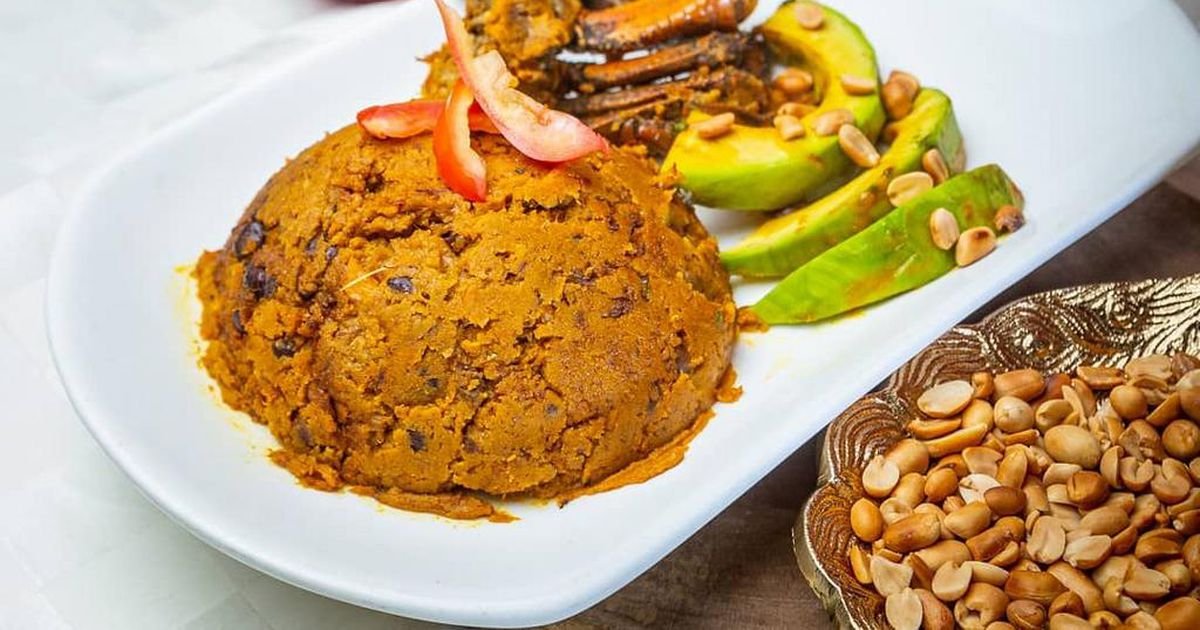
If you find yourself in a Ghanaian home and a bowl of Apapransa is placed before you, consider it a profound gesture of hospitality.
Unlike the ubiquitous Jollof or the reliable Fufu, Apapransa isn’t “everyday” street food. It is a celebratory labor of love, a dish that carries the weight of history and the richness of the Ga and Akan heritage in every spoonful.
At its heart, Apapransa is a testament to culinary ingenuity. It is made from roasted corn flour—which gives it a deep, nutty aroma—stirred into a savory base of palm nut soup. But it’s the texture that truly captures the imagination.
@wannabe.foodie INGREDIENTS _Palmnut soup _Roasted corn flour _Red beans _Onions _Pepper _Tomatoes _Salt _Crabs #wannabefoodie #fyp #aprapransa #foodblogger #ghanatiktok🇬🇭 #ghanaianfood #foodtiktok #trendingvideo #viral #foodtok ♬ original sound – Wannabe Foodie
It is dense, silky, and heart-warmingly heavy, often topped with a crown of tender crabs, flaky fried fish, and a drizzle of vibrant red palm oil.
What makes it a “must-taste” for any global palate? It’s the complexity of the smoke. Because the corn is roasted before it’s ground, the dish has a sophisticated, smoky undertone that balances the sweetness of the palm fruit.
Read Also: The Calabash Connection: A Journey into the Tangy Soul of Ghana’s Pito
It is earthy and bold, yet incredibly comforting. It is the kind of meal that demands you slow down; you don’t just eat Apapransa, you experience it.
For the curious traveler, tasting it is like catching a glimpse of Ghana’s soul—rich, unpretentious, and unforgettable.
Conclusion
In a world of fast food, Apapransa remains a defiant reminder that some things are worth the wait. It is a masterpiece of texture and tradition that leaves you feeling grounded and deeply satisfied.

If you find yourself in the sun-drenched northern regions of Ghana, or wandering through the bustling “pito bars” of Accra’s hidden corners, you will eventually encounter a rhythmic clinking of calabashes.
This is the sound of Pito, a traditional indigenous beer that is far more than just a drink—it is a cultural heartbeat poured into a gourd.
Brewed from fermented millet or sorghum, Pito is the antithesis of the sterile, carbonated lagers found in grocery stores.
It is served at room temperature, often slightly cloudy, with a flavor profile that dances between earthy sweetness and a sharp, refreshing tang.
But why is it a “must-taste”? Because Pito is a living history. It is the drink of ancestors, the lubricant of village festivals, and the quiet companion of farmers after a day in the fields.
Taking a sip from a communal calabash is an act of immersion. You aren’t just tasting grain; you are tasting the smoke of the brewing fire and the wild yeast of the Ghanaian air.
Whether you opt for the sweeter, non-alcoholic variety or the fermented version with a subtle, creeping kick, Pito offers a depth of “umami” that modern beverages simply cannot replicate.
It’s a sensory bridge to the Sahel, a cool respite from the tropical heat, and a reminder that the best things in life are still made by hand, shared in circles, and rooted in the earth.


Global Arts Community Condemns Police Assault on Ghanaian Artist Ibrahim Mahama

Renowned Civil Rights Attorney Ben Crump to Join Global Leaders at UN Panel As Ghana Presents Motion for Reparatory Justice for Slave Trade

Rev Al Sharpton Backs Ghana’s UN Slave Trade Initiative, Attorney-General Dragged to Court Over Kotoka Airport Renaming, and Other Big Stories in Ghana Today (March 24)
-

 Business22 hours ago
KNUST Graduates Build Ghana’s First AI-Powered Farming Robot
-

 Ghana News2 days ago
This is How Airline Passengers Can Access Ghana’s Newly Launched Dedicated Complaints Portal
-

 Ghana News1 day ago
Ghana Confident UN Will Back Slave Trade Resolution as Mahama Presents Draft March 25
-

 Ghana News2 days ago
Brazil Joins Ghana’s UN Campaign to Declare Transatlantic Slave Trade the Gravest Crime Against Humanity
-

 Diaspora Investment Guide2 days ago
Ghana’s “Raw Material” Export Era Ends: These 3 Value-Added Products Emerge as 2026 Goldmines
-

 Ghana News2 days ago
President Mahama Responds to Calls to Seek 3rd Term, Three-Year-Old Killed in Bee Attack, and Other Big Stories in Ghana Right Now (March 22)
-
 Ghana News2 hours ago
Renowned Civil Rights Attorney Ben Crump to Join Global Leaders at UN Panel As Ghana Presents Motion for Reparatory Justice for Slave Trade
-
 Business1 day ago
The $1 Billion Forecasting Error That Exposed Ghana’s Broken Cocoa Model