
News
Ghana Police Rescue Abducted Girl, 9, at Airport as Suspect Attempted to Send Her to Kenya


ACCRA – Police in Ghana have rescued a nine-year-old girl who was allegedly abducted from the Agormanya Zongo community in the Eastern Region and arrested a 36-year-old woman accused of attempting to send the child to Kenya, authorities said.
The Eastern Regional Police Command announced the rescue and arrest on Monday, April 20, 2026, following a complaint filed a day earlier by the victim’s father, who reported that his daughter had left home and failed to return.
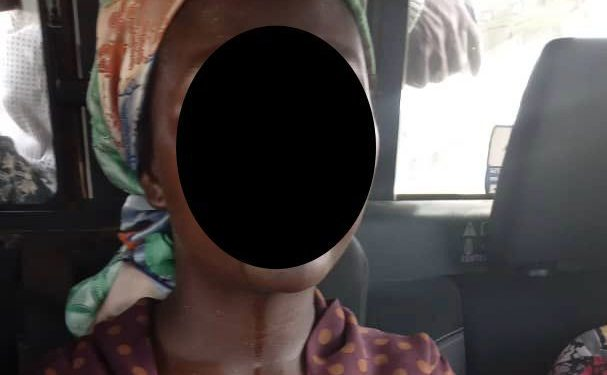
In a statement, police said intelligence-led operations by officers from the Odumase-Krobo District Command, with support from personnel at the Kotoka International Airport, led to the arrest of the suspect, identified as Regina Mamle Tawiah, 36. The victim was rescued at the airport, where preliminary investigations indicate the suspect was preparing to transport the child to Kenya.
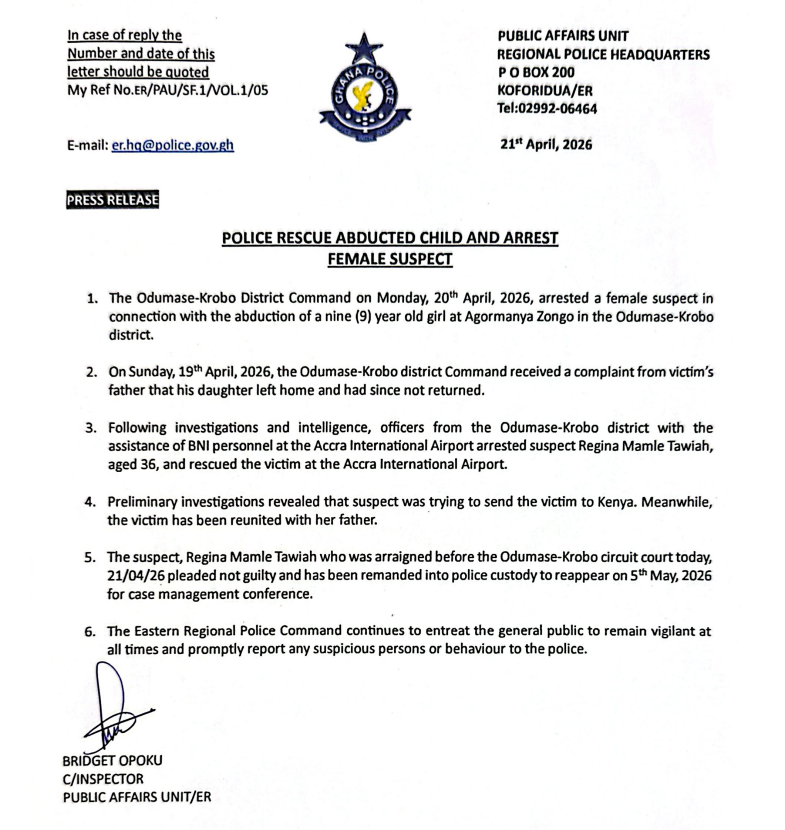
The girl has since been safely reunited with her father, police confirmed.
The suspect was arraigned before the Odumase-Krobo Circuit Court on Tuesday, April 21, where she pleaded not guilty to charges related to the alleged abduction. She has been remanded into police custody and is scheduled to reappear on May 5, 2026, for a case management conference.
The Eastern Regional Police Command has urged the public to remain vigilant and report any suspicious activities to law enforcement authorities.
The case has drawn attention to child abduction risks in Ghana, particularly in rural and peri-urban communities, and has highlighted the role of airport security in intercepting suspected trafficking attempts.










Ghana News
Philanthropy vs. Tradition: What MrBeast’s $10M Ghana Village Reveals About the Child Labor Debate

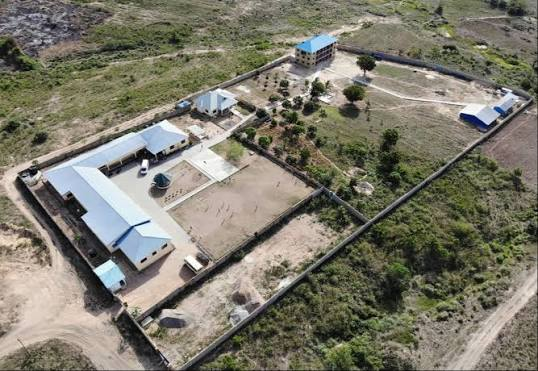
When YouTube mega-star MrBeast unveiled Abna Dakwa Village—a nearly US$10 million custom-built enclave in Ghana’s Eastern Region—the internet erupted.
Equipped with a school for over 300 students, ten homes for teachers, a health clinic, solar grid, and free meals supported by the Rockefeller Foundation, the development is explicitly framed as an intervention against child labor in cocoa farming.
Yet beneath the viral cameras and impressive infrastructure lies a fundamental cultural tension: where does western intervention draw the line between rescuing children from exploitation and dismantling traditional community schooling?
The distinction is critical. International bodies like the International Labour Organization (ILO) explicitly differentiate between hazardous child labor and age-appropriate community participation.
In many Ghanaian rural settings, assisting elders on family farms, helping at market stalls, or learning local fishing techniques isn’t exploitation—it is an essential, intergenerational education.
It transfers survival skills, business acumen, and cultural responsibility that no standardized textbook can replicate.
While combatting dangerous work in mines or unsafe cocoa plantations is undeniably urgent, heavy-handed western philanthropy often collapses all physical work into a single negative category.
This raises an essential question about the $10 million project: what kind of education will Abna Dakwa Village actually deliver?

If the school focuses solely on a homogenized, westernized curriculum designed to service global tech or corporate markets, it risks alienating youth from their local roots.
Instead of strengthening the village’s agricultural and economic engine, it could encourage a brain drain—driving young people away from their home communities toward overcrowded cities or abroad in search of relevance.
True development must harmonize modern academic tools with local agrarian livelihoods.
For philanthropy to build lasting, self-sustaining autonomy rather than dependence, it must respect traditional community work as valid learning, ensuring the next generation is empowered to build up their own backyards.
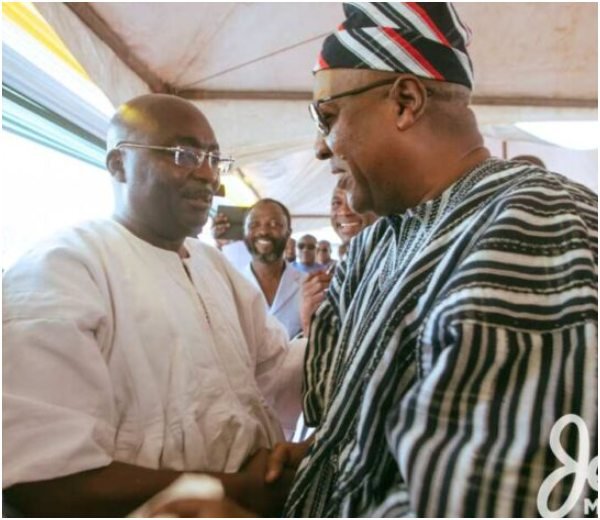
Ghana’s digital political conversation is becoming more substantive, but personality, identity and political symbolism continue to generate engagement levels comparable to or higher than policy developments, according to a new analysis of the country’s online political discourse.
The IMANI PULSE report, which monitored Ghana’s digital political conversation from August 8 to September 7, 2026, found that the most visible conversation is not necessarily the most substantive.
The Perseus Mining dividend announcement, a significant economic story, generated 1,307 engagements, while content surrounding Dr. Mahamudu Bawumia, Samira Bawumia and the National Cathedral generated approximately 1,330 engagements. A TikTok post associated with Bawumia’s 2028 positioning generated 961 engagements, while the nurses and midwives payroll story, a major health policy development, generated 935 engagements.
The comparison is instructive. Personality, identity and political symbolism can generate engagement levels comparable to, or higher than, substantive policy developments. This means that volume and engagement should not be interpreted as direct measures of policy significance. Some of the highest-performing content is driven by loyalty, identity, political competition or controversy, while some policy-heavy conversations receive comparatively modest engagement.
The elections and party theme recorded 475 mentions, but unlike infrastructure, health and jobs, it was substantially more personality-driven. Of 367 classified mentions, 239 were personality-oriented and 128 policy-oriented, producing a ratio of approximately 1.9 to 1 in favour of personality content. The central figure was Dr. Mahamudu Bawumia, who won the NPP presidential primary with 110,645 votes (56.48 per cent), becoming the party’s flagbearer for the 2028 general election.
Bawumia has publicly acknowledged the role of social media in his political rise, thanking supporters who led campaigns on Facebook, TikTok, Twitter and Instagram.
“To my youth campaign team and the teeming young people across the country, who championed this campaign from day one from various communities such as Facebook, TikTok, Twitter and Instagram, I say thank you,” he said. “You remain my allies on this journey, together we will get this done”.
The #Bawumia2028 and #ItIsPossible2028 ecosystems generated extensive content around his leadership qualities, grassroots mobilisation and electoral positioning. Ahafo NPP executives were reported as pledging support and mobilisation, while other content presented Bawumia as the party’s incoming presidential candidate. The running-mate question also surfaced, including calls for Dr. Matthew Opoku Prempeh to be retained on the ticket.
Despite the thematic keywords relating to primaries, delegates and internal party contests, the leading mentions contained little substantive discussion of internal NPP democracy or specific primary contests. The election conversation was therefore primarily a conversation about Bawumia as a political brand, rather than about competing policy platforms.
Yet the report also identified an emerging policy dimension. Bawumia’s consultation with the Ghana Registered Nurses and Midwives Association represented an attempt to connect his 2028 positioning with concrete policy development in healthcare. The discussions covered nursing and midwifery education, health infrastructure and the welfare and working conditions of frontline health workers.
The report found that across thematic categories, one of the clearest patterns is the emergence of two different political temporalities. The government-side conversation is predominantly forward-looking, centring on financing infrastructure, creating jobs, expanding healthcare employment, developing domestic industries, and restructuring state institutions. The opposition conversation is more divided: Bawumia’s 2028 campaign is forward-looking when it discusses consultations with professional groups, but a significant part of the NPP-aligned critique of the current government remains backward-looking, drawing on past economic performance, health outcomes and governance failures.
In the elections and party conversation, the forward-looking orientation was measured at 72 per cent, compared with 28 per cent backward-looking. In the jobs conversation, the gap was even wider at 92 per cent forward-looking and 8 per cent backward-looking.
The August 2026 digital political conversation suggests that Ghana’s political discourse is entering a more consequential phase.
Policy has become increasingly visible: infrastructure, jobs, healthcare, economic transformation and institutional governance are generating substantial amounts of substantive discussion.
Yet personality politics has not receded. It has instead become embedded within the policy conversation.
The result is not a simple transition from personality politics to policy politics. It is a more complex fusion of the two.
The most important political question emerging from the August conversation is whether policy outcomes can ultimately acquire enough political credibility to reshape the reputations of the individuals associated with them.
Ghana News
Africa Digital Democracy: What Ghana’s Online Conversation Reveals About Elections in 2028
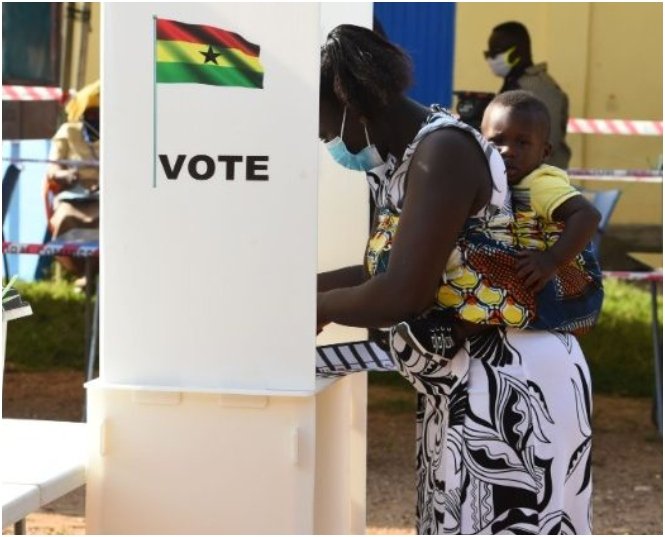
Ghana’s digital political conversation is emerging as a bellwether for how democracy is evolving across Africa, with new data revealing a complex fusion of policy substance and personality-driven engagement that could shape the continent’s electoral future.
The IMANI PULSE report, which monitored Ghana’s digital political conversation across Facebook, X (formerly Twitter), YouTube, TikTok, podcasts, web-based sources and news feeds from August 8 to September 7, 2026, provides a detailed snapshot of a political environment increasingly shaped by concrete questions of delivery, institutional accountability and economic performance.
Across the monitored thematic areas, policy-oriented conversations were particularly prominent around infrastructure, jobs, health, the economy and aspects of governance. The strongest policy signals came from major government announcements, including financing for the Accra–Kumasi Expressway, the proposed $10 billion New Economy program, the absorption of 13,500 nurses and midwives onto the government payroll, and plans to expand domestic crude processing and electricity generation.
The governance and law theme recorded the largest thematic volume in the dataset, with 1,603 mentions. Its substance index stood at 0.60, while sentiment remained marginally negative at -0.05. The Accra–Kumasi Expressway featured prominently, but the governance conversation also captured a series of executive and institutional interventions.
President Mahama’s 14-day ultimatum to two ministers to resolve the impasse between the Tema Metropolitan Assembly and TDC Ghana Limited represented a particularly clear governance intervention, as did his warning that ministers, chief executives and board members would not be permitted to exhibit indiscipline or poor performance.
The GoldBod dispute, involving a reported $1.7 billion loss under the Bank of Ghana’s Domestic Gold Purchase Program, demonstrated how the same accountability issue can cut across several thematic categories. The controversy was simultaneously a financial-governance question and a personalised political confrontation involving President Mahama, GoldBod CEO Sammy Gyamfi and Minority Leader Alexander Afenyo-Markin.
The return of GH¢70,000 by Deputy Minority Leader Patricia Appiagyei, which she said had been given to members of Parliament’s Appointments Committee as a gift, represented another concrete parliamentary-integrity story. The governance conversation therefore combined institutional action with intense political contestation, reinforcing the wider finding that Ghana’s digital political discourse increasingly interprets institutional performance through individual political actors.
The health theme produced only 143 mentions but had one of the strongest substance scores in the dataset, at approximately 0.85. Of 126 classified mentions, 107 were policy-oriented and 19 personality-oriented. The dominant story was President Mahama’s enrolment of 13,500 nurses and midwives onto the government payroll, alongside the reported clearance of outstanding arrears. The issue generated appreciative responses from the Coalition of Unpaid Nurses and Midwives and was framed largely as a government action resolving a longstanding employment and welfare problem.
The report also identified a critical limitation within the dataset: a high substance score does not necessarily mean that the underlying conversation is deeply focused on the sector itself. In the education theme, which recorded 440 mentions with a substance index of 0.65, the apparent policy depth was partly influenced by content that was education-adjacent rather than directly concerned with Ghana’s education system. Several mentions involving Education Minister Haruna Iddrisu were triggered by his attendance at a religious ceremony rather than by education policy, while references to a Supreme Court justice’s secondary-school history entered the dataset because of keyword matching.
The report’s findings have implications beyond Ghana. Across Africa, digital platforms are increasingly becoming the primary arena for political contestation, with implications for how policy is debated, how accountability is demanded, and how political brands are constructed. The Ghanaian case suggests that the transition from personality politics to policy politics is neither linear nor complete. Instead, policy outcomes are becoming embedded within personality-driven narratives, with infrastructure announcements becoming tests of ministerial credibility, economic outcomes attributed directly to political leaders, and health-sector outcomes used to defend or attack previous administrations.
The August conversation sits at the intersection of delivery, credibility and political memory. Policy is gaining ground, but personalities remain the principal vehicles through which Ghanaians encounter, interpret and contest that policy. For the governing NDC, infrastructure delivery, economic transformation, jobs and health interventions are increasingly becoming measures against which the Mahama administration can be judged. For the NPP and Bawumia, past economic and governance outcomes remain part of the political record, while new policy consultations are being used to construct a forward-looking alternative.
As Ghana moves toward the 2028 general election, the country’s digital political conversation offers a preview of how African democracies may evolve in an era of platform politics, a complex fusion of substance and spectacle, where the most important question is not simply whether discourse is becoming more substantive, but whether policy outcomes can ultimately acquire enough political credibility to reshape the reputations of the individuals associated with them.


When Aesthetics Backfire: What the Converse Imagery Controversy Teaches the Global Style Industry

How Mechanical, Electrical, and Plumbing Audits Protect Your Real Estate Investment

The Timeless Appeal of Koose and Spiced Millet Koko
-

 Sights and Sounds1 day ago
Why Bliss Family Entertainment Is Airport City’s Go-To Haven
-

 Health & Wellness2 days ago
First In, Last Out: Understanding Your Body’s Natural Fat Storage Blueprint
-

 Festivals & Events13 hours ago
Accra Welcomes New York Leadership for a Historic Night of Community
-
 Taste GH13 hours ago
The Timeless Appeal of Koose and Spiced Millet Koko
-

 Festivals & Events1 day ago
Where Cascades Meet Culture: The Majestic Grandeur of the Wli Falls Festival
-
 Homes & Real Estate2 hours ago
How Mechanical, Electrical, and Plumbing Audits Protect Your Real Estate Investment
-
 Fashion & Style1 hour ago
When Aesthetics Backfire: What the Converse Imagery Controversy Teaches the Global Style Industry