
Ghana News
UN Strongly Condemns Attack on Ghanaian Peacekeepers in Lebanon, Mpox Outbreak in Ghana and Other Trending Issues in Ghana Today (March 9, 2026)

Stay informed with the latest developments from Ghana and beyond. This rolling update brings you key stories as they unfold. Check back regularly for fresh additions.
UN Chief Strongly Condemns Attack on Ghanaian Peacekeepers in Lebanon
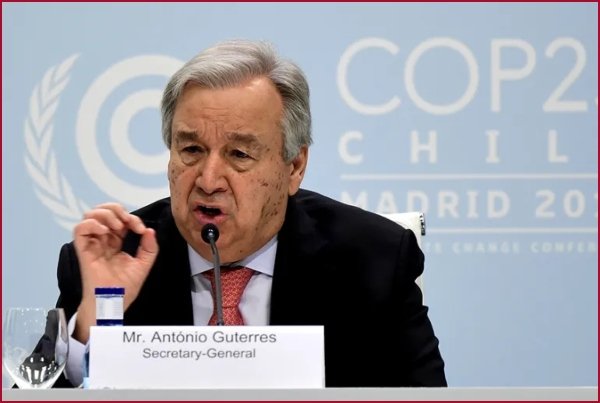
United Nations Secretary-General António Guterres has condemned an attack that injured three Ghanaian peacekeepers serving with UNIFIL in southern Lebanon on March 6, 2026. The soldiers came under heavy gunfire while at their outpost in Al Qawzah, with one seriously injured and evacuated to Beirut. Guterres demanded full accountability, describing attacks on peacekeepers as potential war crimes, and called for immediate de-escalation amid rising regional tensions linked to the broader Middle East conflict.
Read the full story here
Government Bans Land Transit of Rice, Sugar and Seven Other Essential Commodities
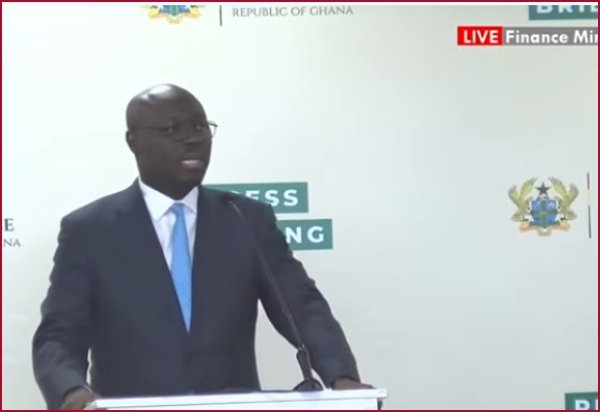
Ghana’s Finance Minister Dr. Cassiel Ato Forson has imposed an immediate ban on the land transit of nine key commodities, including rice, sugar, flour, cooking oil, pasta, canned tomatoes, frozen products, textiles, and pharmaceuticals. Importers must now route these goods exclusively through Ghana’s seaports to curb revenue leakages and strengthen border security. The directive, issued after consultations with the Ghana Revenue Authority, is expected to significantly reshape import logistics and clearing processes in the country.
Read the full story here
Mobile Money Vendor and Customer Killed in Armed Robbery at Fufulso Junction
Two people — a mobile money (MoMo) vendor and his customer — were shot dead in a violent armed robbery at Fufulso Junction in Ghana’s Savannah Region on Sunday evening. Three other persons sustained gunshot injuries and are in critical condition at Buipe District Hospital. The attack triggered angry youth in the community to set fire to several homes, prompting the deployment of security personnel to restore calm.
Read the full story here
CID Reopens Investigations into Multiple High-Profile Murder and Disappearance Cases
The Criminal Investigations Department (CID) has reactivated its Cold Case Unit to reopen investigations into several unresolved high-profile cases, including the disappearance of NDC Women’s Organiser Paulina Lamisi Akambodipo, the murder of Stella Adjoa Potake Donkor in Tema, and the killing of Anthony Cudjoe Ahiama at Oyarifa. The move, announced by CID Director-General COP Lydia Yaako Donkor, aims to bring fresh intelligence and forensic resources to deliver justice for victims and their families.
Read the full story here
Former COCOBOD CEO Returns Official Vehicle Amid Ongoing Audit Probe
Former Ghana Cocoa Board (COCOBOD) Chief Executive Joseph Boahen Aidoo has returned an official vehicle he retained for over 14 months after leaving office. The return comes amid heightened scrutiny and an ongoing audit investigation into COCOBOD’s finances, including major procurement irregularities inherited by the new administration. The case has been referred to the Economic and Organised Crime Office (EOCO) for further probe.
Read the full story here
Temporary Lane Closure at Tetteh Quarshie Interchange Starts March 9 for Bridge Expansion Works
The Ghana Highway Authority has announced a temporary closure of lanes on the N4 northbound carriageway of the Accra–Madina road at the Tetteh Quarshie Interchange, effective March 9, 2026, lasting approximately four months. The measure supports ongoing T-beam launching for the interchange bridge expansion under the Accra–Tema Motorway and Extension Projects, overseen by the Ministry of Roads and Highways. The southbound carriageway will be reconfigured into two lanes in each direction to maintain flow between Accra and Madina. Authorities emphasize safety for construction workers and road users, urging motorists to follow traffic signs, exercise caution, and cooperate with officials.
Read the full story here
Mpox Outbreak in Ghana: Eight Deaths and Over 1,000 Confirmed Cases Since May 2025
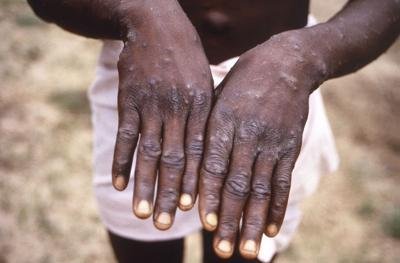
Ghana has recorded 1,038 confirmed mpox cases and eight deaths since the outbreak began in May 2025, according to the latest update as of March 3, 2026. Most fatalities involved individuals with underlying conditions, with one active case currently under admission and no critical cases reported. Cases span 124 districts across all regions (47.5% of the country), with Greater Accra and Western regions recording the highest numbers. The Ministry of Health and Ghana Health Service have led a multi-sectoral response, supported by international partners, including enhanced surveillance, contact tracing with 21-day monitoring, laboratory testing at key facilities, and vaccination of 31,231 people (over 95% coverage) in 12 hotspot districts across Ashanti, Greater Accra, and Western regions using 33,600 doses from Africa CDC and WHO. Health Minister Kwabena Mintah Akandoh noted a significant decline in cases following interventions, with sporadic occurrences in recent months. Medical costs are covered by the state, and officials urge accurate information dissemination to strengthen public health security.
Read the full story here
Poor Hygiene and Sanitation Practices Drive Rising Pediatric UTIs in Ghana, Expert Warns
Paediatrician Dr. Beatrice Nyann of the University of Ghana Medical Centre has highlighted poor hygiene and sanitation as the primary root causes behind the increasing cases of urinary tract infections (UTIs) among children in Ghana, affecting even those from affluent households. Girls face higher risk than boys, with pre-schoolers particularly vulnerable due to neglect. Contributing factors include delaying urination during play, prolonged use of diapers containing urine or faeces (allowing germs to enter the urinary tract), and poor school sanitation exposing pupils to germs from unclean facilities. Dr. Nyann warned that extended time in soiled diapers can lead to severe infections potentially impacting the kidneys. Prevention focuses on frequent diaper changes for infants and promoting strong hygiene and sanitation habits in schools for older children.
Read the full story here
CLOGSAG Starts Indefinite Nationwide Strike Today Over Delayed Conditions of Service
The Civil and Local Government Staff Association of Ghana (CLOGSAG) has commenced an indefinite nationwide strike effective March 9, 2026, citing prolonged delays in implementing agreed conditions of service. Despite previous engagements and a National Labour Commission directive to suspend action and negotiate, the union reports no formal government response since issuing their strike notice last week. The industrial action disrupts administrative operations across ministries, departments, agencies, and local government offices. CLOGSAG’s Public Relations Officer urged all members to stay away from work.
Read the full story here
MP Challenges President Mahama to Lead Salary Cuts Starting from Jubilee House Amid Cocoa Price Slump
Akim Oda MP Alexander Akwasi Acquah has dared President John Dramani Mahama to initiate salary reductions for himself and other appointees beginning at Jubilee House in solidarity with cocoa farmers hit hard by falling prices. Farmers, who met with the Minority Caucus in the Eastern Region, expressed frustration over unfair compensation despite their contributions to the sector, with some unable to celebrate Ghana’s Independence Day. The call references past salary trims under former President Akufo-Addo and urges the burden not fall solely on COCOBOD executives.
Read the full story here
Cabinet Greenlights Fresh Nationwide SIM Registration Exercise
Ghana’s Cabinet has approved a new round of mandatory SIM card registration, described as a complete reset rather than a continuation of prior efforts. Communications Minister Samuel Nartey George announced the move following reviews that highlighted issues like weak biometric enforcement, data inconsistencies, and fraud in the previous process. The National Communications Authority (NCA) will serve as the central data repository with mandatory biometric verification, and a Central Equipment Identity Register (CEIR) will enable cross-network blocking of stolen or fraud-linked devices. Telecom operators have welcomed the initiative but noted operational concerns; a revised Legislative Instrument is in preparation.
Read the full story here
Economist Urges Government to Convert Middle East War Oil Price Gains into Relief for the Poor
Amid escalating Middle East conflict driving up global crude oil prices, economist Dr Adu Owusu Sarkodie has called on the government to channel potential revenue windfalls—Ghana being an oil exporter—into targeted support for vulnerable groups. He suggested measures like fuel coupons for trotro, taxi, and ride-hailing drivers to cushion rising transport costs and stabilize fares. The expert highlighted risks from prolonged disruptions, drawing parallels to the Russia-Ukraine war’s effects on supply chains, fertilizer, and wheat imports, and stressed the need to boost local production in agriculture and industry to reduce import reliance.
Read the full story here
Import Dependency Poses Threat to Ghana’s Economy Amid Iran Conflict, Warns Economist
Economist Dr Adu Owusu Sarkodie has cautioned that Ghana’s heavy reliance on imported essentials—such as fertilizer and wheat—jeopardizes economic stability if the Israel-Iran conflict escalates and disrupts global supply chains. Referencing past shocks from the Russia-Ukraine war, he noted vulnerabilities in food security and input costs, while acknowledging potential oil revenue benefits from higher prices. Recommendations include using extra earnings for targeted relief (e.g., transport sector support) and accelerating domestic production of key goods like fertilizer, poultry, and sugar to build long-term resilience.
Read the full story here
Ghana’s Gold Export Reliance on Dubai Exposes Cedi to Risks from Iran Conflict Trade Disruptions
Ghana’s dependence on Dubai for over 72% of small-scale gold exports (with India taking most of the rest) has left the cedi vulnerable as the Israel-Iran conflict disrupts Middle East airspaces and slows shipments. In 2025, small-scale exports totaled over 103,000 kg via the Ghana Gold Board, but airspace issues could reduce foreign currency inflows critical for forex market stability. Experts note the lack of traceability limits access to premium markets, forcing reliance on Dubai and potential discounted sales, with broader implications for currency pressure despite Bank of Ghana reserves. Efforts to diversify routes and improve local refining continue.
Read the full story here
Self-Styled Marriage Counsellor Remanded for Alleged Child Sexual Abuse Material Offences
Rev Dr Ebenezer Conduah, a self-styled international radio marriage counsellor, has been arrested and remanded into custody for three weeks by a court to facilitate ongoing investigations. The charges relate to child sexual abuse material under sections 62 and 63 of Act 1038, stemming from allegations of abusing a 17-year-old minor over approximately four years, including recordings and postings on international porn websites. The arrest was executed by the Cyber Security Authority in collaboration with the Ghana Police Service following cyber investigations.
Read the full story here
Check back regularly for fresh additions.

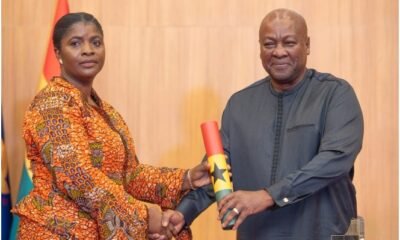





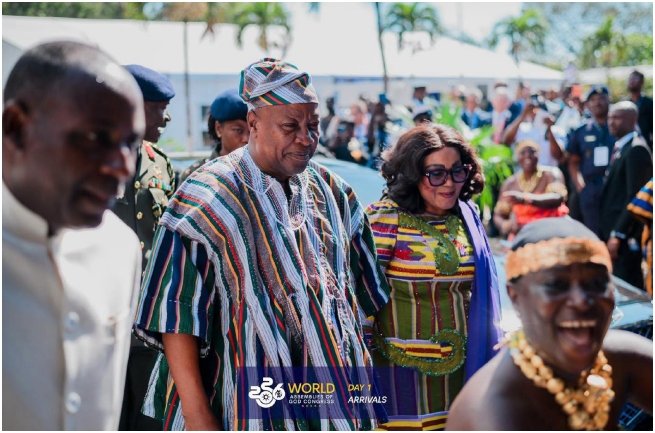
President John Dramani Mahama has challenged thousands of church delegates gathered in Ghana’s capital to measure the success of their global congress not by the eloquence of its sermons, but by the lives they transform after the final prayer is said.
“The lasting story of this conference, this congress, will be written in the lives that we touch after the closing prayer,” Mahama told more than 10,000 participants at the opening ceremony of the 10th Triennial Congress of the World Assemblies of God Fellowship on Wednesday, October 14, 2026.
The president urged delegates to return to their home countries with concrete plans to serve their communities — mentoring young people, supporting schools, strengthening health ministries and standing beside congregations serving under difficult conditions.
Faith Must Be Tangible
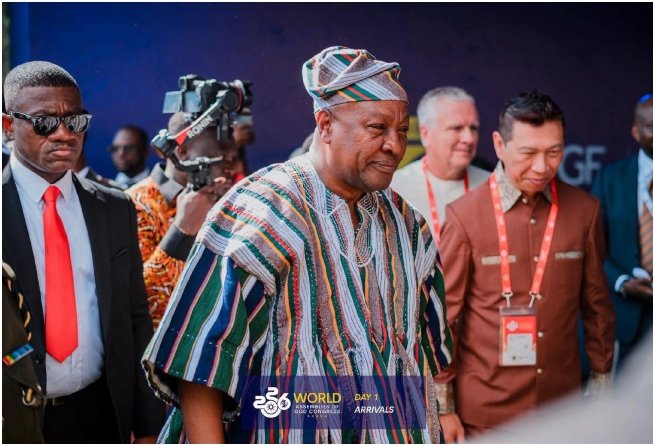
Mahama argued that faith becomes real only when it meets human need. He offered a vivid portrait of what practical Christianity looks like: a hungry child receiving a meal, a patient treated with compassion, a young person acquiring a skill, a widow finding companionship, and a struggling family receiving support from its community.
He called on the church to give greater attention to the relationship between preaching the gospel and serving people in practical ways, saying the two must not be separated.
“Spiritual authority entails a duty of care,” the president said, stressing that churches must provide safe environments for children and vulnerable people. He warned that spiritual leadership carries a responsibility to protect the trust placed in it through responsible conduct.
A Warning on Youth and Technology
Turning to youth development, Mahama acknowledged that young people today are growing up in a world of extraordinary opportunity, but also considerable pressure. Technology, he said, connects young people across continents while simultaneously exposing them to constant comparisons, misinformation and competing expectations about who they should become.
He urged churches and families to create environments where young people can ask questions freely, receive guidance, develop their abilities and take on meaningful responsibilities. Delegates, he said, should mentor young people by listening to them, offering opportunities for service and modelling integrity.
The president also called on the church to recognise the contributions of women of faith, saying their wisdom, talents and leadership deserve full recognition.
A Call for Global Solidarity
Addressing the global nature of the fellowship, Mahama expressed hope that members with greater resources would find ways to support those with fewer. The fellowship, he said, would grow stronger when its members shared their gifts and stood with one another through difficult times.
He also spoke directly to the responsibility of public office, saying those entrusted with power had a particular duty to serve with humility, honesty and integrity. Faith, he added, should deepen respect for citizens and concern for those whose voices are least likely to reach the centres of power.
Historic Honour for a Pentecostal President
At the ceremony, the World Assemblies of God Fellowship presented Mahama with its maiden Global Leadership Excellence and Trailblazer Award. The citation described him as the first member of the Assemblies of God worldwide to become president of a country — a milestone for the denomination.
Organisers also presented him with a Bible and urged him to allow the Word of God to guide his leadership.
The fellowship honoured First Lady Mrs. Lordina Mahama for her work supporting vulnerable people through her compassion ministry.
Former Malawian President Dr. Lazarus Chakwera also received the Global Leadership Excellence Award. His citation described him as the second member of the denomination — and the first minister of the gospel within the fellowship — to become president of a country.
Prayers for Wisdom and Redistribution
Following the awards, general superintendents and Ghanaian church leaders gathered around Mahama to pray for him. The prayer leader, Reverend Dominic Yeo, the fellowship’s Global Chairman, asked God to grant the president “divine wisdom” and prayed for the continuation of what he described as a reformation agenda.
He also prayed for “a redistribution of wealth throughout this nation so that all Ghanaians will be blessed,” a prayer that resonated beyond the sanctuary walls in a country where economic inequality remains a pressing concern.
A Global Gathering in Accra
The 10th Triennial Congress has drawn more than 10,000 participants to Accra, making it one of the largest Pentecostal gatherings on the continent this year. The event brings together delegates from across the global fellowship, reflecting the denomination’s growing presence in Africa and beyond.
For Mahama, however, the congress’s true significance will not be found in its attendance figures or its ceremonies — but in what delegates do once they return home.
“Faith becomes tangible,” he said, “when a hungry child receives a meal, a patient is treated with compassion, a young person acquires a skill, a widow finds companionship and a struggling family receives support from its community.”
The closing prayer, it seems, is only the beginning.
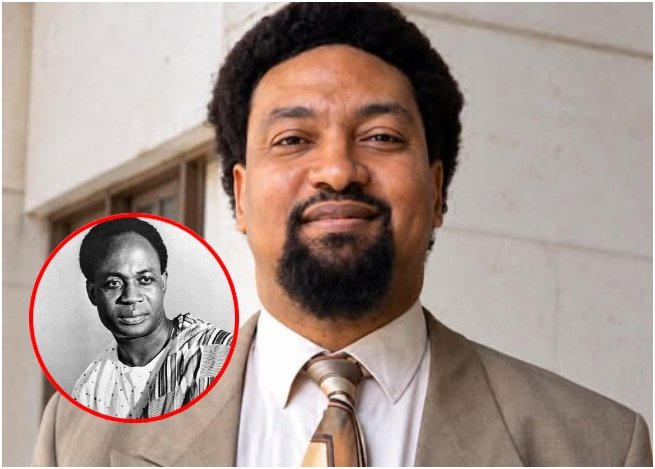
Gamal Gorkeh Nkrumah, the journalist, writer, and intellectual son of Ghana’s founding president, Osagyefo Dr. Kwame Nkrumah, has died in Cairo, Egypt, following a prolonged illness. He was 67.
The Nkrumah family announced his passing in a statement released Tuesday, describing it as “a profound loss not only to our family and loved ones, but also to the wider community of friends, colleagues and readers who valued his insight, humanity and unwavering engagement with the great questions of our time.”
According to the family, Gamal Nkrumah passed away peacefully after receiving care at a rehabilitation centre, where he had been recovering from a stroke.
A Life of Intellectual Engagement
Born in 1958, Gamal Nkrumah carved out a distinct identity as a newspaper journalist and commentator, dedicating his voice and intellect to examining the political, social, and cultural forces shaping Africa and the wider world.
Throughout his life, the family said, he remained “deeply committed to the ideals of justice, human dignity, African unity and international solidarity.”
Described as a man of “profound intellectual curiosity, independence of thought and quiet conviction,” Gamal carried forward the legacy of his father in his own distinctive way, while building a reputation firmly grounded in his own principles and achievements.
His passing marks the loss of a respected voice in African journalism and intellectual life, one whose work spanned continents and engaged deeply with the pressing issues of his time.
A Family in Mourning
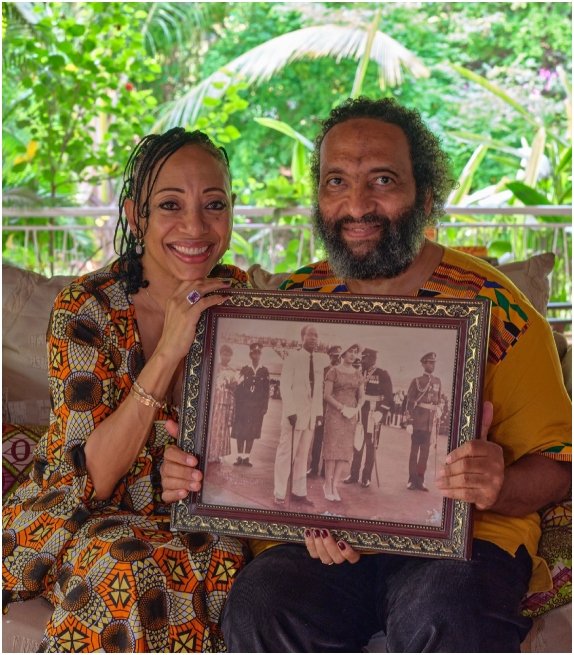
Gamal was one of the acknowledged children of Kwame Nkrumah and Fathia Nkrumah. He is survived by his siblings: Samia Nkrumah (born 1960), a politician and former leader of the Convention People’s Party (CPP); Dr. Francis Nkrumah (born 1962), a paediatrician; and Sekou Nkrumah (born 1964), a politician and photographer.
The Nkrumah family remembered Gamal “with immense love, gratitude and pride,” stating that “his wisdom, kindness and devotion to the values he held dear will remain an enduring source of inspiration.”
Gratitude and Requests for Privacy
In their statement, the family expressed heartfelt appreciation to all those who stood with Gamal throughout his illness, particularly the medical professionals and caregivers in Cairo who provided him with care and dignity.
They also extended “deepest thanks” to the governments and people of his two countries, Egypt and Ghana, for their generous support.
The family has kindly requested privacy as it mourns this deeply personal loss. Details concerning memorial arrangements and opportunities to pay tribute to his life and legacy will be communicated in due course.
“May he rest in eternal peace,” the statement concluded.
Ghana News
Ohio Court Orders Ghanaian Care Worker to Repay $53,278 After Workers’ Compensation Fraud Conviction

Betty Boateng, 50, of Columbus, pleaded guilty to a fifth-degree felony after investigators found she collected disability benefits while working for two in-home care employers
A US-based Ghanaian woman has been ordered to repay more than $53,000 to the state of Ohio after admitting she collected workers’ compensation disability benefits while simultaneously holding paid jobs, authorities announced.
Betty Boateng, 50, of Columbus, pleaded guilty to one count of Workers’ Compensation Fraud, a fifth-degree felony, following an investigation by the Ohio Bureau of Workers’ Compensation (BWC) Special Investigations Department, the agency said in a news release dated October 9, 2026.
Investigators found that Boateng “knowingly and with fraudulent intent returned to work for two different employers during periods when she was receiving BWC disability benefits to which she was not entitled.”
Evidence gathered during the probe showed she earned wages while continuing to accept disability checks, resulting in improper payments totaling $53,278.40.
Sentencing in Franklin County
On September 23, 2026, a judge in the Franklin County Court of Common Pleas accepted Boateng’s guilty plea and proceeded directly to sentencing, ordering:
- A 12-month suspended sentence
- 60 months of community control
- Mandatory reporting requirements
- Restitution of $53,278.40 to the Ohio BWC
- Waiver of fines, with court costs imposed
The case centered on Boateng’s work providing non-medical in-home care services for multiple employers, work she performed while receiving disability benefits she was not entitled to.
“Fraud Hurts Honest Workers”
BWC Administrator Stephanie McCloud said the agency remains committed to protecting the state’s workers’ compensation fund.
“Fraud against the workers’ compensation system hurts honest Ohio workers and employers,” McCloud said. “We are committed to holding accountable those who abuse the system and ensuring that funds remain available for individuals truly in need.”
The BWC urged anyone who knows of or suspects workers’ compensation fraud to contact its Special Investigations Department at 1-800-OHIO-BWC.
A Cautionary Tale for the Diaspora
The conviction adds to a growing list of cases involving Ghanaian nationals abroad facing fraud-related charges in the United States. Ghanaian communities in the US — particularly in cities such as Columbus, which has a sizable Ghanaian population — have increasingly been urged to understand the strict compliance rules attached to public benefit programs.
Workers’ compensation fraud in Ohio can be prosecuted as a felony depending on the amount involved, and convictions typically require full restitution in addition to any criminal penalties.


-
 Ghana News2 days ago
OBITUARY: Gamal Gorkeh Nkrumah, Son of Ghana’s Founding President, Dies in Cairo
-

 Festivals & Events2 days ago
MaddFest 2027: Welcome the New Year with a Night of Celebration in Accra
-

 Health & Wellness2 days ago
Walking Is More Than Exercise: Small Steps That Can Transform Your Health
-
 Global Update2 days ago
Wave of Student Killings at Mexico Universities Raises Safety Concerns
-
 Ghana News2 days ago
Mahama to Churches: The Real Sermon Is Written After the Closing Prayer
-

 Reels & Social Media Highlights2 days ago
Ghana’s Timeline Erupts: Showboy’s Crude Plea, Asantewaa’s Silence, and a Nation Divided
-
 Festivals & Events1 day ago
Velukusi Festival: Re-enacting the Ewe Escape to Freedom in Ve-Deme
-

 Taste GH24 hours ago
Simple, Nourishing and Rooted in Tradition: Discover Ghana’s Kapala