
Sights and Sounds
Discover Ghana’s Basket Weaving Tradition in Accra

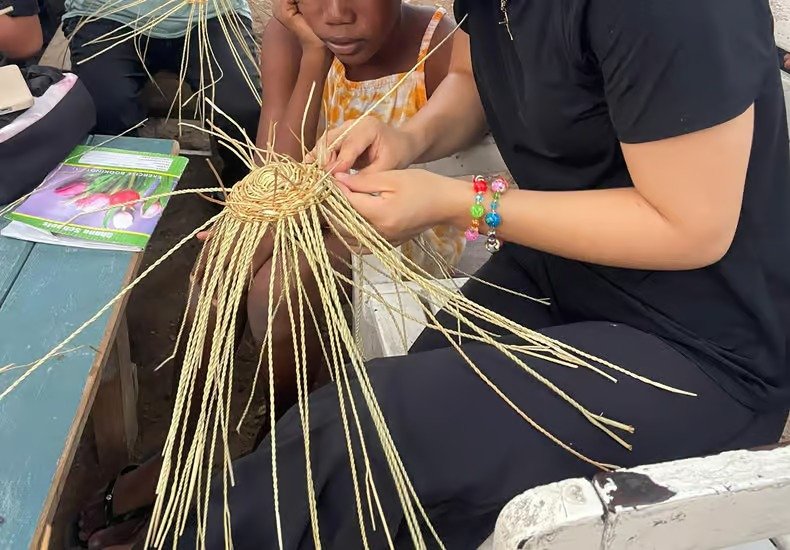
The first thing you notice is the rhythm—the soft rustle of dried straw bending under careful fingers, the quiet concentration in the room, and the occasional laughter as a beginner’s weave goes slightly off pattern.
In this workshop space in Accra, time slows down. Seated on low stools, visitors lean into a centuries-old craft, guided by skilled artisans from northern Ghana who make the process look effortless.
This is Bolgatanga basket weaving, a tradition that originates from the Upper East Region of Ghana. Here in the capital, it becomes more than a demonstration—it’s an invitation to participate.
The Workshop Experience
The session begins with a story. Artisans share how these baskets, known globally for their durability and intricate designs, are handwoven from elephant grass in Bolgatanga.
For generations, weaving has been both an art form and a livelihood, passed down through families and communities.
Then, it’s your turn.
You’re handed a bundle of straw—firm, slightly coarse, and surprisingly fragrant. Under guidance, you begin shaping the base, folding and pulling the strands into place. It’s not easy. The weave demands patience, precision, and a steady hand. But that’s part of the appeal.
As the hours pass, your fingers adjust to the motion. The chaos of loose strands slowly transforms into structure.
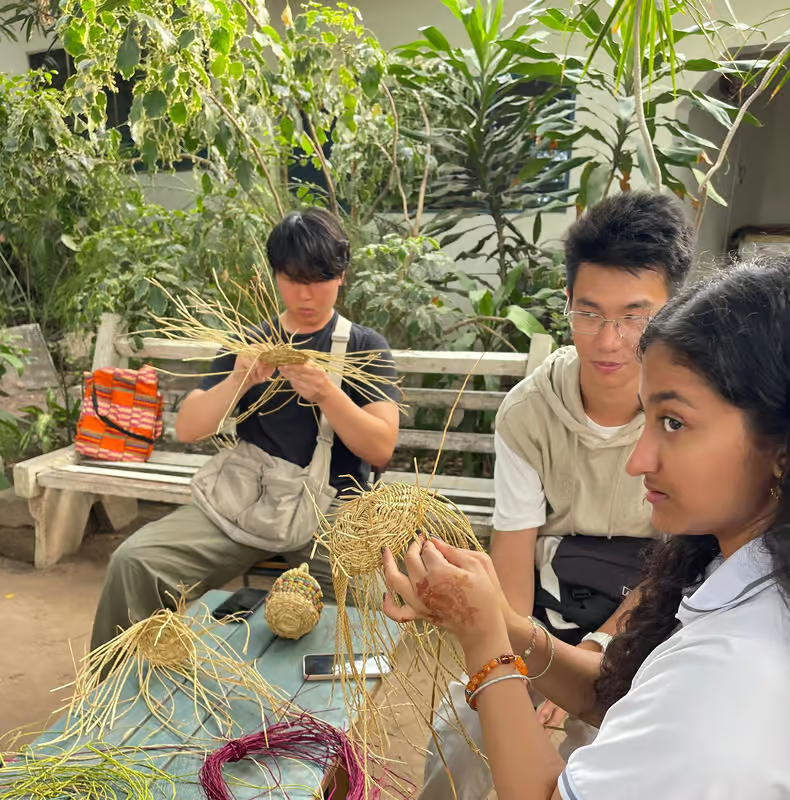
Around you, others are immersed in the same quiet challenge—travelers, creatives, and curious locals, all connected by the shared act of making something tangible.
Between weaving, there’s time to soak in the atmosphere. Some workshops incorporate music, storytelling, or even light refreshments, creating a relaxed, communal feel. You’re not just learning a skill; you’re stepping into a living tradition.
More Than a Souvenir
By the end of the session, what sits in your hands is more than a basket. It’s slightly imperfect, perhaps uneven at the edges—but entirely yours. And that’s the magic of it.
For travelers, the experience offers a deeper connection to Ghanaian culture beyond markets and museums.
Read Also: Exploring Traditional Bead Making in Ghana’s Eastern Region
It brings context to the colorful Bolga baskets often seen in shops, turning them from decorative items into stories of craftsmanship and heritage.
In a city as fast-paced as Accra, this workshop provides a rare pause—a chance to create, to listen, and to understand.
You leave not just with a handmade piece, but with a new appreciation for the skill and history woven into every strand.









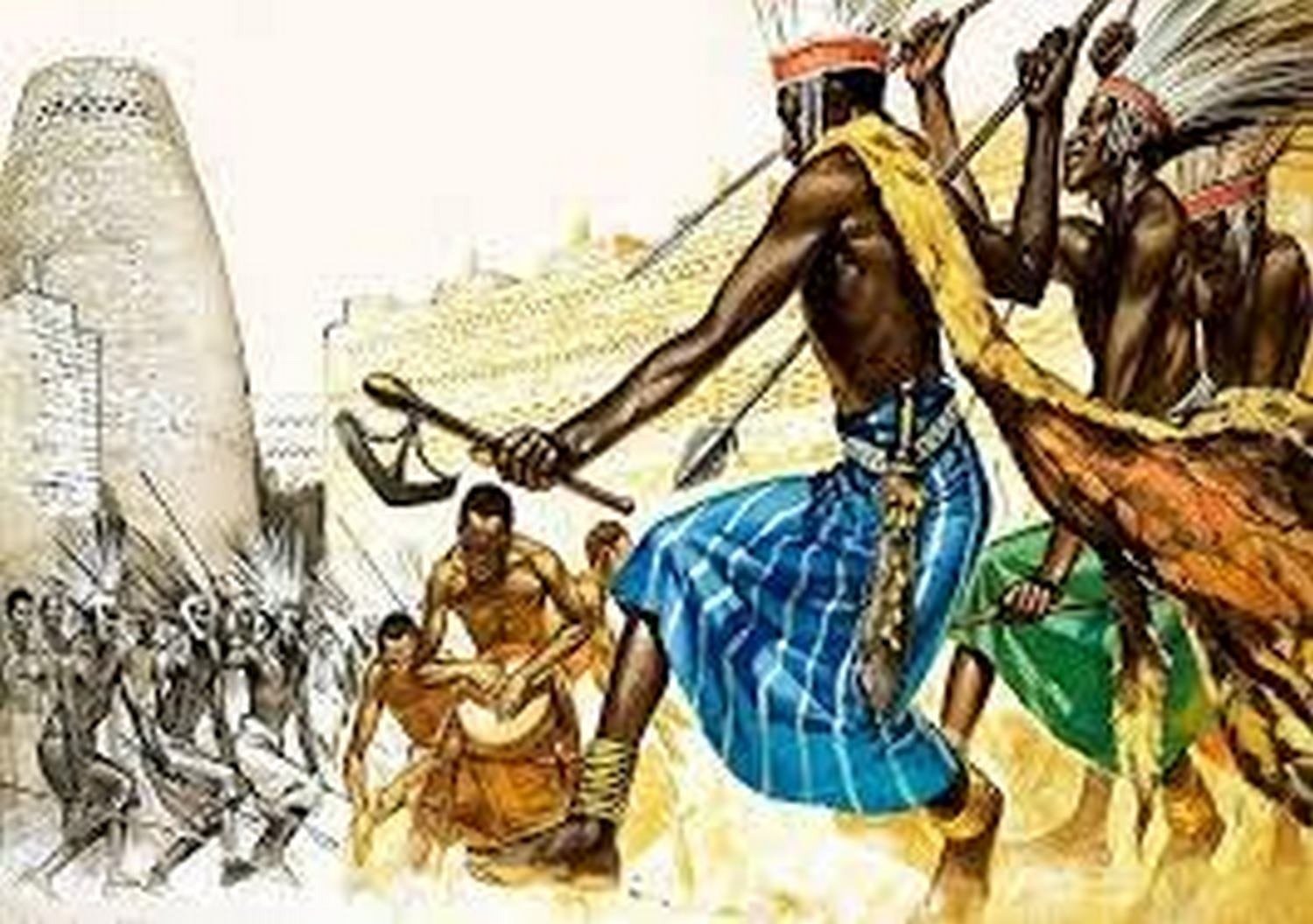
The Battle of Katamanso was not simply a clash of armies. It was the moment when rival communities chose unity over division—and altered the course of the Gold Coast’s history.
In 1826, an estimated 40,000 Ashanti warriors marched south, determined to crush resistance and tighten control over the coast.
Their advance met an unlikely coalition on the plains near Dodowa, where Ga, Fante, Akwamu, Denkyira and other southern forces stood together, backed by British and Danish military support.
What followed was a brutal contest that stretched for hours. The forest became a battlefield of musket fire, cannon blasts and hand-to-hand combat as smoke hung over the trees and both sides paid a heavy price.
By the time the fighting ended, the outcome stunned the region. The Ashanti army, long regarded as one of West Africa’s most formidable military forces, suffered devastating losses, including prominent commanders.
For the Ashanti Kingdom, it marked one of the most painful defeats in its early history and brought its southern advance to a halt.
The consequences reached far beyond the battlefield. The victory strengthened southern alliances, boosted trade around Accra and gave Britain greater influence along the coast.
Political power began shifting toward the coastal settlements that would later play an increasingly important role in Ghana’s colonial story.
Katamanso’s legacy also lives in culture. Oral traditions recall mourning rituals, including hairstyles created to express collective grief, preserving the memory of lives lost long after the weapons fell silent.
Nearly two centuries later, the Battle of Katamanso remains a reminder that history can turn not only on military strength, but on the power of unlikely alliances.
By day, the sound of children playing competes with laughter, conversation and the clink of plates at Gazebo View Restaurant & Playground, a colourful venue just off Osekere Road in Accra.
By night, the playground falls quiet and the space takes on a more grown-up rhythm, with music, cocktails and relaxed conversation under the evening sky.
That ability to serve two very different moods is perhaps Gazebo View’s biggest attraction.
During the day, families can settle into the open-air seating while children explore the spacious playground or try their hand at mini-golf. Shaded areas offer adults a comfortable place to unwind, while bright murals and playful décor give the venue a cheerful, photo-friendly character.
The food follows the same inclusive philosophy. Gazebo View serves a broad selection of Ghanaian favourites and international dishes, from jollof and fried rice to grilled chicken, kebabs, pasta, burgers, salads and seafood. Generous portions and freshly served meals make it suited to everything from family lunches to casual gatherings with friends.
Large television screens add another layer to the experience, particularly when major sporting events are on.
As evening arrives, however, Gazebo View shifts gears. Music becomes more prominent, cocktails replace playground snacks and live DJs or acoustic performers can provide the soundtrack.
The atmosphere remains social without becoming overwhelmingly loud, making it an alternative for those who want a night out without entering the intensity of a nightclub.
In a city where dining and entertainment venues often cater to one audience at a time, Gazebo View offers something more flexible: a place where a family afternoon can gradually become an easygoing night out.
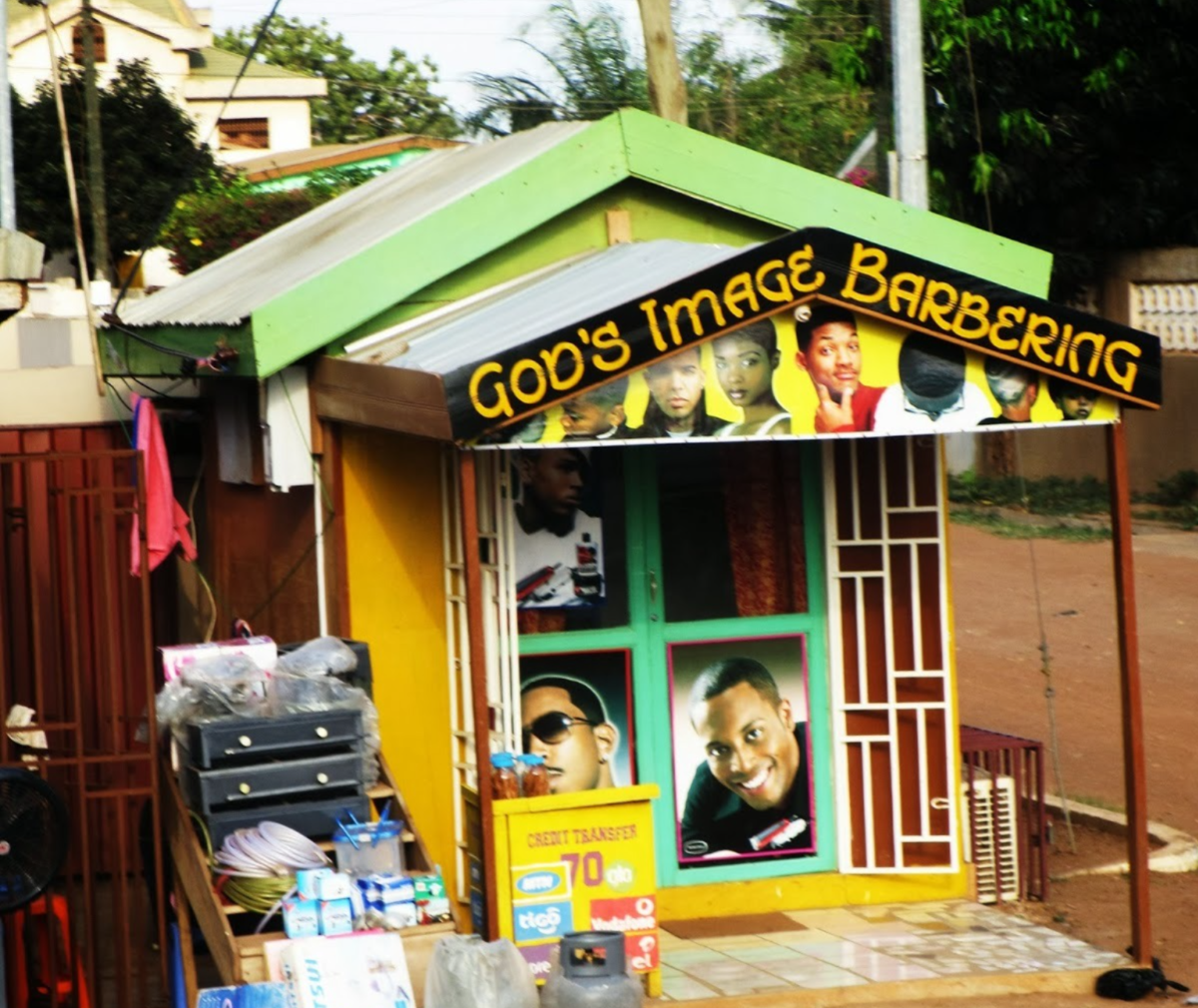
Walk through a Ghanaian neighbourhood and you may find a business sign that makes you pause. God Is Good Provision Store. Inshallah Enterprise. Sweet Jesus Special Jollof. Allah Is the Greatest Fast Food.
At first glance, they may seem like colourful expressions of religious devotion. Look closer, and they tell a deeper story about how Ghanaians understand work, prosperity and uncertainty.
For many business owners, putting God or a religious phrase on a shopfront is more than branding. It is an acknowledgement that success is not entirely within human control.
The practice also predates the arrival of Christianity and Islam in Ghana. Among Akan communities, expressions such as Nyame Adom, meaning “by God’s grace,” and Nyame Betua, roughly expressing trust that God will provide or repay, have long been part of everyday speech.
They reflect an older worldview in which the divine is woven into ordinary decisions, hopes and responsibilities.
When Christianity and Islam became established in Ghana, their language of faith found familiar ground.
Religious expressions could easily move from conversation into commerce, appearing on kiosks, barber shops, workshops, transport businesses and restaurants.
That makes the Ghanaian business sign an unlikely cultural document. It records not only what someone sells, but something about how they see the world.
A shop named Inshallah Enterprise can suggest trust in what tomorrow may bring. A business carrying “By God’s Grace” can turn a private belief into a public declaration. Even the most humorous religious names carry that same underlying idea: the owner may run the business, but the outcome belongs to something greater.
In Ghana, therefore, a signboard can function as both advertisement and testimony—a small piece of faith hanging above the street.


The Hidden Brain Benefit of Strength Training After 30

Cedi Fears, Courtroom Drama, and a Viral Escape: Inside Ghana’s Wildest Social Media Day

Diplomatic Row: President Mahama and Israeli Ambassador Lock Horns Over Gaza
-
 Ghana News2 days ago
Ghana Selected Among Eight Pilot Partners for WHO’s Global Clinical Trial Standards
-
 Sights and Sounds2 days ago
Nine Hours That Changed the Gold Coast: The Legacy of the Battle of Katamanso
-

 Ghana News18 hours ago
Top Headlines From Ghanaian Newspapers: Thursday, August 27, 2025
-
Ghana News2 days ago
Top Headlines From Ghanaian Newspapers: Wednesday, August 26, 2025
-

 Health & Wellness22 hours ago
Your Calves Are Your Second Heart: The Travel Health Risk Too Many People Ignore
-
 Ghana News17 hours ago
Diplomatic Row: President Mahama and Israeli Ambassador Lock Horns Over Gaza
-
 Festivals & Events2 days ago
Beyond the Hype – Next Level Is Bringing Ghana’s AI Future to Life at Google Accra
-
 Arts and GH Heritage22 hours ago
The Tower of Discarded Things: How Teshie Turns Letting Go into a Festival Ritual