
Global Update
Trump’s America Pulls Back from Africa-Focused UN Agencies


The United States under President Donald Trump has ordered federal agencies to begin withdrawing from several United Nations bodies that focus on Africa’s development, diplomacy, and global representation.
The move marks a significant shift in Washington’s approach to multilateral engagement.
The decision follows a presidential memorandum issued after a government-wide review conducted under Executive Order 14199. The directive instructs U.S. agencies to halt participation in or funding for 66 international organizations judged by the administration to be “contrary to the interests of the United States.” Among them are UN institutions that have long served as key channels linking African governments and communities to global decision-making.
For decades, these bodies have played an important role in advancing Africa’s economic and political priorities at the international level, supporting policy coordination, development financing, debt management, trade integration, and social inclusion.
They have also provided platforms through which African leaders and diaspora communities engage the UN system on issues ranging from economic reform to racial justice.
The move aligns with President Trump’s broader second-term foreign policy strategy, which prioritises national sovereignty, domestic economic objectives, and reduced U.S. involvement in multilateral frameworks. Since returning to office, the administration has tightened immigration pathways, reduced refugee admissions, and scaled back participation in international institutions that it argues limit U.S. autonomy or offer limited returns to American taxpayers.
Africa has felt the impact of this shift acutely. In addition to stricter immigration enforcement, the withdrawal signals a reduction in U.S. engagement through diplomatic and development mechanisms that have historically shaped Washington’s relationship with the continent.
One of the affected bodies is the UN Economic Commission for Africa (ECA), which provides technical advice to African governments on economic transformation, industrialization, and regional integration, including implementation of the African Continental Free Trade Area (AfCFTA). The Office of the Special Adviser on Africa has served as a critical link between African leaders and the UN Secretary-General, while the Permanent Forum on People of African Descent has brought global attention to issues of inequality, discrimination, and economic exclusion affecting African and diaspora communities.
Analysts say the U.S. exit from these institutions will reduce both financial support and diplomatic influence in forums that help shape international development and governance policy. For African governments, the move raises concerns about a declining U.S. role in multilateral cooperation at a time when many countries face mounting debt pressures, security risks, and a fragile global economy.
While the Trump administration argues the withdrawals will allow the United States to pursue a more interest-driven foreign policy, critics warn the decision could weaken America’s global influence and reshape long-standing partnerships with Africa.











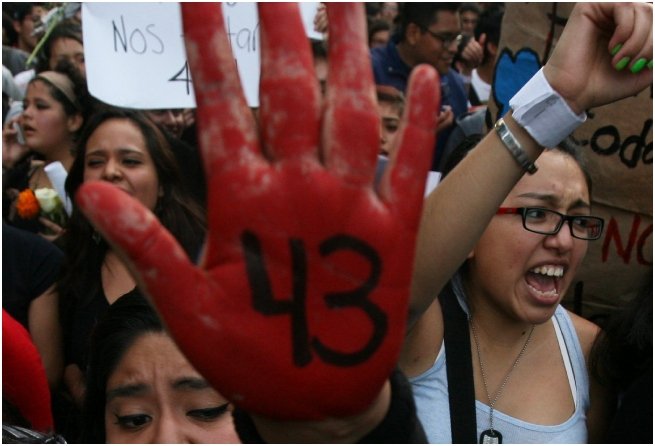
Two female students at the Autonomous University of Morelos disappeared within days of each other in March. Both were later found dead. Since April of last year, at least seven students from the same university have been murdered, five young women and two teenage boys.
Among them was an exchange student from Spain, killed last month just weeks after arriving in Mexico.
“When we hear that another student has disappeared or been killed, we all see ourselves in her. We think, that could have been me,” said Yugi Milan, a student activist in Morelos, speaking to The World’s Tibisay Cea and colleague Axel Hernandez.
The killings have exposed a deepening crisis of gender-based violence at Mexican universities, and a system that activists say is failing to protect students, investigate complaints, or deliver justice.
A University Under Pressure
The Autonomous University of Morelos responded to the high-profile murders with calls for investigation and promises of tighter security: more guards, cameras, and panic buttons.
But activists say those measures do not address the root of the problem, sexual harassment on campus.
“They can’t even respond to complaints of gender violence against professors and fellow students on campus,” Milan said, speaking in Spanish.
The problem extends far beyond Morelos. A recent study found that nearly one in five female university students in Mexico has experienced sexual harassment — but only about 10 percent file a formal complaint.
Fear of Retaliation
Ana Buquet, a gender studies researcher at Mexico’s largest public university, UNAM, says fear keeps victims silent.
“I think basically they are afraid,” Buquet said. “First, many times they feel alone.”
Victims fear retaliation from professors, including lower grades or obstacles to graduating, she said.
Ameyali Ramirez, a UNAM student, remembers a teaching assistant who had been accused of harassing female students — yet continued working with them. Ramirez says she had to take exams alone with him, behind a closed door. Nothing happened to her, but she questions why the exams were conducted that way.
While Ramirez acknowledges universities have made progress, including better reporting procedures and courses on gender violence, Buquet says many reforms focus on responding to harassment rather than preventing it. Universities need more education on gender equality and better training for professors and staff, she said.
Danger Beyond Campus Gates
For many students, the threat follows them home.
Lorena Ruiz Rojas, a 19-year-old anthropology student at UNAM, says she worries about disappearing during her commute. She regularly shares her live location with her family on WhatsApp.
Mexico has a widespread disappearance crisis, with more than 130,000 people officially listed as missing. Security analyst Eduardo Guerrero says organized crime is behind many disappearances involving young women and girls.
“Many times it is young women who disappear, and it has to do with human trafficking markets, sexual trafficking,” Guerrero said.
Some criminal groups abduct young women for sexual exploitation, he said.
Harassment Is Everywhere
Even in everyday life, women in Mexico face harassment in public spaces.
In Mexico City, the subway reserves some cars for women and young children only. Carmen Cuevas, waiting for the next train with her five-year-old son, says the measure exists for safety reasons, she says men have touched her when traveling in mixed-gender cars.
Another passenger, 64-year-old Patricia Ponce de León, says harassment does not stop as women grow older. She has seen men masturbating in front of her on the train.
Justice Denied
For women who report abuse, getting justice can be another ordeal.
Becky Bios is a survivor of domestic violence. Her former husband beat her to the point of deforming her face and causing internal injuries — just because she wanted to leave the relationship. She was hospitalized in critical condition for several days and was afraid to report him.
When she finally filed a formal complaint nine years ago, she says the case never led to prosecution. Her aggressor remains free.
Mexico has one of the highest rates of femicides in the world. According to the National Statistics Agency, more than 93 percent of crimes are either never reported or never investigated.
A Regional Reckoning
The report comes amid renewed global attention to campus sexual violence, following recent gang rape allegations at Cornell University in the United States. In Mexico, students have spent years demanding better protection from sexual harassment and gender-based violence, and say the urgency has never been greater.
For students in Morelos and across Mexico, the fear is personal and constant.
“When we hear that another student has disappeared or been killed, we all see ourselves in her,” Milan said. “We think, that could have been me.”
Global Update
Space Wars: New NOVA Documentary Warns Militarization of Orbit Could Spark Next Global Conflict


Astrophysicist Jonathan McDowell says the world’s 12,000 satellites are now indispensable, and increasingly vulnerable, as anti-satellite weapons, space jammers and a rising tide of orbital debris threaten the systems that run modern life
A new PBS documentary is sounding the alarm about the growing militarization of space, warning that the satellites underpinning everything from cell phone connections and GPS to ATMs and battlefield communications have become both indispensable assets and prime targets in a new era of potential conflict.
The NOVA film Space Wars, featuring astrophysicist Jonathan McDowell, explores how the roughly 12,000 satellites now in orbit have become central to modern military operations — and why a war in space could have consequences lasting decades to centuries.
“Without them, commanders are blind,” the documentary notes, describing how satellites are essential for battlefield communication, surveillance, intelligence and targeting. “The more sophisticated these space-based systems, the greater edge they provide. And the more valuable targets they become.”
McDowell, who retired from the Smithsonian Observatory earlier this year, told The World that militaries are now as dependent on satellites as civilian society.
“As much of the world is, the satellites network us. They feed us information. They connect us,” he said. “For the military, a lot of communications across the world goes across satellites. Surveillance, of course. Intelligence, what are your opponents up to? And navigation. GPS was developed originally for weapons guidance. All of those things are absolutely integral to the way that a modern military operates.”
Anti-Satellite Weapons and the Debris Threat
Russia’s full-scale invasion of Ukraine saw Moscow jam satellites over the country, but McDowell warned that countries possess far more destructive capabilities — including kinetic anti-satellite weapons designed to physically strike orbiting spacecraft.
“It doesn’t need any explosive on board because the satellite’s traveling at 17,000 miles an hour,” he said. “If you can just get in the way of it, it’s going to completely smash. And that would generate enormous amounts of space debris and space junk that would be very bad for everyone using space.”
Space debris is already a mounting hazard. McDowell said more than 30,000 pieces a few inches across or larger are being tracked, while centimeter-sized debris could number as much as a million pieces in orbit.
“We’ve been seeing a concerning increase in the number of small incidents,” he said, citing a recent strike on China’s space station that hit an evacuation module, though no lives were lost. “The worry is that that’s a rising level that indicates that the bigger pieces of space debris are not far behind and that we could start losing satellites soon. I think it’s a real problem and a real risk.”
The documentary features Paul Graziani, CEO of the aerospace company Comsbox, who describes how space junk ranges from spent rocket stages and defunct satellites to lost astronaut gloves and errant screws.
Space Jammers: The Next Front
Rather than destroying satellites outright, which would create debris harmful to all space users, McDowell said major powers are increasingly turning to “space jammers” that can drown out satellite signals with competing radio frequencies.
“You can put a satellite next to the GPS satellite and broadcast really loud so as to disable it for all users, or maybe even to take out the satellite if you can drown out its control frequencies,” he said. “These space jammer weapons, I think, are likely to be the focus in the years to come.” He noted rumors that the United States has already deployed such systems.
A Militarized History, and a Fragile Peace
The idea of militarizing space is not new, McDowell said, it predates the first satellite launch.
“In the 1940s, before we even launched the first satellite, space has been militarized, I’m afraid, since the very earliest days.” Within a couple of years of Sputnik, the CIA was launching spy satellites, and the first space weapons test came in 1959.
“We’ve managed to stay just on the right side of peace in space, but there’s been a strong military thread throughout the history of space exploration,” he said.
Asked whether the world is in an arms race in space, McDowell said the dynamic is broader:
“Not just an arms race, but also a military support race, a spy satellite race, a navigation satellite race, a communication satellite race, to support the militaries operating on Earth by more and more sophisticated space assets, giving them an edge over their opponents. Along with that, there has been the development of actual space weapons, but not their deployment, not their use.”
He attributed the restraint to political incentives and the severity of escalation:
“It would be such an act of war to destroy someone else’s satellite. It would be seen as a real escalation. No one actually wants to start a war in space. But if a war does break out, then it will spread to space. That’s what’s different now.”
Treaties and the Case for a New Agreement
The 1967 Outer Space Treaty prohibits nuclear weapons in space, but no comparable agreements bar conventional warfare in orbit. McDowell argued a new accord is necessary because 21st-century society depends so heavily on space technology.
“If you have a war that spreads to space, then you start losing all of that high-tech capability,” he said. “And if you really have a real war in space with debris generation and so on, then you lose the use of space for decades to centuries because of all the debris whizzing around.”
Despite the risks, McDowell said it is not too late to change course, and that the United States and China, the main players in space, hold the key.
“I worry about it because I feel like there’s still time to change direction here,” he said. “A decision to switch the rhetoric around and actually more seriously work towards: how do we trust each other? How do we verify that we’re not about to attack each other? — rather than all of the ranting going on right now about how we need to be able to kick the other guy’s butt in space. Then I think you could still stave this off.”
Space Wars is available to stream now on YouTube, produced by NOVA.
Police in Ghana’s Northern Region have launched a murder investigation into the deaths of three young children whose bodies were discovered in the boot of a vehicle at the Koblimahagu Zoo in the Tamale Metropolis, after a preliminary autopsy indicated they did not die of natural causes.
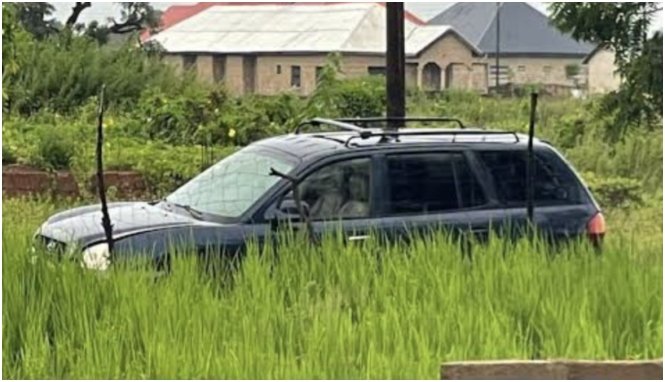
The children, Dauda Abdul Aziz, 3; Saani Alsharaf, 5; and Dauda Fadilan, 7, were found dead on Monday morning, Oct. 5, in a black Hyundai Tucson with registration number AS 1770-14.
They had reportedly left home on Sunday to attend Islamic classes but never returned.
According to reports, preliminary autopsy findings suggest the children may have been murdered. However, a toxicological examination is still required to establish the full circumstances and possible cause of death.
“The autopsy revealed they did not die a natural death,” a source familiar with the investigation told Joy News. “There is a need for toxicological examination to be conducted to fully establish the facts.”
Vehicle Owner Arrested
The owner of the vehicle, a member of the Ghana Immigration Service, has been arrested and transported to Accra to assist with investigations. The officer reportedly told police that the vehicle had been stuck in mud for five days.
Police said the vehicle was found stuck in mud, with the driver’s door and rear passenger door open, while the boot and other doors were locked. The vehicle has been secured for further forensic examination as investigators work to determine how the children ended up inside the boot.
National Response
The Inspector-General of Police has deployed forensic and crime scene experts to Tamale to support the investigation. Homicide investigators and intelligence officers have also been dispatched to assist the Northern Regional Police Command.
The teams are expected to examine the vehicle and other evidence at the scene as investigators work to establish the circumstances surrounding the children’s deaths.
The case has generated widespread concern in the Northern Region, where residents are calling for a thorough and transparent investigation.
Key Facts
- Location: Koblimahagu Zoo, Tamale Metropolis, Northern Region, Ghana
- Victims: Dauda Abdul Aziz (3), Saani Alsharaf (5), Dauda Fadilan (7)
- Discovery: Bodies found in the boot of a black Hyundai Tucson on Monday morning
- Suspect: Vehicle owner, a Ghana Immigration Service officer, arrested and transported to Accra
- Official Status: Murder investigation opened; toxicology results pending
- Response: Inspector-General of Police deployed forensic and crime scene experts to Tamale



-

 Ghana News1 day ago
OBITUARY: Gamal Gorkeh Nkrumah, Son of Ghana’s Founding President, Dies in Cairo
-

 Festivals & Events1 day ago
MaddFest 2027: Welcome the New Year with a Night of Celebration in Accra
-

 Health & Wellness2 days ago
Walking Is More Than Exercise: Small Steps That Can Transform Your Health
-

 Arts and GH Heritage2 days ago
Inside Togo’s Abandoned Colonial Building, African Artists Reclaim Cultural Memory
-

 Global Update1 day ago
Wave of Student Killings at Mexico Universities Raises Safety Concerns
-

 Ghana News1 day ago
Mahama to Churches: The Real Sermon Is Written After the Closing Prayer
-

 Reels & Social Media Highlights1 day ago
Ghana’s Timeline Erupts: Showboy’s Crude Plea, Asantewaa’s Silence, and a Nation Divided
-

 Taste GH13 hours ago
Simple, Nourishing and Rooted in Tradition: Discover Ghana’s Kapala