
Arts and GH Heritage
Beyond Beauty: How a Ghanaian Artist Finds Ancestral Memory in the Hair Salon

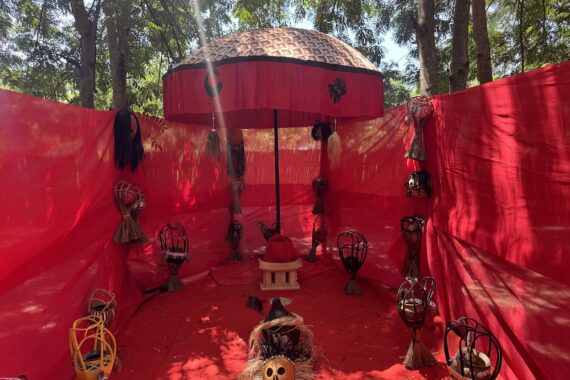
In an immersive installation at a residency in Togo, the Ghanaian artist explores how African hairstyling preserves ancestral memory, challenges beauty standards, and transforms everyday rituals into acts of cultural expression.
A salon chair can be more than a place to sit. Between the rhythmic movement of a stylist’s hands, the tightening of braids and conversations that drift from family histories to everyday struggles, something deeper unfolds: a culture remembering itself.
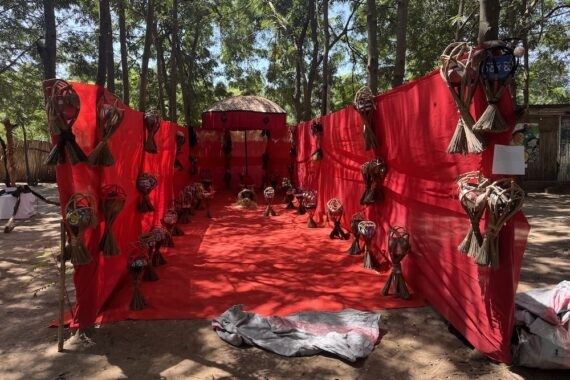
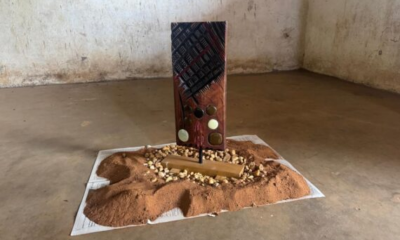
This is the idea at the heart of Asɔneε So (Within the Shrine), an immersive installation by Ghanaian artist Livingstone Amoako, presented during the Karp Kamina Artists and Researchers Residency in Atakpamé, Togo.
Where Everyday Ritual Meets the Sacred
Amoako draws a striking connection between the traditional African shrine and the modern hairdressing salon.
Both become spaces of transformation, shaped by repeated gestures, shared knowledge and connections that extend beyond the individual.
African hairstyling practices, from braiding and threading to locking, carry histories passed between generations.
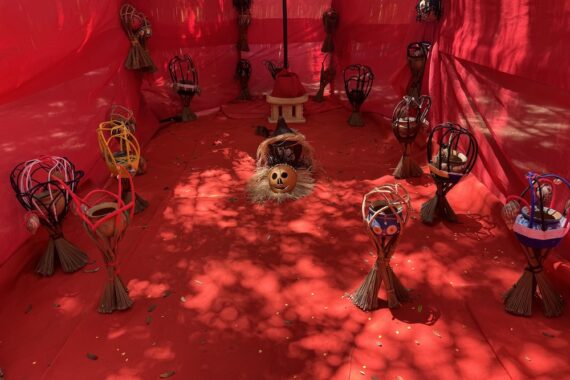
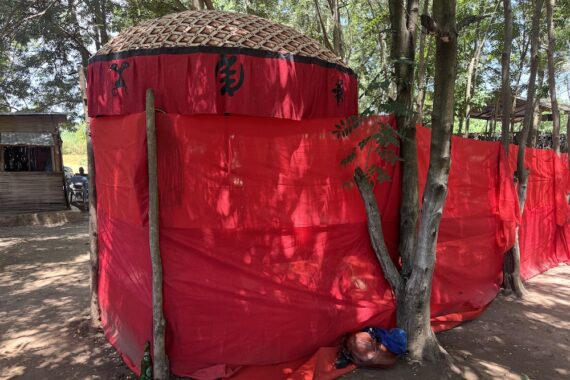
In Amoako’s installation, these practices are presented as expressions of belonging rather than simple acts of beautification. Bright red cloth and Adinkra symbols reinforce the relationship between appearance, cultural knowledge and spiritual consciousness.
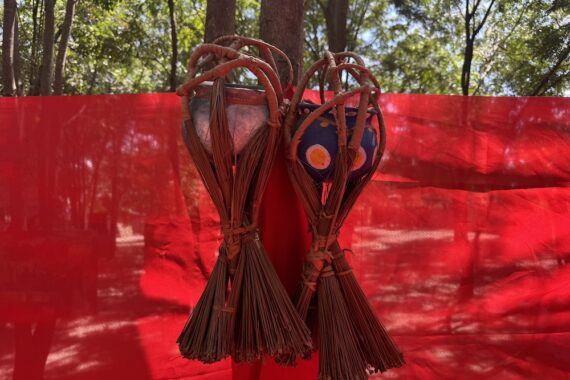
Gourds, brooms and canes further evoke African cosmologies, while the work references American anthropologist Horace Miner’s 1956 essay Body Ritual among the Nacirema, which challenges readers to reconsider how unfamiliar cultural practices are perceived.
Reclaiming the Meaning of African Hair
The installation also speaks to the pressures African hair faces under global beauty standards that have often privileged other textures and styles.
By positioning the salon as a site of cultural significance, Amoako invites audiences to question who defines beauty and which traditions are recognised as meaningful.
His work suggests that heritage is not confined to museums or ceremonial grounds. It lives in everyday encounters, carried through skilled hands and familiar gestures.
In the salon, the past is not merely preserved; it is braided into the present, strand by strand.







Artists from Ghana, Togo, Benin and Norway explore how contemporary creativity can reconnect communities with their histories.
In Kamina, a village near Atakpamé in Togo, cultural heritage became more than something to remember. For two weeks, it became material to question, reshape and carry into the future.
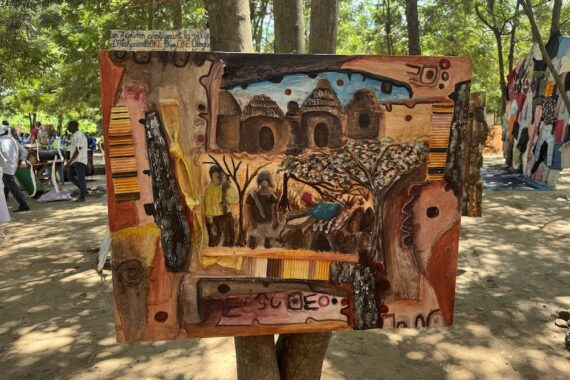
The closing exhibition of the 2026 Karp Kamina Artists and Researchers Residency, held on Sunday, October 19, brought together paintings, sculptures, masks, ceramics and installations created through cross-cultural encounters.
The gathering offered a compelling reflection on how artistic collaboration can keep inherited knowledge relevant to changing societies.
Beyond Preserving the Past
Bringing together practitioners from Togo, Benin, Ghana and Norway, the residency created space for different artistic traditions to meet.
Ghanaian artists Frederick Bamfo and Livingstone Amoako joined fellow creatives, researchers and members of the Dzogbeadzi Music and Dance Group in an environment shaped by experimentation, performance and shared inquiry.
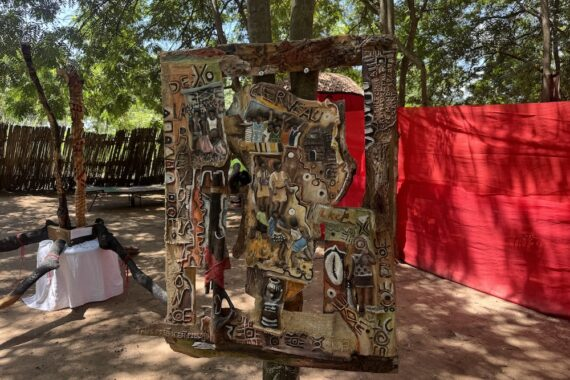
The significance of such encounters extends beyond the finished artworks. When artists work outside familiar studios, engage with local communities and exchange perspectives across generations, cultural knowledge can acquire new forms without losing its historical roots.
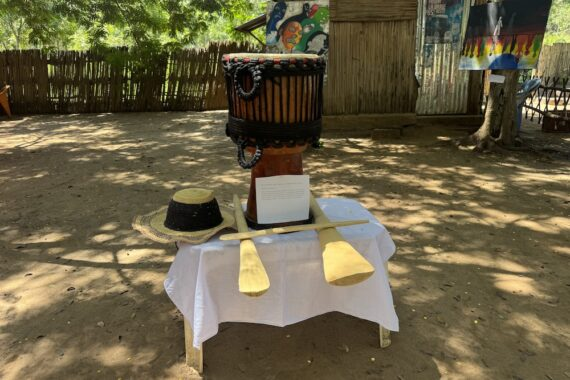
For Ghana and its neighbours, where oral traditions, craftsmanship, music and communal ceremonies remain important carriers of identity, this approach offers another way to engage younger audiences with heritage.
Rather than treating tradition as a fixed inheritance, artists can interpret it through contemporary materials, ideas and experiences.
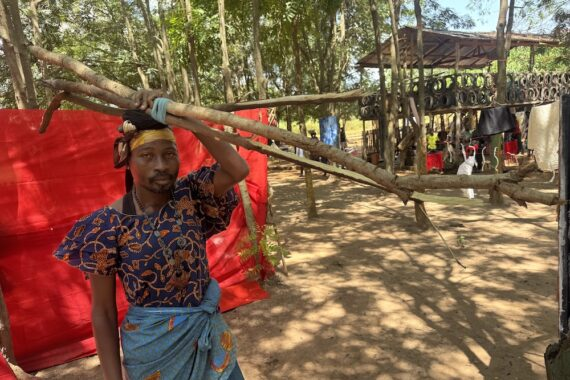
A Regional Platform for Creative Exchange
Karp Kamina’s interdisciplinary approach also challenges the idea that meaningful art must remain within conventional galleries.
By engaging traditional, historic and public spaces, the residency places creative expression closer to the communities whose histories inform it.
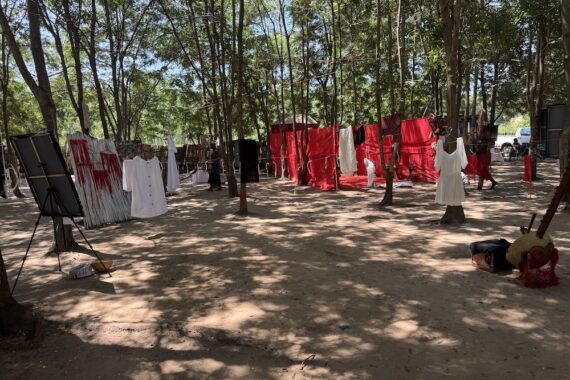
Its lasting promise lies in the relationships established between practitioners and cultures.
The October exhibition marked the end of the residency, but its larger ambition reaches further: building connections through which African heritage can be examined, shared and reimagined internationally.
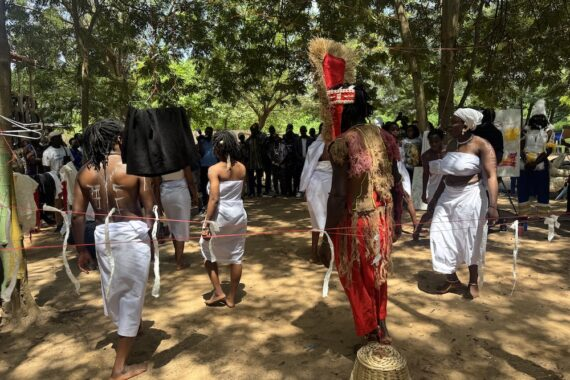
At Kamina, preserving culture meant allowing it to keep moving.
Arts and GH Heritage
When Second-Hand Clothes Become a Playground for Community
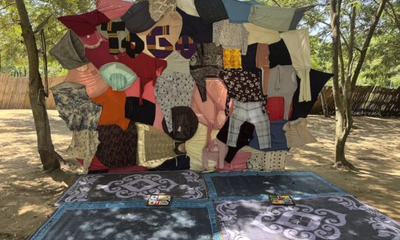
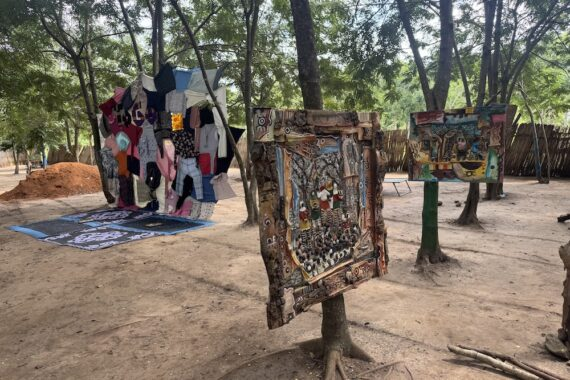
Using Broni Wawu garments purchased at a local market, Bamfo creates enclosed and open environments designed for participation rather than distant observation.
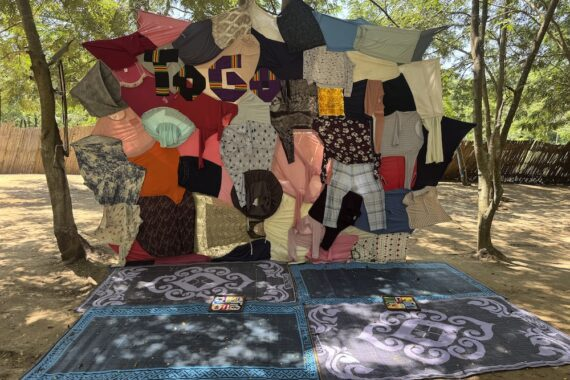
In Atakpamé, Ghanaian artist Dr. Frederick Bamfo transforms discarded garments into interactive spaces where children, cultural memory and collective play meet.
A discarded shirt can carry more than the memory of a former owner. In the hands of Ghanaian artist and academic Dr. Frederick Bamfo, it can become part of a place where children gather, games begin and strangers find reasons to connect.
His installation, The Games Feast, developed during the Karp Artists’ and Researchers’ Residency in Atakpamé, Togo, gives second-hand clothing a new social life.
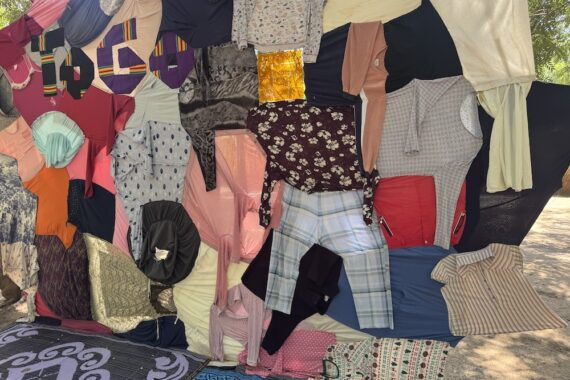
Using Broni Wawu garments purchased at a local market, Bamfo creates enclosed and open environments designed for participation rather than distant observation.
The choice of material speaks to a familiar West African reality. Second-hand clothing circulates through markets, connecting consumers to international trade networks while raising questions about consumption, waste and the afterlife of textiles.
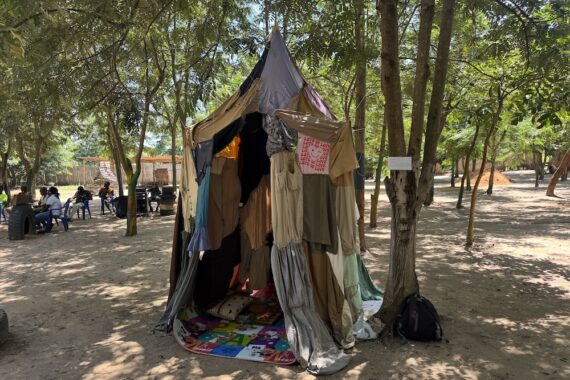
Often valued primarily for their usefulness or affordability, these garments become something different in Bamfo’s work: vessels of memory and possibilities for human connection.
The installation’s defining feature, however, is not simply its reuse of clothing. It is what happens inside these improvised spaces.
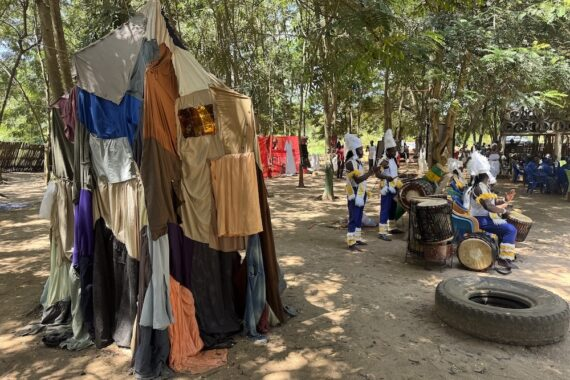
Children help shape the project’s collaborative spirit, while games such as ludo and oware, alongside dancing and skipping, turn the artwork into a setting for shared experience.
These activities draw on familiar forms of play that have long helped communities build relationships and pass cultural knowledge between generations.
Here, they also challenge conventional ideas of an art installation as something to admire without touching or entering.
For Bamfo, the transformation is both material and social. Clothing once associated with individual bodies becomes a collective environment, while everyday games become tools for participation.
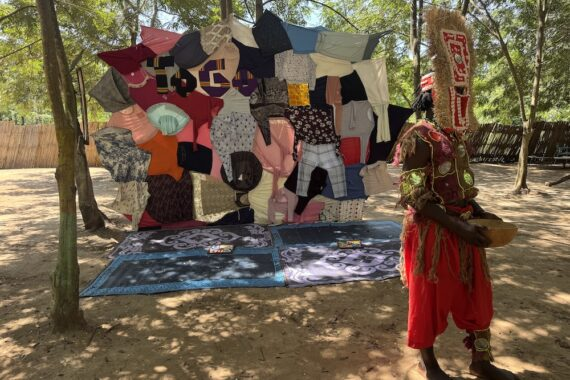
In Atakpamé, The Games Feast suggests that the most meaningful second life of a discarded garment may not be another wardrobe, but a space where people come together.
Arts and GH Heritage
Who Owns the Right to Be Called an Artist? A Debate in Togo Challenges the Rules of Art
From Ghana’s traditional craftsmen to self-taught street artists, creative excellence rarely follows a single road.
An artist may spend years in a university studio learning perspective, composition and art history.
Another may acquire the same confidence with materials through years of observation, experimentation and work passed down through generations. Which deserves greater recognition?
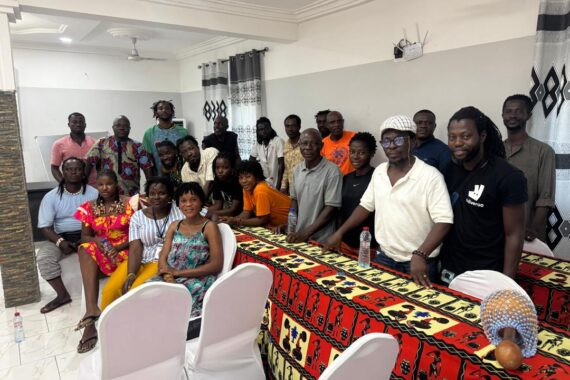
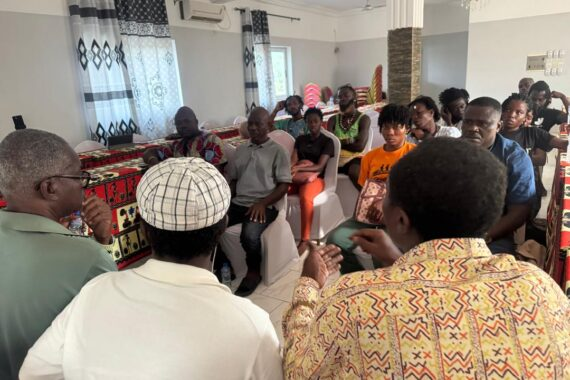
At Hotel Hong Kong in Atakpamé, Togo, this question became a starting point for a wider conversation about who gets to define artistic excellence.
Beyond the walls of the academy
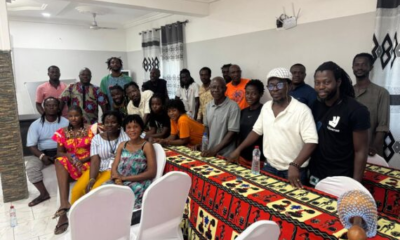
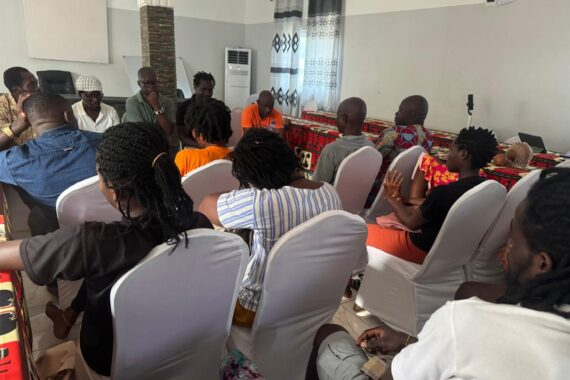
The panel discussion, organised as part of the ongoing Karp Kamina Artists and Researchers Residency, brought together Ghanaian artists Frederick Bamfo, Livingstone Amoako and Ray Agbo.
Moderated by Kojo Biney, with Samuel Olou, the residency’s director, translating into French, the conversation examined the opportunities and limitations of formal and self-directed artistic education.
Art academies offer structured training, experienced mentors, studio facilities and access to professional networks.
Yet these advantages do not automatically produce originality. Outside institutional settings, artists often develop distinctive approaches through everyday encounters, community knowledge, apprenticeships and experimentation.
Ghana’s traditions offer another lesson
Ghana’s fantasy coffin makers illustrate why artistic knowledge cannot be measured by academic qualifications alone.
These craftspeople transform wood into elaborate forms representing professions, personal identities and family histories.
Their expertise is built through practical experience, inherited techniques and close relationships between makers and their communities.
Such traditions challenge institutions to reconsider what counts as legitimate artistic training and whose work deserves exhibition space, critical attention and commercial support.
Making room for different creative journeys
The discussion at Hotel Hong Kong did not present formal education and independent practice as opposing forces.
Instead, it highlighted the need for an art world that values technical knowledge without dismissing unconventional paths.
For African artists navigating galleries, museums and international exhibitions, that distinction matters.
Creativity may begin in a classroom, a workshop or on the street. The greater challenge is ensuring that opportunity does not depend solely on where an artist learned to create.


-
 Arts and GH Heritage2 hours ago
Beyond the Gallery: Karp Kamina Turns Cultural Memory into Contemporary Art
-
 Sights and Sounds1 day ago
Planning a Family Day Out in Accra? Lakeside Marina Park Offers Fun for All Ages
-
 Fashion & Style8 hours ago
Malian Businesswoman’s Reported $1.5 Million Gold Jewellery Stuns Wedding Guests
-
 Festivals & Events1 day ago
Ahukan Festival: Honouring Chiefs and Celebrating Akyem Heritage in Kibi
-
 Global Update41 minutes ago
Huge Storm Kills Two in the UK as 90,000 Properties Left Without Power
-

 Ghana News50 minutes ago
Ghana’s President Congratulates Brazil’s Lula on Historic Fourth Term, Vows to Champion Global South Agenda
-

 Health & Wellness23 minutes ago
Four Weight-Loss Mistakes That Could Be Holding Back Your Progress
Pingback: Beyond the Gallery: Karp Kamina Turns Cultural Memory into Contemporary Art - Ghana News Global